Blogging without borders
My piece published by the Walkerly Magazine
The internet has demolished the iron curtain between Pakistan and India almost overnight, writes Pakistani blogger and writer Raza Rumi.
I don’t need to tell you about the multi-billion dollar enterprise that is the animosity between India and Pakistan. Suffice to say that the birth of a new nation-state on the Indo-Pak sub-continent was among the bloodiest of all time, entailing the migration of nearly 10 million of the wretched of the earth who had to find a new home.
Millions of deaths and three wars later, the bitterness refuses to go away and the interaction of the two countries’ populations has been very limited over 60 years. As a result, not all Pakistanis have the privilege of visiting India. I happen to be one of those who, by sheer coincidence, have been visiting India primarily for work or cultural exchange.
My forays into journalism coincided with my alter ego as a blogger. Purely by accident, I discovered the world of blogging, driven by the desire to post my pieces published by The Friday Times (TFT), a weekly Pakistani magazine. Trying to avoid creating a paid website, the blog template came to my rescue.
Anchorless rambling
We did it again. A hallmark of Hillary Clinton’s visit to Pakistan was her meeting with the stars of the Pakistani media – the all-knowing anchors who have taken it upon themselves to be the “representatives” of Pakistan. Forget the President elected by all the legislatures, the Prime Minister who enjoys the confidence of the National Assembly, and even the Foreign Minister, who at the end of the day was elected from a constituency with a huge majority and nominated by the ruling party.
Such constitutional niceties are of little value. What we witnessed with a motley group of top anchors was a repeat of their daily performance on the idiot box, and the discourse with America’s second most powerful politician was familiar and disappointing. A senior journalist based in Lahore remarked that even the young students at the Government College University came up with better questions than the exchanges aired on television.
Who are we? Muslim, South Asian, Arab? No clear answer, because we are ten different things at the same time, and while the rest of the world is comfortable with multiple identities, Punjab’s urban middle classes crave a singular Islamic identity but want it with all the world’s frills. This is why we cheer the blowing up of the World Trade Centre and at the same want to live in New York. This is why the Islamo-fascist hate-America crowd is at ease with their progeny studying in the United States
Book review: Challenging martial histories
![]() |
|
|
Flight of the Falcon: Story of a Fighter Pilot, |
|
![]() |
|
|
Nur Khan, Asghar Khan and Abbas Khattak at the launch in Islamabad |
|
![]() |
|
|
Haider signing his book |
|
![]() |
|
|
Sajad Haider with his squadron of Pathankot fame |
|
![]() |
|
|
Sajad Haider with his sister Kausar Haider who is an |
|
![]() |
|
|
Sajad Haider (extreme right) with children Zaeina, Adnan, and Zohare |
|
|
“Butt, the prosecutor, had not an iota of self-esteem in his body or soul; he was the most pitiful human being I have seen crumble so quickly from such a high perch. I continued brushing my teeth as I heard him say the CAS had ordered my immediate release and a service car would be there to drive me home” |
|
|
When Haider bid farewell to the PAF, he had Rs 17,000 as his total savings. No plots and other assets that we are now familiar with. He started from ground zero. But his lesson for men in uniform is: “If you serve with total dedication ... nature rewards you for your pride in the profession” |
|
This was a hot May afternoon when I found myself at the book launch of Flight of the Falcon. I had no plans to be in Islamabad until the author informed me of the launch, an event to be remembered in the culturally stifling environs of Islamabad. I have known Air Commodore (retired) Sajad Haider for years. He is an exceptional man, able to connect across generations. The articulate and hospitable Haider can hold forth on any subject under the sun without cavil. As a young man, I had heard the delightful, adventurous and sometimes sad accounts of his stint with the Pakistan Air Force (PAF). In many ways, the rise and fall of the PAF is a mirror image of Pakistan’s institutional trajectory, depicting how good we are at making a hash of things and persecuting our heroes.
Flight of the Falcon essentially sums up Haider’s grand story of valour, tribulations and commitment to the country. As he told me, this book “is my endeavour to fulfil my small responsibility towards my country. During the 1965 and 1971 wars with India, which I participated in as a commander leading the No 19 Squadron of the Pakistan Air Force, and as head of the fighter tactical wing respectively, I was a witness to history in the making.” During the 1965 war, Haider had collected the best fighter pilots and put them under the “warriors” training regime. The results achieved by his squadron were spectacular: an unmatchable six Sitara-e-Jurats were bestowed on the pilots, including the fighter-author. The 19th Squadron carried out the most difficult missions of the 1965 war and these have been documented by British, Indian and Pakistani experts. Whilst most accounts recall the operational episodes narrated by second-hand sources, Flight of the Falcon attempts to provide a candid account of these two controversial wars from the cockpit of a fighter air craft. Interestingly the book challenges the conventional mantra of victory trumpeted by state histories: in both the wars, there was no clear winner, and the book chronicles that honestly.
Haider holds that after four decades, the truth about what happened must come out without any embarrassment. “We owe it to our future generations, particularly today’s young commanders and students of military history, to set the record straight,” he adds. Not surprisingly, reticence to carry out an honest analysis of the lessons of the wars against India is rooted in the effort to protect the incompetent and short-sighted leaders whose mistakes cost the lives of many gallant men, not to mention the tragic break up of Pakistan in 1971.
Flight of the Falcon is not just a dry historical account. It is an eminently readable autobiography as well. Sometimes, the episodes appear stranger than fiction, especially when Haider’s air chief framed him in a conspiracy to overthrow the government of Zulfiqar Ali Bhutto and charged him with treason and with inciting mutiny. We also learn how the Shahinshah of Iran, Raza Pahlavi, told Zulfiqar Ali Bhutto to punish Haider for denigrating him. The sensational bits make the book impossible to put down. There is the incident where Zia ul Haq lectured the armed forces, trying to explain the reasons why he had carried out a military coup, and why the nation was not fit for democracy. The author retorted, “The pride with which I have worn this uniform and defended my country with my life has been denigrated to the point where I see contempt in the eyes of Pakistanis who had once adored the sight of this very uniform. As part of your constituency we are now the conquerors of Pakistan rather than its defenders.” Of course, Haider lost his career and Zia was reported to have said that he wanted to see Haider with a begging bowl in his hand!
The story gets more inspiring as Haider, instead of acting as a depressed careerist, does not look back, and rebuilds his life as a successful businessman. The message is clear: “never cave into coercion, nor surrender to the self-righteous.” These are words that are most relevant as we wage war against the forces of darkness in twenty-first century Pakistan.
We also read interesting anecdotes about Haider’s personal life. His father emerges as a role model, held in high respect by the Baloch Sardars; and his mother is revealed as a woman who emphasised education for all her children. From a ‘mama’s boy’, the author landed into the rough terrain of life and achieved success on merit, and through sheer dedication and hard work. The role of Air Marshal Asghar Khan in upgrading the PAF also gets illuminated through the text. But the sad events following Ayub Khan’s coup in 1958 get a detailed treatment. Indeed the author, many would say for the right reasons, is unsparing towards the 1958 coup – a “ midnight coup supported by second rate generals of the army,” to use Haider’s words. The only person to challenge Ayub was Asghar Khan. The Pakistan army since the 1960s has followed “a course of nepotism, corruption and cronyism that has been hard to rectify in all these years”, laments Haider.
Pakistan’s client status is also discussed at length when the author narrates how the Americans pushed Ayub Khan into creating a spy base at Badaber near Peshawar. Haider laments how this tradition was carried on by Ayub’s successors, especially Yahya Khan, who kept waiting for the 6th fleet in 1971, which was checkmated by the Soviets.
The false sense of importance that we have nurtured and polished as the core to our foreign policy continues unabated.
Haider tells us how Ayub feared his own shadow and constantly suffered the trepidation of coups and assassination attempts which was more of a phantom. Purges from within the ranks led to a situation where the army was starved of young captain and major level officers. In Haider’s words, the “not so obvious young Turks managed to survive.” Ayub pushed Pakistan into the 1965 war, which turned out to be a tactical debacle leading to the dismemberment of Pakistan. As we find out from Flight of the Falcon , the PAF was kept completely in the dark about the plan to annex Kashmir through guerrilla warfare, and Asghar Khan was deliberately kept out of the loop until the Indian air force rattled the rafters of Musa and Ayub’s bunkers. Tragically, the leadership thought that India would not react violently against Pakistan. The gallant men who infiltrated into Indian- held Kashmir were ill-trained. Some youths from the streets of Azad Kashmir towns were given as little as three weeks training to fight a guerrilla war of attrition. “There was no plan of exfiltration, and the secrecy of this plan met its Waterloo when two Muslim Kashmiris reported the presence of Pakistani Mujahid forces to the Indian police as well as to the local army headquarters. A tragic massacre of our valiant men followed,” says Haider. We have been bleeding due to the Kashmir conflict for decades, and brave men have shed their blood without knowing the power-games and megalomania of our leaders.
Lahore is burning
Raza Rumi
[reportedly] 27 dead and dozens injured - no respite for us.
Once again, in less than a month Lahore has been ravaged by terrorists. Who said that Pakistan was a hub of terrorism - we are now the greatest victim of terror and militancy. The residents of Lahore are scared and the vibrant city seems to be enveloped in a mist of uncertainty and fear.
The Mumbai and later Lahore 3/3 model seems to be in vogue now. Extremely well trained commandos, with sophisticated weapons and not afraid of death are let loose on the society. The media is hysterical as well and following the Indian media's cue[s] is now a participant and embedded in the so-called operation.
Bombay – Nostalgic shop owners refuse to change name
Read the captioned story in the Times of India today- politics of war mongering can be such a disruptive influence on ordinary lives. In Pakistan, we have shops and businesses named as Bombay restaurant, Bombay cloth house and even a Bombay sweet house. And of course Hyderabad's premier bakery - the Bombay bakery as reminded by Kazim. I am posting an image of the Hyderabad outlet during my recent, fleeting visit to the city.
Deep down, the links continue despite 61 years of turbulence...
MUMBAI: Karachi Sweets in Mulund is not the only business establishment that bears the name of a Pakistani city. TOI came across at least seven shops, offices, halls and restaurants named after Karachi, Peshawar, Multan, Sindh and Lahore-most of the owners probably could never forget their hometowns that they had to leave during Partition.
"How can the MNS ban shop names like Karachi, Lahore or Sindh as most of the owners are refugees from Pakistan?'' said a shop owner in Bandra. "Even my shop is named after a Pakistani city and we have been running this business for the past 100 years. A lot of sentiment is attached to the name.'' He added that it was unfair to target innocent shop owners who have settled down in India and are patriotic. "We just carry a Pakistani city's name on our signboard. We are true Indians and not Pakistanis.''
We shall overcome the trap of violence
As clouds of war hover in the skies of Lahore, I am missing Delhi and lamenting the relatively difficult venture to visit the city The December of . 2008 was a month of promise. I was meant to visit the Jawaharlal Nehru University, read a paper, participate in a conference and enjoy the environs of the campus that would have glowed in December sunshine. Not to forget that I was meant to pick up two books on Gulzar, the great modern poet and lyricist of India whose links with Urdu and Pakistan’s Punjab are as intractable as the nine centuries of our South Asian past. How keen I was to walk around the bookstores of Delhi and try out the unfrequented eateries hidden behind the mayhem of the urban life. Above all, I wanted to finish the book that I have been writing on Delhi. For that I have to do a little more exploring of its myriad moods. Alas! Certain things are not meant to be. My trip was scheduled right after the tragic Mum bai events which were equally mourned in Pakistan. But that terrorist event has now become a bone of contention, almost a drumbeat for war, between India and my country .
Say no to war
by Raza Rumi
Little did we know that the imminence of war between India and Pakistan would once again become a possibility, howsoever faint or misguided? The ruling political junta in India is talking war following the media frenzy over Mumbai carnage. Once again it is time to be ‘tough’ with Pakistan. This is a surprise given that the interlude of peace under General Musharraf and all the offers of conflict resolution were either stalled by the red-tapism of Indian bureaucracy or a victim of political inaction. At home, we have the air-force planes hovering the wintry skies of Lahore causing consternation not only to the peaceniks, shrinking each day, but to the overwhelming majority of the common citizens. After all what have they got to do with the power game in Islamabad and Delhi, the media hysteria or even the terror cartels?
True that circumstantial evidence points to the fact that the metaphor of our times, Ajmal Kasai socially upgraded as the Urduised Kasab, is linked to the little Faridkot in the Pakistani Punjab. However, much of the international community has reminded India that there is little or no evidence of any direct involvement of the Pakistani state let alone its fragile civilian government. Yet, the rhetoric of unilateral strikes by the Indian foreign minister and now the venerable Sonia Gandhi is having the right effect here. Of war mongering, preparedness assessments and the much trumpeted security strategy through the nuclear option.
1971: the forgotten silence
The NEWS: Friday, December 19, 2008
by Raza Rumi
This week marks the 37th anniversary of the tragic events of 1971 that led to the dismemberment of Pakistan and creation of Bangladesh. This time the sixteenth day of that deadly December invited little attention in the mainstream media as the new Pakistan struggles to manage the multiple crises of statehood, governance and cohesion.
Whether we like it or not, history and its bitter truths have to be confronted. When the united Punjab was being ruled by the Unionists and the Congress and the NWFP had a chief minister from the congress-Khudai Khidmatgar alliance, and almost all the custodians of South Asian puritanical Islam were opposed to Pakistan, the peasantry and the intelligentsia of East Bengal were spearheading a movement for Pakistan. There were indeed economic reasons, but there was an unchallengeable mass support for and belief in Pakistan. What happened after 1947 is well known; and within two decades or so, those who wanted Pakistan in the first place were subjected to state excesses and brutal treatment by the groups and elites that had actually little commitment to Pakistan or its idea. Nothing could be more ironical.
It is of little significance to remember the exact chronology of events or to indulge in a blame-game. The truth is that we as a state and society lost our majority province after pushing its people into a situation where independence through a War of Liberation was the only choice. India, of course, played a huge role in transacting this deal, but the West Pakistani elites had prepared the ground, sown the seeds of mistrust to a great degree. Thus the Pakistan created by its founding members was no more in 1971, further subdividing the Muslims of the subcontinent. A bitter lesson of history was in the making. If only, we were capable of paying heed to it.
9 Is Not 11

I am completely under the spell of this fabulous piece of writing, brutally honest and eminently sensible.
essay: terror in mumbai
![]()
9 Is Not 11
![]()
(And November isn't September)
![]()
ARUNDHATI ROY
We 've forfeited the rights to our own tragedies. As the carnage in Mumbai raged on, day after horrible day, our 24-hour news channels informed us that we were watching "India's 9/11". And like actors in a Bollywood rip-off of an old Hollywood film, we're expected to play our parts and say our lines, even though we know it's all been said and done before.
As tension in the region builds, US Senator John McCain has warned Pakistan that if it didn't act fast to arrest the 'Bad Guys' he had personal information that India would launch air strikes on 'terrorist camps' in Pakistan and that Washington could do nothing because Mumbai was India's 9/11.
But November isn't September, 2008 isn't 2001, Pakistan isn't Afghanistan and India isn't America. So perhaps we should reclaim our tragedy and pick through the debris with our own brains and our own broken hearts so that we can arrive at our own conclusions.
Policy shifts not war
Raza Rumi
The dastardly attacks in Mumbai have irritated the old wounds and replayed the familiar, jingoistic tunes across the Indo-Pak borders. The Pakistanis, clamouring for friendship with their larger and problematic neighbour, have condemned these attacks in no uncertain terms. Who could be a worse victim of terrorism than Pakistan in these extraordinary times? Yet, the Indian media and sections of its establishment are quick to involve ‘Pakistan’ as the key perpetrator of the terror regime. This has obviously angered some and allowed a few Cold-War practitioners to call for self-defence and fighting with India till the last. The truth is that much of Pakistan does not want war. Hopefully, the Indian citizens are also not looking at war as a solution, or so it seems.
It is almost a cliché to state that war is not a solution to the current imbroglio despite the hysterical calls by the Hindu right to ‘neutralise’ Pakistan. The saner elements in India have already pointed to the implicit and deep-seated issues of misgovernance, short-termism and the mess of Partition that were neither carefully deliberated nor rectified during all these decades. The non-state actors in both India and Pakistan have gained ascendancy due to the power distance of the Raj induced steel-frame structures of governance. If there are dozens of districts in India that operate beyond the writ of the formal state, there are areas in Pakistan that are not just outside the scope of the formal state but in a state of rebellion due to the war on terror.
Confronting militancy
The unedited version of my op-ed published in the NEWS today:
It is time that the vocabulary introduced by the global imperial projects is changed in Pakistan. The infamous and rotten coinage – war on terror – needs to be trashed. It was constructed by an imbecile global leader, whose vision defies basic standards of human intelligence. And, in our case the frontline-state status is a passé title as well. The war has now entered the Pakistani consciousness, has consumed thousands and continues to destabilize the country to a point where its citizenry is insecure and bereft of hope. We have to now protect Pakistanis and Pakistan first. All else is secondary.
The gravity of the situation is however not shared by many. The rugged militants are artfully backed by the ‘urban Taliban’, a term that has emanated from Sindhi intelligentsia. There are political parties and their leaders who downplay the threat to Pakistan, and few journalists and TV anchors brazenly eulogise the Taliban bravery and, believe it or not, ‘sound’ governance. Even some on the residual Left term this extremism as an anti-imperial struggle. We are being reminded that the destruction of private property and daylight murders of innocent civilians are nothing but a ‘reaction’ to our policies and Western diktat. Ironically, a key religious party now train-marching across the country on a was ruling two of the war zoned provinces for nothing less than five years tacitly supporting Army operations as well as legitimizing a military ruler through a constitutional amendment.
History’s ghetto – (Geneva Camp, Dhaka)
My recent piece for the The Friday Times - about the bitterness and destitution in a Dhaka camp for Biharis
It was almost by accident that I visited the Mohammadpur Geneva camp in Dhaka – one of the largest settlements housing thousands of stranded Biharis in Bangladesh. On my last visit to Dhaka, my guide Ronny offered the possibility of getting the best bihari kebabs in town. He told me that his house was near the place and I could meet him somewhere close.
This was an extraordinary afternoon when the receding sun was converting the sky into a field of unimaginable colours that artists can only aspire to create through their limited palettes. Dhaka, the noisy, overcrowded megapolis can be enchanting at times, especially during late springtime when the Krishnochura trees (the Flame of the Forest) bloom all over with their fiery flowers. I almost cancelled the trip thinking that a walk in the park might be a better alternative to the usual South Asian gluttony. Quite soon, I arrived at the meeting point having rationalised my proclivity for indulgence.
Little did I know that the meeting point was nowhere but at the doorstep of Dhaka’s underbelly, the easy to ignore Bihari camp. Not until I had reached there had I realised how the wounds of 1971 were festering for hundreds and thousands of men, women and children who have waited for all these years to attain identity and citizenship of Pakistan. As if it were a curse, the Pakistani state soon forgot about their existence as its ethnic politics dominated the policy commitments of Bhutto. And for the Bangladeshis these were the “traitors” who continued to wave Pakistani flags when the vast majority of East Pakistanis revolted against the excesses and the might of Pakistan army following the infamous and mischievous army action of 1971.
In a few minutes I had all but forgotten about the famous Mustaqeem kebabs and parathas and forced Ronny to take me inside the camp. Very soon I realised I did not need any Bangla-speaking guide as the ghetto was Urdu speaking, and portraits of Pakistani leaders and flags could still be spotted despite the passage of three and a half decades. Ronny knew the locals and found his younger friends, child workers and idle youth who took charge of our little tour.
Shamed by guilt and excited by the real experience, I wandered the smelly, open-drained and dark streets of the ghetto. I have frequented other slums but this one was special for it reeked of the contemporary elite politics, bloodshed and cold inhumanity that Pakistanis are shy of confronting. The living conditions would put any half-concerned South Asian to shame. The homes for most of the families comprised tiny little rooms, with all the belongings and large families concentrated in the inner space. No proper toilets and water supply – as if civilization had taken a backseat here.
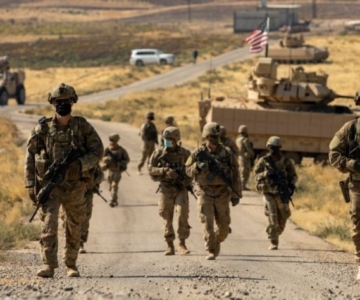
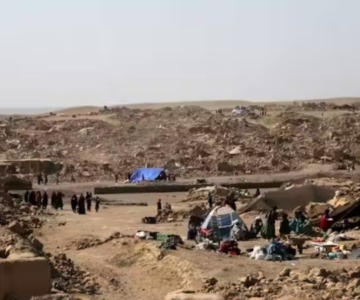
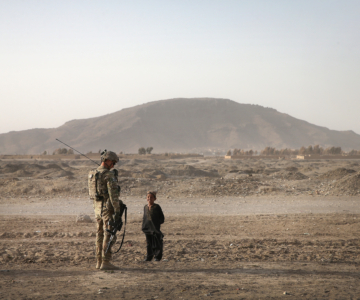
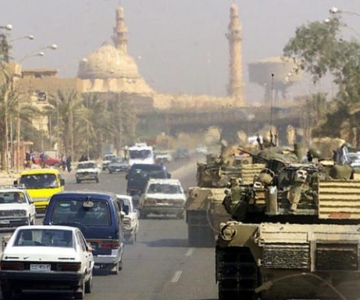
NATO Genocide in Afghanistan?
I hold no brief for the Taliban. They have enraged the world and brought much shame to Muslims and dare I say the great religion Islam as well. In fact, I detest their version of Islamic codes that they want to impose on the world through coercion.
However, the NATO battle against Taliban is not only barbaric in equal intesnity but it also dehumanizes them.
Mr Ali Khan of Washburn University School of Law sent his piece that is eloquent, and extremely well argued. Ali Khan says that in the name of the "war of terror," NATO forces are "committing genocide in Afghanistan by systematically hunting down and destroying" the Taliban, in violation of the terms of the Convention on the Prevention and Punishment of the Crime of Genocide... ![]()
These sentences are chilling:
Politicians, the armed forces, the media, and even the general public associate in the West the Taliban with irrational fanatics, intolerant fundamentalists, brutal assassins, beheaders of women, bearded extremists, and terrorists. This luminescent negativity paves the way for aggression, military operations, and genocide. Promoting the predatory doctrine of collective self-defense, killing the Taliban is celebrated as a legal virtue.."
THe West should remember that this will not solve the issue of terrorism or militancy - whatever one may want to name it - in fact such wars cause more pain, create more martyrs and legends and motivate people to resist - theyhave nothing to lose in the first place. And, the history of Afghanistan spells out some clear lessons for the current imperial powers.
Read his full article below.