W H Auden on Partition
Pakistani state: reform or perish
My op-ed for The NEWS
Raza Rumi
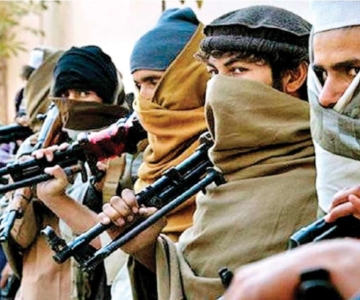
On the face of it, the Pakistani state with the clear endorsement of political parties and the majority of its citizenry is fighting a battle against militant Islamism. However, it is not as simple a formulation as it appears to be. The state is also cracking under extreme pressure for having lost its capacities and effectiveness a long time ago. The central tenet of state policy and implementation is adhocism that keeps a mammoth, oversized, under-paid and snail-paced elephant going. With Mughal and pre-industrial social structures reflecting in a colonial organisation, the Pakistani state is an unattended patient lying on an Elliotesque table, waiting for a surgery.
The fact that ragtag groups have the audacity to challenge the state and its mighty armed forces speaks a lot for where we stand today. That a relatively small number of bandits can wreak havoc and make us look like pariah country with nervous neighbours is by itself a parable of our times. Add to this the dysfunctional police that simply cannot discharge their functions let alone tackle the suicide missions launched by jihad laboratories. Services – health, education, water and justice – are abysmally delivered to the lucky ones who have access to them. Otherwise, it is pretty much a jungle out there. In a context where insecurity and lack of faith in the state pervades the body politique, the current war can accentuate the pressures on the state, leading to a near-collapse situation: assuming, rather charitably, that it still functions as an arbiter between citizen interest and the legitimate use of violence.
Brewing storms
Raza Rumi laments the tragedies of our times, and says that the state cannot be absolved of its responsibility to protect citizens against terrorism (The Friday Times)
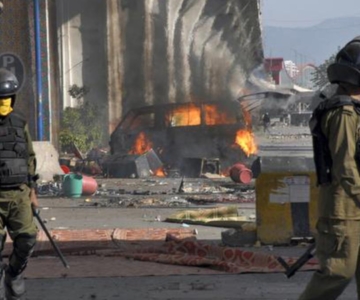
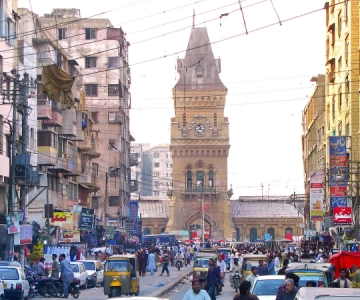
Lahore has finally been encircled by the layers and tremors of violence. If the events of March 2009 were not enough, there is now a concerted effort to create panic in the city. In the past few weeks, girls’ schools have been threatened that they would face the music for educating girls and promoting co-education. How can children and their middle-class urban parents survive these gruelling times? (pic left:Pir Baba’s shrine is now closed to visitors )
Ah, the deal
Much has been made of this NYT article on the class inequalities in NWFP that are fuelling the Taliban movement. However, I would like to ask where in Pakistan class inequalities do NOT exist. They are everywhere. By using this argument then the Taliban takeover becomes a natural conclusion as a social revolution is required everywhere to correct the exploitative structures and provide 'speedy justice'. Therefore, our political class has to rise to the occasion and provide the kind of leadership, delivery against their manifestos and restore the fading writ of the state.
Brutalities have swung public opinion in Pakistan
I have been quoted in this brave piece of reporting:
Girl’s flogging exposes Pakistani rift
Salman Masood (writing for The National)
ISLAMABAD // The video of a teenage girl being whipped in public by the Pakistani Taliban has riveted the country and has highlighted an ideologically strained and divided society faced with the growing threats of Talibanisation and extremism, analysts say.
The video, broadcast last week on Pakistani television and widely posted on the internet, showed a 17-year-old from the Kabal area of the restive Swat district. The Taliban publicly flogged her after she was accused of having an illicit relationship with a neighbour.
Lahore is burning
Raza Rumi
[reportedly] 27 dead and dozens injured - no respite for us.
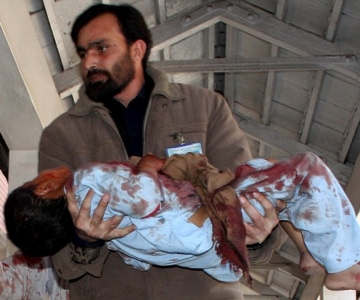
Once again, in less than a month Lahore has been ravaged by terrorists. Who said that Pakistan was a hub of terrorism - we are now the greatest victim of terror and militancy. The residents of Lahore are scared and the vibrant city seems to be enveloped in a mist of uncertainty and fear.
The Mumbai and later Lahore 3/3 model seems to be in vogue now. Extremely well trained commandos, with sophisticated weapons and not afraid of death are let loose on the society. The media is hysterical as well and following the Indian media's cue[s] is now a participant and embedded in the so-called operation.
Carlos Latuff’s artwork on Gaza
Brazilian cartoonist Carlos Latuff creates artworks that call on the world to condemn Israeli brutalities in Gaza. Carlos Latuff's statement:
I'd like to beg all viewers to spread this image anywhere, as a way to expose Israeli war crimes against Palestinians. Use it on t-shirts, posters, banners. Reproduce it in zines, papers, magazines, and make it visible everywhere...Thank you in the name of every suffering Palestinian.
Basharat Peer’s Curfewed Night
Book Review by Sumaira Samad
Curfewed Night is the memoir of young Kashmiri journalist Basharat Peer, recounting his youth in the troubled valley during the '80s and '90s. A harrowing look at the political strife and armed conflict that has torn Kashmir apart over the last 30 years, Curfewed Night is nothing if not personal. The people, places and events Peer describes are ones he encountered and experienced first hand. They are his parents and neighbours and friends. Yet, despite this intimacy, essential to any good memoir, Peer's narrative is refreshingly honest, frank and unbiased. His is no polemic, and sentimentality, self-pity and melodrama take a back seat.
Beginning in the years before the struggle, Curfewed Night invites the reader into a beautiful, peaceful mountain paradise where the regular, slow rhythms of village life make up one's existence. Peer lives a happy, uneventful childhood, surrounded by a loving family and tight knit community. But this apparent serenity, as it turns out, is merely the glassy surface, hiding a quagmire beneath. The shadow of Kashmir's turbulent history and unresolved conflicts never quite goes
Say no to war
by Raza Rumi
Little did we know that the imminence of war between India and Pakistan would once again become a possibility, howsoever faint or misguided? The ruling political junta in India is talking war following the media frenzy over Mumbai carnage. Once again it is time to be ‘tough’ with Pakistan. This is a surprise given that the interlude of peace under General Musharraf and all the offers of conflict resolution were either stalled by the red-tapism of Indian bureaucracy or a victim of political inaction. At home, we have the air-force planes hovering the wintry skies of Lahore causing consternation not only to the peaceniks, shrinking each day, but to the overwhelming majority of the common citizens. After all what have they got to do with the power game in Islamabad and Delhi, the media hysteria or even the terror cartels?
True that circumstantial evidence points to the fact that the metaphor of our times, Ajmal Kasai socially upgraded as the Urduised Kasab, is linked to the little Faridkot in the Pakistani Punjab. However, much of the international community has reminded India that there is little or no evidence of any direct involvement of the Pakistani state let alone its fragile civilian government. Yet, the rhetoric of unilateral strikes by the Indian foreign minister and now the venerable Sonia Gandhi is having the right effect here. Of war mongering, preparedness assessments and the much trumpeted security strategy through the nuclear option.
A new book on the Partition saga
Changing mindsets by SYED ALI NAQVI
One might cry out, humanity is dead if there was any, in disgust and disbelief after going through the events of the partition of the subcontinent. It is hard to believe that hatred and instinctual savagery can derive men to the edge of morality. Politics, religious bias and ethnicity do have the poison to make men so vulnerable that they get ready to put everything at stake.
Partition of the Indian subcontinent is seen as one of the most brutal and unfortunate events in the world history. There are incidents of mass murder by every religious and ethnic community of each other as well as rapes and abductions of women, looting and separation of families during the
Policy shifts not war
Raza Rumi
The dastardly attacks in Mumbai have irritated the old wounds and replayed the familiar, jingoistic tunes across the Indo-Pak borders. The Pakistanis, clamouring for friendship with their larger and problematic neighbour, have condemned these attacks in no uncertain terms. Who could be a worse victim of terrorism than Pakistan in these extraordinary times? Yet, the Indian media and sections of its establishment are quick to involve ‘Pakistan’ as the key perpetrator of the terror regime. This has obviously angered some and allowed a few Cold-War practitioners to call for self-defence and fighting with India till the last. The truth is that much of Pakistan does not want war. Hopefully, the Indian citizens are also not looking at war as a solution, or so it seems.
It is almost a cliché to state that war is not a solution to the current imbroglio despite the hysterical calls by the Hindu right to ‘neutralise’ Pakistan. The saner elements in India have already pointed to the implicit and deep-seated issues of misgovernance, short-termism and the mess of Partition that were neither carefully deliberated nor rectified during all these decades. The non-state actors in both India and Pakistan have gained ascendancy due to the power distance of the Raj induced steel-frame structures of governance. If there are dozens of districts in India that operate beyond the writ of the formal state, there are areas in Pakistan that are not just outside the scope of the formal state but in a state of rebellion due to the war on terror.
Confronting militancy
The unedited version of my op-ed published in the NEWS today:
It is time that the vocabulary introduced by the global imperial projects is changed in Pakistan. The infamous and rotten coinage – war on terror – needs to be trashed. It was constructed by an imbecile global leader, whose vision defies basic standards of human intelligence. And, in our case the frontline-state status is a passé title as well. The war has now entered the Pakistani consciousness, has consumed thousands and continues to destabilize the country to a point where its citizenry is insecure and bereft of hope. We have to now protect Pakistanis and Pakistan first. All else is secondary.
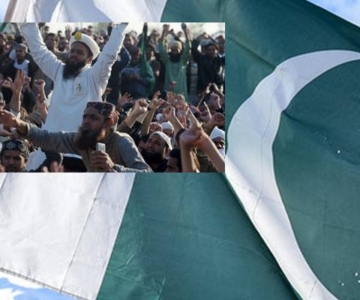
The gravity of the situation is however not shared by many. The rugged militants are artfully backed by the ‘urban Taliban’, a term that has emanated from Sindhi intelligentsia. There are political parties and their leaders who downplay the threat to Pakistan, and few journalists and TV anchors brazenly eulogise the Taliban bravery and, believe it or not, ‘sound’ governance. Even some on the residual Left term this extremism as an anti-imperial struggle. We are being reminded that the destruction of private property and daylight murders of innocent civilians are nothing but a ‘reaction’ to our policies and Western diktat. Ironically, a key religious party now train-marching across the country on a was ruling two of the war zoned provinces for nothing less than five years tacitly supporting Army operations as well as legitimizing a military ruler through a constitutional amendment.
History’s ghetto – (Geneva Camp, Dhaka)
My recent piece for the The Friday Times - about the bitterness and destitution in a Dhaka camp for Biharis
It was almost by accident that I visited the Mohammadpur Geneva camp in Dhaka – one of the largest settlements housing thousands of stranded Biharis in Bangladesh. On my last visit to Dhaka, my guide Ronny offered the possibility of getting the best bihari kebabs in town. He told me that his house was near the place and I could meet him somewhere close.
This was an extraordinary afternoon when the receding sun was converting the sky into a field of unimaginable colours that artists can only aspire to create through their limited palettes. Dhaka, the noisy, overcrowded megapolis can be enchanting at times, especially during late springtime when the Krishnochura trees (the Flame of the Forest) bloom all over with their fiery flowers. I almost cancelled the trip thinking that a walk in the park might be a better alternative to the usual South Asian gluttony. Quite soon, I arrived at the meeting point having rationalised my proclivity for indulgence.
Little did I know that the meeting point was nowhere but at the doorstep of Dhaka’s underbelly, the easy to ignore Bihari camp. Not until I had reached there had I realised how the wounds of 1971 were festering for hundreds and thousands of men, women and children who have waited for all these years to attain identity and citizenship of Pakistan. As if it were a curse, the Pakistani state soon forgot about their existence as its ethnic politics dominated the policy commitments of Bhutto. And for the Bangladeshis these were the “traitors” who continued to wave Pakistani flags when the vast majority of East Pakistanis revolted against the excesses and the might of Pakistan army following the infamous and mischievous army action of 1971.
In a few minutes I had all but forgotten about the famous Mustaqeem kebabs and parathas and forced Ronny to take me inside the camp. Very soon I realised I did not need any Bangla-speaking guide as the ghetto was Urdu speaking, and portraits of Pakistani leaders and flags could still be spotted despite the passage of three and a half decades. Ronny knew the locals and found his younger friends, child workers and idle youth who took charge of our little tour.
Shamed by guilt and excited by the real experience, I wandered the smelly, open-drained and dark streets of the ghetto. I have frequented other slums but this one was special for it reeked of the contemporary elite politics, bloodshed and cold inhumanity that Pakistanis are shy of confronting. The living conditions would put any half-concerned South Asian to shame. The homes for most of the families comprised tiny little rooms, with all the belongings and large families concentrated in the inner space. No proper toilets and water supply – as if civilization had taken a backseat here.
Lahore blasts fail to terrorise Lahoris
Posted by Raza Rumi
Having lived two days in Lahore as a 'resident', the three low intensity blasts are a rude reminder that there is a war all over the country..It does not matter whose war it is; what matters is that it is real and not a fantasy and that it continues to harm ordinary, unarmed citizens who perhaps have no hand in formulating policies in Pakistan.
The fodder of terrorism - home grown and external - are innocent victims, children and more often than not, the poor..
What can be done, is the issue. And, the answers to this ostensibly simple question are in short supply.