US assistance needs an alternative paradigm
An oped published by The NEWS
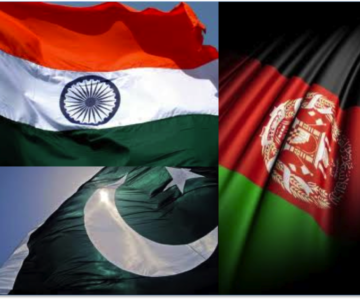
The gods are smiling at Pakistan's development industry once again. Such a moment was experienced almost a decade ago when Pakistan's strategic location made it into a hub of post-9/11 investments to secure the world peace. However, this time the United States of America has undertaken a historic step of aiding the civilian government and addressing the structural imbalances such as poverty, unemployment and lack of opportunity that quite rightly fuel militancy and promote factories of suicide bombers. Some would think this is naive in view of the imperial occupation of Afghanistan and the rather schizophrenic and counterproductive policies of the US elsewhere in the Muslim world.
This is not an invalid position taken by the rejectionists of US assistance. But this is an equally naive postulate for it is far more important to invest in civilian governance than hi-tech arms and domestic war machine. Haven't we reaped the disastrous
Contemporary Pakistani literature in the ‘age of terror’
I am posting the synopsis of my paper entitled Silhouetted Silences - contemporary Pakistani literature in the ‘age of terror’, that I presented at the SAARC writers' festival held in Agra, India (March 13-17, 2009). The full paper needs to be edited and referenced so that will posted a little later.
Round my neck,
from time to time, there was the hallucination
of a noose, and now and then, the weight
of chains binding my feet.
Then one fine day
love came to drag me, bound and manacled,
into the same cavalcade as the others (Faiz)
Since the invasion of Afghanistan by the United States and the global hysteria about ‘terror’ and ‘terrorism’, Pakistan has faced the greatest of existential challenges after its dismemberment in 1971. As a frontline ally of the US in the war on terror, Pakistani society and polity have been engulfed by growing militancy and acts of violence commonly branded as terrorism. Whilst there is no single definition of ‘terrorism’, the mainstream media and policymakers – in the service of imperial rhetoric aimed to justify and perpetuate the occupations of Afghanistan and Iraq – have established terrorism as the major threat to domestic and regional peace in South Asia. Acts of premeditated and organised violence in India, Pakistan and Bangladesh have thus assumed a central place in discourse on regional cooperation or its converse: the rivalries between the constructed nation states and their irresponsible power-elites.
In this milieu, the South Asian citizens have been the victims of violence, uncertainty and acrimonies that have only led to exacerbation of poverty, inequality, ascendancy of militarism and war-mantra. All of this is taking place when globalization is relentlessly seeping into domestic economies, cultures and social systems. Where does this leave the writers and poets of the region who grapple with the complex, confusing and fast changing social and political realities? Whilst the community of South Asian writers – traditionally the forbearers of intellectual and political movements – is beleaguered by corporate media industry, it has struggled to respond to challenges that events have created.
Remembering Benazir Bhutto
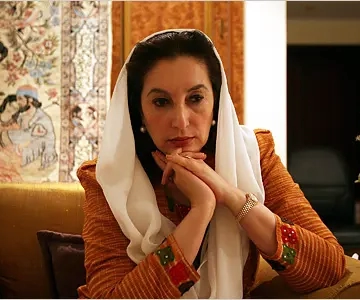
Raza Rumi retraces the bittersweet legacy of Benazir Bhutto (published in the Friday Times)
It was only yesterday that we were mourning for the loss of an icon of our times. The much loved, and passionately hated Benazir Bhutto whose tragic murder in broad daylight was the greatest metaphor of what Pakistan has turned into: a jungle of history, ethnicity and extremism. Little wonder that Bhutto’s worst enemies cried and lamented the loss of a federal politician whose life and times were as unique as her name. The populist slogan – charon soobon ki zanjeer (the chain of the four provinces, literally) could not have been truer than the most tested of axioms. As if her death were not enough, the state response was even more brutal. Why did she participate in public rallies? On that fateful day of December 27, 2007, why did she invite death by sticking her neck out – literally and metaphorically? This was tragedy compounded by invective and betrayal. After all, had she not received a tacit understanding from the then military President, General Pervez Musharraf?
The official machinery then went to work in a super-efficient frenzy. Within hours, the murder scene had been washed away, right opposite the Liaqat Bagh in Rawalpindi where Pakistan’s first Prime Minister, Liaquat Ali Khan, was also shot dead. If anything history repeated itself with a bang – only to restate that Pakistani Prime Ministers are dispensable accessories of the power game. The misogynistic thirst for blood-letting once quenched, patriarchy dictated that the autopsy of a woman became an issue of honour, confusion and violation of the law. How telling, that the laws of the land remain subservient to the imperatives of culture and tradition.
Within a day, Pakistan shook and the world also felt the tremors from an already stinking cesspool of violence, terror and global mischief. Many Pakistanis think these labels are of imperialist manufacture, reeking of hogwash. But the case has been made: Pakistan is a rogue and failing state and no one is safe.
mystical expressionism and Jamali’s art

Jamali is a contemporary artist of Pakistani origin. It was a delight to have discovered his artistic vision.
Mystical expressionism is a new mode of art-making that combines the scientific insights of our new age with humankind's ancient wisdom. Obeying the dream guide who set him on the path to art, Jamali himself has named his life's work Art & Peace.
The source of Jamali's art and his life lies in the primordial spiritual traditions of the East. In his birthplace Peshawar, the Asian crossroads city, Jamali drank in Buddhist, Hindu, and Sufi ideas of the sacredness of being. He spent years of his youth with a mysterious desert people who still respect the shaman's powers. But he also studied modern physics and engineering. Jamali is the first to incorporate the paradoxes of quantum mechanics into contemporary art.
Read more here