Posts Tagged Urs

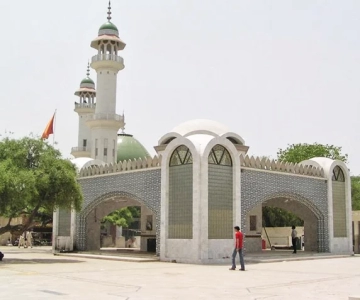
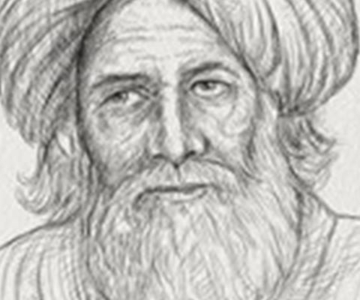
URS TODAY-Hazrat Baha-ud-din Zakariya (RA) Multan

21 January 2010

Iftikhar Chaudri’s excellent note on the great saint:
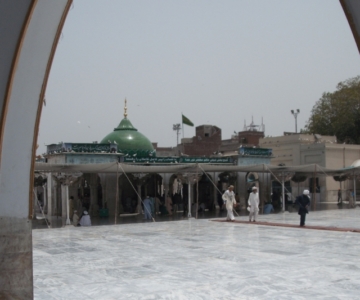
Hazrat Baha-ud-din Zakariya(RA) was a Sufi of Suhrawardiyya order (tariqa). His full name was Al-Sheikh Al-Kabir Sheikh-ul-Islam Baha-ud-Din Abu Muhammad Zakaria Al-Qureshi Al-Asadi Al Hashmi. Sheikh Baha-ud-Din Zakariya known as Bahawal Haq was born at Kot Kehror, a town of Layyah District near Multan, Punjab, Pakistan, around 1170.

His grand father Hazrat Shah Kamaluddin Ali Shah Qureshi al Hashmi arrived Multan from Makkah en route to Khwarizm where he stayed for a short while.In Tariqat he was the disciple of Renowned Sufi Master Shaikh Shahab al-Din Suhrawardi who awarded him Khilafat only after 17 days of stay at his Khanqaah in Baghdaad. (more…)

Urs celebrations at Ajmer

20 June 2009

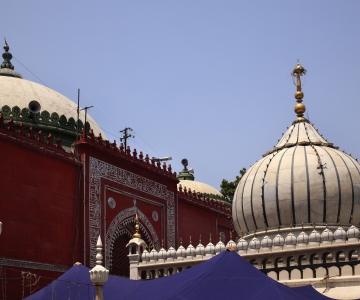
AJMER: The 797th Urs of the 12th century Sufi saint, Khwaja Moinuddin Chishti, commenced on Friday with the flag-hosting ceremony at the Buland Darwaza.

About 200 people from the Gori family of Bhilwara, headed by Fakrudin Gori, came to Ajmer. As per age-old traditions, the family is authorized to hoist the Urs flag.
(more…)

“I have never become less from dying”

18 December 2008

Rumi departed earthly life on 5 Jumadi II, 672 A.H (according to the Islamic lunar calendar; Dec 17, 1273 A.D., according to the Christian calendar). His death is referred to by Persians as “vesal”, meaning “union (with the Beloved)”, while in the Mevlevi Sufi tradition, the expression “shab-i aroos” (variously spelled “sheb-i arus”, etc., in transliteration) is used, a phrase meaning “the wedding night” — the night of Rumi’s marriage to the Beloved. (The Sufi tradition of referring to the death of a Sufi saint as “urs” — a wedding — predates Rumi, and is still used in Sufi circles.)

Over the next few days, the Sunlight mailing list will offer poems appropriate to the memory of Molana’s passing from this life, and touching on his teachings on the significance of death. (more…)

Sachal Sarmast’s sufi kalaam – live recording

17 September 2008

Cross posted from here

Sachal Sarmast's TombI recorded a few bits of performances of sufi siant Hazrat Sachal Sarmast’s kalaam (poetry) at his tomb in Daraza Sharif, some 50 kms outside Khairpur Mirs.

A trip to Khairpur cannot be complete without exploring many of its spiritual treasures. Khairpur itself is a calm, quiet city. You can feel the stillness of the air.

The Dating Season
I have heard that this stillness becomes slightly oppressive at around this very time of the year – the hot summers – when the area transforms into a gigantic dates bazaar. In the heat and stillness, dates – the prime agricultural product of Khairpur – come to ripen. Temporary shack cities spring up in the area as pickers and traders come in droves. Many use the by-products of the dates industry – the barks and the gigantic leaves – to make woven baskets, sweepers, and other handcrafted products.
Folk performer at Sachal Sarmast's tomb
Sufi Music – Live Recording at the Tomb
But I digress. I recorded several bits of music and this one is my favorite. I used an iRiver MP3 player+radio+recorder to capture the music. The night was calm and beautiful, and our small circle sat with their heads one their knees and eyes closed – in a state of absorption. in our group was Sindh’s popular activist Amar Sindhu, her faithful friend the gentle-natured Arfana Mallah, my journalist friend Afia, and our kind hosts the Joyos.

The Real Sufi was Standing Up
I shouldn’t forget to mention that I went to the tomb to learn more about “sufis.” I found that we had a (more…)

Urs of Bulleh Shah in Kasur

26 August 2008

The annual Urs of Bulleh Shah, the Punjabi mystic poet, commenced yesterday in Kasur yesterday. Bulleh’s poetry reflected his rejection of orthodox hold of mullahs over Islam, the nexus between the clergy and the rulers and all the trappings of formal religion that created a gulf between man and his Creator. A common theme of his poetry is the pursuit of self-knowledge that is essential for the mystical union with the Beloved. Among Bulleh’s timeless verse, I love this one (more…)

Lal Shahbaz Qalandar of Sehwan

2 September 2007

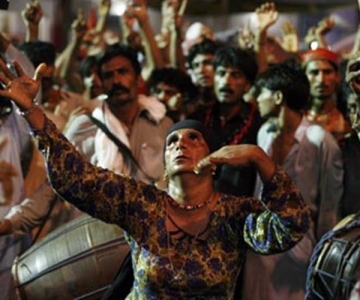
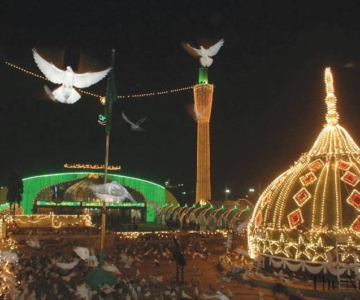
Lal Shahbaz Qalandar‘s shrine is full of devotees these days. His Urs is a major cultural event in Sindh. The Qalandar has followers across the Central and West Asia and his shrine and festivities around the Urs are an important part of Sindh’s spiritual and cultural landscape. The Qalandar was also a part of the wider Chishtia movement in the subcontinet in the twelfth and thirteenth centuries.

His shrine even today is an inclusive space for all religions, classes and castes.

This report paints an interesting picture:

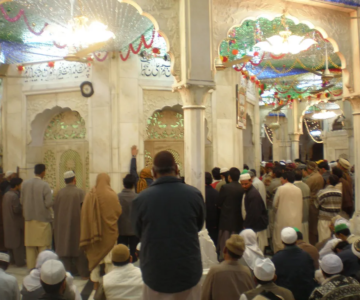
In the colourful crowd, Sunnis rub shoulders with Shias and Muslims eat and drink with Hindus, using same plates and glasses. The Sufi culture of the Subcontinent, which breaks the barriers of cast, colour and creed, is witnessed in its most magnificent and harmonious way during the celebrations.

Neither the power of crowns and kings nor the might of armies equals the force of a Qalandar.”

Source

Update: Sadly, I just read that there were deaths today due to sheer mismanagement and negligence at the shrine. What a pity! May God bless the souls of those who died in such unfortunate (and uncalled for) circumstances.