Pakistan: democratic governance is the only way forward
(Also published by The News) Given the average shelf life of any civilian government, it is almost miraculous that the incumbent government has survived and there are signs that its removal is not immediate. The longevity of civilian order has less to do with the inherent strengths of its style of governance or delivery of public goods that it had promised in its manifesto. The survival of this government is an outcome of the lack of options for the establishment as well as its international allies, notably the Western powers. Leaving the conspiracy theories and the excessive over-reliance of the analysts on the American factor, we can safely argue that the military establishment of Pakistan and its intelligence agencies has found themselves in a unique situation since the assumption of the presidency by Asif Ali Zardari.
The truth is that Pakistan People’s Party, an anathema to the civil-military bureaucracy, has assumed the most important and powerful offices that a civilian government can aspire for. Two years ago, when the Prime Minister Yousaf Raza Gillani was
“Hum Pakistani” launched in Lahore
Umbrella organization “Hum Pakistani” launched in Lahore to provide relief to IDPs
Pakistan faces grave challenges today.
Over 3.0 million Pakistanis have been displaced in the NWFP and adjoining tribal areas. The lives of these internally displaced persons (IDPs) have been affected by the ongoing militancy and counter-insurgency operation underway.
To address this challenge, a group of individuals and citizen organizations have come together to form an umbrella organization called Hum Pakistani, the first of its kind, to unite more than 20 NGOs and thousands of people with the common purpose of providing relief and services to the IDPs in Pakistan.
mujhay koray na maaro – a poem by Neelum Basheer
Abject surrender
April 13 will be remembered as a black day in Pakistan’s history. This is the day, future historian will write, when its pampered and stuffed-up political elites opted for a grand surrender. We have to live with the pain, infamy and ignominy of the December 1971 surrender at Ramna Park, Dhaka. That black moment was faced by a General who shall remain the face of Pakistan’s atrocities against its own citizens, the interference of an irresponsible, vengeful neighbour and the bravado of Bengalis who had been excluded from the privileged ‘martial race’ category by none other than Field Marshal Ayub Khan and his junta. This exclusionary act by the Field Marshal, later recorded in his memoirs, set the tone for an agenda of discrimination that was subsequently responsible for the second amputation of South Asia in less than 25 years.
Ah, the deal
Much has been made of this NYT article on the class inequalities in NWFP that are fuelling the Taliban movement. However, I would like to ask where in Pakistan class inequalities do NOT exist. They are everywhere. By using this argument then the Taliban takeover becomes a natural conclusion as a social revolution is required everywhere to correct the exploitative structures and provide 'speedy justice'. Therefore, our political class has to rise to the occasion and provide the kind of leadership, delivery against their manifestos and restore the fading writ of the state.
Civil society speaks
Zinda dilaan-e-Lahore say no to Talibanisation, reports Raza Rumi
Never before have we citizens been traumatised with an uncertain future and the knocks of destruction at our door as is the case in the year 2009. The celebrated twenty first century has, if nothing else, blown the contradictions of Pakistani society and state right into our faces. One hundred and eighty million people cannot be spectators to the imperial great games and a callous state that gropes in the dark trying to locate the ‘enemy’ outside, instead of looking into its own crevices and cracks.
Not that Lahore has been a haven of peace in recent years – the inequities, the crime levels have been on the rise. However, March 2009 witnessed two full-scale terror attacks in the city of gardens, shrines and a centuries-old tolerant culture. Media gurus were quick to involve India, RAW, the Americans, everyone under the sun except the enemy within. First the friends of Pakistan – the Sri Lankans and then the ill-equipped and vulnerable Police Academy at Manawan, were attacked by trained assassins who espouse a version of Islam that no sane Muslim can ever live with.The panic and fear generated by these two incidents had not ended when the brutal video of Chand Bibi getting lashed on the streets of Swat was released.
Brutalities have swung public opinion in Pakistan
I have been quoted in this brave piece of reporting:
Girl’s flogging exposes Pakistani rift
Salman Masood (writing for The National)
ISLAMABAD // The video of a teenage girl being whipped in public by the Pakistani Taliban has riveted the country and has highlighted an ideologically strained and divided society faced with the growing threats of Talibanisation and extremism, analysts say.
The video, broadcast last week on Pakistani television and widely posted on the internet, showed a 17-year-old from the Kabal area of the restive Swat district. The Taliban publicly flogged her after she was accused of having an illicit relationship with a neighbour.
Swat, Now
Yesterday's announcement that Zardari has made a deal with the TNSM and installed "Islamic government" in Swat is all over the news. I talked, briefly, with Jerome McDonald of Worldview today. My main point was that there exists a history - 1994, 1999, 2007 - of efforts to install a Shari-Nizam-e-Adl (Islamic Order of Justice) in Swat region. You can check my previous post on Swat to get a sense of this history, Akond of Swat.
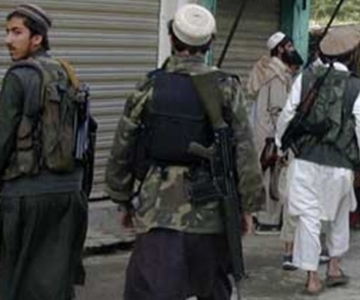
The Pakistani state policy of nurturing jihad factories over the decades is staring back at its architects, supporters and sponsors. Zafar Hilaly, a close aide of the late Benazir Bhutto, recently divulged in his memoirs that BB had confessed how the support to the Taliban was perhaps her most regrettable mistake. She could recognise it was more of a function of being out of the power ambit for nearly a decade. The compulsions of exercising power and playing it by the rules set by the national security obsessed state are perhaps germane to Pakistan's creation as an insecure postcolonial state that was neither prepared not committed to reverse the colonial modes of governance.