On Kabir, Bulleh Shah and Lalon Shah
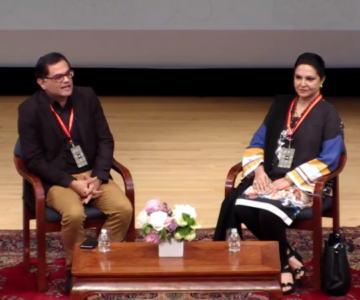
Not a great recording of my talk at Kuch Khaas, Islamabad.
This video is from the band Da Saaz. Dhruv Bilal Sangari is singing and Raoul Amaar Abbas has directed, produced and shot all the trippy light
This morning arrived with the shocking news of the recent barbarity played out in Pakpattan (formerly known as Ajodhan) when two criminals left bombs outside the shrine of Baba Farid. Eight innocent people, returning from morning prayer, lost their lives and about 2o were injured.
Baba Fariduddin Ganje Shakar’s shrine was the latest victim of terrorism. We have now entered into a decisive phase of the ongoing battle. What is the purpose of attacking a shrine other than the fact that it defines the historical reality of a peaceful and secular Punjab. Baba Farid is revered by Muslims, Sikhs and Hindus of the subcontinent. He is the leading light of Chishti school of Sufism in Indo-Pak subcontinent. Other than his status as a mystic, Baba Farid is the pioneer of modern Punjabi language as it was innovated and refined in the 12th century. The Punjabis across the world consider him as a cultural and spiritual master.
We condemn this brutal attack, this sheer cowardice and barbarity. It is time to fight against this menace of sectarianism and scaring the people of Pakistan. We have lunatics – now dangerous criminals – who are hellbent to destroy our centuries’ old culture.
I am reproducing sections of an article from Manzur Ejaz which narrates the contribution of Baba Farid to the Punjabi language and how times were a commentary on the changing social contours of the Punjab. (more…)
Book Review
The War that Wasn’t: The Sufi and the Sultan By Fatima Hussain Publisher: Manoharlal Publishers Pvt. Ltd, New Delhi Pages: 245
Last year I had a chance to meet Dr Fatima Hussain, a thoughtful and inspiring academic based in Delhi. We had all congregated in Agra for the SAARC writers’ summit and Hussain’s facility with subcontinental history, especially Sufism, was most impressive. This is when I found out that her book had just been published and my curiosity to read the book knew no bounds. The title of this book was even more intriguing: “The War that Wasn’t: The Sufi and the Sultan”. Essentially the title summarises a millennium of the societal resistance offered by the Sufis against state power as well as the embedded social relations in the Indian subcontinent.
Hussain teaches History at Delhi University and was educated at Lady Shri Ram College and Jawaharlal Nehru University, New Delhi. She has also authored The Palestine Question: A Historical Perspective (2003) and several scholarly articles. An interesting volume that she edited – Sufism and Bhakti Movement: Contemporary Relevance (2008) – perhaps explains the relative fluency of her familiarity with the subject. After her marriage to Pakistan’s leading Punjabi writer and activist, Fakhar Zaman, she is now delving into documenting the history, culture and morphology of Lahore. (more…)
You have fallen in love my dear heart
Congratulations!
You have freed yourself from all attachments
Congratulations!
You have given up both worlds to be on your own
the whole creation praises your solitude
Congratulations! (more…)
Rumi Foundation brings out a ‘Sufi journal’ called Hu. This year two of my essays have been published in the journal. I am posting the first one on Bulleh Shah.
***
If God was found by bathing and cleansing
He would have been found by frogs and fish
If God was found by wandering in the jungles
Stray animals would have found him
O Bulleh, the Lord can only be found
By loving hearts – true and pure…
(Translation by author)
Fifteenth century India witnessed a spiritual-cultural synthesis that was navigated by hundreds of yogis, Sufis and poets of India. Very much a people’s mobilisation, the Bhakti movement articulated a powerful vision of tolerance, amity and co-existence that is still relevant today. The powerful and soulful voices of Sufi poets of the sixteenth century therefore sing a shared tune: of love, rejection of formal identities based on caste, organized religion and class.
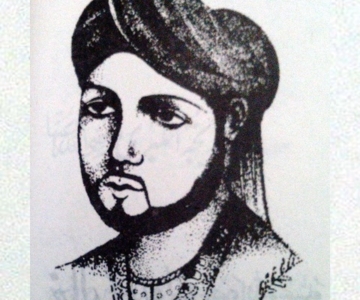
Bulleh Shah (1680-1758) of Kasur in Central Punjab is an extraordinary voice that provided a mystical message beyond caste, institutionalized religion and ideologies of power. Born in 1860 and named Abdullah Shah in a Syed family, he found a Murshid (spiritual master) in Shah Inayat who was an Arain (traditionally a non-landowning group). Bulleh’s family disowned him for trampling his caste and therefore identity in the rural context. However, Bulleh Shah, driven by Sufi ideals of equality of humans, rejected the formalized social identity framework based on hierarchies. The quest for knowledge, and the thirst for spiritual completion – what the masses perceive to be the domain of religion – was a pursuit beyond these divisive and hereditary conceptions of formal religion. When the orthodoxy declared him as an infidel, Bulleh replied: (more…)
Sufi Music and Expression of Devotion from the Muslim World is one among a rare festival initiated in Pakistan by Rafi Peer Theatre Workshop.Performance Schedule (more…)
Bulleh-a aashiq hoyiyon Rabb da,
Hoai Malamat Lakh Tenon Kafir Kafir aakhdey,
toon aaho aaho aakh
(Bulleh Shah)
Bulleh lover of G-d, a million blames occur
Your title is apostate, answer yes, yes, so it is.
(translation by JH)
My piece published by the Walkerly Magazine
The internet has demolished the iron curtain between Pakistan and India almost overnight, writes Pakistani blogger and writer Raza Rumi.
I don’t need to tell you about the multi-billion dollar enterprise that is the animosity between India and Pakistan. Suffice to say that the birth of a new nation-state on the Indo-Pak sub-continent was among the bloodiest of all time, entailing the migration of nearly 10 million of the wretched of the earth who had to find a new home.
Millions of deaths and three wars later, the bitterness refuses to go away and the interaction of the two countries’ populations has been very limited over 60 years. As a result, not all Pakistanis have the privilege of visiting India. I happen to be one of those who, by sheer coincidence, have been visiting India primarily for work or cultural exchange.
My forays into journalism coincided with my alter ego as a blogger. Purely by accident, I discovered the world of blogging, driven by the desire to post my pieces published by The Friday Times (TFT), a weekly Pakistani magazine. Trying to avoid creating a paid website, the blog template came to my rescue. (more…)
The soulful poetry of Khawaja Ghulam Farid (1845-1901) best represents the essence of Seraiki language. Diwan-e-Farid, a collection of the poet’s verses, happens to be an outstanding masterpiece of Seraiki mystical poetry that reaches the poetic excellence and transcendence found in the messages of Rumi and Iqbal in terms of exploring the metaphysics of knowledge and being.
Shahzad Qaiser has undertaken a major labour of love by rendering the Diwan-e-Farid into English and issuing another separate volume – The Metaphysics of Khawaja Ghulam Farid – that explores the vastness of meaning in Khawaja Farid’s poetry. It is rare these days to find a civil servant who can spare time to devote himself to the cause
of letters. In contrast to past traditions, present day civil service has become a vehicle for playing along with palace intrigues and extracting opportunities from the vicissitudes of power. Rejecting this trend, Qaiser appears to have shunned the ordinary power-mongering culture and delved deeper into the mysteries of divine love. Therefore, his endeavour to search for the inner meanings of Khawaja Ghulam Farid’s poetry has been eminently successful. These two volumes are highly readable and well-presented for specialists and lay readers alike.
Khawaja Ghulam Farid was born in Chachran, located in the south of present day Pakistan’s Punjab province. His spiritual ancestry was somewhere linked with the revered Baba Farid Ganj-e-Shakar of Pakpattan and hence he was named after the master saint of the family. It is the metaphysical understanding which talks of reality as the divine essence and removes the difference between Ahad and Wahad and one and many that constitutes the doctrine of ‘oneness of being’ (more…)
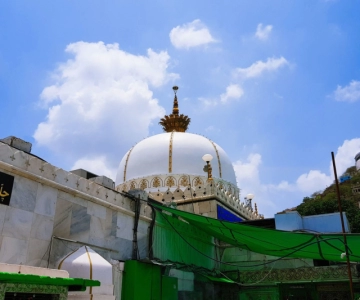
RAKSHANDA JALIL writing hereAJMER: The 797th Urs of the 12th century Sufi saint, Khwaja Moinuddin Chishti, commenced on Friday with the flag-hosting ceremony at the Buland Darwaza.
About 200 people from the Gori family of Bhilwara, headed by Fakrudin Gori, came to Ajmer. As per age-old traditions, the family is authorized to hoist the Urs flag.
(more…)
Published in The Friday Times (May 22 issue)
Raza Rumi discusses a new book on Sufism by Sadia Dehlvi
Getting a visa to India is a nightmare for ordinary mortals. My application was not very politely returned last month with technical objections. It was only when a letter from Harper Collins arrived that the High Commission rather efficaciously allowed me to enter enemy territory, that too with special instructions that cantonments were out of bounds. I guess the South Asian officialdoms have yet to discover that Google Earth has permanently altered the shape of boundaries and secrecy. (more…)
Recent Comments