No priests needed – search of a Pakistani identity
Raza Rumi wonders why we remain in search of a Pakistani identity
Half-truths are what we love to indulge in. One of the countless crimes committed by President Asif Ali Zardari is that he wears a Sindhi cap instead of a Jinnah cap. That by preferring a Sindhi topi and thundering at the occasion of late Benazir Bhutto’s death anniversary, he undermined his Pakistani identity, is truly mystifying. After all, what is a Pakistani identity and why is the Jinnah cap being elevated to the level of an article of national faith?
If anything, Mr Jinnah’s patronage of Muslim identity mark was an afterthought. His usual attire was a well-tailored pucca-sahib-like suit. It was only in the nineteen forties and that too close to India’s independence that Mr Jinnah started donning the Muslim nobility’s attire.
So what is this fuss all about? Constructing Pakistan’s ideology based on theological interpretation of a universal religion like Islam has been a carefully executed project of the Pakistani establishment and its shadows in the non-state domains. Such cliques have grown bigger, mushroomed and are now essential to our lived reality. Therefore lambasting of Zardari on not sporting a Jinnah cap finds public resonance and broad acceptability within the populous Punjab province where the Urdu press flourishes and finds readers and writers aplenty.
Raag Bhitai
Please play this fabulous rendition of Bhitai Raag at the dergha of Shah Abdul latif Bhitai in Sindh. I am completely in love with this piece.
The question of Pakistan’s provincialism
My piece that appeared in the 'political economy' section of The NEWS on Sunday.
The elites drunk on the status quo have expressed two major reactions to the proposal of creating another province within the mighty Punjab. First that this is akin to opening a Pandora's box when we are at war against terrorism. Second, that this is a planted controversy whereby the ruling PPP wants to harm the house of Raiwind; or a conspiracy by those who want to destabilise Pakistan's political system.
Both these arguments are spurious for nothing is more important for Pakistan than to make the federation work. The argument that the British drawn provincial boundaries are sacrosanct is as nonsensical as the reality of the Durand Line or for that matter the line of control itself. If anything, South Asia has experienced territorial and demographic shifts through the centuries. When resisted, the sweep of history has blown away the resistant elements and when carefully manoeuvred such shifts have resulted in commonsensical political and administrative solutions.
Pakistani state: reform or perish
My op-ed for The NEWS
Raza Rumi
On the face of it, the Pakistani state with the clear endorsement of political parties and the majority of its citizenry is fighting a battle against militant Islamism. However, it is not as simple a formulation as it appears to be. The state is also cracking under extreme pressure for having lost its capacities and effectiveness a long time ago. The central tenet of state policy and implementation is adhocism that keeps a mammoth, oversized, under-paid and snail-paced elephant going. With Mughal and pre-industrial social structures reflecting in a colonial organisation, the Pakistani state is an unattended patient lying on an Elliotesque table, waiting for a surgery.
The fact that ragtag groups have the audacity to challenge the state and its mighty armed forces speaks a lot for where we stand today. That a relatively small number of bandits can wreak havoc and make us look like pariah country with nervous neighbours is by itself a parable of our times. Add to this the dysfunctional police that simply cannot discharge their functions let alone tackle the suicide missions launched by jihad laboratories. Services – health, education, water and justice – are abysmally delivered to the lucky ones who have access to them. Otherwise, it is pretty much a jungle out there. In a context where insecurity and lack of faith in the state pervades the body politique, the current war can accentuate the pressures on the state, leading to a near-collapse situation: assuming, rather charitably, that it still functions as an arbiter between citizen interest and the legitimate use of violence.
This is a long war
Published in The NEWS
By Raza Rumi
This is a critical moment in our history perhaps unmatched for its severity and its brutal reality. The experiential nightmare that our country is passing through is perhaps unparalleled for the enemy is neither foreign nor fully identifiable. At the same time, never has there been a clear backing of a military campaign against domestic agents of subversion and anarchy. Forget the doctored samples of opinion polls, often conducted by foreign agencies. That by itself should make us ashamed for our proclivity to accept what others have to analyse and determine for us. Even ignore the fringe voices of dissent led by those who neither have credibility or sagacity to comprehend the existential crisis faced by Pakistan. The army has shown vision and displayed courage in tackling a menace that alas is a home-grown cancer due to our short-sighted strategies in pursuit of phantom depths. The battle to be won is now the country itself.
The political consensus of sorts that has accompanied the military action against the Taliban is also remarkable. Notwithstanding the spin doctors posing as analyst-anchors on the idiot box, the political class has recognised that its survival is embedded in the battle against extremism that predicates itself on elimination of sane, moderate and secular politics itself. This was the Swat model – blow the polity to bits and create a vacuum for a takeover. An age-old recipe employed by the hordes from Central Asia that invaded Muslim Delhi again and again during Sultanate and Mughal periods of our common histories which refuse to be partitioned.
Pakistan’s Sufis Preach Faith and Ecstasy
Read this great blog and was tempted to cross-post a few bits here:
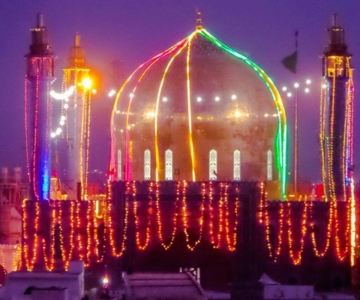
Every year, a few hundred thousand Sufis converge in Seh- wan, a town in Pakistan's southeastern Sindh province, for a three-day festival marking the death of Lal Shahbaz Qalandar, in 1274. Qalandar, as he is almost universally called, belonged to a cast of mystics who consolidated Islam's hold on this region; today, Pakistan's two most populous provinces, Sindh and Punjab, comprise a dense archipelago of shrines devoted to these men. Sufis travel from one shrine to another for festivals known as urs, an Arabic word for "marriage," symbolizing the union between Sufis and the divine.
Saving Kahoo Jo Daro
Read this impassioned appeal in the press - it also alerted me to the situation that haunts this ancient relic.
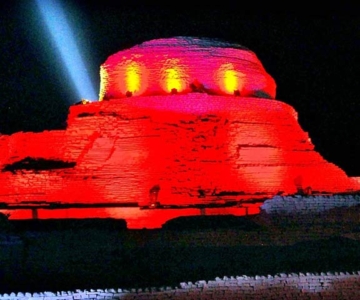
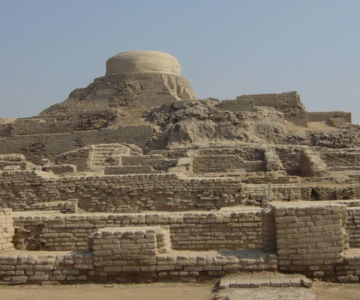
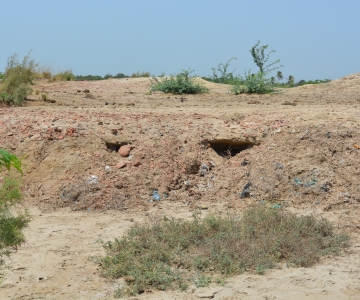
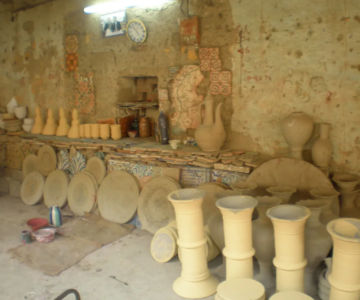
The city is built beside an old Buddhist metropolis of 4th century. There are remnants of the Stupa in ancient city known as Kahoo Jo Daro.
The Stupa on Moen Jo Daro , Kahoo Jo Daro and some other un-excavated Stupas can be classified as the lower Indus basin sites. They are different in art & material. Mud & terracotta is widely used instead of stone.
Casteism: alive and well in Pakistan
Published in The Friday Times, Pakistan (current issue)
It is a cliché now to say that Pakistan is a country in transition – on a highway to somewhere. The direction remains unclear but the speed of transformation is visibly defying its traditionally overbearing, and now cracking postcolonial state. Globalisation, the communications revolution and a growing middle class have altered the contours of a society beset by the baggage and layers of confusing history.
What has however emerged despite the affinity with jeans, FM radios and McDonalds is the visible trumpeting of caste-based identities. In Lahore, one finds hundreds of cars with the owner’s caste or tribe displayed as a marker of pride and distinctiveness. As an urbanite, I always found it difficult to comprehend the relevance of zaat-paat (casteism) until I experienced living in the peri-urban and sometimes rural areas of the Punjab as a public servant.
I recall the days when in a central Punjab district, I was mistaken for a Kakayzai (a Punjabi caste that claims to have originated from the Caucasus) so I started getting correspondence from the Anjuman-i-Kakayzai professionals who were supposed to hold each other’s hands in the manner of the Free Masons. I enjoyed the game and pretended that I was one of them for a while, until it became unbearable for its sheer silliness and mercenary objectives.
Abida Sings Shah Latif Bhitai
Naveed Siraj has sent the captioned audio link. The track is originally by Ustaad Manzoor Ali Khan who belongs to the Gwaliar Gharana. The track is called “Khutaa Keenjhar kinaray, tambo tamachee jaam ja” which NS has translated as: “At the banks of (Lake) Keenjhar, the King (Jam Tamachee) puts up the camp”. Here, we can visualise the mighty ruler of the land arriving at the Keenjhar with all the pomp and protocol and is received by poor mohanas. This track as is mesmerising.
While taking me through the audio journey, I learnt about Khuta Kinjhar kin (The King puts up camp at Keenjhar). This is Shah Latif’s Sur Nooree-Jam-Tamachee & it is simply describing the scene of the King Jam Tamachee falling for the simple fisherwoman Nooree.
So it starts with Shah giving voice to Nooree who cries out to the Samoo King "You are the supreme lord, I, a lowly fisherwoman, full of blemishes, pray do not foresake me and turn your back on me in view of our abject poverty.
Bombay – Nostalgic shop owners refuse to change name
Read the captioned story in the Times of India today- politics of war mongering can be such a disruptive influence on ordinary lives. In Pakistan, we have shops and businesses named as Bombay restaurant, Bombay cloth house and even a Bombay sweet house. And of course Hyderabad's premier bakery - the Bombay bakery as reminded by Kazim. I am posting an image of the Hyderabad outlet during my recent, fleeting visit to the city.
Deep down, the links continue despite 61 years of turbulence...
MUMBAI: Karachi Sweets in Mulund is not the only business establishment that bears the name of a Pakistani city. TOI came across at least seven shops, offices, halls and restaurants named after Karachi, Peshawar, Multan, Sindh and Lahore-most of the owners probably could never forget their hometowns that they had to leave during Partition.
"How can the MNS ban shop names like Karachi, Lahore or Sindh as most of the owners are refugees from Pakistan?'' said a shop owner in Bandra. "Even my shop is named after a Pakistani city and we have been running this business for the past 100 years. A lot of sentiment is attached to the name.'' He added that it was unfair to target innocent shop owners who have settled down in India and are patriotic. "We just carry a Pakistani city's name on our signboard. We are true Indians and not Pakistanis.''
Remembering Benazir Bhutto
Raza Rumi retraces the bittersweet legacy of Benazir Bhutto (published in the Friday Times)
It was only yesterday that we were mourning for the loss of an icon of our times. The much loved, and passionately hated Benazir Bhutto whose tragic murder in broad daylight was the greatest metaphor of what Pakistan has turned into: a jungle of history, ethnicity and extremism. Little wonder that Bhutto’s worst enemies cried and lamented the loss of a federal politician whose life and times were as unique as her name. The populist slogan – charon soobon ki zanjeer (the chain of the four provinces, literally) could not have been truer than the most tested of axioms. As if her death were not enough, the state response was even more brutal. Why did she participate in public rallies? On that fateful day of December 27, 2007, why did she invite death by sticking her neck out – literally and metaphorically? This was tragedy compounded by invective and betrayal. After all, had she not received a tacit understanding from the then military President, General Pervez Musharraf?
The official machinery then went to work in a super-efficient frenzy. Within hours, the murder scene had been washed away, right opposite the Liaqat Bagh in Rawalpindi where Pakistan’s first Prime Minister, Liaquat Ali Khan, was also shot dead. If anything history repeated itself with a bang – only to restate that Pakistani Prime Ministers are dispensable accessories of the power game. The misogynistic thirst for blood-letting once quenched, patriarchy dictated that the autopsy of a woman became an issue of honour, confusion and violation of the law. How telling, that the laws of the land remain subservient to the imperatives of culture and tradition.
Within a day, Pakistan shook and the world also felt the tremors from an already stinking cesspool of violence, terror and global mischief. Many Pakistanis think these labels are of imperialist manufacture, reeking of hogwash. But the case has been made: Pakistan is a rogue and failing state and no one is safe.
Sachal Sarmast’s sufi kalaam – live recording
Cross posted from here
I recorded a few bits of performances of sufi siant Hazrat Sachal Sarmast's kalaam (poetry) at his tomb in Daraza Sharif, some 50 kms outside Khairpur Mirs.
A trip to Khairpur cannot be complete without exploring many of its spiritual treasures. Khairpur itself is a calm, quiet city. You can feel the stillness of the air.
The Dating Season
I have heard that this stillness becomes slightly oppressive at around this very time of the year - the hot summers - when the area transforms into a gigantic dates bazaar. In the heat and stillness, dates - the prime agricultural product of Khairpur - come to ripen. Temporary shack cities spring up in the area as pickers and traders come in droves. Many use the by-products of the dates industry - the barks and the gigantic leaves - to make woven baskets, sweepers, and other handcrafted products.

Sufi Music - Live Recording at the Tomb
But I digress. I recorded several bits of music and this one is my favorite. I used an iRiver MP3 player+radio+recorder to capture the music. The night was calm and beautiful, and our small circle sat with their heads one their knees and eyes closed - in a state of absorption. in our group was Sindh's popular activist Amar Sindhu, her faithful friend the gentle-natured Arfana Mallah, my journalist friend Afia, and our kind hosts the Joyos.
The Real Sufi was Standing Up
I shouldn't forget to mention that I went to the tomb to learn more about "sufis." I found that we had a
Lal Shahbaz Qalander of Sindh
Visit to Sindh, Udero Lal (the story of the Dalits in Pakistan)
Yoginder Sikand writing at DNA
South-central Sindh isn’t quite a favourite holiday destination, but I spent a fortnight there while on a vacation in Pakistan. My host was the amiable, 70 year-old Khurshid Khan Kaimkhani, a noted leftist activist, author of the only book on Pakistan’s almost 3 million Dalits. Along with a friend, he edits the only Dalit magazine in the entire country.
Khurshid met me at the railway station in Hyderabad, Sindh’s largest city after Karachi. We drove to his small farm, on the outskirts of his hometown of Tando Allah Yar, a two hour bus-ride ahead. Several Bhil families live on the farm. “They are like my own family,” Khurshid says as Baluji, a tall, handsome Bhil man, manager of the farm, welcomes us in with a tight embrace.
Love Stories of the Risalo of Shah Latif – Noori Jam-Tamachee
Contribution by Naveed Siraj
The Risalo of Shah Latif is divided into chapters called Surs which are composed on the lines of musical notes. Each sur is based on symbols taken from stories which are part of Sindhi folklore. Sur Kamod in the Risalo of Shah Latif is based on the love story of Noori Jam-Tamachee:
Noori Jam-Tamachee
King Jam Tamachi was a Samo ruler of lower Sind at the end of the 14th century A.D. While on a shooting expedition, he chanced to see a fisher girl named Noori, falling madly in love with her and offered to married her, his love for her blind to the social disparity between them.
When they returned back to his capital, he was made aware of the general disapproval of this match. He merely observed that the detractors did not know her as much as he did. In order to display her character and appease the cynics, one day, he announced to his queens, that he would take one of them for a ride on an outing.
Lal Shahbaz Qalandar of Sehwan

Lal Shahbaz Qalandar's shrine is full of devotees these days. His Urs is a major cultural event in Sindh. The Qalandar has followers across the Central and West Asia and his shrine and festivities around the Urs are an important part of Sindh's spiritual and cultural landscape. The Qalandar was also a part of the wider Chishtia movement in the subcontinet in the twelfth and thirteenth centuries.
His shrine even today is an inclusive space for all religions, classes and castes.
This report paints an interesting picture:
In the colourful crowd, Sunnis rub shoulders with Shias and Muslims eat and drink with Hindus, using same plates and glasses. The Sufi culture of the Subcontinent, which breaks the barriers of cast, colour and creed, is witnessed in its most magnificent and harmonious way during the celebrations.
"Neither the power of crowns and kings nor the might of armies equals the force of a Qalandar."
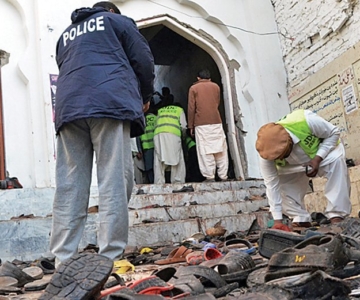
Update: Sadly, I just read that there were deaths today due to sheer mismanagement and negligence at the shrine. What a pity! May God bless the souls of those who died in such unfortunate (and uncalled for) circumstances.
Shah Abdul Latif Bhitai
If you are seeking Allah
If you are seeking Allah,
Then keep clear of religious formalities.
Those who have seen Allah
Are away from all religions!
Those who do not see Allah here,
How will they see Him beyond?
Let us go the land of Kak
Where love flows in abundance,
There are no entrances, no exits,
Every one can see the Lord!
There is no light nor day
Every one can see the Lord!
Those who love the Lord
The world cannot hold them.
Palaces do not attract them,
Nor women nor servants
Nothing binds them:
The renouncers leave everything behind.
A message came from the Lord:
A full moon shone
Darkness disappeared
A new message came from the Lord:
It does not matter what caste you are
Whoever come, are accepted.
Where shall I take my camel,
All is Light...
Inside there is Kak, mountain and valley,
The Lord and the Lord: there is nothing but the Lord.
(translated from Sindhi by D. H. Butani)
Legacy of Shah Latif is a recent book on Bhitai's life and works. In a recent book review, Anwar Abro writes:
"Two and a half centuries after his death, the celebrated Sindhi philosopher-poet Shah Abdul Latif Bhittai (1689-1752 AD) continues to inspire and influence the lives and activities of the peace-loving mystic souls of Sindh. Intellectual activities, social, political or ideological discourses are considered meaningless without the recitation of his poetry. Shah Latif has become an essential part of the day-to-day life of the people of Sindh so much so that everyone wants to find out more about his life, his principles and beliefs and discover the true interpretation of his mesmerisingly meaningful poetry..."
read more here
Picture above right is courtesy Himal Magazine
The city is built beside an old Buddhist metropolis of 4th century. There are remnants of the Stupa in ancient city known as Kahoo Jo Daro.
It irks me when I hear simplistic platitudes on Pakistani society, state or people. The heterogeneity of Pakistan is by itself an anthropologist's dream, a planners' headache and a sociologist's challenge. Despite the sixty-one years of drumming the uniform nationalism mantra, Pakistan's regions and their peoples refuse to toe the line sponsored by the official textbook masters. This is why one minute there is a delightful speech on being a Pakistani and the other minute caste, tribe or ethnicity raise their discrete heads and the linear formulae dissolve into thin air.