Jahane Rumi In search of the unsearchable: O, my soul! where would you find your house?

15Mar/100

I am a child of love

I profess the religion of love,
Love is my religion and my faith.
My mother is love
My father is love
My prophet is love
My God is love
I am a child of love
I have come only to speak of love

- Jalaluddin Rumi

18Feb/100

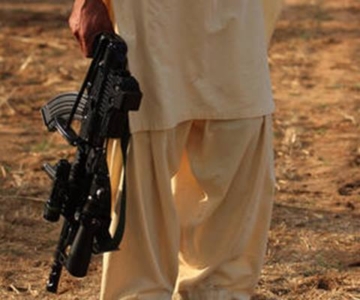
Killing Shias is not jihad – stop this carnage in Pakistan

This is an old article – When the state kills – authored by Pakistan’s eminent intellectual Khaled Ahmed. It remains relevant for what is happening today – the carnage in Karachi and targetted killing of the Shia minority is a cause for concern for  Pakistanis who want the country to become a plural, tolerant and progressive society for all its citizens irrespective of their faith, caste or creed.
Many of us - who identify themselves as neither Sunni nor Shia (only Muslims) - strongly condemn the Karachi incidents and will continue to raise voice against extremism and sectarianism.
14Feb/1015

Mazhub – a voice for peaceful South Asia

In 2006, I read this brilliant poem by Brijinder"Sagar (found here on Adnan's brilliant site). I had kept it with me for an adequate translation. I have been unable to do justice and therefore I will rework my draft to post here. In the meantime, this poem will be accessible to Urdu-Hindustani speakers. This poem is about bigotry and extremism in the name of religion that has overtaken India as well as other South Asian countries. Pakistan is no exception and Bangladesh is also witnessing the rise of Islamism, though not as alarming as India and Pakistan. Sri Lanka has also seen ethnic warfare, different in its manifestation but akin to the violence and death that comes in its wake. In such a charged environment, voices for peace are delightful.

Mazhub
Har haath main mazhub kay parcham
Har aaNkh main wehshat ka junooN
Lub pay haiN nafratoN kay sholay
KhyaaloN pay ik aawaaraa fusooN
Ik zehar ka baadal fazaa pay chaayaa hai
Khumaar-e-ghaphlat phir zehanoN pay aayaa hai
Har nighaah main bus ik swaal ki bu
Hindu ki aulaad hai ya muslim hai tu
Tarak subnay kiyay viraasat kay khazaanay
Woh Nanak ki wehdat Kabir kay taraanay
KahiN talwaaraiN to kahiN trishool aayaay
SadioN ki pehchaanaiN sub bhool aayaay
Bhai ko bhai kay qatl ki pyaas
NamooN har samt yahi ghurbat-e-ahsaas
Lahu phir apnay hi lahu say laraa hai
Waqt phir sehmaa saa ik aur ja kharaa hai
Abhi to bhray bhi na thay Zakhm tam_ddun kay
Abhi to bhoolay bhi na thay woh aleel ayaam
DariNda insaaN main uthaa tha yeh abhi kal ki baat hai
Aadam khud bika tha yeh abhi kal ki baat hai
Aur aaj phir utraa hai afreet-e-wehshat
Aur phir say lagaayay hai chehraa mazhub ka
Phir say hai hujoomoN pay ik shauq-e-bekaar
Phir say banaa mazhub bahaanaa nafrat ka
Kab talak paighaMbar yooN neelaam karogay?
Kab talak latkaingay masihay saleeb-e-yaas par?
Kab talak pinhaaN insaaN qattl hogaa?
Kab talak pashymaaN karogay apnaa wazood?
Kab talak?
9Feb/103

Muslimness – shifting boundaries

Muslimness is an elusive state of being. There are watertight strictures of the theological identity defined by men, interpreted as the Sharia, on the one hand; and the broad political and cultural sense of the self, on the other. Identity, in any case, is a messy affair: shifty, shifting and eventually, imagined. While 9/11 placed Muslims at the centre stage of global politics, the broth had already been simmering in the cauldrons of biased academe and pop reality mirrored through the blood-thirsty lens of corporate media.

So what is it to be a Muslim? An inflexible bag of rituals? Or a cultural sense of belonging or a deeper dogma ingrained in young minds? I have never considered myself anything but a believer, a ‘practicing Muslim’. This has never been at variance with my secular and inclusive pretensions, despite the fact that the clergy in my country considers secularism akin to atheism, a sort of mirror image of the Pakistani political foundation. The clerics translate secular as la-deen , at best irreligious, and at worst, godless.

Ironical that this business of religious identity is articulated in a land that was the crucible of the secular Indus Valley civilization, non-militant Buddhism and a peculiar version of South Asian Islam that spread via the Sufi khanqahs and was a sort of amalgam of the Central Asian with the ancient South Asian. Even more ironical is the reality, neglected and veiled, that lived Islam is located around dargahs , tribal codes and customs which are irreligious in their own way. But who cares? Referred to as the world’s most dangerous country, Pakistan, according to the pundits of global opinion, is a haven for Islamic terrorists. Collateral damage, therefore, is kosher and a necessity to undo the unstated part of the ‘axis of evil’.

Labels and more labels. On the global shelves such products sell well and work in favour of a war machine hungry for energy resources, territory and blood.

7Feb/104

Chal Way Bullehya Chal O’thay Chaliyay – Let’s go where everyone is blind

Chal Way Bullehya Chal O’thay Chaliyay
Jithay Saaray Annay
Na Koi Saadee Zaat PichHanay
Tay Na Koi Saanu Mannay
***
O’ Bulleh Shah let’s go there
Where everyone is blind
Where no one recognizes our caste (or race, or family name)
And where no one believes in us
***
Ab to jaag Musaffir pyare
Raeen gayi latke taare
Kar le aj karni da weera
Mod na ho si aawen tera
***
Awake, dear traveller, you've got to move on.
Trailing its stars, the night is gone.
Do what you have to do, do it today.
You will never be back this way.
Your companions are calling.
Let us go.
***
Awake, dear traveller, you've got to move on.
Trailing its stars, the night is gone.
A pearl, a ruby, the touchstone and dice
With all that you thirst by the waterside.
Awake, dear traveller, you've got to move on.
Trailing its stars, the night is gone.
Below a modern rendition of these verses by the inimitable Meekal Hasan Band. They have been instrumental in reintroducing Sufi poetry among the youth of our country.
23Sep/090

Pakistani blasphemy laws should be repealed

This is a pertinent post on my blog-zine Pak Tea House. Readers should take a closer look.

It is therefore quite clear that what is purported to be some sort of a defence against blasphemy has become a vehicle of oppression and persecution of minorities in Pakistan.  These laws are the most draconian in the world and have no justification even in Islamic jurisprudence.   It is time-  as one Pakistani MNA said- to repeal them for they have done more harm to Pakistan, Islam and humanity then good.   Indeed they haven’t done any good but have only reinforced negative stereotypes about Islam

20Sep/096

Conversations with History

This is quite an interesting account. Am posting it for the readers - Eid Mubarak

[youtube=http://www.youtube.com/watch?v=kfAGnxKfwOg]

18Sep/095

Virginia synagogue doubles as mosque for Ramadan

This news item courtesy The Associated Press made a lovely reading...
On Friday afternoons, the people coming to pray at this building take off their shoes, unfurl rugs to kneel on and pray in Arabic. The ones that come Friday evenings put on yarmulkes, light candles and pray in Hebrew.
The building is a synagogue on a tree-lined street in suburban Virginia, but for the past few weeks - during the Muslim holy month of Ramadan - it has also been doubling daily as a mosque. Synagogue members suggested their building after hearing the Muslim congregation was looking to rent a place for overflow crowds.
"People look to the Jewish-Muslim relationship as conflict," said All Dulles Area Muslim Society Imam Mohamed Magid, saying it's usually disputes between the two groups in the Middle East that make news. "Here is a story that shatters the stereotype."
16Sep/091

Out, Out, Damned Atheists – Karen Armstrong weighs in on God

By Lisa Miller | NEWSWEEK
Published Sep 11, 2009
From the magazine issue dated Sep 21, 2009
The latest salvo in the war between the atheists and the believers comes from the doyenne of religious intellectual history, Karen Armstrong. Her tone is one of high-minded irritation. Her argument is compelling. To oversimplify: "faith" and "reason" are not like political parties. You don't join one after having been convinced via argument of its validity. What the Greeks called logos and what they called mythos define two different aspects of the world and our experience in it: the knowable and the unknowable. You can believe in both. The bridge between them, Armstrong submits, is not the snarky badinage or righteous browbeating that has so defined faith-versus-reason debates of late, but practice. By practice she means not the occasional yoga class but genuine, difficult, repetitive practice, which over time gives the practitioner—even the reasonable practitioner—glimpses of the transcendent or the divine. Call it God.
The Case for God, which comes out this month, is Armstrong's 19th book, and it rides the crest of a wave of books meant to dismantle the arguments of the atheists Sam Harris, Christopher Hitchens, and Richard Dawkins. Armstrong is uniquely qualified to write on this subject, for having been a Roman Catholic nun, she then rejected faith. "For many years, I myself wanted nothing whatsoever to do with religion," she writes. "But my study of world religion during the last twenty years has compelled me to revise my earlier opinions…One of the things I have learned is that quarreling about religion is counterproductive and not conducive to enlightenment." Armstrong shows that for most of human history, "faith" and "reason" were not mutually exclusive and that even today all kinds people believe in a God that in no way resembles the God the atheists despise. "Jews, Christians, and Muslims all knew that revealed truth was symbolic, that scripture could not be interpreted literally, and that sacred texts had multiple meanings, and could lead to entirely fresh insights," she writes. "Revelation was not an event that had happened once in the distant past, but was an ongoing, creative process." This critique has not been articulated often or clearly enough: the new atheists are, in effect, buying into one particular modern, Western fundamentalist notion of God in order to make God look ridiculous and knock him (or her or it) down. For them to fail to concede that what William James called "religious experience" is far more complex than what certain contemporary believers preach is extremely disingenuous.
9Sep/090

Religion of the heart

RAKSHANDA JALIL writing here
Sufism, often considered exotic and esoteric, belongs to ordinary people of faith.
Sufism: The Heart of Islam; Sadia Dehlvi, 2009, HarperCollins, p 384
By the early thirteenth century Delhi had emerged as the beating heart of the Sufi movement that had sprung in Central Asia and swept across much of north India. Sultan Shamsuddin Iltutmish (1210-35) had set himself up as the ruler of Hindustan and e stablished his capital at Delhi. Central Asia and Iran had fallen to the Mongol hordes and a virtual exodus had begun — of scholars, holy men and wandering
mendicants. While Ajmer and Nagaur remained important centres of the Chistiya silsila, Delhi was fast gaining popularity as the axis of the Islamic east. And it was to Delhi that they came – to set up hospices, to gather the faithful around them, and to spread the word about a new kind of Islam. In the years to come, the Islam of the Sufis spread
29Jun/090

Sacred Kerala–Transcending Communal Boundaries

Book Review


Name of the Book: Sacred Kerala—A Spiritual Journey

Author: Dominique-Sila Khan

Publisher: Penguin, New Delhi, 2009

Reviewed by: Yoginder Sikand


The southern Indian state of Kerala has a unique population mix. A little less than half of Kerala’s inhabitants are Hindus, who belong to various castes. The rest are Muslims and Christians, in roughly equal number, and a miniscule number of Jews, who form India’s oldest Jewish community. In contrast to much of north India, inter-community relations in Kerala have always been fairly harmonious, although the situation is beginning to change today. At the popular level, economic and social ties and inter-dependence between Kerala’s different religious communities have given birth to a strong sense of Malayali identity that transcends religious boundaries. This has been facilitated by the use of the Malayalam language by all of the state’s communities as well as a long-standing tradition of religious overlapping or shared religious identities, which is what this fascinating book is all about.

13Apr/091

Bauls of Bengal

Found this translation and music video here

The famous Bengali author Rabindranath Tagore was influenced by Bauls. He translated the following Baul verse into English in his book The Religion of Man. The quote highlights the mystic Sufi focus on celestial love:

Where shall I meet him, the Man of my Heart?
He is lost to me and I seek him wandering from land to land.

I am listless for that moonrise of beauty,

which is to light my life,
which I long to see in the fulness of vision
in gladness of heart.

3Apr/095

GOD-FORSAKEN RELIGIONS

A poem by Cecil Rajendra

Any religion
that sidelines
excludes
any one.

Any religion
that does not
open doors to
every one.

Any religion
that targets
fingerpoints
some one.

Any religion
that claims
it’s “the one
and only one”.

Any religion
whose language
is “we” / “they”
and not “us”.

All such religions
run against God
who is Oneness
& abhors divisions.

28Mar/091

Nightingale of Peshawar falls silent

My piece published in The Friday Times

The bombing of Rehman Baba’s shrine is more proof that we are slipping, inch by inch, into an abyss. It is as if the soul of Peshawar, and by extension that of the whole of Pakistan has been scarred by those barbaric bombs and grenades. Among other ironies of the situation, this one stands out: the late Baba was instrumental in disseminating the message of Islam in the Khyber valley and beyond. And today the zealots destroy his shrine for being un-Islamic! A poet of love and tolerance, of amity and forgiveness to be treated in this manner displays how brutal we have become as a society and how fissured our state is. Otherwise a successor of a mighty steel frame, the indigenised state has surely given up to the hordes that are now hell bent on destroying Pakistan.


Rahman Baba was born in 1632 A.D. at Bahadur Kala, a village close to Peshawar. The Pashtuns hold his work in high esteem and his rank in Pashto poetry matches that of Hafiz Shirazi in Persian literature. The simple, down to earth and universal messages of his poetry have been revered by the Pashtuns as well as many adherents of the Sufi creed in South Asia and elsewhere.

In Afghanistan too, Rehman Baba was an icon and his muse was referred to as the ‘heart-beat’ of every Afghan. A friend told me how Saidu Baba, the famed saint of the now destroyed Swat valley, remarked that if the Pashtuns were to pray from a book other than the Holy Quran it would definitely be Rahman Baba’s work. But nothing describes Baba better than what Janes Enveldson had named him: the “Nightingale of Peshawar.” Alas, nightingales do not sing in gardens that have been ruined by long, harsh winters or other cataclysms such as hatred and violence.

19Apr/084

Islamic poster art in India – and South Asia

This piece entitled, My Name is Green, published in the weekly Outlook India traces how "forged in the cultural ferment of a century ago, Islamic poster art in India thrived on the frontiers of taboo." The author is Shruti Ravindran, who has obviously undertaken a lot of research and also published some great samples of such posters. That Islam in South Asia acquired and adapted the local flavour and modes of social and spiritual interaction is well known.

While reading this piece, I also recalled seeing similar eclectic posters in Pakistan in my childhood before the puritanism of General Zia ul Haq engulfed the country and Wahabi variant of an exclusive and suspicious man made 'faith' deepened its presence, well at least in the public domain of representation.

This piece looks at some of these aspects through the popular art form. Read and enjoy - full text has been posted below courtesy the intelligent Outlook.

13Apr/082

Khusrau, Meera, Kabir: The Fluid Self

An essay contributed by the celebrated singer,writer and spiritualist Vidya Rao

I often ask myself the question why I choose, above all things, to sing, and then to sing a traditional gayaki like thumri. The images that are gleaned from its poetic texts are so often open to misunderstand: pining nayikas, heartless piyas, rakish Krishnas, divine Rams. I ask myself that question again today when tradition is in danger of being smothered by sectarianism, communal violence and a whole culture lies bleeding.
I turn to the music itself for my answer. It has never failed me before it does not fail me now.

7Dec/071

Hazrat Ali’s letter on governance and citizenship

The common stories about Islam or Muslims have to do with the chopping of arms and killing of infidels. We are told that Muslims had a great empire, after many conquests and subjugation of the 'infidels'. And what have we learned in the textbooks: Ali (AS) was a brave general with a legendary sword? Have we heard this:

Do not close your eyes from glaring malpractice of officers, miscarriage of justice and misuse of rights, because you will be held responsible for the wrong thus done to others. In the near future, your wrong practices and maladministration will be exposed, and you will be held responsible and punished for the wrong done to the helpless and oppressed people.

Fahmida Riaz is Pakistan's premier female poet. She became a sensation in the early 1970s when her bold, feminist poetry created a stir in the convention ridden world of Urdu poetry. Riaz was expressive, sometimes explicit, and politically charged. She created a completely new genre in Urdu poetry with a post-modern sensibility. Later, she remained prominent with her defiance of General Zia's martial law, her exile to India and the continuous evolution of her fiction and poetry.

Since the late 1990s, Fahmida Riaz has discovered Jalaluddin Rumi, the 12th century Turkish poet and jurist, and now an international celebrity. Her recent publication “ Yeh Khana-e aab-o-gil" is a unique translation of Rumi's ghazals in the same rhyme and meter. Since her navigation of the Rumi universe, she has explored another dimension of her individual and cultural consciousness, where the influence of Islamic scholars and Sufis is paramount.

Last winter, she read a letter by Hazrat Ali bin Abi Talib (AS), the fourth Caliph and son-in-law of the Prophet Mohammed (PBUH), while browsing a translation of Nahaj ul Balagha (a collection of sermons, letters and sayings of the Caliph). Later, in an email, she related to her friends across the globe how angry she felt for not knowing about this letter all her life, and how the real jewels of Muslim history were concealed generation after generation.

At the time she was preparing for a Conference at Heidelberg, Germany. Lo and behold, she made a dramatic speech about Ali's (AS) letter at the international moot. Thereafter she showed the text of the letter to Dr Patricia Sharpe, a US-based writer who was impressed by it and immediately paraphrased and uploaded it to on her website under the title Good Governance Early Muslim Style.

Ali (AS) had written a comprehensive letter  articulating principles of public policy for the guidance of the newly appointed Governor to Egypt, Maalik al Ashtar. In this fascinating directive, Ali (AS) advises the new governor that his administration will succeed only if he governs with concern for justice, equity, probity and the prosperity of all. There is a timeless applicability of this famous letter. Selected passages from the text are reproduced below:

Religious tolerance: Amongst your subjects there are two kinds of people: those who have the same religion as you [and] are brothers to you, and those who have religions other than yours, [who] are human beings like you. Men of either category suffer from the same weaknesses and disabilities that human beings are inclined to; they commit sins, indulge in vices either intentionally or foolishly and unintentionally without realising the enormity of their deeds. Let your mercy and compassion come to their rescue and help in the same way and to the same extent that you expect Allah to show mercy and forgiveness to you .

10May/070

Why I love Pakistan? Top 5 reasons

The Civilization

Pakistan is not a recent figment but a continuation of 5000 years of history: quite sheepishly, I admit, that I am an adherent of the view held by many historians that the Indus valley and the Indus man were always somewhat distinct from their brethren across the Indus. I do not wish to venture into this debate but I am proud as an inheritor of Harappa, Mohenjo-Daro and Mehrgarh (not strictly in this order) and this makes me feel rooted and connected to my soil as well as ancient human civilizations and cultures.

It also makes me happy that no matter how much the present-day media hysteria about Pakistan (and “natives” in general) diminishes my country and region, nothing can take away this heritage and high points of my ancestral culture. Pakistan is not just Indus civilization it is a hybrid cultural ethos: the Greek, Gandhara, the central Asian, Persian, Aryan and the Islamic influences merge into this river and define my soul how can I not be proud of this?