Posts Tagged Raza Rumi

Final round of survival? It’s do or die

31 January 2012

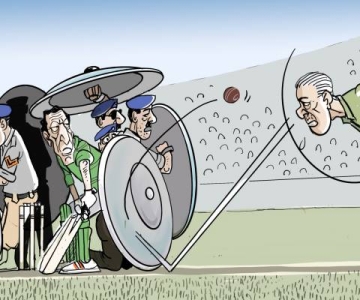
Tehelka story last week: Government in final round of survival game: It’s do or die

Either the government will withstand the pressure from the unelected arms of the state or will cave in, says Raza Rumi

Pakistan’s beleaguered civilian government has entered into the final round of its survival game. This is not a new ‘game’ as the transition to democracy has been jeopardised from the very start. In 2007, the military junta started the process of negotiating with the Pakistan People’s Party (PPP) and the then Army chief, General Pervez Musharraf, and his trusted associate General Ashfaq Parvez Kayani shaped a power-sharing arrangement with late Prime Minister Benazir Bhutto. The ‘arrangement’ was formalised in the shape of a law—National Reconciliation Ordinance (NRO)—which inter alia intended to drop dozens of cases against PPP’s leadership and politicians. It should be noted that many of these cases were pending in courts for over a decade and due to lack of evidence or faulty prosecution, there were no convictions.

Politicians in Pakistan have faced ‘corruption’ charges since 1950s largely as an instrument to keep them in line and expand the space for the unelected executive i.e. the civil-military bureaucracy, which has ruled Pakistan for the longest period of time in its chequered history. The judiciary historically acted as a subordinate ally of the executive legitimising coups, convicting and debarring politicians and enabling a praetorian state to run the country.

Since 2007, the judiciary has evolved as a powerful institution due to the popular middle-class movement which contributed to the restoration of the deposed Judges and paved the way for Musharraf’s ouster in 2009. The period between 2007 and 2009 was when the urban middle class’ (led by the lawyers) aspirations (more…)

Pakistan Floods: Making the same mistakes?

9 July 2011

Rarely have countries been so incapable of responding to challenges, as is the case with Pakistan. Last year, the worst flood in our historyhit millions of poor Pakistanis, wiping away their livelihoods and depriving them of their dwellings and, in many cases, land entitlement. It was due to the resilience of the Pakistani people thatsome post-flood rehabilitation took place. Like much else in the country, people took their lives into their own hands and the state, at best, was a secondary player. Media focus remained on the politicisation of the response to the natural disaster and making heroes out of army battalions which, at least on paper, are subordinate to the elected executive.

What has happened since then? I was intrigued to note an advert a month ago in the national newspapers wherein a multilateral agency was hiring a programme manager for ‘early recovery’ after floods! Multilaterals reflect the speed and bureaucratic labyrinths of the government and, therefore, this little notice seemed farcical at best. Forget early recovery, we are now back in the monsoon season. And the federal and provincial governments appear to be as ill-equippedas before.

I was part of a team that undertook post-flood assessment and had a chance to interact with key stakeholders last year. The attitudes of some high level public officials are a subject of a satirical book rather than this short piece. In summary, their assumption was that the poor were resilient and knew how to deal with disasters and that life goes on. Several of the recommendations that we offered remain unimplemented, chiefly those relating to local governments. (more…)

More on the Pakistan Wikileaks- US Operations Constrained by India-Pakistan Relations

16 June 2011

My interview which has appeared on Wikileaks Central.

Pak-Usa

The Dawn Media Group in partnership with WikiLeaks has been releasing the “Pakistan Papers.” Thus far, some of the revelations include the following: US was concerned that Pakistan would oppose its policies at the United Nations; US was worried Pakistan would purchase oil from Iran, allowing them to get a foothold in Pakistan; Pakistan’s government was upset with US funding for the Pakistan military, which led to increased civil-military tensions; Pakistan’s military asked for continued drone coverage; the US has had troops deployed on Pakistan soil; Saudi Arabia and the UAE have been financing jihadist groups in Pakistan and the US did not provide Benazir Bhutto with proper security. (more…)

My session with Intizar Husain: Karachi Literature Festival 2011

19 February 2011

Huma Imitiaz has summed up the session I moderated at the KLF. Huma has been kind to me but I am just a humble student of literature and facing Intizar Saheb in this session would remain a milestone in my imagined literary journeys, yet to start…

“There are two forces that have risen in Pakistan: women and mullahs,” said writer and journalist extraordinaire Intizar Husain, at the Karachi Literature Festival. The crowd roared in approval, and Husain smiled. At his session, held on the second day, the room was nowhere near full capacity, but those in attendance were hanging on to his every word. In a one on one discussion with writer Raza Rumi, Husain talked about a variety of subjects, from writing techniques to the Lahore that once was.
(more…)

On ‘The Melodious Age of Mehdi Hasan’

18 October 2010

A book review published in DAWN mentions my piece on Mehdi Hasan:

… Raza Rumi’s piece ‘The Melodious Age of Mehdi Hasan’ discusses in reasonable detail the socio-cultural impact that Khan Sahib has had on Pakistani society.

Beginning from his birth (in the town of Luna in district Jhunjhunu, Rajasthan in 1927) he touches upon the early struggling phase of his life and then, in lyrical prose, talks about the society that he is a part of and how music in particular and the arts in general are looked upon.

He writes, ‘Our greatest artists, singers, poets and intellectuals have suffered at the hands of a conformist society and state captured by puritans especially since the late ’70s.

It is never too late for the intelligentsia of this country to mobilise public pressure on the state machinery so that it learns to respect cultural diversity and the imperative to nurture a creative, healthy and civilised society.’

Showering compliments on Khan Sahib, Raza Rumi rounds off his article by claiming, ‘Miyan Tansen must be proud of his new age prodigy.’
(more…)

My painting as a magazine cover

28 September 2010

KIndle Magazine , originally uploaded by Jahane Rumi.

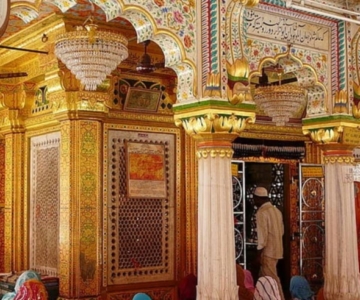
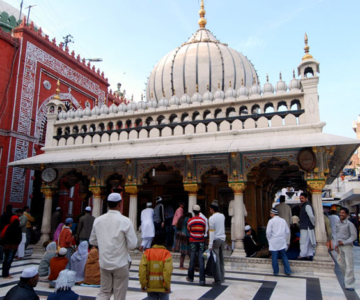
Kindle magazine has printed an excerpt from my forthcoming travel book. I has sent them a painting of mine to be used with the text but it was a pleasant surprise to see it as a cover for the magazine. It is an impression of Sarmad’s dargah from inside.

My contribution on Dara and Sarmad can be read here at the magazine website.

My comments on BBC: Pak floods and political instability

22 August 2010

Please click at the link below to hear my comments on BBC World. In summary, political instability will accelerate economic meltdown and there is no need for a regime change unless we want more uncertainty that can benefit the militants.

http://www.bbc.co.uk/iplayer/console/p0094zyy (go to 31.40 mins)

An Unlikely Catalyst For Change

12 April 2010

Published in Tehelka this week

AFTER 37 YEARS OF POLITICAL UNCERTAINTY, PAKISTAN’S CONSTITUTION HAS BEEN RECAST ON ZARDARI’S WATCH. WILL IT HELP REKINDLE DEMOCRACY, WONDERS RAZA RUMI

BRANDED A ‘failed state’, Pakistan has become notorious in the global media. Political change is often a result of the notorious 111 Brigade (the Rawalpindi-based army contingent which leads any military coup) moving on the streets of Islamabad and capturing the derelict PTV (Pakistan Television) headquarters. News-worthiness is defined by the number of suicide blasts that take place in a single day within what has been termed as the “most dangerous country” in the world. Pity that such stereotypes have prevented a nuanced understanding of Pakistan, as well as the fact that it is a fast changing country with a strong yearning for the rule of law and constitutionalism.

These days, Pakistanis, when they are on a break from the next suicide bomber, are rejoicing over a major political shift brought about by the April 8 approval by parliament of the 18th Amendment to fix the truncated Constitution. Thirty seven years ago, for the first time in its existence, Pakistan’s political elite was able to reach a consensus on the scheme and shape of the Constitution. An earlier version was the 1956 Constitution, which was abrogated even before its implementation by Field Marshal Ayub Khan in 1958. There were two other military “gifts” to the nation in 1962 and 1970, which were hardly democratic and barely representative of what citizens actually wanted. (more…)

Mystical Form of Islam Suits Sufis in Pakistan

26 February 2010

A New York Times’ piece where I was quoted.

By SABRINA TAVERNISE- LAHORE, Pakistan — For those who think Pakistan is all hard-liners, all the time, three activities at an annual festival here may come as a surprise.
Thousands of Muslim worshipers paid tribute to the patron saint of this eastern Pakistani city this month by dancing, drumming and smoking pot.
It is not an image one ordinarily associates with Pakistan, a country whose tormented western border region dominates the news. But it is an important part of how Islam is practiced here, a tradition that goes back a thousand years to Islam’s roots in South Asia. (more…)

The closed minds that deny a civilisation’s glories – where I was quoted

15 February 2010

I was most pleased to read this piece by Yasmin Alibhai-Brown entitled The closed minds that deny a civilisation’s glories. I would like to thank Yasmin Alibhai, whom I have always respected for her integrity and courage, to have quoted a few hurried lines posted by me in response to tge butchery perpeterated by the extremists in Pakistan and elsewhere:

Muslims are seeing Koranic injunctions where none exist
Confused Dad Mohamed from somewhere in the US sends his dilemma to an Islamic guidance website through whom Allah apparently communicates his orders – on how we dress, what we do minute by minute, unholy TV programmes, wicked vitamins and even wickeder relations between males and females.
I paraphrase Mohamed’s frantic appeal for clarity. His children watch cartoons, and have stuffed toys, quilts and pillow cases with Mickey Mouse on them. Is all that halal? Now many of us detest the addictive and manipulative Disney brand which targets young children. But this fully grown, procreative adult cannot trust his own mind and seeks instructions from unverified voices of authority. How abject is that?
These global sites control people, push through Maoist “cleansing”. Miserable mullahs are closing down the Muslim mind and heart the world over. Meanwhile “true believers” desperately seek enslavement and thank their enslavers. The questions posed are startling in their naiveté. May we sing? Is it OK for a man to listen to a woman singer? Do I watch a female newsreader? Yes, says a wise one – as long as she is properly covered up and not wearing perfume. Don’t laugh. It is tragic, not funny.
Somehow in the last decade or so, millions of believers have been persuaded that they are repositories of sin because they watch films, love music and paintings, read books, experience temporal pleasures and ecstasies. Remember the ferocity with which the Taliban destroyed all pre-Islamic treasures? Saudi Arabia is guilty of similar vandalism. Thus they seek to recreate the piety of triumphant Islam. Well they didn’t have cameras, mobile phones, cars and computers then. Should these be banned too?
Muslim children are now programmed to obey – robbed of imagination, independent thought and refinement. UK Muslim parents are increasingly coming out against school visits, music and drama, novels, exercise, scientific facts. Teachers know these parental demands leave Muslim children under-educated and emotionally numbed, rendered unresponsive to artistic words, sights and sounds.
This is a travesty of our history, our love of truth and beauty, the intellectual energy that throughout history uplifted Muslim civilisations. The current Science Museum exhibition of Muslim inventions that shaped the modern world proves we were never the barbarians promoted in Western demonology. Some of the earliest manuals on surgery and optics, astronomy and flying machines came out of Muslim regions. And those same places were creative hubs producing great works of art, incredible buildings and intricate crafts.
There is no Koranic injunction against the depiction of the human form, yet pictures from previous ages would today not be painted – a kneeling, sensual angel by an Ottoman artist in the mid-16th century, a man filling his cup of wine. Passion plays were performed through the centuries in all main Arabian conurbations. Poetry was written and recited by both men and women. Music, devotional and romantic, was in every household. All that is under threat today.
The Pakistani blogger Raza Rumi writes: “Who are these butchers of culture? What religion do they follow? They have no religion except barbarism.” Exactly. British Muslims for Secular Democracy (of which I am chair), supported by the British Council, is tomorrow organising a conference on artistic and cultural freedom at the School of Oriental and African Studies in London. Speakers include Miss Pakistan (who is also a professor), fashion designers, the entrepreneur Saira Khan, painters, stand-up comics, musicians, writers, others who are concerned. The event is open to all. Check the BMSD site. We will be launching an advisory guide for teachers on protecting the interests of the Muslim child. (more…)

Blogging without borders

16 November 2009

My piece published by the Walkerly Magazine

The internet has demolished the iron curtain between Pakistan and India almost overnight, writes Pakistani blogger and writer Raza Rumi.

I don’t need to tell you about the multi-billion dollar enterprise that is the animosity between India and Pakistan. Suffice to say that the birth of a new nation-state on the Indo-Pak sub-continent was among the bloodiest of all time, entailing the migration of nearly 10 million of the wretched of the earth who had to find a new home.

Millions of deaths and three wars later, the bitterness refuses to go away and the interaction of the two countries’ populations has been very limited over 60 years. As a result, not all Pakistanis have the privilege of visiting India. I happen to be one of those who, by sheer coincidence, have been visiting India primarily for work or cultural exchange.

My forays into journalism coincided with my alter ego as a blogger. Purely by accident, I discovered the world of blogging, driven by the desire to post my pieces published by The Friday Times (TFT), a weekly Pakistani magazine. Trying to avoid creating a paid website, the blog template came to my rescue. (more…)

The vanity of being quoted

13 September 2009

A friend sent me these links and I am shamelessly posting them here:

My views on the IMF programme for Pakistan – Also here

On visiting Bangladesh as a Pakistani

My art review of Asim Butt’s work

Ghalib in Benaras

On Qurratulain Hyder, the Urdu writer

Princess Zebunnissa

Inhospitable reception given to white women

On the stranded Pakistanis in Bangladesh

On the Asian News net

Singh’s controversial book becomes subject of debate in Pak

21 August 2009

I was quoted in this press story. Also here


Press Trust of India / Islamabad August 20, 2009 - Seeking to give Muhammed Ali Jinnah a clean chit for country’s partition might have caused his expulsion from BJP, but former External Affairs Minister Jaswant Singh’s book has earned him supporters across the border.

(more…)

This is a long war

18 June 2009

Published in The NEWS
By Raza Rumi

This is a critical moment in our history perhaps unmatched for its severity and its brutal reality. The experiential nightmare that our country is passing through is perhaps unparalleled for the enemy is neither foreign nor fully identifiable. At the same time, never has there been a clear backing of a military campaign against domestic agents of subversion and anarchy. Forget the doctored samples of opinion polls, often conducted by foreign agencies. That by itself should make us ashamed for our proclivity to accept what others have to analyse and determine for us. Even ignore the fringe voices of dissent led by those who neither have credibility or sagacity to comprehend the existential crisis faced by Pakistan. The army has shown vision and displayed courage in tackling a menace that alas is a home-grown cancer due to our short-sighted strategies in pursuit of phantom depths. The battle to be won is now the country itself.

The political consensus of sorts that has accompanied the military action against the Taliban is also remarkable. Notwithstanding the spin doctors posing as analyst-anchors on the idiot box, the political class has recognised that its survival is embedded in the battle against extremism that predicates itself on elimination of sane, moderate and secular politics itself. This was the Swat model – blow the polity to bits and create a vacuum for a takeover. An age-old recipe employed by the hordes from Central Asia that invaded Muslim Delhi again and again during Sultanate and Mughal periods of our common histories which refuse to be partitioned. (more…)

My interview at the Pak Spectator

9 October 2007

Raza Rumi was interviewed at the Pak Spectator blog. My interview is nothing but rambling galore; but I did relish answering the various questions. I am not sure why I was asked about my preferred travel destination[s], but I did enjoy the day-dreaming:

That top most travel destination would have to be Turkey. I am fascinated by the confluence of civilizations and cultures that is embedded in contemporary Turkish reality. You move from one town with Greek remains and enter into an area where Roman splendours or ruins await you and then you hear the sound of azaan and it just becomes an incredible journey into history and world cultures. And of course, Konya where Rumi lived is also in Turkey.

My second choice would be Indonesia: another country with beautiful rainforests, mountains, beaches and rich history. I love Java Island and have written a little bit about it as well.

I suppose the third choice is the African continent. There is immense, raw beauty there that brings once closer to the primordial connection with Nature. I want to go there again and again. I haven’t been to Western and Southern parts and am eager to go as soon as I have some savings for this purpose.

Read the full interview here.

Shameless self-promotion!