Posts Tagged Rawalpindi

Institutions, accountability and the UN Report

12 June 2010

The UN Report is a historic document for it brings forth a set of findings and actions that should become the cornerstone for democratic mobilisation in Pakistani politics

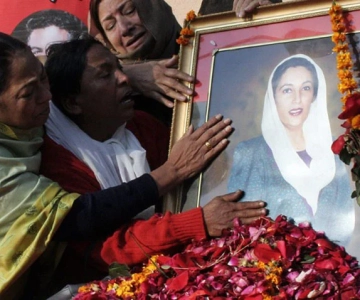
The UN fact finding report on Benazir Bhutto’s murder is a scathing indictment of the Pakistani state and its dysfunctional institutions. However, sections of the media have seized it as a glorious opportunity to target the PPP itself by squarely apportioning the blame on Rahman Malik and Babar Awan – the two characters who are now punching-bags of the right wing. Not that Malik or Awan are spotless revolutionaries, but they are no different from the other political actors. After all, Pakistani politics is a nefarious web of patronage, sycophancy and shady deals, often involving the state and its agencies. The reason for targetting these two individuals is simple: they are close associates of President Zardari who, according to the Punjabi urban legends, is the alleged killer of Mohatarma.

Now that the UN report has exonerated Zardari of the crime, a few TV anchors and several writers in the vernacular press are hell-bent on proving that the real reason for Bhutto’s murder was the whisking away of a backup vehicle. Such a narrative ignores the gritty and ugly realities of our polity. The reason is quite clear: public discourse must be shaped in a manner that minimizes the embedded, historical role of the praetorian state, intolerant and suspicious as it is of alternative sources of power. In this case, it would be the popular legitimacy which Benazir Bhutto enjoys even in the grave.

The ‘establishment’

The UN report has attempted at a loose definition of what constitutes the Pakistani establishment, and places its intelligence agencies at the core of such a power-centre. In recent days, this has been derided by the usual suspects. First, the Urdu columnists whose careers have been shaped and enriched by invisible hands. Second, the TV anchors whose shows have lost all credibility. And lastly, the audience they cater to: the conservative mindset which cannot forgive the Bhuttos for being pro-poor, Sindhi and secular. (more…)

The pampered Islamabadites

17 October 2008
My piece published by Himal Southasian

Mahboob Ali

Islamabad is a very peculiar urban space. Though no longer a town, it is still struggling to become a city. Arguably, it is the most ‘inhabitable’ place in Pakistan, and ranks far ahead of several other capitals in Asia and Southasia, nearly all of which are plagued by pollution, traffic jams, crime cartels and civil strife. Islamabad, despite the disturbances and security threats that became endemic during 2007, remains largely aloof from this pattern – at least for now.

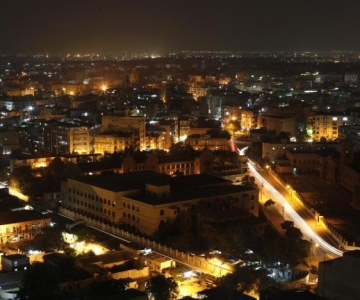
Located in the foothills of the Margallas, and boasting green spaces and forests intertwined among the folds of the city, Islamabad appears almost surreal against the densely populated rest of Pakistan. Built during the early 1960s by Pakistan’s developmentalist dictator, General Ayub Khan, Islamabad was seen as an antidote to politicised Karachi – which, in any case, was a bit too far from the Punjab and the NWFP, the popular bases for Pakistan’s powerful military. Laid out as a model city with the help of Greek architects, this city of the exclusive was formally born in 1965. Nearby Rawalpindi was already the seat of the army’s headquarters, and its proximity to the new capital was certainly intentional.

The new city’s layout was divided into sectors, numbered streets and broad avenues that are called ramna, using the Bengali term. The civil bureaucracy of federal united Pakistan moved here, and thus the sleepy town suddenly emerged as a new urban settlement in line with the earlier planned emergence of Chandigarh. In Islamabad, roads would empty out after sunset, and the national capital would be oddly deserted on all public holidays. After all, for decades none of the residents actually belonged to this city. (more…)

Shoaib Akhtar – a fallen hero

22 May 2008

My piece published in The Friday Times last week

I am not concerned with the technicalities of Shoaib Akhtar’s sentence, which have been the subject of much debate across Pakistan and indeed wherever cricket is played and followed. There have been some avoidable outbursts by both Akhtar and his disciplinarians. Akhtar has a chequered past in the conventional sense; and perhaps his tragic flaw is the cavalier attitude that is now a hallmark of his persona. But he is a star whose talent has done cricket, Pakistan, and Pakistanis proud. The quantum of punishment given to him has therefore been viewed as some sort of betrayal, and many have termed it unfair. But this is now a sub judice matter and so cannot be commented upon any further.

However, what lies underneath the narrative of Shoaib Akhtar’s plight relates to the sociological and attitudinal trends that have now engulfed Pakistan, like a poisonous creeper that consumes even the best kept plants in a garden.

Shoaib Akhtar is self-made, rising from humble origins into the global limelight. Born at Morgah, a small town near Rawalpindi, on August 13 1975, he is the youngest of four sons (he also has a younger sister) of an oil refinery worker. Far from following in his father’s footsteps, however, Akhtar began to show cricketing talent while still at school. It was at Asghar Mall College, during his twenties, that his extraordinary skill at the game was recognised; he played at increasingly high levels (including a spell for the English team Worcestershire), culminating in his selection for the national team in 1997. He then shot to international fame during the 1999 World Cup. Stunning spectators with his bowling ability, he went on to set the world record for bowling speed at 100.2 mph, where it still stands. (more…)

People of this Murderous City

13 February 2008

The other day, I translated my poem in Urdu written after the events of 27 December, 2007. It has been published by this blog. I am reproducing it here.

In this island of grief
Where all journeys stand directionless
Fragrant Roses adorn your image
And, We, your murderers, impotent accomplices,
Cast guilty shadows across this barren land

O, the gifted leader, that inimitable image
You had given a new meaning to resplendence
Dragging your worn feet
and covering your bare head
You had borne invective upon invective
And the half-dead people of this city
gaped at your strength

This was the murder of all my visions
And all my dreams cracked
as you entered hades*,
beneath the weight of roses

Though a grave shall unfold its fragrance
We the ashamed,
fighting our tears
holding the placards of our dreams
Will analyse, compose elegies

And the bleeding wound shall scar
all the paths
The moon shall keep waxing
As the illumining candles of your tomb
reveal an endlessly humiliated Yazeed**

There is just a little request
Enact another wonder
what the city of Yazeed could not do
Forgive those
Who could not forgive you
and pushed you over the edge of Euphrates***

And today,
locked in the mist of wistfulness
gripping their torn shirts
they search for their forsaken hearts

* the underworld kingdom in Greek mythology inhabited by the souls of the dead.
** Yazeed (645 – 683), the second Umayyad ruler who established monarchy and killed Husain and his family members, the grandson of Prophet Mohammad who had challenged the principle of rule without the consent of the ruled.
*** The location of the legendary battle of Karbala.

The Urdu version can be read below. (more…)