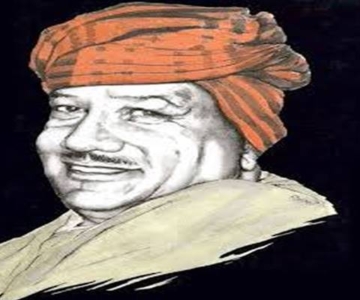
Baba Najmi’s little poem
Iko Tera mera payu (You and I share the same father)
Iko teri meri maan (We share the same mother)
Iko saadi janam bhon (one is our birth place)
Tu Sardar tey mein kammi kiyon? (why are you the chief and I a slave)

Chal Way Bullehya Chal O’thay Chaliyay – Let’s go where everyone is blind
Bulleh Shah’s admission
Bulleh-a aashiq hoyiyon Rabb da,
Hoai Malamat Lakh Tenon Kafir Kafir aakhdey,
toon aaho aaho aakh
(Bulleh Shah)
Bulleh lover of G-d, a million blames occur
Your title is apostate, answer yes, yes, so it is.
(translation by JH)
Bulleh! to me, I am not known
Bulleh Shah – on rejecting caste
A popular kafi of Bulleh Shah, sung by Abida Parveen "BULHE NU SAMJHAWAN AAINAN BHAINAN TE BHARJAIAN" earlier posted as " A stove is better than Bulleh" am posting its english translation thanks to Shahidain's invaluable contributions.
People discouraged Bulleh Shah from accepting Inayat Shah as his master and said " Bulleh you are a scholar and a descendent of of prophet Mohammad (pbuh). Does it seem right to you to go to an ordinary gardener of low caste and become his disciple? Is it not embarrassing?" But Bulleh showed great love and reverence for his master and did not pay any heed to this objection.
Na mai Sussi
Na mai sussi
Na mai sohni
Na mai heer sayal
phair we sajna
dil kyouN mera
Ja lagayaa teray naal
Baba Bulleh Shah’s gift
Dr Manzur Ejaz writing for the TFT
According to myth, if perfectly sung by a master, the classical raga Malkauns can set a river on fire. And if you want a description of Malkauns personified, it would be the tall red-eyed jogi or Ustad Chote Ghulam Ali Khan. In a freshly laundered, blazing white and starched kurta-pajama, Khan Sahib was a well dressed and handsome man even in old age. Despite his appearance, Khan Sahib was at heart a jogi who had wandered and meditated in the limitless jungle of classical music his entire life.
Both Bade Ghulam Ali Khan and Chote Ghulam Ali Khan belong to this gharana. They were cousins with identical names but because one was older he was known as precisely that, Bade, and the younger as Chote. The classical singers of the Qasur gharana are sometimes called “Qasur kay qawwal bankay” (children of Qasur qawwals) because their forefathers were traditional qawwals at the shrine of Baba Bulleh Shah.
Khan Sahib worked hard to enhance Samina Hussain Syed’s skills in classical music because she had a very powerful, deep and melodious voice that constitutes the core of a classical singer. In fact, she had more potential than anyone else in the world of music at that time. Khan Sahib knew her potential and that is why he would come daily for her training; it was never just for the money.

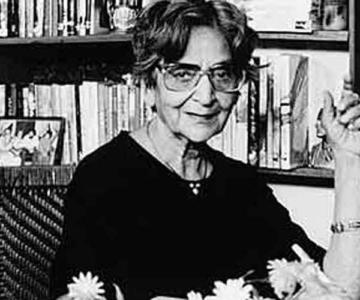
Akhtari Bai Faizabadi, whom Khan Sahib romanced
Bulleh’s virtuous thoughts-
Shahidain has sent these couplets
Main NeevaaN Mera Murshid Uccha
Main UcchiyaaN naal sang laayee
I am lowly my spiritual guide is lofty!
I have tied my fate to such lofty ones!
---------------------------------------
Bulleh naaloN chullaah changaa
jis te ann pakaaee daa
ral faqeera majlas keetee
bhora bhora khaaee daa
A stove is better than Bulleh
because at least you can cook food on it
Saints sit together to eat
and share their food with each other.
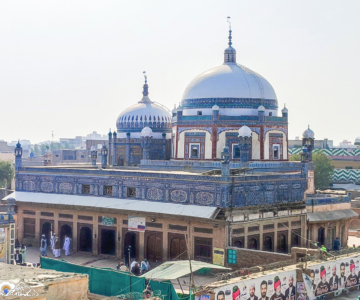
Urs of Bulleh Shah in Kasur
The annual Urs of Bulleh Shah, the Punjabi mystic poet, commenced yesterday in Kasur yesterday. Bulleh’s poetry reflected his rejection of orthodox hold of mullahs over Islam, the nexus between the clergy and the rulers and all the trappings of formal religion that created a gulf between man and his Creator. A common theme of his poetry is the pursuit of self-knowledge that is essential for the mystical union with the Beloved. Among Bulleh's timeless verse, I love this one
Pakistan’s rich dissident literary tradition
Himal Magazine had published this article on the resistance poetry in Pakistan. I had uploaded it on the Pak Tea House some time back. However, I just realised that it should be published here as well..
The long spells of authoritarian rule in Pakistan have nurtured a rich dissident literary tradition. This tradition has its roots in the Progressive Writers' Movement, which originated in colonial India with major Urdu poets and writers as its vanguards. Faiz Ahmed Faiz was, of course, the best-known torchbearer of this tradition, while other luminaries included Sajjad Zaheer, M D Taseer, Rashid Jahan, Kaifi Azmi, Ismat Chughtai, Sahir Ludhianvi and Ahmed Nadeem Qasmi, to name only a few.
With the post-Independence Pakistani state continuing the old-style approach to ruling over the masses, the progressive movement too carried on its dissent long after 1947. Those who had migrated to Pakistan faced a new reality, which, in the words of Faiz, was far from the dawn for which they had hoped. "This blemished light, this dawn by night half-devoured," Faiz wrote ruefully. "surely not the dawn for which we were waiting."
Nusrat Fateh Ali Khan sings Bulleh Shah
I had earlier posted a video of Abida Parveen singing Bulleh Shah. While that is an all time favourite, the global voice of Nusrat Fateh Ali Khan has also rendered Bulleh Shah with great ease and soulfulness. I am grateful to Cubano for opening the doors into this magical world of music. No words can capture the sheer beauty of this music. Videos are posted below
A few poems by Bulleh Shah
Recently, I was asked to help a friend with the original text of Bulleh Shah's Hindu na Na heen Musalmaan. I found the original Punjabi and also found two other pieces that I am posting here.
Bulleh Shah's poetry addresses most maladies that we face in this day and age.
------------------------------
HiNdu na naheeN musalmaan,
Baheeye tiranjan taj abhimaan.
Sunni na naheeN ham sheeya
Sulha kuhl ka maarag leeya.
Bhookhe na naheeN ham rahje,
NaNge na naheeN ham kahje.
RoNde na naheeN ham hasde
UjaRe na naheeN ham vasde.
Paapi na sudharmi na,
Paap pun ki raah na jaanaaN.
Bulhe Shah jo hari chit laage,
Hindu turak doojan tiyaage
Neither Hindu nor Muslim,
Sacrificing pride, let us sit together.
Neither Sunni nor Shia,
Let us walk the road of peace.
We are neither hungry nor replete,
Neither naked nor covered up.
Neither weeping nor laughing,
Neither ruined nor settled,
We are not sinners or pure and virtuous,
What is sin and what is virtue, this I do not know.
Says Bulhe Shah, one who attaches his self with the lord.
Gives up both hindu and muslim.
Abida Parveen sings Bulleh Shah’s teray ishq nachaya..
As I recited Bulleh Shah's poetry this evening, a friend sent a link to another video of Abida Parveen singing Bulleh's mystic poetry in her inimitable style. Lo and behold, I also found an online translation of the verse:
Here is a translation of the verse rendered in this video:
O Physician, come back! my life is ebbing away.
Compelled by love, I dance, I dance.
This love has set up camp inside me.
It is I, who filled the cup with this poison and drank it.
Come back right away, else, I will surely die.
Compelled by love, I dance, I dance.
The sun has set, its glow remains.
Grant me a sight of you again! I would die for it!
What a mistake I made, not going with you.
Compelled by love I dance, I dance.
Mother do not bar me from this love.
Whoever turns back unloaded boats that have left?
How foolish I was, not going with the boatman.
Compelled by love I dance, I dance.
Peacocks sing in the groves of love.
My beautiful beloved is my Ka'ba, my Qibla.
He injured me, then turned away.
Compelled by love I dance, I dance.
Bullhe Shah, I sit at Inayat's door,
He clothed me in robes of green and red.
When I stamped my heel, I found him.
Compelled by love I dance, I dance.
(and now the video).
Here is the source of translation
For another version of Punjabi and English, please click here.
sanon apna yaar rajhawan dey – Bulleh Shah
With due apologies to those who cannot understand Punjabi. I will work on a translation sometime later.
mar na mulla bulariyan
sanon apna yaar rajhawan dey
kanjri banyaan meri ezat na ghatdi
meinon naach ke yaar manawan deey
loog ishaq noon mool gindey
meinnoon gaal wich mala pawan deey
Bulleh shah odi oo janey
meinon apni toord nebha lein deey