Posts Tagged provinces

The debate on new provinces in Pakistan

30 August 2011

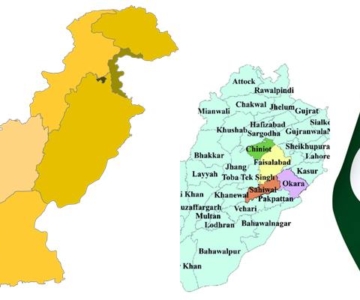
Since 1977, military or quasi-military governments have ruled Pakistan. The basic tenet of such a governance structure has been centralization and denial of multiple identities that Pakistanis have. Recent reform via the 18th Amendment has opened up a debate on new provinces. Not long ago, division of provinces was a taboo. Not anymore. This by itself is a major victory of the quasi-democratic process since 2008, howsoever flawed and contradictory it might be.

Remember this is a country where the largest federating unit – East Pakistan (Bengal) was denied its due in power and resources leading to the tragic events of 1971. From 1955-1970, ethnic, linguistic and local identities were forcibly negated under the One Unit. After the creation of Bangladesh, the federal debate focused on Punjab versus the rest of Pakistan. Even the elected Prime Minsiter, Zulfiqar Ali Bhutto ordered Army operations in Balochsitan and the North West Frontier Province to quell insurgencies and demands for local autonomy. Zia’s rule (1977-88) was a major setback to the federal project as Sindh was at the receiving end and the smaller provinces were remote-controlled from Islamabad. During the decade of democracy (1988-1999), things improved but only marginally. (more…)

Towards a decentralised Pakistan

20 July 2011

Without civil service reform, devolution of policy setting will be unachievable and the current reform may just not achieve its intended purposes

On July 1, 2011, the third phase of redistribution of federal powers and functions was completed whereby 7 federal ministries now stand devolved. These include Ministries of Health, Food and Agriculture, Labour and Manpower, Environment, Women Development, Sports and Minorities affairs. Earlier, ten ministries were devolved to the provinces with the abolition of concurrent list under the 18th Amendment.

Implementing the 18th Amendment: The process has been fraught with political bickering between the Centre and the Provinces and resistance by powerful groups, which are beneficiaries of a centralised Pakistan. However, these political and administrative contests have not undermined the process of devolution. A major factor in negotiating this transition has been the role of Mian Raza Rabbani who heads the Implementation Commission for the 18th Amendment to the Constitution.

Most significantly, the political parties have shown their willingness to work together in achieving the intended results of provincial autonomy related clauses. Having said that, the real test of the elected civilian governments has just begun. Large scale restructuring of the federal government and transfer of new functions to the provinces implies that there is much more needed than executive notifications and political rhetoric.

Beyond executive notifications: Four challenges are of urgent importance. First, to ensure that devolution process is completed and not truncated or manipulated to suit the ends of the political parties. At the same time the regulatory capacity of the state, already weakened over decades, must not be diluted during the transition. Secondly, the corresponding institutional capacities are also devolved to the provinces and where missing, the Centre should advise and facilitate institutional strengthening. Thirdly, a civil service reform is required to achieve the responsive and citizen-oriented governance — the larger goal of the 18th Amendment. Finally, decentralisation of provincial powers is also needed and the local government system should be reintroduced. Unpacking and addressing these four imperatives is now an urgent responsibility, which the federal and provincial governments cannot absolve themselves of. (more…)

Our textbooks and the lies they teach

1 May 2011

By Raza Rumi

Due to the 18th Amendment, a momentous shift in Pakistan’s governance arrangements is taking place through a politically mediated and largely consensual manner. The federal government is being trimmed and 10 ministries have already been devolved to the provinces. A key development pertains to the devolution of education — lock, stock and barrel — to the provinces. Most notably, the odious era of setting poisonous, centralised curricula in the name of a ‘martial’ nationalism is finally over. Whether the past practices of turning Pakistan into a jihad project will end is uncertain, unless the provinces take the initiative and reverse the regrettable trajectory of the past.

Pakistani textbooks have preached falsehoods, hatred and bigotry. They have constructed most non-Muslims, especially Hindus, as evil and primordial enemies, glorified military dictatorships and omitted references to our great betrayal of the Bengali brothers and sisters who were the founders and owners of the Pakistan movement. It is time to correct these wrongs. (more…)

‘Reforming’ the education system

30 April 2011

By Raza Rumi

Pakistani students sit inside and on top of a rickshaw heading to their schools in Muzaffargarh in Punjab province, Pakistan, Tuesday, Nov. 2, 2010. AP Photo

The recent debates on education have also highlighted how the education sector is not receiving its due compared to say defence, infrastructure and other expenditures made by the government. However, the discussion has yet to move to the most important area i.e. quality of schools and what sort of learning are they providing?

The task of reforming the education system is huge, complex and some would say next to impossible. However, the 18th Amendment to the Constitution has opened the doors to avenues for change. (more…)

Devolution of powers: the challenges ahead

24 April 2011

The impediments to full provincial autonomy under the 18th Amendment need to be tackled despite the odds

By Raza Rumi

Perhaps the best thing about contemporary Pakistan is the way its governance arrangements are being restructured to undo the bitter, brutal legacy of centralisation. Had we undertaken such reform decades ago, Pakistan would have been a far better place. The 18th Amendment reflects a board political consensus on how Pakistan can actually evolve into a real federal state as opposed to the notional federalism of the past where provincial autonomy had become a residue of central patronage and not guaranteed by the Constitution.

Nevertheless, the devolution of powers in 2011 faces two major dilemmas. First, the provinces are currently operating as centralised bureaucratic apparatuses with little or no powers and accountabilities at the local levels. Second, and perhaps far more important, the provinces have to build their technical and political capacities to handle the new powers and functions, which are now flowing at an unprecedented speed. These two challenges are the real test of civilian governments and it remains to be seen if they can handle it lest another messiah or messiah-proxies enter the arena and reverse this process. Knowing Pakistan’s history, anything is possible. This is a country plagued by lack of political stability and policy continuity. We shall examine the pitfalls and challenges that lie ahead in this transitional process.

Progress so far: During the first two phases of the devolution, 10 of the 48 ministries at the federal level were to be devolved. The Committee set June 30th 2011 as the deadline for this process. Taking up these recommendations, the federal cabinet devolved ministries for special initiatives, Zakat and Ushr, population welfare, youth affairs, and local government and rural development to the provinces in December 2010. The provinces also inherited office buildings, equipment, development funds and projects for fiscal year 2010-11. All international matters of these ministries were transferred to the Economic Affairs Division (EAD) and some planning-related matters to the Planning and Development Division. However, overall planning of ministries that are being transferred or will be transferred in February 2011 will be the responsibility of provincial governments.

On April 5th, 2011 the second phase of the devolution process commenced, with the devolution of the ministries for education, social welfare, and special education, tourism, livestock and dairy, rural development and culture. According to reports, the Commission for Implementation of the 18th Amendment has also approved a plan for the transfer of three federal ministries, including sports, women development and environment, to the provinces in the third phase.

Unclear federal arrangements: While the centre has abolished ten ministries so far, there is a deadlock over the staff and resources. Provinces complain that they cannot pay the wage bill of surplus staff and centre has retained all the existing federal public servants, as any move to right size will be fraught with political dangers. Similarly, after June 2011, who will pay the staff? If the federal government continues to foot the salaries bill then it will not be able to rationalise its size and the temptation of recentralisation will remain. Secondly, the federal government’s move to shift attached bodies and autonomous organisations to Cabinet Division and such other dysfunctional ministries is even worse. There needs to be a more thorough assessment of post-devolution architecture of the central authority. It appears, with due respects to a great reformer, Raza Rabbani and his colleagues, patchy, ad-hoc and devoid of long term thinking. (more…)

State accountability

21 June 2010
My piece published in The Friday Times (June 18 issue)
Leaving aside the political debate on the results of the recent Transparency International (TI) survey, the results are pretty damning for the masters of our destiny. The issue is not about which province is least or most corrupt. The fact that the majority of respondents hold the Police as the most corrupt department since the last eight years is a matter of grave concern. It is even more troubling, given the current security scenario where Pakistanis are facing a crisis of public safety. Markets, shops, and highways are not safe. If there is a respite from the terrorists, then the criminals are there to make hay while collapsing administrative and policing structures struggle to manage their operations. Let us not forget that security of the person and their property is a fundamental right of the Pakistanis.
The party-based and ethnicity-oriented feuds on TI survey are meaningless as the Police is a provincial subject and TI’s surveys have consistently shown that there is something deeply rotten in how the security apparatus works at the subnational level. The causes for such a crisis of governance need to be highlighted, regardless of which party we vote for or where we live. What could be more telling than the events of the recent past?

Divide or perish: creating new provinces in Pakistan

4 May 2010
My piece published in TFT
Since 1947, two characteristics of the Pakistani state have continued to haunt its legitimacy and survival. The first relates to the lopsidedness of its federal framework; and the second pertains to the dysfunctional citizen-state compact. Prior to 1971, the efforts to achieve parity between the eastern and western wings remained a constant struggle eventually culminating in the break-up of the country. Nationalist narratives insist on the Indian intervention in 1971 rather than acknowledging that the governance arrangements for the two wings through a powerful Centre in Karachi and later Islamabad were inherently biased and unworkable. In the post-1971 context, the lopsidedness did not end as the Punjab continued to dominate the way country works and how power is distributed between the various federating units. How can a federation work when one province will always be the most populous, resourceful and hold keys to state power through the civil-military bureaucracy?
The second unfortunate legacy of the colonial governance arrangements i.e., an over-developed state operating through central rule and diktat , is now facing the greatest crisis of legitimacy. It is now commonly recognized that state legitimacy is a function of how effective a state is in delivering services, ensuring entitlements (such as security) and negotiating plural identities and competing demands for resources and power. Pakistan’s dominant classes have always been averse to address this endemic issue until the recent political consensus that has been achieved through the passage of the 18th Amendment. While the political elites are clear on the future roadmap it remains to be seen whether the unelected institutions of the state are on board with the new provincial autonomy arrangements. Perhaps the recent violence in response to the renaming of the erstwhile North West Frontier Province to Khyber-Pakhtunkhwa was allegedly orchestrated by the Kings’ party known for its servility to the establishment.
The debate on creating new provinces from different corners of the countries is a healthy sign and a direct result of a democratic phase, howsoever uncertain it might be. (more…)

The question of Pakistan’s provincialism

5 July 2009

My piece that appeared in the ‘political economy’ section of The NEWS on Sunday.

The elites drunk on the status quo have expressed two major reactions to the proposal of creating another province within the mighty Punjab. First that this is akin to opening a Pandora’s box when we are at war against terrorism. Second, that this is a planted controversy whereby the ruling PPP wants to harm the house of Raiwind; or a conspiracy by those who want to destabilise Pakistan’s political system.

Both these arguments are spurious for nothing is more important for Pakistan than to make the federation work. The argument that the British drawn provincial boundaries are sacrosanct is as nonsensical as the reality of the Durand Line or for that matter the line of control itself. If anything, South Asia has experienced territorial and demographic shifts through the centuries. When resisted, the sweep of history has blown away the resistant elements and when carefully manoeuvred such shifts have resulted in commonsensical political and administrative solutions. (more…)

Confronting militancy

20 October 2008

The unedited version of my op-ed published in the NEWS today:

It is time that the vocabulary introduced by the global imperial projects is changed in Pakistan. The infamous and rotten coinage – war on terror – needs to be trashed. It was constructed by an imbecile global leader, whose vision defies basic standards of human intelligence. And, in our case the frontline-state status is a passé title as well. The war has now entered the Pakistani consciousness, has consumed thousands and continues to destabilize the country to a point where its citizenry is insecure and bereft of hope. We have to now protect Pakistanis and Pakistan first. All else is secondary.

The gravity of the situation is however not shared by many. The rugged militants are artfully backed by the ‘urban Taliban’, a term that has emanated from Sindhi intelligentsia. There are political parties and their leaders who downplay the threat to Pakistan, and few journalists and TV anchors brazenly eulogise the Taliban bravery and, believe it or not, ‘sound’ governance. Even some on the residual Left term this extremism as an anti-imperial struggle. We are being reminded that the destruction of private property and daylight murders of innocent civilians are nothing but a ‘reaction’ to our policies and Western diktat. Ironically, a key religious party now train-marching across the country on a was ruling two of the war zoned provinces for nothing less than five years tacitly supporting Army operations as well as legitimizing a military ruler through a constitutional amendment. (more…)