Jahane Rumi In search of the unsearchable: O, my soul! where would you find your house?

25Feb/103

Pakistan: democratic governance is the only way forward

(Also published by The News) Given the average shelf life of any civilian government, it is almost miraculous that the incumbent government has survived and there are signs that its removal is not immediate. The longevity of civilian order has less to do with the inherent strengths of its style of governance or delivery of public goods that it had promised in its manifesto. The survival of this government is an outcome of the lack of options for the establishment as well as its international allies, notably the Western powers. Leaving the conspiracy theories and the excessive over-reliance of the analysts on the American factor, we can safely argue that the military establishment of Pakistan and its intelligence agencies has found themselves in a unique situation since the assumption of the presidency by Asif Ali Zardari.

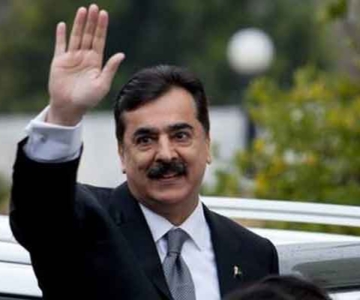
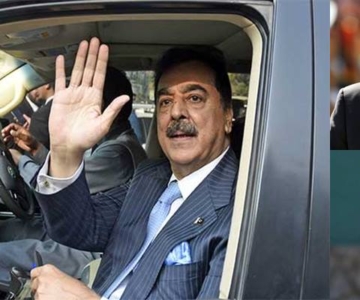
The truth is that Pakistan People’s Party, an anathema to the civil-military bureaucracy, has assumed the most important and powerful offices that a civilian government can aspire for. Two years ago, when the Prime Minister Yousaf Raza Gillani was

8Feb/104

How instability is garnered

My latest analysis published by The News

We continue to bemoan the failure of democratic norms to take root in our governance culture. True, that the repeated extra-constitutional interventions and direct or indirect military rule have rendered democratic governance as a distant and seemingly unattainable goal. In addition, the emergence of non-state actors, sometimes more powerful than the state itself has also led to formidable and multiple centres of power. In such a milieu, achieving the sustainability of democratic process is a Herculean task. Whilst the intentions of our unelected state institutions and their overt and covert non-state partners are clear, the behaviour of the political elites is confounding.

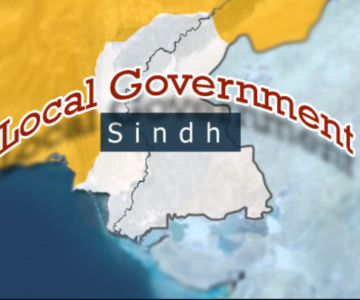
Not unlike the past, the divisiveness of Pakistan’s political elites has entered into a decisive phase. Fissures are apparent in the post-2008 political accord that led to the unanimous election of the Prime Minister, Yousaf Raza Gilani. The first cleavage, now a recurrent pattern, has emerged in Sindh where the coalition partners — the Pakistan People’s Party (PPP) and the Muttahida Qaumi Movement (MQM) — are pitted against each other for political control of urban Sindh. The latest skirmish is rooted in the evolving arrangements for the local governments and who will end up controlling the third tier of government. However, there is an ethnic dimension to it as well. Karachi remains besieged by sectarian, provincial, and linguistic ghosts that apparently are alive and kicking.

The second disruption in the political compact that led to a transition towards representative rule is unfolding in the shape of a brewing discord between the ruling PPP and the opposition Pakistan Muslim League (Nawaz). The PML-N rules the Punjab and thereby has a stake in the system and power matrix but it is also striving to maintain its ‘opposition’ status. This is why a dual strategy is evident where a few firebrand leaders of PML-N take a hard line against the federal government and the President Asif Ali Zardari. The party does not want to rock the system it says but also considers ‘options’ that lead to a mid-term election or even the premature exit of the President from the office in the wake of Supreme Court rulings on the National Reconciliation Ordinance.

14Apr/093

Civil society speaks

Zinda dilaan-e-Lahore say no to Talibanisation, reports Raza Rumi

Never before have we citizens been traumatised with an uncertain future and the knocks of destruction at our door as is the case in the year 2009. The celebrated twenty first century has, if nothing else, blown the contradictions of Pakistani society and state right into our faces. One hundred and eighty million people cannot be spectators to the imperial great games and a callous state that gropes in the dark trying to locate the ‘enemy’ outside, instead of looking into its own crevices and cracks.

Not that Lahore has been a haven of peace in recent years – the inequities, the crime levels have been on the rise. However, March 2009 witnessed two full-scale terror attacks in the city of gardens, shrines and a centuries-old tolerant culture. Media gurus were quick to involve India, RAW, the Americans, everyone under the sun except the enemy within. First the friends of Pakistan – the Sri Lankans and then the ill-equipped and vulnerable Police Academy at Manawan, were attacked by trained assassins who espouse a version of Islam that no sane Muslim can ever live with.The panic and fear generated by these two incidents had not ended when the brutal video of Chand Bibi getting lashed on the streets of Swat was released.

2Apr/091

This night bitten dawn

By Raza Rumi

The triumph of a popular movement on March 16 has marked a new beginning. The retreat of an intransigent government and the wise response by the PML-N and the lawyers averted a major crisis that could have been violent, and also a potential recipe for harming the parliamentary system in its infancy. There was a sigh of relief among the public for a long-standing issue appeared to have been resolved. This has been a monumental achievement by all standards.

However, the inherent imbalances within Pakistan's power structure and the state of its polity are yet to be addressed and the contradictions of how our power is exercised stared us as the good news rolled out through the ubiquitous TV channels and their zealous presenters. The way quintessentially political issues and turf-wars between the PPP and PML-N were battled and resolved through a stage-managed process only concealed the bitter power-realities of Pakistan.

5Mar/093

Suicide Democrats

Raza Rumi

I am appalled by the recent events that have yet again stirred instability and uncertainty into Pakistani politics. Those of us who voted in last year's elections expected that the political leaders and Pakistan's political elites would learn a lesson from our unfortunate history.

We also expected the lawyers' movement, headed by men of extraordinary calibre, to display sagacity and vision and contribute to the consolidation of a democratic culture. However, what we witnessed was a complete rejection of the Feb 18 polls by the leading lights of the movement, and a few other naïve political actors. When the electorate voted in large numbers and returned the two mainstream political parties to the parliament, the lawyers, instead of accepting that they were wrong to boycott elections, insisted on their narrow and bourgeois interpretation of the term "rule of law."

5Jul/087

Pakistan’s ruling coalition must not splinter

My op-ed piece that was published in the NEWS, Pakistan 

On these erudite pages, and elsewhere, there has been much ado about the fact that now the ruling coalition should split in response to the great betrayals perpetrated by Asif Ali Zardari. In classic machismo laden bravado, the honorific narratives have been urging Nawaz Sharif and his party to take the bold step and stick to their “principled” stand. What is interesting about these exhortations is the brazen rendering of political discourse in black or white terms.

Many a former ambassador, the recent cohort to jump into the fray of political activism, has found a great post-retirement vocation. Once the plush tenures are over and all that could be extracted from the holy state cow, now is the time to speak the truth and condemn military dictatorships. Convenient and most opportune! This low-risk strategy is paying its dividends: a great whitewashing of all that they were a party to, and all that they let happen in front of their red-taped offices. The ex-servicemen whose record is even more dismal are even more vociferous in their advocacy for a democratic Pakistan.

Therefore, the confused citizens with a shred of historical sense are simply bewildered. Gen Chishti, the key player in toppling Zulfikar Ali Bhutto’s government and unleashing of eleven years of mediaeval darkness, talking about resistance to army rule. Surely, the realisation took three decades of lasting damages and fissures within the body politic. Another retired Army chief, Gen Beg, is also at the forefront. His vitriole cannot hide the years when he actively sabotaged the democratic process, admitted before the Supreme Court that he had “advised” a bench not to restore Junejo’s government; and disbursed astronomical sums of money to undermine civilian government raised through another shady character heading a dubious financial institution.

27Feb/080

An open letter to Mr Aitzaz Ahsan

This was published in DAWN yesterday

By Raza Rumi

THAT you are principled, charismatic and right is beyond doubt. You have inspired the cynical, intelligentsia, revived a moribund civil society and awakened Pakistan's traditionally de-politicised middle class.

This is something that history shall record gloriously – reminiscent of the way you re-invoked the essential attributes of 'Indus man' in your treatise on the pre-historic identity of Pakistan.

Today, all efforts to generate 'positive' results from Election 2008 have foundered; and there is a new parliament ready to be sworn in. The new National Assembly, reflecting the fractured polity, has one common thread – nearly two thirds of its members constitute or sympathise with what was known as the opposition before February 2008. This is a moment of reckoning and most concrete outcome of a decade long struggle initiated by your friend Mr Nawaz Sharif, your leader the late Mohtarma Benazir Bhutto and your supporters in the middle class and urban democrats. The movement that followed the suspension of the Chief Justice in March 2007 was a culmination of public discontent that started way before. That you provided a shape and led it, is, your stellar contribution.

This is a historic moment that cannot be squandered or lost to the politics of personalities and individuals. Most Pakistanis are in awe of the dismissed Chief Justice for his strength of character, they have tremendous respect for the members of the bench who refused to succumb to the executive diktat following the imposition of emergency in November 2007. And above all, they are also tired of General Musharraf whose good intentions have only led to the proverbial hell of energy and food crises, rampant inflation and roaming suicide bombers. But this struggle just cannot be about getting rid of the president and reinstating the Chief Justice. That would be a belittling corollary of this fabulous episode in our recent history.

The representatives of the PPP, PML-N, ANP and bulk of like-minded independents are touching the magic number of two thirds in the new Assembly. If they are asked to settle a score with an individual and honour another few, history will not record it in kind terms.

Your call for a march towards Islamabad and the restoration of judges before Mar 9 is bound to polarise the fragile parliament, the political parties that have been beaten, poached, hounded with leaders assassinated or disqualified. It is a delicate juncture of our history and any division in the moderate political class or resort to historical bickering and blame-games will rock the system only to benefit the martial corridors of Islamabad's Byzantine palaces and their traditional occupants.

This is why many citizens are worried and skeptical that nothing changes in the murky waters of Pakistani politics.

13Feb/0810

People of this Murderous City

The other day, I translated my poem in Urdu written after the events of 27 December, 2007. It has been published by this blog. I am reproducing it here.

In this island of grief
Where all journeys stand directionless
Fragrant Roses adorn your image
And, We, your murderers, impotent accomplices,
Cast guilty shadows across this barren land

O, the gifted leader, that inimitable image
You had given a new meaning to resplendence
Dragging your worn feet
and covering your bare head
You had borne invective upon invective
And the half-dead people of this city
gaped at your strength

This was the murder of all my visions
And all my dreams cracked
as you entered hades*,
beneath the weight of roses

Though a grave shall unfold its fragrance
We the ashamed,
fighting our tears
holding the placards of our dreams
Will analyse, compose elegies

And the bleeding wound shall scar
all the paths
The moon shall keep waxing
As the illumining candles of your tomb
reveal an endlessly humiliated Yazeed**

There is just a little request
Enact another wonder
what the city of Yazeed could not do
Forgive those
Who could not forgive you
and pushed you over the edge of Euphrates***

And today,
locked in the mist of wistfulness
gripping their torn shirts
they search for their forsaken hearts

* the underworld kingdom in Greek mythology inhabited by the souls of the dead.
** Yazeed (645 - 683), the second Umayyad ruler who established monarchy and killed Husain and his family members, the grandson of Prophet Mohammad who had challenged the principle of rule without the consent of the ruled.
*** The location of the legendary battle of Karbala.

The Urdu version can be read below.