Posts Tagged policy

A Shifting Political Landscape

6 September 2011

By Raza Rumi:

If there is any single constant in Pakistani politics it is perennial instability. More so when fledgling democracies struggle to change the governance discourse and attempt to consolidate their hold over power which has traditionally been concentrated in the unelected ‘arms’ of the executive. The current civilian governments at the centre and the provinces are no exception
to this historical trend.

Nevertheless contemporary political dynamics in the country display both continuity and discontinuity from historical trends. This is what makes Pakistan’s evolution during the 21st century a most fascinating process of societal change and resistance by the post-colonial state which is basically fighting a serious battle for its survival; and perhaps has entered the decisive
phase of this conflict. (more…)

Myth and reality of extremism

29 August 2011

Pakistan needs to undertake research on militancy for effective policymaking

By Raza Rumi:

A recent attempt to understand militancy, “Poverty and Support for Militant Politics: Evidence from Pakistan” (Graeme Blair, C. Christine Fair, Neil Malhotra, Jacob N. Shapiro, 2011), provides us fresh insights into the phenomenon or myth of popular support for militant extremism in Pakistan. Using a sample of urban and rural population and employing inventive techniques, this research is an important document if only Pakistan’s policymakers would ever pay attention to the little evidence that is generated with respect to militancy. It is a sad state of affairs that our national policy institutes and ‘think-tanks’ are yet to undertake such studies even when the state and its agencies have been brutally attacked and over 35,000 Pakistanis have died due to terrorism during the last decade. By no means does this survey provide a definitive account of what is happening in the country. However, in the absence of any other study, its findings are most useful to debate how extremism is taking root in the society.

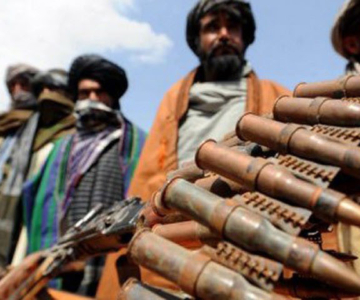
The survey measured public attitudes towards four important militant groups: Al-Qaeda, the Afghan Taliban, Kashmiri groups (Lashkar-e-Tayyaba, Jaish-e-Muhammad among others) and sectarian groups such as Lashkar-e-Jhangvi and Sipah-e-Sahaba. Contrary to conventional wisdom, the study concludes that the survey participants “were generally negatively inclined toward all four militant organizations” and reinforced what many analysts have said often: “Pakistanis do not have a taste for militants”. However, participants differentiated between the groups. They were more inclined to believe that Kashmiri groups provided public goods like health services, etc., and were much more likely to say that they were fighting for a good cause. Secondly, Pakistanis living in violent parts of the country, e.g. Khyber-Pakhtunkhwa (KPK), strongly disliked these groups probably because they pay a higher price for their actions. (more…)

More on the Pakistan Wikileaks- US Operations Constrained by India-Pakistan Relations

16 June 2011

My interview which has appeared on Wikileaks Central.

Pak-Usa

The Dawn Media Group in partnership with WikiLeaks has been releasing the “Pakistan Papers.” Thus far, some of the revelations include the following: US was concerned that Pakistan would oppose its policies at the United Nations; US was worried Pakistan would purchase oil from Iran, allowing them to get a foothold in Pakistan; Pakistan’s government was upset with US funding for the Pakistan military, which led to increased civil-military tensions; Pakistan’s military asked for continued drone coverage; the US has had troops deployed on Pakistan soil; Saudi Arabia and the UAE have been financing jihadist groups in Pakistan and the US did not provide Benazir Bhutto with proper security. (more…)

‘Reforming’ the education system

30 April 2011

By Raza Rumi

Pakistani students sit inside and on top of a rickshaw heading to their schools in Muzaffargarh in Punjab province, Pakistan, Tuesday, Nov. 2, 2010. AP Photo

The recent debates on education have also highlighted how the education sector is not receiving its due compared to say defence, infrastructure and other expenditures made by the government. However, the discussion has yet to move to the most important area i.e. quality of schools and what sort of learning are they providing?

The task of reforming the education system is huge, complex and some would say next to impossible. However, the 18th Amendment to the Constitution has opened the doors to avenues for change. (more…)

Failed prescriptions for a failing state

19 September 2010

The cat is finally out of the bag. The MQM chief has issued a statement on how the country needs to be saved from corrupt politicians. This was followed by his arch-foe Imran Khan who assured the military of his support should they choose to rescue the country. The PPP has issued muted condemnation of this statement while the PML-N has been categorical in rejecting any extra-constitutional intervention. The ISPR has been silent (unlike its vociferous denunciation of the Kerry-Lugar Bill) and so has the apex court that is usually prompt in taking suo motu notice. Overzealous TV anchors have had a field day in proving how terrible the current ‘system’ of democracy is without indicating what the alternative is.

Several wise commentators have also pointed out public frustration over the alleged mismanagement of the floods by the civilians as a genuine reason for a no-confidence in the system of governance. Pakistan’s chatterati, especially its depoliticised, affluent classes, have perfected such an ahistorical discourse to an art form. There seems to be amnesia about the fact that although all military interventions were sought to get rid of the ‘corrupt politicians’ each of these autocratic spells weakened Pakistan. Furthermore, centralised military rule is incompatible with federalism. Pakistan’s existence was, and remains, a compact between its constituent provinces. (more…)

Wikileaks and our fantasies

29 July 2010

My new oped for Express-Tribune

The Wikileaks’ damning half-truths pertain to the anti-war movement within the US. This has caused embarrassment to the US war architects and stirred the military industrial complex and its cousin, the corporate and embedded media. Similarly, what has been said about the role of Pakistan and its globally famed Inter Services Agency (ISI) is not something that is really a revelation and is more or less an open secret. Three important questions need to be considered before Wikileaks can be taken seriously.

Do field reports from individual sources, especially disgruntled, anti-Pakistan Afghan nationals constitute ‘evidence’? No. Is there sufficient evidence to substantiate the startling sensational pieces of information? Perhaps not. Is the Pakistan-ISI role central in the Taliban insurgency within Afghanistan? No clear answers can be determined due to the complexity of the Taliban resistance and the involvement of multiple players. (more…)

Pakistan Policy Group – logo

11 July 2010
Here is a log for the informal network of policy practice, research, advisory and communication activities. It would be good to know the feedback of the readers.

Pakistan Policy Group – logo, originally uploaded by Jahane Rumi.

Fatal obsession

29 June 2010

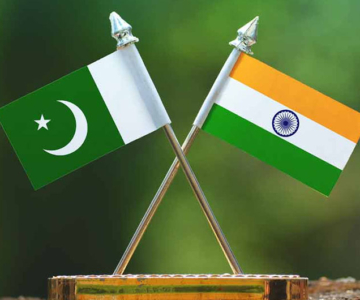
It is a matter of public record that the founder of Pakistan had stated that Indo-Pakistan relationship will resemble that of the USA and Canada. Even before the Partition, Jinnah in a 1946 press conference stated, “the two states (Pakistan and India)… will be friends and will go to each other’s rescue in case of danger and will be able to say ‘hands off’ to other nations. We shall then have a Munroe doctrine more solid than America…” This vision along with other pronouncements by Jinnah is buried in the debris of Pakistan’s national security paranoia. The spectre of India and its ‘hegemonic designs’ to use an oft-quoted phrase remain central to Pakistan’s security paradigm.

The unwavering view on India is what explains the context for the discussion paper entitled, The Sun in the Sky: The Relationship between Pakistan’s ISI and Afghan Insurgents -authored by Matt Waldman from the prestigious platform of the London School of Economics. Pakistan’s real power-centre, its security and intelligence apparatus are a self-sustaining reality. Other than the financing, of which plenty comes from the Western Capitals, there is a solid national opinion behind the xenophobic worldview carefully cultivated by a decades’ long well coordinated state policy. The centre of this argument is the ‘Indian threat’ and any conception of Pakistan’s security is linked to the evil designs of the powerful ‘enemy’ across the border.

Waldman’s report is neither authoritative nor presents a credible set of data to back up its central argument. But who does not know of the Taliban’s patronage by the security establishment. Confessional labels such as ‘patriotic’ and strategic assets are all too well known. Ask a random passerby on a Pakistani street and one will be amazed at the level of understanding by the common citizen. If you happen to travel a bit northwards and step out of the boundaries of the Punjab, even more riveting insights and stories will be related. Waldman is not telling us anything that we don’t know nor is he giving us a new perspective of how we frame our security interests and strategic priorities.

The report also alludes that Pakistan’s policy is coloured by its India-centric worldview. However, what is critically missing from the discourse at home is to tackle the India-problem, if one were to coin this phrase for simplifying a complex reality. Is this India-obsession sustainable, healthy and in our longer-term strategic interest?

Admittedly, India has not been that wise either. From its flawed strategy on Kashmir to the 1971 intervention it has provided enough ammunition, both literally and metaphorically, to the Pakistani establishment. If we were to ignore the transgressions such as Kargil, Musharraf’s unprecedented offers of revisiting the troubled history on Kashmir related UN resolutions fell on deaf ears. The usual refrain has reflected the typical South Asian emotionalism loosely packaged as ‘trust deficit’. If there is a military government it cannot be trusted, if civvies are in power, they are not the real masters. The end result is status quo thereby feeding into the military-industrial complex that cuts across national boundaries. (more…)

Whither civilian governance?

3 April 2010

My new piece published by The Friday Times

While the gurus of security and international affairs continue to unpack and make sense of the high-profile and much-hyped strategic dialogue , the people of Pakistan continue to ask questions about its direct relevance to their lives. If increased US investment in the energy sector and other poverty alleviation programmes would be outcomes of this exercise, perhaps there may be some hope for an ordinary Pakistani. However, it appears that the process of dialogue has harped on familiar tunes, adding to the sound and fury that defines Pak-US relations.

If anything, the re-emergence of the Pakistan Army’s ascendancy over national affairs has been a direct result of the much touted “strategic” dialogue. The Pakistan Army and its leadership have already taken over the foreign policy and recent developments suggest that their command and control over domestic policies of public interest remains as entrenched as ever. Whether this pertains to the meeting of top bureaucrats presided over by the Chief of the Army Staff, or the capitulation of the civilian government before the obsessively India-centric policy of our military-bureaucratic establishment, we are sure about who is calling the shots in the Land of the Pure. (more…)

New Education Policy

1 December 2009

A policy matter published in the iWrite Magazine

Raza Rumi responds to the new education policy for Pakistan

Yet another educational policy has been announced for Pakistan and its hapless citizens. We should not cast aspersions on the motives of an elected government, for we have been bitten by endless rounds of authoritarian rule which have not only destroyed the institutions of civilian governance, but have also demolished the integrity of our curriculum and mode of instruction. Decade after decade, dictators chose to glorify martial rule and later legitimized the abuse of jihad and violence. Even those who have studied at elite, expensive schools have somehow been doctored by the same curse of malicious textbooks. The surreal curricula have glorified looters and plunderers like Mahmud Ghaznavi only because they happened to be Muslims by a sheer coincidence of birth. Not to mention the Hindus, with whom we have coexisted for nearly a thousand years; they have been painted as treacherous, villainous and vile creatures ready to destroy the Muslims.

One would have expected that a legitimately elected government, representing the aspirations and pluralism of Pakistan’s small provinces would take a strong stance on the revision of pernicious curricula. Alas, this is now a distant, buried dream for all. The policy is silent on that. This is a government that is waging wars on terrorism rather successfully and with clarity of purpose, but the educational policy makes little mention of the madrassa reform which is now an imperative for the very survival of Pakistan as a viable state. Thousands of madrassas scattered all over the place, funded by external powers preach hatred, bigotry and a reversion to the Dark Ages. Who will reform these madrassas if the national education policy does not even bother to lay out a strategy and provide resources? The new policy promises that by 2015, the budgetary allocation for education would increase to seven percent of the GDP from the current 2.1 percent of the GDP. This is surely promising but how can a policy not envision the need or the strategy to mobilize such resources? Have we not heard such sanguine proclamations in the past? (more…)