Posts Tagged police

State accountability

21 June 2010
My piece published in The Friday Times (June 18 issue)
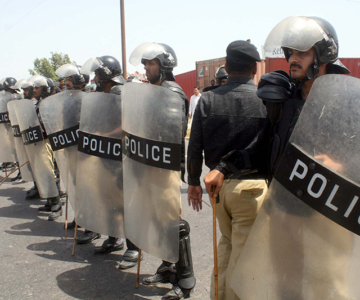
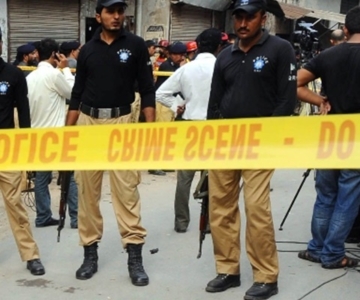
Leaving aside the political debate on the results of the recent Transparency International (TI) survey, the results are pretty damning for the masters of our destiny. The issue is not about which province is least or most corrupt. The fact that the majority of respondents hold the Police as the most corrupt department since the last eight years is a matter of grave concern. It is even more troubling, given the current security scenario where Pakistanis are facing a crisis of public safety. Markets, shops, and highways are not safe. If there is a respite from the terrorists, then the criminals are there to make hay while collapsing administrative and policing structures struggle to manage their operations. Let us not forget that security of the person and their property is a fundamental right of the Pakistanis.
The party-based and ethnicity-oriented feuds on TI survey are meaningless as the Police is a provincial subject and TI’s surveys have consistently shown that there is something deeply rotten in how the security apparatus works at the subnational level. The causes for such a crisis of governance need to be highlighted, regardless of which party we vote for or where we live. What could be more telling than the events of the recent past?

Institutions, accountability and the UN Report

12 June 2010

The UN Report is a historic document for it brings forth a set of findings and actions that should become the cornerstone for democratic mobilisation in Pakistani politics

The UN fact finding report on Benazir Bhutto’s murder is a scathing indictment of the Pakistani state and its dysfunctional institutions. However, sections of the media have seized it as a glorious opportunity to target the PPP itself by squarely apportioning the blame on Rahman Malik and Babar Awan – the two characters who are now punching-bags of the right wing. Not that Malik or Awan are spotless revolutionaries, but they are no different from the other political actors. After all, Pakistani politics is a nefarious web of patronage, sycophancy and shady deals, often involving the state and its agencies. The reason for targetting these two individuals is simple: they are close associates of President Zardari who, according to the Punjabi urban legends, is the alleged killer of Mohatarma.

Now that the UN report has exonerated Zardari of the crime, a few TV anchors and several writers in the vernacular press are hell-bent on proving that the real reason for Bhutto’s murder was the whisking away of a backup vehicle. Such a narrative ignores the gritty and ugly realities of our polity. The reason is quite clear: public discourse must be shaped in a manner that minimizes the embedded, historical role of the praetorian state, intolerant and suspicious as it is of alternative sources of power. In this case, it would be the popular legitimacy which Benazir Bhutto enjoys even in the grave.

The ‘establishment’

The UN report has attempted at a loose definition of what constitutes the Pakistani establishment, and places its intelligence agencies at the core of such a power-centre. In recent days, this has been derided by the usual suspects. First, the Urdu columnists whose careers have been shaped and enriched by invisible hands. Second, the TV anchors whose shows have lost all credibility. And lastly, the audience they cater to: the conservative mindset which cannot forgive the Bhuttos for being pro-poor, Sindhi and secular. (more…)

Whither rule of law?

23 April 2010

My piece published in the Express-Tribune

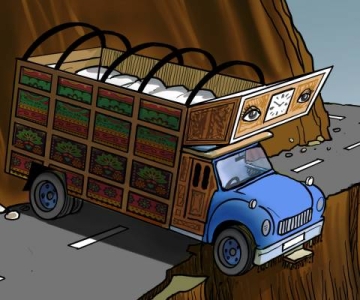
State effectiveness, by most definitions, has been waning in Pakistan. The ability of the law enforcement agencies and institutions to deliver services and entitlements is dwindling.

Ultra-nationalists resent the ‘failed state’ branding but what else can describe a dysfunctional apparatus that is unable to provide a basic entitlement, i.e. security? After 1973, the state has undertaken no serious civil service reform and the top-down reform under former president Pervez Musharraf has failed.

Therefore Pakistan has, among other things, witnessed a near-collapse of its institutions especially the criminal justice system where the police and prosecution have lost their efficacy and millions of cases are pending in courts.

Terrorism is often viewed in the country as the handiwork of ‘anti- Pakistan’ elements. However, rarely has it been noted that our criminal justice system is unable to cope with the spiralling phenomenon called terrorism. Cases are registered but proper investigations never take place. The overstretched prosecutors, lacking incentives to deliver, seldom pursue the cases in the courts. Consequently, the courts acquit most of the accused due to lack of credible evidence. (more…)

Lahore is burning

30 March 2009

Raza Rumi

[reportedly] 27 dead and dozens injured – no respite for us.

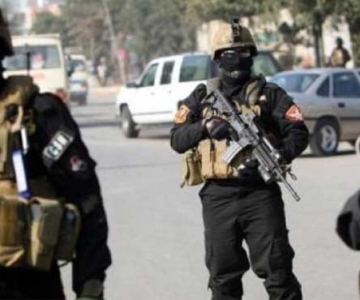
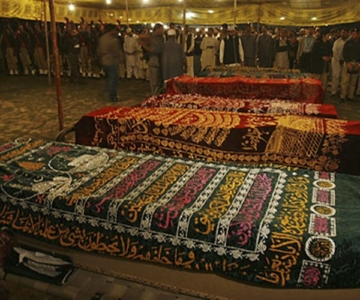
Once again, in less than a month Lahore has been ravaged by terrorists. Who said that Pakistan was a hub of terrorism – we are now the greatest victim of terror and militancy. The residents of Lahore are scared and the vibrant city seems to be enveloped in a mist of uncertainty and fear.

The Mumbai and later Lahore 3/3 model seems to be in vogue now. Extremely well trained commandos, with sophisticated weapons  and not afraid of death are let loose on the society. The media is hysterical as well and following the Indian media’s cue[s] is now a participant and embedded in the so-called operation. (more…)