Posts Tagged ‘Poetry’
Fahmida Riaz: A neglected genius
My op-ed for The NEWS
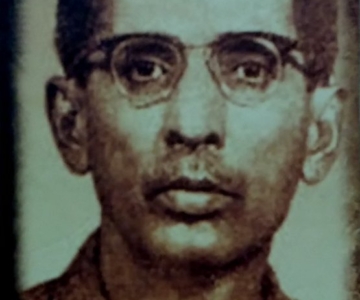
Whilst my earlier piece on the IMF programme and the tremendous discussion it has invoked deserves a rejoinder, I want to write on a completely different subject this week. I am perturbed by the fact that thousands of jobs have been recreated for those who were rightly or wrongly dismissed in the earlier dispensations; there is silence about one luminary, a towering one at that, who lost state employment twice. Fahmida Riaz’s name is yet to appear amongst the reinstated ones.
Following the physical departure of the leading Urdu poets – Qasmi, Munir and Faraz – Fahmida Riaz is arguably the greatest living poet of Pakistan. Controversial though this statement might be, her originality and path-breaking poetry has yet to find an equal in the turbulent waters of the Pakistani cultural river. It is hardly surprising that Fahimda Riaz has been targeted all through her otherwise illustrious creative career by state and society alike. She was branded as unpatriotic when she had to run for her life in the Zia-ul-Haq days and live in exile. In India, she was termed as a Pakistani agent since she criticised the communal tensions that the Indian state had encouraged. Read the rest of this entry »
Tags: Culture, Famida, Ghalib, India, Mir, pakistan, poet, Poetry, Riaz, Urdu
When compassion fills my heart
I am happy
when I am sad
I am together
when fallen apart
like earth
when I am silent
I have thunder
hidden inside
– Translation by Nader Khalili
“Rumi, Dancing the Flame”
Cal-Earth Press, 2001
~~~~~~~~~~~~~~~~~~~~~~~ Read the rest of this entry »
Tags: mystic, poem, Poetry, Rumi, spiritual, sufi, Sufism
questions from a worker who reads
Bertolt Brecht
who built thebes of the seven gates?
in the books you will find the names of kings.
did the kinds haul up the lumps of rock?
and babylon, many times demolished
who raised it up so many times? in what houses
of gold-glittering lima did the builders live?
where, the evening that the wall of china was finished
did the masons go? great rome
is full of triumphal arches. who erected them? over whom
did the caesars triumph? had byzantium, much praised in song
only palaces for its inhabitants? even in fabled atlantis
the night the ocean engulfed it
the drowning still bawled for their slaves.
the young alexander conquered india.
was he alone?
caesar beat the gauls.
did he not have even a cook with him?
philips of spain wept when his armada
went down. was he the only one to weep?
frederick the second won the seven years’ war. who
else won it?
every page a victory.
who cooked the feast for the victors?
every ten years a great man.
who paid the bill?
so many reports.
so many questions.
(The illustration is a painting entitled ‘Man Reading’ by John Sargent) Read the rest of this entry »
Tags: Bertolt, Brecht, class, John Sargent, Man Reading, poem, Poetry, worker, working
My soul has come on my lips
Amir Khusrau’s Khabaram Raeeda translated by Annemarie Schimmel
Tonight there came a news that you, oh beloved, would come –
Be my head sacrificed to the road along which you will come riding!
All the gazelles of the desert have put their heads on their hands
In the hope that one day you will come to hunt them….
The attraction of love won’t leave you unmoved;
Should you not come to my funeral,
you’ll definitely come to my grave.
My soul has come on my lips (e.g. I am on the point of expiring);
Come so that I may remain alive -
After I am no longer – for what purpose will you come?
(trans. A. Schimmel)
sent by JZ via email
Tags: Amir, Delhi, India, Khusrau, mystic, poem, Poetry, spiritualism, sufi, Sufism, Sultanate
The words of others
![]() |
|
|
Faiz Ahmed Faiz with friends: Faiz’s poetry is now being used to advertise phones |
|
![]() |
|
|
Habib Jalib: anti-establishment |
|
|
|
|
|
Opposition to the military regime was marked by a liberal ethos, a value-system that stressed constitutionalism, rule of law, and the independence of judiciary, rather than identifying with the politics of redistribution or attacking Pakistan’s problem uno supremo: poverty |
|
|
|
My piece published in the Friday Times last week
For decades, Pakistan’s poets and writers have defied conventions and the almighty establishment. Rooted in the progressive writers’ movement, the literature of resistance was a pro-people ideology that kept redistribution of power and resources at its core. The great poet Faiz Ahmad Faiz was often jailed and kept on the margins of the literary and cultural establishment and castigated as a “foreign agent” and “anti-Pakistan.” Scores of other writers had to suffer torture and silencing by the state when they challenged its arbitrariness. Habib Jalib faced similar treatment and died a poor man after decades of acting as the poetic conscience of a nation.
It was the lyrical, direct poetry of Habib Jalib that stirred the street for decades, echoing the vision of the world from below. Jalib’s expression was popular and immediate, and could be related to easily by the average listener. During the rule of General Ayub Khan, from 1958 until 1969, Jalib particularly represented the public conscience when he chanted his poem Dastoor (Constitution), which was about Ayub Khan’s tailor-made “constitution.” Later, this work was utilised in support of Fatima Jinnah’s (the Quaid-e-Azam’s younger sister’s) campaign against the general:
Aisay dastoor ko,
Subh-e-baynoor ko,
Mein naheen manta,
Mein naheen janta
(I do not accept/I do not recognise/A constitution that resembles/A morning with no light).
In 2008, we saw the Punjab Chief Minister chanting these lines. The poetry has come full circle. While the Chief Minister’s
Tags: capitalism, corporations, establishment, Faiz, Jalib, pakistan, Poetry, progressive, Urdu
I am only the house of your beloved
Rumi again…
“I am only the house of your beloved,
not the beloved herself:
true love is for the treasure,
not for the coffer that contains it.”
The real beloved is that one who is unique,
who is your beginning and your end.
When you find that one,
you’ll no longer expect anything else:
that one is both the manifest and the mystery.
That one is the lord of the states of feeling,
dependent on none:
month and year are slaves to that moon.
When He bids the “state,”
it does His bidding;
when that one wills, bodies become spirit. Read the rest of this entry »
Tags: poem, Poetry, Rumi, sufi, Sufism
powerless is the prayer…
Tags: ghazal, Poetry, shair, Urdu, verse
Ode to Benaras - Ghalib’s grand vision
![]() |
|
|
A Brahmin resident of Benaras |
|
![]() |
|
|
Ghalib |
|
![]() |
|
|
Benaras: “forever spring” |
|
|
It is incredible that a Muslim poet who prided himself on his Turkic ancestry and invoked the “warrior” past in his day-to-day conversation (through his letters) could compare the divine light at Mount Sinai to the lamps at Benaras |
|
he cancer of communalism and bigotry in South Asia continues to haunt us. These days, the Muslims are once again a subject of intense, though not always fair, scrutiny in India: their loyalties are being questioned and many are potential terrorists if not already abettors of violence. The post 9/11 world has contributed to the demonising of the Muslim identity and history to surreal heights.
The recent bomb blasts in Delhi have placed the communal discourse on the front pages. The invaders and violent Muslims have done it again. A friend called me from Delhi and narrated the profiling that takes place at marketplaces and how the gulf between different communities is widening.
There was a time, not in the ancient past, when in Delhi the greatest of Urdu poets Mirza Ghalib (1796-1869) lived in an age when Hindus and Muslims shared common saints, dargahs and even popular gods and goddesses. Written accounts of this age – the mid to late 19th century – relate how intimate co-exitence of “Mussalmans” and “Hindoos” had led to a relative amalgamation of customs among the common people. And poets like Ghalib could see the commonalities of spiritual streams:
I n the Kaaba I will play the shankh (conch shell)
In the temple I have draped the ahraam (Muslim robe)
The verse above delineates the Sufi concept of fana (or dissolution of the self in divine reality) and the unity articulated by the ancient Indian texts such as the Vedanta. Sufis were to elaborate this as the wahdat-al-wajood (Unity of Being) philosophy.
Tags: Benaras, Calcutta, Delhi, Ghalib, Hindus, Islam, mathnavi, Muslims, Pavan, Persian, poem, Poetry, tolerance, Varma, wahdatalwajood
In this game of chess
I was first seduced by love
then put in a fire of agonies
as i won the mastery
of the beloved
the beloved dropped me
and was gone
–Translation by Nader Khalili
Rumi, Dancing the Flame
Cal-Earth Press, 2001
~~~~~~~~~~~~~~~~~~~~
First, he tempted me
with infinite caresses.
He burnt me in the end
with pain and sorrow.
In this game of chess
I had to lose myself
in order to win Him.
– Translation by Azima Melita Kolin
and Maryam Mafi
Rumi: Whispers of the Beloved
HarperCollins Publishers Ltd, 1999
Tags: Love, Poetry, Rumi, sufi, Sufism
Abida Parveen sings Faraz’s poem
Found this enchanting piece of music here:
In his latest double CD “Paigham-e-Muhabbat” composer Muzaffar Ali, who has brought so much pleasure to our lives in the last two decades, included ‘O des aane wale bata’. This nazm by Ahmed Faraz and Akhtar Sheerani is beautifully sung by Abida Parveen.
For those of us who migrated during Partition from India to Pakistan or vice versa and have memories of the old homeland. Also many who have lived overseas, away from our birthplace for several years, and yet have a deep felt love and nostalgia for what was left behind, it strikes a cord.
In memory of Ahmed Faraz who was one of the greatest contemporary Urdu poets…
Tags: Abida Parveen, Ahmad Faraz, Music, Muzaffar Ali, Paigham-e-Muhabbat, pakistan, Poetry, soulful, Southasian music
The Breeze at Dawn

Courtesy Isa Daudpota
Tags: Poetry, Rumi, sufi, Sufism
Ode to Mirza Ghalib’s Haveli

This excellent post brought found here back so many memories - of my two memorable visits to the famed but neglected Haveli
Gali Qaasim Jaan was wrapped in fading darkness. A few tattered curtains hung listlessly on some doors. Pigeons flew overhead and some kids fought over marbles. Somewhere a goat tethered to a threshold, bleated timidly.This was Ballimaaran in the walled city of Delhi more than 150 years ago where one of the greatest masters of Urdu Poetry, Mirza Ghalib once lived.Mirza gave a whole new dimension to the world of Urdu Poetry, and has been hailed as one of the the true Masters. My desire to visit Mirza’s Haveli was soon going to be realized. Regardless of how well one knows the streets of Delhi, it is no joke to locate Gali Qasim Jaan where Mirza’s Haveli still stands.
It is a crying shame that what once was a two-storey Haveli has been reduced to barely a neglected remnant. Years of government indifference has led to severe misuse of the place.Finally, the Archaeological Society of India took matters into its own hands and two ushers now look after the Haveli. Visiting hours are observed for tourists who long to feel the air, which still echoes with Mirza’s recitals.
Tags: Ballimaran, Delhi, Ghalib, Haveli, India, literature, Mirza, Mughal, old Delhi, poet, Poetry, Urdu
This Love — Quatrain from Rumi
This Love is the king,
yet a throne cannot be found.
It is the essence of the Koran
yet a verse cannot be found.
Any lover hit by the Hunter’s arrow
will bleed all over,
yet a wound cannot be found.
– Version by Jonathan Star and Shahram Shiva
“A Garden Beyond Paradise”
Bantam Books, 1992 Read the rest of this entry »
Tags: Divine, God, Love, mystic, Poetry, Rumi, sufi, Sufism
The Verge of Tears
You make our souls tasty like rose
marmalade. You cause us to fall flat
on the ground like the shadow of
a cypress still growing at its tip.
Rainwater through a mountain forest,
we run after you in different ways.
We live like the verge of tears inside
your eyes. Don’t cry! You trick some Read the rest of this entry »
Tags: poet, Poetry, Rumi, sufi, Sufism
Thou art the sky and the deep sea (Rumi)
When you fall asleep,
you go from the presence of yourself
into your own true presence.
You hear something
and surmise that someone else in your dream
has secretly informed you.
You are not a single “you.”
No, you are the sky and the deep sea.
Your mighty “Thou,” which is nine hundredfold,
is the ocean, the drowning place
of a hundred “thou’s” within you.
~ ~ ~ ~ ~ ~ ~ ~~ Read the rest of this entry »
Tags: mystic, mystical, poem, Poetry, Rumi, sufi, Sufism
Would you permit me?
Nizar Qabbani
In a country where thinkers are assassinated, and writers are considered
infidels and books are burnt,
in societies that refuse the other, and
force silence on mouths and thoughts forbidden,
and to question is a sin,
I must beg your pardon, would you permit me?
Would you permit me to bring up my children as I want, and not to
dictate on me your whims and orders?
Would you permit me to teach my children that the religion is first to
God, and not for religious leaders or scholars or people?
Would you permit me to teach my little one that religion is about good
manners, good behaviour, good conduct, honesty and truthfulness,
before I teach her with which foot to enter the bathroom or with which hand she
should eat? Read the rest of this entry »
Tags: Arabic, Damascus, Islam, Musims, Nizar Qabbani, poem, Poetry, Syria
O my Lord, if I worship you
Today I was directed to this excellent blogsite devoted to Rabia Basri’s poems - found this bold poem by Rabia, an early Sufi from Iraq and one the better known women Sufi poet:
O my Lord,
if I worship you
from fear of hell, burn me in hell.
If I worship you
from hope of Paradise, bar me from its gates.
But if I worship you
for yourself alone, grant me then the beauty of your Face.
Tags: God, mystic, Mysticism, poet, Poetry, Rabia, rabia al basri, sufi, Sufism
Know the true definition of yourself
Rumi on knowing ourselves
Suppose you know the definitions of all substances
and their derivatives,
what good is this to you?
Know the true definition of yourself.
That is indispensable.
Then, when you know your own definition, flee from it,
that you may attain to the One who cannot be defined,
O sifter of the dust.
~ ~ ~ ~ ~ ~ ~ ~ Read the rest of this entry »
Tags: mystic, poem, Poetry, Rumi, sufi, Sufi poetry, Sufism
“Better than Cabbage Soup”
Rumi on the deeper meanings of fasting in Ramzan
What sweetness lies in an empty stomach!
Man is like a lute: no more, no less.
If the lute is full
it cannot sing a high or low note.
If your mind and stomach
burn with the fire of hunger
it will be like a heavenly song for your heart.
In each moment that fire rages
It will burn away a hundred veils
And carry you a thousand steps
toward your goal. Read the rest of this entry »
Tags: fasting, Islam, Muslim, mystic, Poetry, ramadan, ramzan, Rumi, sufi, Sufi poetry, Sufism
Sab Thath pada reh jaye ga…(When the gypsy-headman leaves)

These pithy Urdu verses by Nazeer Akbarabadi lament that all will be abandoned when the Banjara (gypsy), the headman or Naik in the folklore, [or at a general level the life-traveller] will leave his temporal abode. Read the rest of this entry »
Tags: banjaara, gypsy, Nazeer Akbarabadi, poet, Poetry, Urdu, verse