Lovers have nothing to do with existence
Kaifi & I
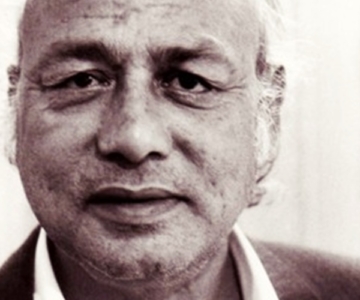
Shabana Azmi reads from her mother Shaukat Kaifi’s memoirs at the Jaipur literary festival. The segment was introduced by Urvashi Butalia
Presented by DNA
Jaipur Literature Festival 2010 from Dreamcast India on Vimeo.
I am enslaved to fate, of all else say no more – Rumi
" I am enslaved to fate, of all else say no more
With a sweet tongue speak, else I plea say no more
Speak not of troubles, of treasures, tell me more
And if of this you know not, be not troubled, say no more
I have gone insane, Love found me, then whispered in my ear
'I am here, cry not aloud, curse yourself not, say no more'
I said ' O Love it is other than Thee that I fear'
Said ' it may thus appear, yet it is not so, say no more
I speak in you ear, to you bring secrets near
Speak with your head, confirm a nod, say no more'
I asked, ' What do I see? Is it an angel or a man? '
Said ' no more an angel than a man, is another, say no more'
'Tell me what it is, why withhold, why the flames of my torment fan'
Said ' just be tormented, confused, say no more
For leaving this colorful and false abode, you have made no plan
Rise up and just depart, leave this home, say no more'
Maulana Jalaluddin Rumi
Tau kiya yeh tay haye… (Gulbahar Bano singing)
A piece of Urdu poetry that has remained with me through seasons, years and all the vicissitudes...
This is an extraordinary ghazal (rhymed poem in Urdu composed in classical style). The poet is perhaps Saleem Kausar whose expression is subtle yet brutal. There is a sense of finality in the lyrics - a denouement that is being challenged and hence a dynamic is created that allows the tragedy of two people parting their ways to turn into a moment of absolute beauty. The sadness of the verse is augmented by Gulbahar Bano's unique voice that brings out the depth of meaning in the lines.
I can only translate the first couplet:
Tau kiya ye tay haye ke ab umr bhar nahee milna
Tau phir ye umr bhi kiyon, tum se gar nahee milna
Is it now agreed that we shall not meet for life
But what good would be living if I will not be with you
As I rendered this literal translation, I wanted to curse myself for being so inadequate with words.. Those who can understand Urdu or Hindi would know what exactly I am complaining about. I dedicate this to someone special who remains as close as time itself. In fact, I am grateful to this muse who sent it the other day bringing back the smell of summer heat, the shades of white and all the flowers that bloomed and were tucked into thick books.
Here is the ghazal
another version found on youtube:
‘My life-achievement’ – karnama e hayat
What great lines
Mera karnama-e-zindagi
Meri hasraton kay siwa nahi
Yeh kiya nahi, woh hua nahi
Yeh mila nahi, woh raha nahi
The achievement of my life is nothing
But things that could not be done
I could not do it, [or] 'that did not happen'
Did not get that and what I got, did not stay with me
On the bank of the river
On the bank of the river,water is grudged by that one alonewho is blind to the flowing stream.
~~~~~~~~~~
Bar lab-e ju bokhl-e âb ân-râ bovadku ze ju-ye âb nâ-binâ bovad
-- Mathnawi II:894Version by Camille and Kabir Helminski"Rumi: Daylight"Threshold Books, 1994Persian transliteration courtesy of Yahyá Monastra
Jaipur, Faiz and Ali Sethi
Ali Sethi recently attended the Jaipur literary festival and his extraordinary performance is now accessible to those who were not there. I should thank him for sharing this video. Ali's instructions were also meticulous but I will not post them here except his concluding comment: the whole of the rest of the session is fantastic, and includes an excellent performance by Shabana Azmi as well as a very funny story told by Javed Akhtar about his first meeting with Faiz Sahib..
Click and enjoy!
A rare portrait of Ghalib
Ghalib the Urdu poet who described himself as a man-bitten muse, remains immortal by way of his Urdu and Persian poetry and his modern witty prose. His religious views were secular even by the twenty first century standards - I wrote about his eclectic poetry and also posted a piece on his little, neglected Haveli in Delhi. Thanks to Aniket Alam, I discovered his photograph and am posting it here.

Chal Way Bullehya Chal O’thay Chaliyay – Let’s go where everyone is blind
Bahar Ayee (Spring Has Come)
*By Faiz Ahmed Faiz
Translated by Ayesha Kaljuvee
Spring has come
So have returned suddenly from the past
* *
All those dreams, all that beauty
That on your lips had died
* *
That had died and lived again each time
All the roses are blooming
That still smell of your memories
That are the blood of my love for you
* *
A TRIBUTE TO KAIFI AZMI
Dr. Visho Sharma has been kind enough to send me this guest post that pays tribute to a legendary poet of the subcontinent who was committed to his principles and ideology throughout his life. RR
Jo bejaan khilonon se bahel jaati haiy
Tapti saanson ki haraarat se pighul jaati haiy
Paaon jis raah mein rakhti hai phisul jaati haiy
Bunkey seemaab hur ek zurf mein dhul jaati haiy
Zindagi jihad main hay sabar kay qabu main nahin.
Jannat ek aur hay jo murd kay pahloo main naheen.
Uski azaad ravish pur bhi machalna hay tujhey
Zeest key aahni saanchey main dhulna hai tujhey
Uth meri jaan mere saath hi chalna hai tujhey.”
These verses are from the Urdu poem “Aurat” (Woman) written by the famous Urdu poet from India , Kaifi Azmi. What is remarkable is that Kaifi wrote this poem in the 1940s before the independence of India . In that era when the Indian society was very traditional and very much a man’s world, such thoughts were almost unheard of. But then Kaifi was always decades ahead of his time.
Bulleh! to me, I am not known
Faiz’s ‘Intesab’ – a lovely translation
A reader - Joe 31 - has rendered a great translation of Faiz's poem - "Intesab". I am posting it as a separate blog entry for all those who read and enjoy Faiz Ahmad Faiz, Pakistan's eminent poet. This poem appears as an introduction to one of his early collections of verse. This timeless poem is relevant even today as it celebrates the resilience and courage of Pakistani proletariat.
Dedicated to these times, and the sorrow of these times.
The pain of today, that is set against the plentiful garden of life.
The forest of dead leaves, that is my land.
The collection of pain that is my land.
Dedicated to the gloomy lives of clerks
Moth eaten hearts and words.
Dedicated to the postmen
Dedicated to the coachmen
Dedicated to the railway workers
Dedicated to the innocent beings in the factories.
Majeed Amjad and chopped trees
In response to my article on Lahore's vanishing trees, a reader reminded me of one of my favourite poems in Urdu composed by the lesser known genius, Majeed Amjad. I am posting this poem though I am not sure if everyone will be able to read the Urdu script. I am taking a chance at translating the opening lines:
For twenty years, these trees stood at the doorstep of a singing canal
Gallant guards at the borders of swaying fields
Shady, enticing, blossoming chatnars
All were sold for a mere twenty thousand rupees
In the last stanza, after all the trees have been chopped, the poet cries
Now I stand by the singing canal and muse
In this murderous environment, only my thought sways
Adam's descendants ought to chop me, why not?
Spinning with your love
I am filled with splendor,
spinning with your love.
It looks like I'm spinning around you,
but no – I'm spinning around myself!
Rumi's Quatrain 1118
-- Version by Jonathan Star and Shahram Shiva
A Garden Beyond Paradise
Bantam Books, 1992
Polish your heart for a day or two
Stop talking!
What a shame you have no familiarity
with inner silence!
Polish your heart for a day or two:
make that mirror your book of contemplation.
His Sun always shines within me
You call him a moon,
yet moonlight fades.
You call him a king,
yet kingdoms fall.
How often you say,
Wake up, you'll miss the sunrise.
But His Sun always shines within me.
How can I miss the sunrise?
-- Version by Jonathan Star and Shahram Shiva
A Garden Beyond Paradise
Bantam Books, 1992
Cast the paradise into hell…(Ghalib)
Courtesy mehr-i-niimroz, I found one of my favourite verses from Ghalib
taa((at me;N taa rahe nah mai-o-angabii;N kii laag
doza;x me;N ;Daal do ko))ii le kar bihisht ko
1) so that, in obedience/worship, the attachment/desire of wine and honey does not remain
2) take Paradise, and cast it into Hell
Commentary here
In the company of lovers
I am drunk and you are insane
tell me, who will lead us home?
How many times have I asked you not to drink so much
for I see no sober soul in town.
Come to the tavern my dearest and taste the wine of love
for the soul is joyous only in the company of lovers.
The tavern of love is your livelihood
your income and expenses, the wine.
Be careful, not to trust a sober soul
with even one drop of this wine.
Go on playing your lute, my drunken gypsy but tell me,
between the two of us, who is more drunk?
As I left my house a Sufi approached me,
in his glance I saw a hundred gardens.
He swayed from side to side like a ship without an anchor,
while a hundred reasonable men watched on enviously.
Where are you from? I asked him.
He replied, "Half from Turkistan and half from Farghaneh,
half from water and clay and half from soul and heart,
half from the edge of the sea and half from the depths of the coean."
Rumi -- Ghazal (Ode) 2398
Translated by Azima Melita Kolin
and Maryam Mafi
Rumi: Hidden Music
HarperCollins Publishers Ltd, 2001
The Fragile Vial
I need a mouth as wide as the sky
to say the nature of a True Person, language
as large as longing.
The fragile vial inside me often breaks.
No wonder I go mad and disappear for three days
every month with the moon.
Turn your face toward your own face
The medicine of all intellects is just a picture of Love,
the faces of all sweethearts are but His veil.
You who are devoted to Love, turn your face toward your own face:
you have no kinsman but yourself, you who are distraught.
The faqir made a qiblah of his heart and began to pray:
The human being has nothing but that for which he labors.*
Before he heard any answer to his prayer
he had been praying many years.
He prayed intently without receiving any overt response,
but in secret from Divine grace he was hearing I am here.
Since that sickly man was always dancing without a tambourine,
in reliance upon the bounty of the Almighty Creator,
though neither a heavenly voice nor Divine messenger
was ever seen to be near,
yet the ear of his hope was filled with Here I am.
His hope was saying, without tongue, "Come!"
and that call was sweeping all weariness from within his heart.
Enthralled only by love
whenever you meet
someone deep drunk
yet full of wisdom
be aware and watch
this person is enthralled
only by love
I am that
The marvelous sound
That comes from the sky – I am That.
The sweet fragrance
That comes from the garden – I am That.
The great beauty
That comes from the heart and soul
Until I leave . . . Wait!
I can't leave – I am That.
Rumi - version by Jonathan Star and Shahram Shiva
A Garden Beyond Paradise
Bantam Books, 1992
Ahmed Nadeem Qasmi (1916-2006)
I am republishing an old article that appeared in The Friday Times, Pakistan on the great Urdu poet Ahmed Nadeem Qasmi.
Ab aik baar to qudrat javaabdeh thehre
hazaar baar ham insaan aazmaaye gaye
Now Nature must be held accountable at least once
We humans have been held answerable a thousand times
Few men evoke such awe and respect as the departed poet and writer Ahmed Nadeem Qasmi who breathed his last on July 10 2006. His mastery over poetry – he has been equally prolific in traditional ghazal and nazm – and prose – as a short story writer, journalist and literary critic – stand at the pinnacle of Urdu literature and he has contributed to the language over 50 titles.
Born in 1916 amidst the scenic Soon-Sekasar valley in district Khushab, nature influenced the evolution of Qasmi’s poetic sensibilities. Exposure to the grim realities of rural India’s inequities also played their part in his development as a writer; the underlying theme of his poetry is human dignity and his short stories – regarded as next in line to another master, Munshi Prem Chand, for their directness and simplicity – portrayed the woes of the Punjabi peasantry and their interaction with power structures. Following his matriculation from Campbellpur in 1931, around the time when he wrote his first poem, he moved to the Sadiq Egerton College in Bahawalpur and graduated in 1935.
Fahmida Riaz: A neglected genius
My op-ed for The NEWS
Whilst my earlier piece on the IMF programme and the tremendous discussion it has invoked deserves a rejoinder, I want to write on a completely different subject this week. I am perturbed by the fact that thousands of jobs have been recreated for those who were rightly or wrongly dismissed in the earlier dispensations; there is silence about one luminary, a towering one at that, who lost state employment twice. Fahmida Riaz's name is yet to appear amongst the reinstated ones.
Following the physical departure of the leading Urdu poets – Qasmi, Munir and Faraz – Fahmida Riaz is arguably the greatest living poet of Pakistan. Controversial though this statement might be, her originality and path-breaking poetry has yet to find an equal in the turbulent waters of the Pakistani cultural river. It is hardly surprising that Fahimda Riaz has been targeted all through her otherwise illustrious creative career by state and society alike. She was branded as unpatriotic when she had to run for her life in the Zia-ul-Haq days and live in exile. In India, she was termed as a Pakistani agent since she criticised the communal tensions that the Indian state had encouraged.
Ode to Mirza Ghalib’s Haveli

This excellent post brought found here back so many memories - of my two memorable visits to the famed but neglected Haveli
Gali Qaasim Jaan was wrapped in fading darkness. A few tattered curtains hung listlessly on some doors. Pigeons flew overhead and some kids fought over marbles. Somewhere a goat tethered to a threshold, bleated timidly.This was Ballimaaran in the walled city of Delhi more than 150 years ago where one of the greatest masters of Urdu Poetry, Mirza Ghalib once lived.Mirza gave a whole new dimension to the world of Urdu Poetry, and has been hailed as one of the the true Masters. My desire to visit Mirza’s Haveli was soon going to be realized. Regardless of how well one knows the streets of Delhi, it is no joke to locate Gali Qasim Jaan where Mirza’s Haveli still stands.
It is a crying shame that what once was a two-storey Haveli has been reduced to barely a neglected remnant. Years of government indifference has led to severe misuse of the place.Finally, the Archaeological Society of India took matters into its own hands and two ushers now look after the Haveli. Visiting hours are observed for tourists who long to feel the air, which still echoes with Mirza’s recitals.
The Verge of Tears
You make our souls tasty like rose
marmalade. You cause us to fall flat
on the ground like the shadow of
a cypress still growing at its tip.
Rainwater through a mountain forest,
we run after you in different ways.
We live like the verge of tears inside
your eyes. Don't cry! You trick some
O my Lord, if I worship you
Today I was directed to this excellent blogsite devoted to Rabia Basri's poems - found this bold poem by Rabia, an early Sufi from Iraq and one the better known women Sufi poet:
O my Lord,
if I worship you
from fear of hell, burn me in hell.
If I worship you
from hope of Paradise, bar me from its gates.
But if I worship you
for yourself alone, grant me then the beauty of your Face.
Published in The Friday Times