Posts Tagged PMLN

Consensus is vital for democracy

29 January 2012

 Any morality-led reinterpretation of the supreme law will open doors for future misuse

The federal government seems to have escaped many a crisis in recent months. There is a pattern to this madness. The systemic fault lines of Pakistan’s political system manifest themselves time and again. Whether it is the long-standing civil-military distrust or the fissures within the political elites, this is not a new story. In recent years, the new power centre i.e., higher judiciary has entered the equation thereby creating a new dynamic in terms of power imbalances between various actors. This development has its roots in the events of 2007-2009 when the so-called lawyers movement mobilised urban middle classes and led to what some analysts have termed as the ‘law model’.

Faisal Siddiqui, an active member of the lawyers movement has cited this historic quote in his piece (January 1, 2012,The Dawn) by Justice Jawwad S. Khawaja: “The past three years in the history of Pakistan have been momentous and can be accorded the same historical significance as the events of 1947… and those of 1971 … It is in this backdrop that these petitions have been heard and decided.”

Furthermore, Siddiqui writes how the courts and growing ‘judico-politico’ power articulated the ‘law model’ — negotiating democratic transition through courts and the law — in direct opposition to the ‘force model’ conceived by Musharraf and his associates in the junta. The tensions resulted in the emergence of a ‘consent’ model typified by the NRO and how it allowed for a negotiated democratic transition.

Indeed, this is a new development in Pakistan. The understanding of this law model is rather limited and perhaps rudimentary given that this model is still evolving. Nevertheless, a few conceptual problems can be detected. First of all, it is a well-established principle that democratic development requires an elite consensus of sorts.

The very process of democratisation, as has been noted in various democratic countries entails negotiation, bargain and compromise. Therefore, the consent model is what has driven many countries towards democracy. Several Southeast Asian countries like Indonesia have implemented this model and proceeded with strengthening of civilian institutions.

Needless to say, the political elites and civil society play a major role in effecting this consensus. By signing the charter of democracy, most political parties in Pakistan did agree on a common framework. However, in actual terms the realisation of CoD has been stunted. Even though much of it has been implemented in terms of constitutional reform, the interplay between the parliament, judiciary and the military has been problematic to say the least. (more…)

Before it’s too late

24 January 2011

As Pakistan enters into another year fraught with fresh challenges and old dilemmas, it is quite clear that its ruling elites – civil and military – are unwilling to learn from history. The crisis of governance in the country has spiraled out of control. We are heading towards grave internal conflict, the possibility of which has been bolstered by serious economic woes in the wake of high inflationary trends. Most importantly, the dilemma of reconciling our national security interest with a possible long-term economic agenda is becoming even more problematic by the day.

Radicalistan? Pakistan’s radicalization is now a threat to its society and the region. Whilst General Zia ul Haq will be remembered for institutionalizing extremism, most Pakistani governments, including democratic and quasi-democratic regimes have in the past, surrendered to the Islamist fringe. From Liaquat Ali Khan’s acquiescence to a terribly vague and confusing Objectives Resolution to Zulfikar Ali Bhutto’s unforgivable act of declaring Ahmedis as non-Muslims through a constitutional amendment, Pakistan’s long-term interest has always been sacrificed at the altar of short-term expediency and political survival. But the Pakistan of today is not a case of a majority beholden to a virulent minority; it is split from within and fraying at the edges.

Extremism has become embedded in our social fabric?: we are a country in transition. The old is cracking up and the new remains undefined and directionless. Over 65 percent of Pakistan’s exploding population is under the age of 26 and the coming generations will set the future course of the country. However, the portents are disheartening. Nearly 60 percent of youth surveyed in a countrywide poll (organized by British Council Pakistan) had little faith in democracy. Therefore, the glorification of former Governor Punjab Salmaan Taseer Shaheed’s murderer is not an isolated incident. It reflects a combination of societal changes in the broader context of religo-political transformation. At least three factors have greatly contributed to these phenomena.

First, the education system and its overtly pro-jihad bias (whether in madrassas or in state-run schools), has led to the construction of a particular mindset that shuns reason in favor of a theological or a hyper-nationalist discourse. Second, the institutionalization of mullahs and mosques with hefty state patronage backed by the zakat distribution systems ensure that public discourse is controlled and aligned with national security imperatives. Third, the sheer neglect of a social change agenda and absolute disregard for issues of social justice and a citizen voice means that there is an ever-increasing citizenship crisis. A large number of Pakistanis either enjoy partial citizenship rights (Balochistan, many parts of Khyber-Pakhtunkhwa and even Karachi for that matter) or none at all (Federally Administered Tribal Areas, Azad Jammu and Kashmir to name a few). (more…)

Media freedoms versus responsibility (holy cow syndrome)

18 July 2010

Published today in The News

Much has been said about media accountability and the dire need of a regulation framework for Pakistan’s new power centre. Pakistani media has earned its freedom and independence after a long, often bloody, struggle against military dictators and civilian autocrats. Countless journalists were imprisoned, harassed, even killed in this decade’s long fight for free speech, otherwise a much-touted fundamental right in every Pakistani constitution. There is no question that a viable democracy and a culture of accountability cannot exist without a robust and independent media.

Globalisation and the rise of electronic media in Pakistan, ironically under General Musharraf, is a relatively new phenomenon and has changed the contours of power matrix in the country. If anything, electronic media and its older cousin, the print media, with a plethora of columnists, are now an established group with considerable influence and nuisance value. Actualisation of the newly acquired powers was best demonstrated during the anti-Musharraf movement from 2007-2008. This was a startling development and pleased most Pakistanis as they found the echo of their daily trials and tribulations in the direct and frank reporting by the numerous TV channels.
Ambiguous regulatory framework: The sudden liberalisation of private television channels took place in an environment when a regulatory framework had barely been established. The Pakistani Electronic Media Regulatory Authority (PEMRA) came into existence during an unrepresented regime and, therefore, it lacked the essential process of consultation, ownership, and national consensus. On the one hand, media oligarchies emerged despite the vague announcements that cross ownership would not be permitted. On the other hand, electronic media showed little interest in developing a common code of conduct and finding ways of self-regulation. The results and the initial phase were disasters. Human limbs and heads found ample air time thereby glorifying terrorism and violence, and impacting the collective psychology of the viewers through a gradual process of desensitisation. Furthermore, objectivity was thrown out of the window and partisan, one sided rants became the order of the day.

Lawyers and media alliance: This was a type of intense civil activism and unprecedented representation of the Pakistani middle class in mainstream politics. Seemingly, a momentous development, the foresighted mobilization, came into public domain regurgitating the ‘anti-politics’ biases of Pakistan’s conservative middle class. This automatically resulted in severe distortions of the political expression. The first rule of law was personified by a handful of judges who had been linked to Pakistan’s regressive establishment throughout their careers; and a misconception that rule of law would lead to political, economic, and social transformation became a ‘truth’. Minority voices such as this scribe, alerted to the inherent contradictions of these developments. In short, intra-bourgeoisie struggles could be disruptive but rarely led to transformative social change. The results today are clear. The lawyers are beating up every public official and media representative who attempts to question their activities. After heroic battles the conduct of judges has been called into question. (more…)

Pakistan’s democracy remains fragile

30 April 2010

My piece which was published by The News, Pakistan under a different title

If the parliament and judiciary want to continue exercising their newfound powers, they have no option but to act strictly within the framework of the Pakistani Constitution

Pakistan is a surreal country. Only here we have long, protracted struggles for democracy and only here we are almost always ready to scuttle democracy. Perhaps Iskander Mirza was not all too wrong while making the assessment that democracy does not suit the genius of our people. An added qualification is that it does not suit the genius of the elites, in particular the unelected institutions of the state.

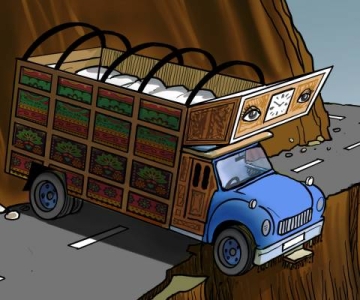
There is now a clear and present danger that the judicial review of the 18th Amendment will lead to a potential clash of the key organs of the state: the legislature and the judiciary. Pundits have also predicted that if such a situation arises, then a logjam will benefit the third force — Pakistan’s well organized formal institution, which is readily available to undertake crisis management. Perhaps such fears are slightly exaggerated and misplaced. But the reality is that Pakistani history teaches us some interesting though unsavoury lessons.

Curse of history

The Constitution of 1956 was drafted, almost after a decade of the new country’s formation, as the elites were not interested in changing the colonial structure of the state and its institutions. After much negotiation and a bit of arm-twisting, parity between (more…)

How instability is garnered

8 February 2010

My latest analysis published by The News

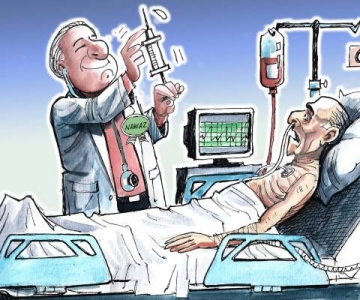
We continue to bemoan the failure of democratic norms to take root in our governance culture. True, that the repeated extra-constitutional interventions and direct or indirect military rule have rendered democratic governance as a distant and seemingly unattainable goal. In addition, the emergence of non-state actors, sometimes more powerful than the state itself has also led to formidable and multiple centres of power. In such a milieu, achieving the sustainability of democratic process is a Herculean task. Whilst the intentions of our unelected state institutions and their overt and covert non-state partners are clear, the behaviour of the political elites is confounding.

Not unlike the past, the divisiveness of Pakistan’s political elites has entered into a decisive phase. Fissures are apparent in the post-2008 political accord that led to the unanimous election of the Prime Minister, Yousaf Raza Gilani. The first cleavage, now a recurrent pattern, has emerged in Sindh where the coalition partners — the Pakistan People’s Party (PPP) and the Muttahida Qaumi Movement (MQM) — are pitted against each other for political control of urban Sindh. The latest skirmish is rooted in the evolving arrangements for the local governments and who will end up controlling the third tier of government. However, there is an ethnic dimension to it as well. Karachi remains besieged by sectarian, provincial, and linguistic ghosts that apparently are alive and kicking.

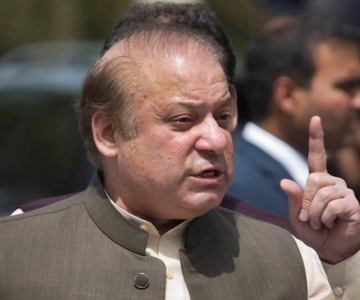
The second disruption in the political compact that led to a transition towards representative rule is unfolding in the shape of a brewing discord between the ruling PPP and the opposition Pakistan Muslim League (Nawaz). The PML-N rules the Punjab and thereby has a stake in the system and power matrix but it is also striving to maintain its ‘opposition’ status. This is why a dual strategy is evident where a few firebrand leaders of PML-N take a hard line against the federal government and the President Asif Ali Zardari. The party does not want to rock the system it says but also considers ‘options’ that lead to a mid-term election or even the premature exit of the President from the office in the wake of Supreme Court rulings on the National Reconciliation Ordinance. (more…)

Suicide Democrats

5 March 2009

Raza Rumi

I am appalled by the recent events that have yet again stirred instability and uncertainty into Pakistani politics. Those of us who voted in last year’s elections expected that the political leaders and Pakistan’s political elites would learn a lesson from our unfortunate history.

We also expected the lawyers’ movement, headed by men of extraordinary calibre, to display sagacity and vision and contribute to the consolidation of a democratic culture. However, what we witnessed was a complete rejection of the Feb 18 polls by the leading lights of the movement, and a few other naïve political actors. When the electorate voted in large numbers and returned the two mainstream political parties to the parliament, the lawyers, instead of accepting that they were wrong to boycott elections, insisted on their narrow and bourgeois interpretation of the term “rule of law.” (more…)