Blogging without borders
My piece published by the Walkerly Magazine
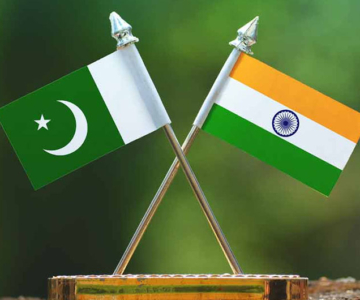
The internet has demolished the iron curtain between Pakistan and India almost overnight, writes Pakistani blogger and writer Raza Rumi.
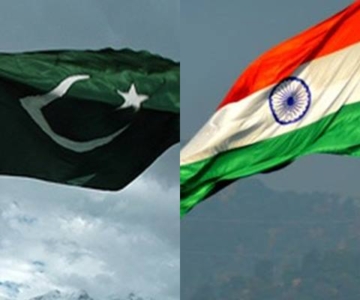
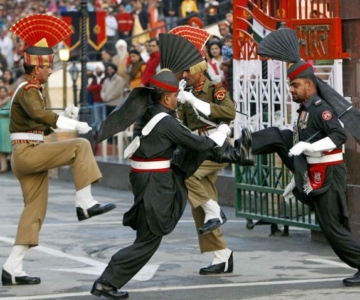
I don’t need to tell you about the multi-billion dollar enterprise that is the animosity between India and Pakistan. Suffice to say that the birth of a new nation-state on the Indo-Pak sub-continent was among the bloodiest of all time, entailing the migration of nearly 10 million of the wretched of the earth who had to find a new home.
Millions of deaths and three wars later, the bitterness refuses to go away and the interaction of the two countries’ populations has been very limited over 60 years. As a result, not all Pakistanis have the privilege of visiting India. I happen to be one of those who, by sheer coincidence, have been visiting India primarily for work or cultural exchange.
My forays into journalism coincided with my alter ego as a blogger. Purely by accident, I discovered the world of blogging, driven by the desire to post my pieces published by The Friday Times (TFT), a weekly Pakistani magazine. Trying to avoid creating a paid website, the blog template came to my rescue.
Amankaar Tehrik (peace movement) in Pakistan challenges the status quo
Courtesy Fouzia Saeed
DISSPELLING THE MYTHS ABOUT TALIBAN
Myth: The root cause of Terrorism is extreme poverty and lack of education
Reality: This is not true. There are many countries in the world that suffer from extreme poverty but do not have terrorist groups. Within Pakistan many areas are more poor than Swat, but have not become violent. On the other hand people who have become terrorists are not doing anything to eradicate poverty or provide education. Terrorists merely use the resentment of the marginalized and those resentful of other state actions in the initial phase of their ideological campaign. Once in control, they tax the poor, destroy school buildings and stop girls from going to schools. Most of those who have been killed due to militant attacks are women, peasants and the poor.
Civil society speaks
Zinda dilaan-e-Lahore say no to Talibanisation, reports Raza Rumi
Never before have we citizens been traumatised with an uncertain future and the knocks of destruction at our door as is the case in the year 2009. The celebrated twenty first century has, if nothing else, blown the contradictions of Pakistani society and state right into our faces. One hundred and eighty million people cannot be spectators to the imperial great games and a callous state that gropes in the dark trying to locate the ‘enemy’ outside, instead of looking into its own crevices and cracks.
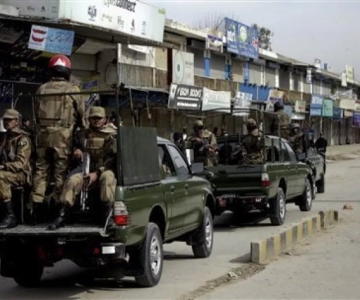
Not that Lahore has been a haven of peace in recent years – the inequities, the crime levels have been on the rise. However, March 2009 witnessed two full-scale terror attacks in the city of gardens, shrines and a centuries-old tolerant culture. Media gurus were quick to involve India, RAW, the Americans, everyone under the sun except the enemy within. First the friends of Pakistan – the Sri Lankans and then the ill-equipped and vulnerable Police Academy at Manawan, were attacked by trained assassins who espouse a version of Islam that no sane Muslim can ever live with.The panic and fear generated by these two incidents had not ended when the brutal video of Chand Bibi getting lashed on the streets of Swat was released.
At the red-bricked house
It rained in Lahore the other night. They say rains at this time of the year are terrible for the wheat crop. For us self-satisfied urbanites, rain is beautiful and a relief from growing heat. The man made pollution disappears for a while and spring flowers are back in their full glory.
But the rain was not that pleasant this time. The lingering feeling of doom in the air was too much. Heavy. All present were even depressed and even concluded that now the country was all set to fail. How chilling to hear the words about a place that one identifies with.
But hope rekindled yesterday after attending a big peace rally, undaunted by threats and fear. Quite liberating.
Fighting terror
Today it is Chaand Bibi - the unfortunate victim in Swat and tomorrow it could be civilisation itself or whatever remains of it in the rest of the country.
The citizens of Lahore and the numerous groups will get together tomorrow to protest on the Mall Road. Similar rallies are being organised elsewhere most notably in Karachi by the People's Resistance group.
This is a chance for you to stand up and be counted against the forces of extremism and aggression who are hellbent on destroying our beloved city Lahore and the country. If we will not raise our voices then we are condemned to be victims of history.
Let us march on the Mall tomorrow, to counter darkness with peaceful protest with OUR STATE MUST FIGHT THE TERRORISTS
Date: Saturday, April 4, 2009
Time: 4:00pm - 5:00pm
Location: The High Court/GPO Chowk
Street: Mall Road
City/Town: Lahore, Pakistan
Revisiting the concept of Jihad in Islam
By Maulana Wahiduddin Khan
(Translated from Urdu by Yoginder Sikand)*
The word 'jihad' is derived from the root juhd, which means 'to strive' or 'to struggle'. It denotes the exertion of oneself to the utmost, to the limits of one's capacity, in some activity or for some purpose. This is how the word is understood in Arabic grammar.
Because fighting against one's enemies is also one form of this exertion or striving, it is also sometimes referred as jihad. However, the actual Arabic word for this is qital, not jihad. Fighting with one's enemies is something that might happen only occasionally or exceptionally. However, jihad, properly understood, is a continuous action or process that animates every day and night of the life of the true believer. Such a person does not let any hurdle affect his life, including desire for gain, the pressure of customs, the demands of pragmatism, lust for wealth, etc.. All these things serve as hurdles in the path of doing good deeds. Overcoming these hurdles and yet abiding by the commandments of God is the true jihad, and this is the essential meaning of the concept of jihad. There are many references to jihad, as understood in this way, in the collections of sayings attributed to the Prophet Muhammad.
South Asia has lost a great crusader of peace
Nirmila Deshpande is dead. She will be remembered for her invaluable services for peace in the region. This statement from the Asian Human Rights Commission says it all:
"Nirmila Deshpande, a well known peace crusader of India, died on May 1, 2008, after a long period of illness. She was 79-years-old and left behind so many followers who like her, wanted peace. From her early years she was a Gandhian and an enlightened person whose only aim in life was to work for the cause of humanity. Nirmila was the one by whose efforts the bus service between different cities of India and Pakistan particularly, between the Kashmiri people of both sides, were started. She worked extensively all her life for peace among various religious and linguistic communities in India and to achieve this cause she undertook a 40,000-km padyatra (long march) across India to carry Mahatma Gandhi's message of Gram Swaraj. She firmly believed that although it was difficult to practice Gandhian principles, it was the only way towards a truly democratic society.
At the time of her death she was Chairperson of the Pakistan India People's Forum for Peace and Democracy, an organization with chapters all over India and Pakistan that works for peace in the region.
Mohsin Hamid on Indo-Pak perceptions
Hamid thinks that India is more jingoistic than Pakistan. There were some interesting moments in the interview as the quote below indicates. Full entry here >>
The Universalism of Kabir
Troubled by the ongoing middle east crisis, the destruction of Lebanon and the acrimony generated by the tragic Mumbai blasts, I am reminded of this poem by Kabir:

Allah and Rama
If Khuda inhabits the mosque,
then whose play-field is the rest of the world.
If Rama lives in the idol at the pilgrim station,
then who controls the chaos outside?
The East is Hari's domicile, they say,
the West is Allah's dwelling place.
Look into your heart, your very heart:
That's where Karim-and-Rama reside.
All the men and the women ever born,
Are nothing but Your embodied forms:
Kabir's a child of Allah-and-Rama
They're his Guru-and-Pir
(translated by Vinay Dharwadker in Kabir: The Weaver's Songs)


My
I visited this remarkable place recently spending my evenings and all the spare time at the shrine. I have met more and more people at the dergah including a devotee who also runs the Sufi Inayat Khan Center nearby. I will write more about that later.
Now that I have had some time to sort out my pictures, I am posting a few more here. These are dedicated to Marta and I hope she will find them inspiring again...