Jahane Rumi In search of the unsearchable: O, my soul! where would you find your house?

16Nov/097

Blogging without borders

My piece published by the Walkerly Magazine

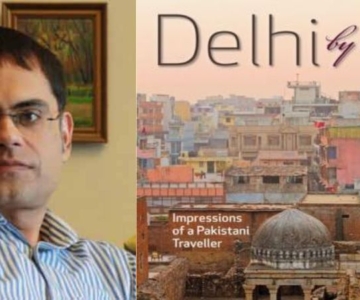
The internet has demolished the iron curtain between Pakistan and India almost overnight, writes Pakistani blogger and writer Raza Rumi.

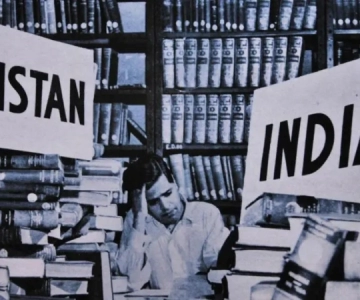
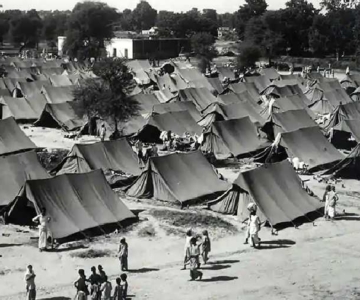
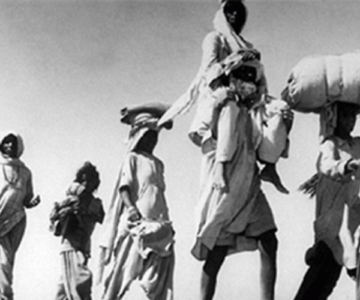
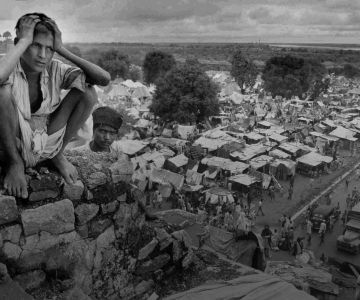
I don’t need to tell you about the multi-billion dollar enterprise that is the animosity between India and Pakistan. Suffice to say that the birth of a new nation-state on the Indo-Pak sub-continent was among the bloodiest of all time, entailing the migration of nearly 10 million of the wretched of the earth who had to find a new home.

Millions of deaths and three wars later, the bitterness refuses to go away and the interaction of the two countries’ populations has been very limited over 60 years. As a result, not all Pakistanis have the privilege of visiting India. I happen to be one of those who, by sheer coincidence, have been visiting India primarily for work or cultural exchange.

My forays into journalism coincided with my alter ego as a blogger. Purely by accident, I discovered the world of blogging, driven by the desire to post my pieces published by The Friday Times (TFT), a weekly Pakistani magazine. Trying to avoid creating a paid website, the blog template came to my rescue.

15Nov/090

Coffee, tea and revolution

Before his death in July 2009, KK Aziz had accomplished one mission that he had set for himself, i.e. to write about the Lahore Coffee House, the glorious nursery of ideas. Luckily, despite his failing health, Aziz finished a draft that was meant to be a shining part of his autobiographical kaleidoscope. “The Coffee House of Lahore: A Memoir, 1942-57” was published in 2008 and Aziz, in the opening chapters, tells us about the genesis of his passion to document this memorable phase of our contemporary history.

Whenever an intellectual, cultural and literary history of Lahore (or the Punjab and Pakistan) is written, the diverse circles which met and discoursed in the Coffee House will have to be described in detail and the ever-widening waves of their influence recorded. As nothing has been written so far on the subject and I don’t see anything in the offing, I give below a list of the important persons who I can recall.

Quite diligently, Aziz sets forth to list two hundred and six names that would include a wide array of thinkers, scholars, artists, writers and even some CSPs who obviously changed their life course despite the influence of their Coffee House days. For those who want to know about Lahore and its not-so-old diversity, KK Aziz’s memoir is a must-read. It is

22Sep/090

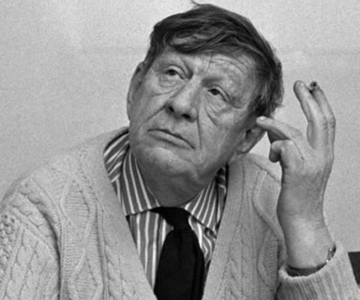
W H Auden on Partition

A poem by WH Auden (published in 1966) about Radcliffe - I am grateful to KA for this contribution:
Partition
Unbiased at least he was when he arrived on his mission,
Having never set eyes on the land he was called to partition
Between two peoples fanatically at odds,
With their different diets and incompatible gods.
“Time,” they had briefed him in London, “is short. It’s too late
For mutual reconciliation or rational debate:
The only solution now lies in separation.
The Viceroy thinks, as you will see from his letter,
That the less you are seen in his company the better,
So we’ve arranged to provide you with other accommodation.
We can give you four judges, two Moslem and two Hindu,
To consult with, but the final decision must rest with you.”
Shut up in a lonely mansion, with police night and day
Patrolling the gardens to keep the assassins away,
He got down to work, to the task of settling the fate
Of millions. The maps at his disposal were out of date
And the Census Returns almost certainly incorrect,
But there was no time to check them, no time to inspect
Contested areas. The weather was frightfully hot,
And a bout of dysentery kept him constantly on the trot,
But in seven weeks it was done, the frontiers decided,
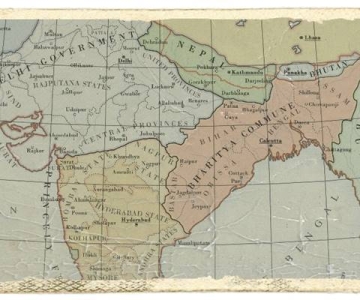
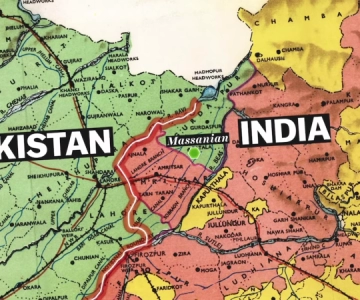
A continent for better or worse divided.
The next day he sailed for England, where he could quickly forget
The case, as a good lawyer must. Return he would not,
Afraid, as he told his Club, that he might get shot.
19Aug/0911

Jaswant Singh – the reluctant fundamentalist

Jaswant Singh's  right-wing worldview can be partially pardoned for he has made an attempt to set the record straight. The vilification of Jinnah to the extent of presenting him as a demon in mainstream Indian discourse has received a severe blow. Singh also blames the stalwarts of Congress for Partition and this has been the independent view held by many historians. It is shameful that a right winger had to condone Jinnah but then someone had to take the first step in the popular domain. The earlier voice of H M Seervai was drowned in the cacaphony of nation-state jingoism and because he was from a fringe community, his dispassionate views did not receive much attention. In fact many in India and Pakistan have no clue about Seervai.

5Aug/095

Le grand historien – (KK Aziz 1927-2009)

Zarina and KK Aziz, Lahore, 2007

KK Aziz, aged 11 years

Author with the grand historian of Pakistan, 2007

KK Aziz, aged 10 years

KK Aziz at MB high school, Batala, 1941-42

KK Aziz at Government College, Lahore, 1946

It was a humid evening in Peshawar when I found out about the demise of Pakistan’s neglected, grand historian KK Aziz. As it is, visiting Peshawar these days is quite depressing, and this news hit me for its stark, brutal reality. This was the physical death of the historian, for the scholar had already been marginalized from the mainstream of an anti-intellectual Pakistan. Only a week before, I had spoken to Zarina Aunty, his wife, and inquired about Aziz’s health. I am overwhelmed by the regret of not having met him for months, knowing full well how fragile he had been for the past few years.

It had become a routine over the years to meet the historian at his Lahore house and spend long, engaging afternoons duly arranged in advance. Aziz was an old-fashioned gentleman: proper, entertaining and hospitable. It was his wife, Zarina, who was more of a light-hearted character in their lonely house full of books and research materials.

At school, our exceptional history teacher had introduced us to KK Aziz and his writings; and the experience of reading shoddy, deceitful textbooks and Aziz’s reasoned critique was both revealing and entertaining. It was years later when my friend Faheem, with whom I explored history, introduced me to K.K. Aziz. That was a fantastic moment, for meeting Aziz was always a mixed experience: exciting, disquieting and sometimes depressing. He peeled away layers and layers of the ignorance and half-truths that have been so viciously grafted on to historiography by Pakistan’s nervous and irresponsible state.

Khursheed Kamal Aziz, commonly known as KK Aziz, was born to Barrister Abdul Aziz, in Ballambour near present-day Faisalabad on December 11, 1927. KK Aziz’s father was acclaimed as “a historian in his own right” for work on Heer Waris Shah, and in the Urdu work “Woh Hawadis Ashna” KK Aziz elucidates his family legacy and his father’s history.

True to his lineage, Aziz was to pen dozens of historical works and there is little doubt that he shall be remembered for generations of academia and independent scholarship. He was an alumnus of Government College, Lahore, where his tutors included Professor Ahmad Shah Patras Bokhari and Professor Sirajuddin. Later, Aziz became a full professor, and over the years taught courses in politics, history, Islamic Studies and Asian studies at various universities in Lahore, Toronto, Cambridge, Heidelberg and Khartoum. His research interests and capacities were emboldened by this international exposure. However, he yearned to bring back his experience and expertise to his country, but each time the co-joined twins of the Pakistani state and its ‘ideology’ were to harry him. Independence in scholarship is not a trait respected by officialdom, for it tends to promote and honour the cop-outs and the conformists.

Aziz served as an Official Historian to the federal government, Chairman of the National Commission on Historical & Cultural Research, and a Special Policy Adviser to the Prime Minister between 1973 and 1978. In these official capacities, he was characteristically important in the historical definition of Pakistan’s ‘life’ as a nation. In 1978, he was heading the National Commission of Historical and Cultural Research in Islamabad when he was forced to leave Pakistan by Zia-ul-Haq.However, this did not dissuade him from his passion and his academic pursuits.

Even before the draconian Zia era, K.K. Aziz faced various impediments from the state. For instance he related to me how the state censored certain portions of Fatima Jinnah’s monograph “My Brother”, where unsavoury remarks about Liaqat Ali Khan were kept under lock and key lest they demolished the official mythologization of Pakistan’s early leadership. Jinnah in Ziarat apparently had refused to see Liaqat Ali Khan, and only on the persuasion of his sister did Jinnah agree to see him, along with Abdur Rab Nishtar. Jinnah reportedly told his sister that the visitors, on the pretext of inquiring after his health, had come to check how soon he was going to die.

Such flagrant abuse of power and distortion of facts has led us to a point where we exist as an imagined fortress of Islam seeking glories, while in reality society and the state are struggling to survive. This is why the exit of KK Aziz is significant, for we have lost the home-grown voice of sanity which gave primacy to facts over spin-doctoring.

Aziz authored “The Pakistani Historian: Pride and Prejudice in the Writing of History” in 1993, elaborating upon the experience from his own professional career and the kind of life that a historian in this country would live through. In the same year he also wrote “The Murder of History”, a succinct rendition on history and how it is presented or obscured by official raconteurs. It was in the 90’s that he also admitted to having ghost-written “The Struggle of Pakistan”, published under the name of Ishtiaq Hussain Qureshi. In 1995 he attended the 62nd anniversary celebration for the name “Pakistan” at an event in London, where he elucidated upon the history of the word “Pakistan”, taking initiation from Rehmat Ali’s declaration “Now or Never” in January 1933. In 1997 he was elected to the coveted Aziz Ahmad Memorial Lectureship at the University of Toronto; signaling his position as a political scientist, as a historian and as an instructor/lecturer of global repute.

The works of KK Aziz testify to his penchant for detail, of verified sources of information and astute analysis. His seminal work, “The Making of Pakistan: A Study in Nationalism”, is a standard textbook and is a superior work on Pakistan’s troubled nationalist identity. His other well-regarded books include “Party Politics in Pakistan 1947-1958”, “History of the Partition of India” and “Britain and Pakistan”, among others. He also authored a diverse range of books that dealt with pre-Partition history: “Public Life in Muslim India: 1850-1947”, “Muslims under Congress Rule 1937-1939: A documentary record”, “British Imperialism in India”, and “The All India Muslim Conference 1928-1935: A documentary record”. His original works on political science and history, such as “Studies in History and Politics” and “Britain and Muslim India” are also well-known. Another well-researched document, “Rahmat Ali: A Biography” was published in 1987, and this is a magnificent tribute to an elusive historical figure who coined the term ‘Pakistan’ in the first instance.

From being an avid nationalist, KK Aziz also journeyed through a phase of disillusionment with the country that he had cherished. I recall a meeting where he was brutally frank about Professor Ishtiaq Hussain Qureshi, who had doctored historical facts to serve the new state, and created a fabricated account of Pakistan’s creation. Even though he had contributed to the writing of the book, Professor Qureshi had tinkered with the truth and set a wrong precedent for coming generations. It is no wonder that historiography in Pakistan is nearly extinct. A handful of Pakistani academics, mostly working in Western universities, such as Ayesha Jalal, are keeping the torch ablaze. But they are condemned and mocked by the guardians of official truth within the country, who cannot view Pakistan’s history beyond the right-wing narratives of anti-Muslim biases of the Hindus. Aziz in his last years was not as firm about his earlier views on the creation of Pakistan, and he did make a few revealing statements that I would rather not quote, for he should now rest in peace and not become a target for self-styled nationalist Mullahs.

19May/094

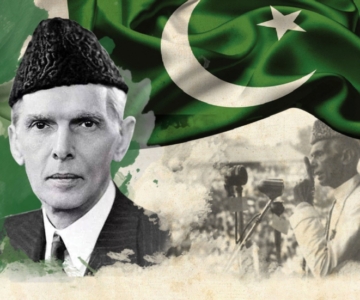
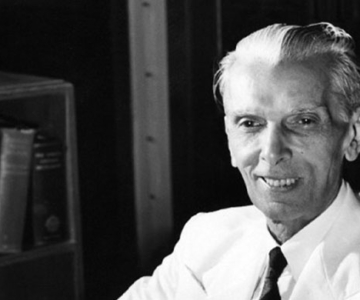
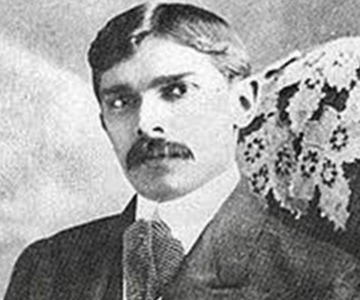
Jinnah’s fabulous picture

Amit has asked me to find a framed copy of this picture and what a great portrait it is. The only other portrait that has fascinated me is one painted by the great Pakistani artist Zahoorul Akhlaq.

16Dec/083

Even Tamas is online now

My dear friend Bhupinder alerted me to his post that talks about Tamas, a great novel (and subsequently a gripping TV serial) on the Partition. Now the serial can be watched online. This is what Bhupinder wrote:

Thanks to the indefatigable AG, the TV serial Tamas broadcast by Doordarshan in the late 1980s is now available online. (including some  commercial ads from those days!) Based on a novel by Bhisham Sahni on the partition of India, it hit the TV screens in the backdrop of Babri Masjid- Ramjanmabhoomi imbroglio and brings back memories of some very fine TV serials made at time- Shyam Benegal’s The Discovery of India, Gulzar’s Mirza Ghalib and Arvind N Das’s documentary India Invented based on DD Kosambi’s works. Happily all these are now available at youtube and/or google videos.

14Dec/0811

A new book on the Partition saga

Changing mindsets by SYED ALI NAQVI

titleOne might cry out, humanity is dead if there was any, in disgust and disbelief after going through the events of the partition of the subcontinent. It is hard to believe that hatred and instinctual savagery can derive men to the edge of morality. Politics, religious bias and ethnicity do have the poison to make men so vulnerable that they get ready to put everything at stake.
Partition of the Indian subcontinent is seen as one of the most brutal and unfortunate events in the world history. There are incidents of mass murder by every religious and ethnic community of each other as well as rapes and abductions of women, looting and separation of families during the

5Dec/083

Policy shifts not war

Raza Rumi

The dastardly attacks in Mumbai have irritated the old wounds and replayed the familiar, jingoistic tunes across the Indo-Pak borders. The Pakistanis, clamouring for friendship with their larger and problematic neighbour, have condemned these attacks in no uncertain terms. Who could be a worse victim of terrorism than Pakistan in these extraordinary times? Yet, the Indian media and sections of its establishment are quick to involve ‘Pakistan’ as the key perpetrator of the terror regime. This has obviously angered some and allowed a few Cold-War practitioners to call for self-defence and fighting with India till the last. The truth is that much of Pakistan does not want war. Hopefully, the Indian citizens are also not looking at war as a solution, or so it seems.

It is almost a cliché to state that war is not a solution to the current imbroglio despite the hysterical calls by the Hindu right to ‘neutralise’ Pakistan. The saner elements in India have already pointed to the implicit and deep-seated issues of misgovernance, short-termism and the mess of Partition that were neither carefully deliberated nor rectified during all these decades. The non-state actors in both India and Pakistan have gained ascendancy due to the power distance of the Raj induced steel-frame structures of governance. If there are dozens of districts in India that operate beyond the writ of the formal state, there are areas in Pakistan that are not just outside the scope of the formal state but in a state of rebellion due to the war on terror.

9Oct/0817

History’s ghetto – (Geneva Camp, Dhaka)

My recent piece for the The Friday Times - about the bitterness and destitution in a Dhaka camp for Biharis

It was almost by accident that I visited the Mohammadpur Geneva camp in Dhaka – one of the largest settlements housing thousands of stranded Biharis in Bangladesh. On my last visit to Dhaka, my guide Ronny offered the possibility of getting the best bihari kebabs in town. He told me that his house was near the place and I could meet him somewhere close.

This was an extraordinary afternoon when the receding sun was converting the sky into a field of unimaginable colours that artists can only aspire to create through their limited palettes. Dhaka, the noisy, overcrowded megapolis can be enchanting at times, especially during late springtime when the Krishnochura trees (the Flame of the Forest) bloom all over with their fiery flowers. I almost cancelled the trip thinking that a walk in the park might be a better alternative to the usual South Asian gluttony. Quite soon, I arrived at the meeting point having rationalised my proclivity for indulgence.

Little did I know that the meeting point was nowhere but at the doorstep of Dhaka’s underbelly, the easy to ignore Bihari camp. Not until I had reached there had I realised how the wounds of 1971 were festering for hundreds and thousands of men, women and children who have waited for all these years to attain identity and citizenship of Pakistan. As if it were a curse, the Pakistani state soon forgot about their existence as its ethnic politics dominated the policy commitments of Bhutto. And for the Bangladeshis these were the “traitors” who continued to wave Pakistani flags when the vast majority of East Pakistanis revolted against the excesses and the might of Pakistan army following the infamous and mischievous army action of 1971.

In a few minutes I had all but forgotten about the famous Mustaqeem kebabs and parathas and forced Ronny to take me inside the camp. Very soon I realised I did not need any Bangla-speaking guide as the ghetto was Urdu speaking, and portraits of Pakistani leaders and flags could still be spotted despite the passage of three and a half decades. Ronny knew the locals and found his younger friends, child workers and idle youth who took charge of our little tour.

Shamed by guilt and excited by the real experience, I wandered the smelly, open-drained and dark streets of the ghetto. I have frequented other slums but this one was special for it reeked of the contemporary elite politics, bloodshed and cold inhumanity that Pakistanis are shy of confronting. The living conditions would put any half-concerned South Asian to shame. The homes for most of the families comprised tiny little rooms, with all the belongings and large families concentrated in the inner space. No proper toilets and water supply – as if civilization had taken a backseat here.

20Aug/083

national identity sans freedom

A few quotes from this article in the Hindustan Times - incidentally it also includes what I rambled....

Freedom means everything. But I’m not free. All these concepts are self-imposed imprisonments.—Roshan Seth, actor

Independence has provided me with a national identity but it hasn’t meant freedom. I find myself enslaved to narrow ideas of patriotism. I’m trying to break free. And writing a book on Delhi, the capital of the ‘enemy’ nation, is my first step.
Raza Rumi, blogger

Personal freedom is crucial to my growth as an artist. ‘Independence Day’ is a distant celebration for me. Each year, as mid-August approaches I am conscious of a sense of loss — I wonder what could have been had the subcontinent not been splintered.
Sehba Sarwar, poet

Being a (somewhat) responsible parent, I will share with my children the notion that today we remember our national heroes. And amidst the nationalistic pop nuggets being broadcast round the clock, I hope they hear Yeh watan tumhara hai, tum ho Pasban iss kay, yeh chaman tumhara hai, tum ho naghma khwan iss kay…
Shandana Minhas, author

More here

6Jul/082

South Asian Cooperation and the Role of the Punjabs

South Asian Cooperation and the Role of the Punjabs. Tridivesh Singh Maini. New Delhi: Siddharth Publications , 2007 

South Asian Cooperation and the Role of the Punjabs is a book that approaches the topic of conflict resolution with a difference. Trividesh Singh Maini’s book does not approach peaceful cooperation from the normative security framework. Nor, for that matter, does the author take the increasingly emergent economic approach to conflict resolution despite the fact that the book’s content deals with the subject of regional cooperation. Alternatively, Maini’s book helps its reader understand the dynamics of cooperation and peace among members of the South Asian Association for Regional Cooperation or SAARC (India, Pakistan, Bangladesh, Nepal, Bhutan, Afghanistan and the island nations of Sri Lanka and Maldives) by presenting a cultural analysis.

This use of culture is persuasive. The author posits himself and his book as scholarship that thinks outside the bureaucratic box of normal research on South Asia with its vested interests in the region to reveal the “emotional” trajectory of cooperation that is occurring in this region. Using culture to support his thesis, Maini illustrates for the reader various cultural exchanges between two cities, Amritsar in East Punjab in India and Lahore in West Punjab in Pakistan. These include visits to religious shrines, literary exchanges and especially recent transportation events such as the initiation of bus services to help people meet their relatives on the other side of the border.

23Aug/079

The tributes continue – remembering Qurratalain Hyder

The literati in India and Pakistan are grappling with the larger question of Qurratulain Hyder's stature in Urdu, and some would say, World literature. The Daily Times, Pakistan has published an appropriately titled editorial, Quratulain Hyder, Urdu's greatest novelist. This paragraph struck me:

...her view of culture was intensely pluralistic, explaining Muslim culture too in a transmigratory technique in her big novel Aag Ka Darya. The Pakistani public paid her a back-handed compliment by making her books bestsellers in Pakistan; but most of them were pirated, meaning that someone other than her got rich selling them. She was always a chronicler, a kind of Tolstoy in Urdu that our critics have ignored. When someone asked her in Bombay to write about the Iran-Iraq war she naturally began with the Arab conquest at Qadissiya.

Outlook India had to say this:

Only a few days back, to mark the 60 years of Independence, when we asked an eminent jury to pick out 60 Great Indians in 60 years of our Republic, the name of Qurratulain Hyder was introduced prominently as Urdu's Marquez."Through her novels and short stories, this prolific writer gave Urdu fiction a brave and endlessly inventive new voice," we wrote, and quoted the London Times: "Her magnum opus, Aag Ka Darya (River of Fire), is to Urdu fiction what A Hundred Years of Solitude is to Hispanic literature

In C M Naim's piece, published in the Outlook:

What counts, for her, is the human spirit and the relationships it generates and nurtures. That is where the linearity of time seems to curve into a spiral, urging us to recognize a past that never quite disappears.....What, then, is our choice as individuals? Here it may be worthwhile to recall the characteristically modest, even self-mocking, remarks that Hyder made in 1991 in her acceptance speech at the Jnanpith Award function: "My concern for civililzational values about which I continue writing may sound naive, wooly-headed and simplistic. But then, perhaps, I am like that little bird which foolishly puts up its claws, hoping that it will stop the sky from falling."

and he concludes with this superb analysis:

...what Hyder tacitly offers us is nothing but that wise Candidean response: even in the best of all possible worlds, it is best not to neglect to tend our garden. Certainly, through the several thousand pages of her writings, she has shown herself to be an eloquent witness to that truth.

(photo left- Gauri Gill 2005) The Indian Prime Minister Manmohan Singh also expressed the sense of loss: "..In her unfortunate passing away the country especially Urdu literature has lost a towering literary figure. She will be truly missed in literary circles in the country.'

Read Jawed Naqvi's piece in the DAWN; and reactions of various writers in the daily NEWS . Rediff has published an article entitled, She was one of a Kind. Javed Akhtar, the eminent Indian lyricist has paid this grand tribute and held that she was a true genius and rightly said that he felt sorry for those people who read fiction but had not read Hyder:

"When I say that it is a great loss, it's not only to Urdu literature, not only to Indian literature, but to the word literature. I am not exaggerating at all.. the years to come, Haider's novels will reach everywhere."

"The kind of work she has done... its only because she was born in a third world country and wrote in a language that is not of the imperialistic powers, her novels have not reached everywhere. I am sure the time will come when they will reach..".

The blogosphere is also remembering Ainee Apa with great respect. Desicritics published An Enigmatic Icon, Adnan wrote a lovely piece on Ainee Apa and her books entitled A legend passes away and 3 Quarks Daily also remembered her. Urdu India has a brilliant post here and another tribute can be found here. Pakistaniat carried my post - click here to see the comments. And the best was from Delhi Walla, who went to the Jamia graveyard and took some great photos.

This will continue given the sad traditions of our literature - the literary and civilizational merits of authors and poets have often been discovered after they left this world. Having said that Ainee had established herself given her powerful voice and unique style of writing. But her real stature as Javed Akhtar says is yet to be discovered.

About the photo (top left): Gauri Gill in the Outlook writes:

Qurratulain Hyder was first photographed by Prashant Panjiar in what was a coup of sorts, everyone talked of how elusive and difficult she could be. When I met her last week to persuade her, she said, 'Tell the magazine I'm a difficult woman.' I told her that was her reputation anyway. For the first time that afternoon she cracked a grin. She seemed flattered.