Posts Tagged Nizamuddin Auliya

Marta Franceschini: H Nizamuddin Auliya’s devotee

25 January 2012

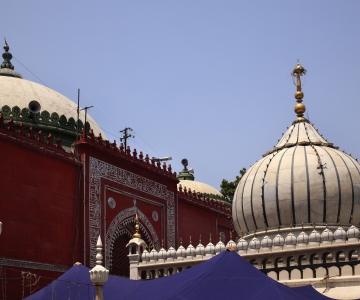
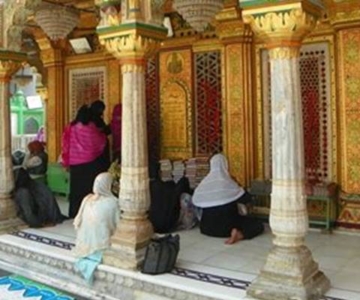
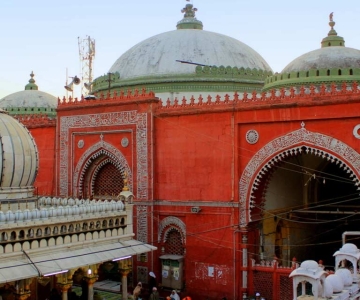
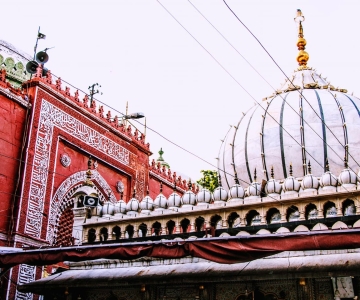
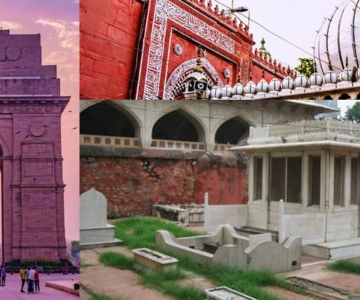
The dargah

This message cheered me up. Amazing that some of us have never met yet there is a bond we share – the calm space in Delhi where a 13th century mystic is buried. I am posting Marta’s letter with her permission below:

Hi Raza Rumi, I wonder if you remember me. Some years back I sent my essay on Hazrat Nizamuddin Aulyia to your site, and you very dearly published it. I had found you on the net, actually I was attracted by your name due to my deep passion and admiration for Mawlana Rumi. But at that time – not a very bright moment of my life, I must say – I didn’t realise who i was sending my message to, neither where. Actually, I discovered only very recently that you really exist, and live and work in Pakistan. Your name appeared in my possible connections in Linkedin, which I joined not long ago thanks to the insistence of a friend. I clicked on your name instinctivly, and later I forgot to go and check your profile and so on. But coincidences are not there for no reason, so few weeks back, while I was travelling with my daughter Sofia in Maharashtra, I read an interesting article on Pakistan on the Hindu, and…there, your name again! Could it be the same Raza Rumi of my essay long time ago? I started to put together the pieces, went back to linkedin, and yes, here you are! Zabardast!

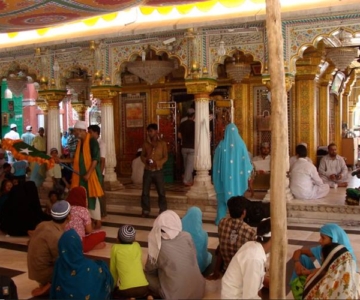
Visitors in the heatI am writing you from my barsati in New delhi, where now I live doing my 2′ year MPhil at JNU in Medieval History. So, you see, the Saint has kept His promise, and brought me back here, after so many years: 24, to be exact. You can probably imagine my overwhemilng joy for such a reunion. Of course, it happened all very “casually”: my daughter went to study in Canada, and I decided to came back to Delhi just for a three months visit. I met so many people, one in particular you may know, Yousuf Saeed of Ektara, who introduced me to Sunil Sharma, who introduced me to Najaf Haider of JNU…I told him about my idea of research, he suggested me to try the admission at JNU. I did. I was accepted, out of every expectation. I packed and moved to my beloved Delhi. This was August 2010, and I was 52 years old. Since then, no matter all the hurdles I had to face, I am the happiest woman of the world. I go to the dargah at least twice a week, but often I end up there also every day. I’d like to tell you more about what has happened inside of me since i came back here – my real home, I feel – and about many other things, and maybe I will do one day, inshallah!

Anyway, I feel the desire to let you know where I am, and what I am doing, and to express you my gratitude for having linked my name to the Saint’s name, when all this was not even imaginable. You brought a real sparkle of light in the dark, at that time. Thank you from the heart, truly. 
In case you come to Delhi, and if you have time and will, please do not esitate to contact me: I would love to meet you.
All the best, Khuda Hafiz, Marta Franceschini

Saints who ruled India

2 August 2010

Book Review

The War that Wasn’t: The Sufi and the Sultan By Fatima Hussain Publisher: Manoharlal Publishers Pvt. Ltd, New Delhi Pages: 245

Last year I had a chance to meet Dr Fatima Hussain, a thoughtful and inspiring academic based in Delhi. We had all congregated in Agra for the SAARC writers’ summit and Hussain’s facility with subcontinental history, especially Sufism, was most impressive. This is when I found out that her book had just been published and my curiosity to read the book knew no bounds. The title of this book was even more intriguing: “The War that Wasn’t: The Sufi and the Sultan”. Essentially the title summarises a millennium of the societal resistance offered by the Sufis against state power as well as the embedded social relations in the Indian subcontinent.

Hussain teaches History at Delhi University and was educated at Lady Shri Ram College and Jawaharlal Nehru University, New Delhi. She has also authored The Palestine Question: A Historical Perspective (2003) and several scholarly articles. An interesting volume that she edited – Sufism and Bhakti Movement: Contemporary Relevance (2008) – perhaps explains the relative fluency of her familiarity with the subject. After her marriage to Pakistan’s leading Punjabi writer and activist, Fakhar Zaman, she is now delving into documenting the history, culture and morphology of Lahore. (more…)

A beatific vision – Nizamuddin Auliya

12 July 2010

There is something unique, almost magical about this place. Otherwise a tiny space in the sprawl of urban Delhi, Nizamuddin’s shrine means a lot to me. My five years old relationship with this corner of a tumultuous globe is source of strength, peace and a connection with a bygone age.
The sad part is that I never get enough time to be there – just to sit and muse – do nothing. Even taking pictures is such a burden in a place where you want to let go – and be yourself, without any need, ambition, desire or a deadline.
When will I visit next? A question that lingers in my mind each time I am leaving this place. Wish the visa hassles were not there. But they are real and so am I.

Nusrat Fateh Ali Khan – Man Kunto Maula

10 March 2010

The invisibility of the Mughal princesses

18 July 2008

My piece published by the Himal Magazine 

The limitations of Southasia’s historical record can be seen in the indifference towards two notable Mughal princesses, Jahanara and Zebunnissa.

History – that mosaic of tales and fables that is generally, though not entirely, agreed upon – will always be contested and debated, often in the blood-lined bazaars of power. Indian history, which serves as the broad banner for the histories of Southasia, is certainly no exception in this. After all, Indian history has largely been one of power laced with the force of religion. In addition, during the course of this history, the rulers, ministers, clerics and soldiers have, with rare exceptions, all been male. Indeed, the annals of the sultanate and Mughal history, both medieval and modern, are largely tales of powerful and quarrelsome men vying for power and patronage. The local patriarchal society, influenced by the zeal of West Asian Islam, ensured the almost complete invisibility of women.

The brief reign of Razia Sultan (1236-1240) was an exception, though her ascension to the Delhi sultanate throne and subsequent dethronement and exile, as well as the continuous resistance of clergy and nobles to her political persona, only reinforced the predominance to patriarchy. Other than Razia Sultan and Queen Nur Jahan, who both gave up purdah and participated in the brutal politics of men, rarely did a woman rise to a position of authority or influence. For her part, Nur Jahan (1577-1645) experienced particular success, but her precedent was not the norm – she was Persian, after all, and was considered a particularly wily player of power politics. And Nur Jahan is demonised as a power-hungry monster, who supposedly subjugated the masculinity of her emperor husband to assume charge of the Mughal Empire. Indeed, in the words of that husband, Jahangir, the kingdom had been ‘sold’ to his wife for a cup of wine and a bowl of soup. Nur Jahan has also been accused of misdeeds that were common to powerful men of that age: bribery, nepotism and the weaving of court intrigues. Such faint praise aside, all the while her lasting contributions to the Mughal court – the cuisine, lifestyle and trends of that age – have been largely overlooked, to appear as little more than ‘feminine’ footnotes in the main narrative of Southasian power.

Lahore is where Nur Jahan and Jahangir married, and where they established their royal home. As a Lahorite, the childhood memories of this writer are inextricably mixed with those of many visits to Jahangir’s tomb. But the name of this much-celebrated monument is also particularly symbolic: it is not just the final resting place of Jahangir, but also that of the queen who lovingly designed the buildings and surrounding gardens, to their very last detail. Many of the architecturally significant additions made to the Lahore Fort, such as the zenana (female) quarters, have never been attributed to her. The irony, of course, is that Nur Jahan was the only queen who actually spent the majority of her royal life in Lahore. Other Mughal Emperors and Empresses lived in Agra or Delhi, save a few years of Akbar’s sojourn in Lahore. However, the histories of Lahore inevitably reduce Nur Jahan’s era to a brief footnote or an unread appendix.

Rilasa-i-Jahanara
But there is more to this story of the neglected women of the Mughal court than Razia Sultan and Nur Jahan. Buried within the folds of history is the tale of two princesses who have always remained well out of sight of the mainstream historical narratives of the Mughals. In recent decades, historians and novelists have indeed begun to explore the lives of princesses Jahanara and Zebunnissa, but the scanty primary sources available have largely thwarted these endeavours. Nonetheless, the stories of these extraordinary Mughal women dazzle through the mists of time, and their central paradox cannot be overlooked: the princesses were royal, and hence noteworthy, and yet they are almost completely invisible in what Southasians know as ‘history’. (more…)

The sanctuary

24 April 2008

Nizamuddin’s shrine and the dergah complex is a source of comfort. Each time I have been there, I have felt uncanny sense of comfort and solace. Found this terrific image here -

Nizamuddin Auliya – for Marta Franceschini

5 January 2007

My post on the pictures of Nizamuddin Auliya’s dergah (shrine) attracted a visitor whose devotion to the great Nizamuddin is quite touching. Marta wrote:

“…picture of the Dargha is next to my bed, first thing I see in the morning and last in the evening. …. No one ever loved me like he does. To experience the power of his love is something impossible to express with words, something that has changed complitely the prospective of my life.”

Commenting further on the pictures, Marta said:

“…..The best gift for Christmas. I am not muslim, nor christian, or anything else, but however my heart is full of love for God which, I am sure, is One and Overwhelming. And does embrace me all time long. If my presence doesn’t offend anyone in your site I will be glad to come back again, and possibly talk to anyone close to the Great Chisthy Saint.”

Her full comment can be found here

I visited this remarkable place recently spending my evenings and all the spare time at the shrine. I have met more and more people at the dergah including a devotee who also runs the Sufi Inayat Khan Center nearby. I will write more about that later.

Now that I have had some time to sort out my pictures, I am posting a few more here. These are dedicated to Marta and I hope she will find them inspiring again…

And this is the last one – the renovated mosque that looks ethereal in the night time.