The Speech of Mr. Sris Chandra Chattopadhya (Opposition to Objectives Resolution, Constitutent Assembly of Pak, 12 March 1949)
This is a historic speech and a document that posterity will re-examine. Seldom has one piece of legislation caused so much trepidation. Thanks to my firebrand friend Usman Qazi, I got to read this speech that I had heard about from many people. Here is the text of the address of Sris Chandra Chattopadhya (Opposition to Objectives Resolution, Constitutent Assembly of Pak, 12 March 1949).
Mr. Sris Chandra Chattopadhya (East Bengal : General) : Mr. President, I thought, after my colleague, Mr. Bhupendra Kumar Datta, had spoken on the two amendments on behalf of the Congress Party, I would not take any part in this discussion. He appealed, he reasoned and made the Congress position fully clear, but after I heard some of the speakers from the majority party, viz, Muslim League Party, the manner in which they had interpreted the Resolution, it became incumbent on me to take part in this discussion.
I have heard Dr. Malik and appreciate his standpoint. He says that "we got Pakistan for establishing a Muslim State, and the Muslims suffered for it and therefore it was not desireable that anybody should speak against it". I quite agree with him. He said; "If we establish a Muslim State and even if we become reactionaries, who are you to say anything against it?" That is a standpoint which I understand, but here there is some difficulty. We also, on this side, fought for the independence of the country. We worked for the independence of the entire country. When our erstwhile masters, Britishers, were practically in the mood of going away, the country was divided – one part became Pakistan and the other remained India. If in the Pakistan State there would have been only Muslims, the question would have been different. But there are some non-muslims also in Pakistan. When they wanted a division there was no talk of an exchange of population. If there was an exchange of population, there would have been an end of the matter, and Dr. Malik could establish his Pakistan in his own way and frame constitution accordingly. It is also true that the part of Pakistan in which Dr. Malik lives is denuded of non-Muslims. That is clear.
Dr. Omar Hayat Malik: On a point of order, Sir, I never said that. He has understood me quite wrongly.
Mr. Omar Hayat Malik: I never said that Pakistan was denuded of non-Muslims. My friend on the opposite has misunderstood me.
Maulana Azad’s interview given to Shorish Kashmiri, 1946
I was intrigued by this interview of Maulana Abul Kalam Azad given to the famous journalist Shorish Kashmiri for a Lahore based Urdu magazine, Chattan, in April 1946. This interesting document has been discovered and translated by a former Indian minister Arif Mohammad Khan. Covert Magazine and newageIslam website have recently published it. The contents of this interview are difficult to agree with. Azad is speaking from a nationalist angle, anti-Pakistan movement platform.
However, the narrative has some interesting observations and predictions for Pakistan that cannot be rubbished simply because Azad was a Congressite. This interview was conducted over a period of two weeks (parallel to the proceedings of the Cabinet Mission) and has not been documented in any book except that of Kashmiri’s book on Abul Kalam Azad, which has been out of print for decades. Its discovery is a welcome step towards better historiography on both sides of the border.
Q: The Hindu Muslim dispute has become so acute that it has foreclosed any possibility of reconciliation. Don’t you think that in this situation the birth of Pakistan has become inevitable?
Le grand historien – (KK Aziz 1927-2009)
![]() |
|
|
Zarina and KK Aziz, Lahore, 2007 |
|
![]() |
|
|
KK Aziz, aged 11 years |
|
![]() |
|
![]() |
|
|
Author with the grand historian of Pakistan, 2007 |
|
![]() |
|
|
KK Aziz, aged 10 years |
|
![]() |
|
|
KK Aziz at MB high school, Batala, 1941-42 |
|
![]() |
|
|
KK Aziz at Government College, Lahore, 1946 |
|
It was a humid evening in Peshawar when I found out about the demise of Pakistan’s neglected, grand historian KK Aziz. As it is, visiting Peshawar these days is quite depressing, and this news hit me for its stark, brutal reality. This was the physical death of the historian, for the scholar had already been marginalized from the mainstream of an anti-intellectual Pakistan. Only a week before, I had spoken to Zarina Aunty, his wife, and inquired about Aziz’s health. I am overwhelmed by the regret of not having met him for months, knowing full well how fragile he had been for the past few years.
It had become a routine over the years to meet the historian at his Lahore house and spend long, engaging afternoons duly arranged in advance. Aziz was an old-fashioned gentleman: proper, entertaining and hospitable. It was his wife, Zarina, who was more of a light-hearted character in their lonely house full of books and research materials.
At school, our exceptional history teacher had introduced us to KK Aziz and his writings; and the experience of reading shoddy, deceitful textbooks and Aziz’s reasoned critique was both revealing and entertaining. It was years later when my friend Faheem, with whom I explored history, introduced me to K.K. Aziz. That was a fantastic moment, for meeting Aziz was always a mixed experience: exciting, disquieting and sometimes depressing. He peeled away layers and layers of the ignorance and half-truths that have been so viciously grafted on to historiography by Pakistan’s nervous and irresponsible state.
Khursheed Kamal Aziz, commonly known as KK Aziz, was born to Barrister Abdul Aziz, in Ballambour near present-day Faisalabad on December 11, 1927. KK Aziz’s father was acclaimed as “a historian in his own right” for work on Heer Waris Shah, and in the Urdu work “Woh Hawadis Ashna” KK Aziz elucidates his family legacy and his father’s history.
True to his lineage, Aziz was to pen dozens of historical works and there is little doubt that he shall be remembered for generations of academia and independent scholarship. He was an alumnus of Government College, Lahore, where his tutors included Professor Ahmad Shah Patras Bokhari and Professor Sirajuddin. Later, Aziz became a full professor, and over the years taught courses in politics, history, Islamic Studies and Asian studies at various universities in Lahore, Toronto, Cambridge, Heidelberg and Khartoum. His research interests and capacities were emboldened by this international exposure. However, he yearned to bring back his experience and expertise to his country, but each time the co-joined twins of the Pakistani state and its ‘ideology’ were to harry him. Independence in scholarship is not a trait respected by officialdom, for it tends to promote and honour the cop-outs and the conformists.
Aziz served as an Official Historian to the federal government, Chairman of the National Commission on Historical & Cultural Research, and a Special Policy Adviser to the Prime Minister between 1973 and 1978. In these official capacities, he was characteristically important in the historical definition of Pakistan’s ‘life’ as a nation. In 1978, he was heading the National Commission of Historical and Cultural Research in Islamabad when he was forced to leave Pakistan by Zia-ul-Haq.However, this did not dissuade him from his passion and his academic pursuits.
Even before the draconian Zia era, K.K. Aziz faced various impediments from the state. For instance he related to me how the state censored certain portions of Fatima Jinnah’s monograph “My Brother”, where unsavoury remarks about Liaqat Ali Khan were kept under lock and key lest they demolished the official mythologization of Pakistan’s early leadership. Jinnah in Ziarat apparently had refused to see Liaqat Ali Khan, and only on the persuasion of his sister did Jinnah agree to see him, along with Abdur Rab Nishtar. Jinnah reportedly told his sister that the visitors, on the pretext of inquiring after his health, had come to check how soon he was going to die.
Such flagrant abuse of power and distortion of facts has led us to a point where we exist as an imagined fortress of Islam seeking glories, while in reality society and the state are struggling to survive. This is why the exit of KK Aziz is significant, for we have lost the home-grown voice of sanity which gave primacy to facts over spin-doctoring.
Aziz authored “The Pakistani Historian: Pride and Prejudice in the Writing of History” in 1993, elaborating upon the experience from his own professional career and the kind of life that a historian in this country would live through. In the same year he also wrote “The Murder of History”, a succinct rendition on history and how it is presented or obscured by official raconteurs. It was in the 90’s that he also admitted to having ghost-written “The Struggle of Pakistan”, published under the name of Ishtiaq Hussain Qureshi. In 1995 he attended the 62nd anniversary celebration for the name “Pakistan” at an event in London, where he elucidated upon the history of the word “Pakistan”, taking initiation from Rehmat Ali’s declaration “Now or Never” in January 1933. In 1997 he was elected to the coveted Aziz Ahmad Memorial Lectureship at the University of Toronto; signaling his position as a political scientist, as a historian and as an instructor/lecturer of global repute.
The works of KK Aziz testify to his penchant for detail, of verified sources of information and astute analysis. His seminal work, “The Making of Pakistan: A Study in Nationalism”, is a standard textbook and is a superior work on Pakistan’s troubled nationalist identity. His other well-regarded books include “Party Politics in Pakistan 1947-1958”, “History of the Partition of India” and “Britain and Pakistan”, among others. He also authored a diverse range of books that dealt with pre-Partition history: “Public Life in Muslim India: 1850-1947”, “Muslims under Congress Rule 1937-1939: A documentary record”, “British Imperialism in India”, and “The All India Muslim Conference 1928-1935: A documentary record”. His original works on political science and history, such as “Studies in History and Politics” and “Britain and Muslim India” are also well-known. Another well-researched document, “Rahmat Ali: A Biography” was published in 1987, and this is a magnificent tribute to an elusive historical figure who coined the term ‘Pakistan’ in the first instance.
From being an avid nationalist, KK Aziz also journeyed through a phase of disillusionment with the country that he had cherished. I recall a meeting where he was brutally frank about Professor Ishtiaq Hussain Qureshi, who had doctored historical facts to serve the new state, and created a fabricated account of Pakistan’s creation. Even though he had contributed to the writing of the book, Professor Qureshi had tinkered with the truth and set a wrong precedent for coming generations. It is no wonder that historiography in Pakistan is nearly extinct. A handful of Pakistani academics, mostly working in Western universities, such as Ayesha Jalal, are keeping the torch ablaze. But they are condemned and mocked by the guardians of official truth within the country, who cannot view Pakistan’s history beyond the right-wing narratives of anti-Muslim biases of the Hindus. Aziz in his last years was not as firm about his earlier views on the creation of Pakistan, and he did make a few revealing statements that I would rather not quote, for he should now rest in peace and not become a target for self-styled nationalist Mullahs.
Misinterpreting Islam to Oppress Women
On Khalwat, Misyar & Mutaah
By Syed Akbar Ali
In Malaysia we frequently read reports of Muslim couples being arrested for the offense of committing ‘khalwat’ or being in ‘close proximity’ to each other. For the benefit of all thinking humans it is best that we explain a little what is meant by ‘Muslim couples’ and what is meant by ‘khalwat’ or close proximity.
For the purposes of khalwat a ‘couple’ refers to a man and a woman who can lawfully get married to each other. The word used to describe such a couple is ‘not muhreem’. ‘Muhreem’ is derived from the Arabic word ‘raheem’ which means womb.
Baytunur – an academic platform in Lahore
Announcement by Taimoor Khan Mumtaz
Baytunur registered as a trust in the year 2006 to promote the understanding of the spiritual branch of Islam known as ‘tasawwuf’ or "Sufism". Managed and supported by six trustees, its academic activity is overseen by a board that includes three trustees and three scholars. It also has an academic advisory council.
The Islam Seminars: are a series of seminars and/or colloquiums that are held in spring and/or summer each year where different scholars are invited to speak in an interactive environment on a certain topic. The topics are usually set on public demand. The inaugural seminars were held in collaboration with Iqbal Academy Pakistan in Lahore, Pakistan and Teachers’ Development Centre, Karachi in 2007. To date a total of six Islam Seminars have been conducted.
Falsehoods about terrorism
I was fascinated by my dear friend Adnan's post - Falsehoods about terrorism: 'Islamic' and 'un-Islamic' terrorists [Indian Muslims and Media] - that was a breath of fresh air. In a non-ideological, dispassionate manner he critiques the media power and association of the word Muslim with terrorism. I have known Adnan since I started blogging. Even though I have never met him in real life, I know that we could have been great actual (as opposed to virtual) friends had the walls of borders, distrust and competing nationalisms not stood between us. But cyberspace has allowed us to be friends and this is remarkable by itself. Perhaps the tone of his post has to do with the essential good manners that come with the Ganga-Jamni tehzeeb (high Indo-Muslim culture) of which Adnan is a torchbearer. He is equally into politics, activism as much as he is steeped in the culture of internalising Urdu poetry and its refined nuances. See his blogs with the finest selections from Urdu poets.
Back to Adnan's excellent post. I am reproducing an excerpt here:
Believe me, had any of these attacks involved a Muslim, it would have been termed a Terrorist attack and for days, we would have been shown images of 'trained Muslim youths', their links, cell phone records, the masterminds, the names of obscure organisations with Arabic names and what not.
"...I would request you to just have a look at the frequency of attacks mentioned below:
1. 11 CISF personnel gunned down in Naxal attack on NALCO bauxite mine in Orissa (April 13) [Link courtesy The Hindu]
Ghamdi on Islam and the Taliban
A friend sent this piece with an introductory message that ” Ghamdi’s life is under threat by the Taleban as they want to eliminate all who can challenge them. Can they eliminate 168 million of us?” Ghamdi is a beacon of hope and enlightenment in these dark days.
The Taliban say that democracy is a concept alien to Islam. According to them, the ideal method of establishing a government according to Islam is the method adopted by Mullah Omar in Afghanistan. Constitution, parliament and elections are evil innovations of modern times. Islam is not bound by any of these institutions for its enforcement. The interpretation of governance conveyed to us by the Hanifi School of jurisprudence is enough for us. The ijtehad of modern jurists are also vague. The ancient jurists have delivered their decisions regarding individual and collective life. These have all been arrived at
Ode to Benaras – Ghalib’s grand vision
![]() |
|
|
A Brahmin resident of Benaras |
|
![]() |
|
|
Ghalib |
|
![]() |
|
|
Benaras: “forever spring” |
|
|
It is incredible that a Muslim poet who prided himself on his Turkic ancestry and invoked the “warrior” past in his day-to-day conversation (through his letters) could compare the divine light at Mount Sinai to the lamps at Benaras |
|
he cancer of communalism and bigotry in South Asia continues to haunt us. These days, the Muslims are once again a subject of intense, though not always fair, scrutiny in India: their loyalties are being questioned and many are potential terrorists if not already abettors of violence. The post 9/11 world has contributed to the demonising of the Muslim identity and history to surreal heights.
The recent bomb blasts in Delhi have placed the communal discourse on the front pages. The invaders and violent Muslims have done it again. A friend called me from Delhi and narrated the profiling that takes place at marketplaces and how the gulf between different communities is widening.
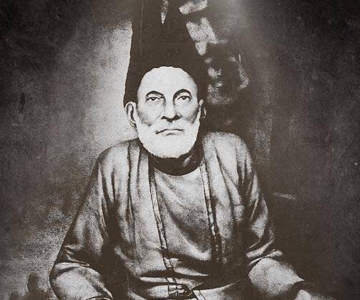
There was a time, not in the ancient past, when in Delhi the greatest of Urdu poets Mirza Ghalib (1796-1869) lived in an age when Hindus and Muslims shared common saints, dargahs and even popular gods and goddesses. Written accounts of this age – the mid to late 19th century – relate how intimate co-exitence of “Mussalmans” and “Hindoos” had led to a relative amalgamation of customs among the common people. And poets like Ghalib could see the commonalities of spiritual streams:
I n the Kaaba I will play the shankh (conch shell)
In the temple I have draped the ahraam (Muslim robe)
The verse above delineates the Sufi concept of fana (or dissolution of the self in divine reality) and the unity articulated by the ancient Indian texts such as the Vedanta. Sufis were to elaborate this as the wahdat-al-wajood (Unity of Being) philosophy.
Muslims feel like Jews of Europe – UK Minister
What an alamring statement coming from a Minister in the UK.
LAHORE: Britain’s first Muslim minister has attacked the growing culture of hostility against Muslims in the UK, saying that many feel targeted like “the Jews of Europe”, The Independent reported on Friday.
Shahid Malik, who was appointed as a minister in the Department for International Development by Prime Minister Gordon Brown last summer, said it has become legitimate to target Muslims in the media and society at large in a way that would be unacceptable for any other minority, according to the British newspaper.
To Muslims: Smash the Doors, Wash your brains..
Came across this excellent article by Farooq Suleria that rather candidly talks about the dearth of creativity in Muslims of today. I love the poem by the Syrian poet Nizar Qabbani at the end. First an excerpt from this piece and then the poem:
...the solution to all our problems is always simple: return to an imagined past which, mercifully for the people of the seventh century, never existed. Every time, a scientist in the West is ready with an invention, our readymade answer is: we knew about it 1,400 years ago what the West has found only now. We kill Theo van Gogh when confronted with a film. We burn down our own cities in response to a blasphemous and racist caricature. Still, we refuse to understand that our answer to every "provocation" is either a fatwa or mindless violence – perhaps because creativity is anathema to us. Not because we lack fertile minds, but because we lack liberation and freedom -- liberation from self-imposed mental, moral, and cultural censors. And freedom to think and express. Time to heed the great Syrian poet Nizar Qabbani, who said:
Five thousand years
Growing beards
In our caves.
Our currency is unknown,
Our eyes are a haven for flies.
Friends,
Smash the doors,
Wash your brains,
Wash your clothes.
Friends,
Read a book,
Write a book,
Grow words, pomegranates and grapes,
Sail to the country of fog and snow.
Nobody knows you exist in caves.
People take you for a breed of mongrels.
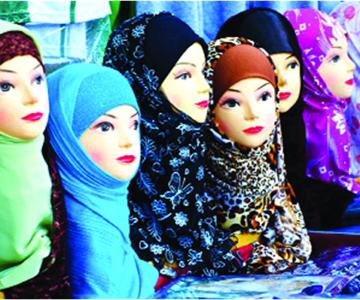
Pakistan diaspora and the politics of the Hijab
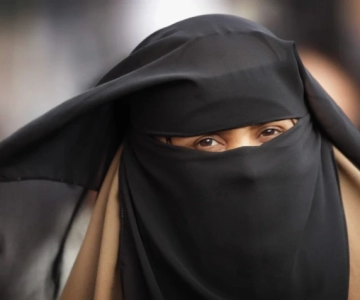
The suggestion of violent disputes between a 16-year-old girl in Mississauga and her father over her desire to show her hair and live a "normal" lifestyle raises questions about tensions between parents and children in the Muslim community...But members of the community particularly young Muslim women say the tension can exist both ways.
...research into the readership of her publication shows that the decision to wear the hijab, the traditional Muslim headscarf is almost always a choice the girl makes on her own.
Text from here
Complex, sordid and tragic. And, I wonder what would the head honcho of Al-Huda (these days based in Canada) has to say on the sad story of a girl who died at 16? What is this obsession with the Hijab when you live in a non-Islamic country. There is no consensus on this within Islamic jurisprudence. As my friend Asma (who sent this story) said: "Is this more important than hayya - the inner modesty; and the ability to discern the right from the wrong?"