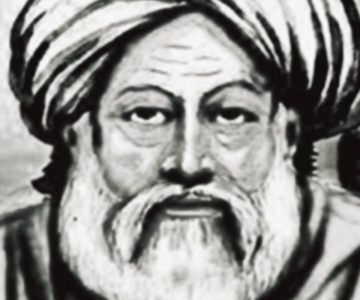
Mystical Form of Islam Suits Sufis in Pakistan
A New York Times' piece where I was quoted.
The closed minds that deny a civilisation’s glories – where I was quoted
I was most pleased to read this piece by Yasmin Alibhai-Brown entitled The closed minds that deny a civilisation's glories. I would like to thank Yasmin Alibhai, whom I have always respected for her integrity and courage, to have quoted a few hurried lines posted by me in response to tge butchery perpeterated by the extremists in Pakistan and elsewhere:
Muslims are seeing Koranic injunctions where none exist
Confused Dad Mohamed from somewhere in the US sends his dilemma to an Islamic guidance website through whom Allah apparently communicates his orders - on how we dress, what we do minute by minute, unholy TV programmes, wicked vitamins and even wickeder relations between males and females.
I paraphrase Mohamed's frantic appeal for clarity. His children watch cartoons, and have stuffed toys, quilts and pillow cases with Mickey Mouse on them. Is all that halal? Now many of us detest the addictive and manipulative Disney brand which targets young children. But this fully grown, procreative adult cannot trust his own mind and seeks instructions from unverified voices of authority. How abject is that?
These global sites control people, push through Maoist "cleansing". Miserable mullahs are closing down the Muslim mind and heart the world over. Meanwhile "true believers" desperately seek enslavement and thank their enslavers. The questions posed are startling in their naiveté. May we sing? Is it OK for a man to listen to a woman singer? Do I watch a female newsreader? Yes, says a wise one - as long as she is properly covered up and not wearing perfume. Don't laugh. It is tragic, not funny.
Somehow in the last decade or so, millions of believers have been persuaded that they are repositories of sin because they watch films, love music and paintings, read books, experience temporal pleasures and ecstasies. Remember the ferocity with which the Taliban destroyed all pre-Islamic treasures? Saudi Arabia is guilty of similar vandalism. Thus they seek to recreate the piety of triumphant Islam. Well they didn't have cameras, mobile phones, cars and computers then. Should these be banned too?
Muslim children are now programmed to obey - robbed of imagination, independent thought and refinement. UK Muslim parents are increasingly coming out against school visits, music and drama, novels, exercise, scientific facts. Teachers know these parental demands leave Muslim children under-educated and emotionally numbed, rendered unresponsive to artistic words, sights and sounds.
This is a travesty of our history, our love of truth and beauty, the intellectual energy that throughout history uplifted Muslim civilisations. The current Science Museum exhibition of Muslim inventions that shaped the modern world proves we were never the barbarians promoted in Western demonology. Some of the earliest manuals on surgery and optics, astronomy and flying machines came out of Muslim regions. And those same places were creative hubs producing great works of art, incredible buildings and intricate crafts.
There is no Koranic injunction against the depiction of the human form, yet pictures from previous ages would today not be painted - a kneeling, sensual angel by an Ottoman artist in the mid-16th century, a man filling his cup of wine. Passion plays were performed through the centuries in all main Arabian conurbations. Poetry was written and recited by both men and women. Music, devotional and romantic, was in every household. All that is under threat today.
The Pakistani blogger Raza Rumi writes: "Who are these butchers of culture? What religion do they follow? They have no religion except barbarism." Exactly. British Muslims for Secular Democracy (of which I am chair), supported by the British Council, is tomorrow organising a conference on artistic and cultural freedom at the School of Oriental and African Studies in London. Speakers include Miss Pakistan (who is also a professor), fashion designers, the entrepreneur Saira Khan, painters, stand-up comics, musicians, writers, others who are concerned. The event is open to all. Check the BMSD site. We will be launching an advisory guide for teachers on protecting the interests of the Muslim child.
The Destruction of Holy Sites in Mecca & Medina – Destroying Islamic Heritage
The Asian Age: The Arabian Peninsula, the cradle of Islam, is being demolished by hardliners. In countries such as Saudi Arabia almost all of the Islamic historical sites are gone, but this is not the first time they have been destroyed.Muslimness – shifting boundaries
Muslimness is an elusive state of being. There are watertight strictures of the theological identity defined by men, interpreted as the Sharia, on the one hand; and the broad political and cultural sense of the self, on the other. Identity, in any case, is a messy affair: shifty, shifting and eventually, imagined. While 9/11 placed Muslims at the centre stage of global politics, the broth had already been simmering in the cauldrons of biased academe and pop reality mirrored through the blood-thirsty lens of corporate media.
So what is it to be a Muslim? An inflexible bag of rituals? Or a cultural sense of belonging or a deeper dogma ingrained in young minds? I have never considered myself anything but a believer, a ‘practicing Muslim’. This has never been at variance with my secular and inclusive pretensions, despite the fact that the clergy in my country considers secularism akin to atheism, a sort of mirror image of the Pakistani political foundation. The clerics translate secular as la-deen , at best irreligious, and at worst, godless.
Ironical that this business of religious identity is articulated in a land that was the crucible of the secular Indus Valley civilization, non-militant Buddhism and a peculiar version of South Asian Islam that spread via the Sufi khanqahs and was a sort of amalgam of the Central Asian with the ancient South Asian. Even more ironical is the reality, neglected and veiled, that lived Islam is located around dargahs , tribal codes and customs which are irreligious in their own way. But who cares? Referred to as the world’s most dangerous country, Pakistan, according to the pundits of global opinion, is a haven for Islamic terrorists. Collateral damage, therefore, is kosher and a necessity to undo the unstated part of the ‘axis of evil’.
Labels and more labels. On the global shelves such products sell well and work in favour of a war machine hungry for energy resources, territory and blood.
Chal Way Bullehya Chal O’thay Chaliyay – Let’s go where everyone is blind
No priests needed – search of a Pakistani identity
Raza Rumi wonders why we remain in search of a Pakistani identity
Half-truths are what we love to indulge in. One of the countless crimes committed by President Asif Ali Zardari is that he wears a Sindhi cap instead of a Jinnah cap. That by preferring a Sindhi topi and thundering at the occasion of late Benazir Bhutto’s death anniversary, he undermined his Pakistani identity, is truly mystifying. After all, what is a Pakistani identity and why is the Jinnah cap being elevated to the level of an article of national faith?
If anything, Mr Jinnah’s patronage of Muslim identity mark was an afterthought. His usual attire was a well-tailored pucca-sahib-like suit. It was only in the nineteen forties and that too close to India’s independence that Mr Jinnah started donning the Muslim nobility’s attire.
So what is this fuss all about? Constructing Pakistan’s ideology based on theological interpretation of a universal religion like Islam has been a carefully executed project of the Pakistani establishment and its shadows in the non-state domains. Such cliques have grown bigger, mushroomed and are now essential to our lived reality. Therefore lambasting of Zardari on not sporting a Jinnah cap finds public resonance and broad acceptability within the populous Punjab province where the Urdu press flourishes and finds readers and writers aplenty.
Maulana Azad’s interview given to Shorish Kashmiri, 1946
I was intrigued by this interview of Maulana Abul Kalam Azad given to the famous journalist Shorish Kashmiri for a Lahore based Urdu magazine, Chattan, in April 1946. This interesting document has been discovered and translated by a former Indian minister Arif Mohammad Khan. Covert Magazine and newageIslam website have recently published it. The contents of this interview are difficult to agree with. Azad is speaking from a nationalist angle, anti-Pakistan movement platform.
However, the narrative has some interesting observations and predictions for Pakistan that cannot be rubbished simply because Azad was a Congressite. This interview was conducted over a period of two weeks (parallel to the proceedings of the Cabinet Mission) and has not been documented in any book except that of Kashmiri’s book on Abul Kalam Azad, which has been out of print for decades. Its discovery is a welcome step towards better historiography on both sides of the border.
Q: The Hindu Muslim dispute has become so acute that it has foreclosed any possibility of reconciliation. Don’t you think that in this situation the birth of Pakistan has become inevitable?
Iqbal – The Universal Reformer
Take simplicity as your companion
Virginia synagogue doubles as mosque for Ramadan
Bulleh Shah – on rejecting caste
A popular kafi of Bulleh Shah, sung by Abida Parveen "BULHE NU SAMJHAWAN AAINAN BHAINAN TE BHARJAIAN" earlier posted as " A stove is better than Bulleh" am posting its english translation thanks to Shahidain's invaluable contributions.
People discouraged Bulleh Shah from accepting Inayat Shah as his master and said " Bulleh you are a scholar and a descendent of of prophet Mohammad (pbuh). Does it seem right to you to go to an ordinary gardener of low caste and become his disciple? Is it not embarrassing?" But Bulleh showed great love and reverence for his master and did not pay any heed to this objection.
Sacred Kerala–Transcending Communal Boundaries
Book Review
Name of the Book: Sacred Kerala—A Spiritual Journey
Author: Dominique-Sila Khan
Publisher: Penguin, New Delhi, 2009
Reviewed by: Yoginder Sikand
The southern Indian state of Kerala has a unique population mix. A little less than half of Kerala’s inhabitants are Hindus, who belong to various castes. The rest are Muslims and Christians, in roughly equal number, and a miniscule number of Jews, who form India’s oldest Jewish community. In contrast to much of north India, inter-community relations in Kerala have always been fairly harmonious, although the situation is beginning to change today. At the popular level, economic and social ties and inter-dependence between Kerala’s different religious communities have given birth to a strong sense of Malayali identity that transcends religious boundaries. This has been facilitated by the use of the Malayalam language by all of the state’s communities as well as a long-standing tradition of religious overlapping or shared religious identities, which is what this fascinating book is all about.
Sufi hearts in Delhi
Published in The Friday Times (May 22 issue)
Raza Rumi discusses a new book on Sufism by Sadia Dehlvi
Getting a visa to India is a nightmare for ordinary mortals. My application was not very politely returned last month with technical objections. It was only when a letter from Harper Collins arrived that the High Commission rather efficaciously allowed me to enter enemy territory, that too with special instructions that cantonments were out of bounds. I guess the South Asian officialdoms have yet to discover that Google Earth has permanently altered the shape of boundaries and secrecy.
The Road to Mecca
An exclusive post by Kazim Aizaz Alam
(Allama) Muhammad Asad aka Leopold Weiss -- b. 1900 d. 1994 -- is a well-known name at least in the Muslim world. I have recently read his wonderful book ‘The Road to Mecca’. Let me write here briefly what I think of the book and its writer, who is undoubtedly one of the most distinguished Muslim scholars of the last century.
About the writer:
Muhammad Asad was born into a Jewish family that lived in Austro-Hungarian Empire. His father was a lawyer and grandfather was a rabbi. At age 22 he travelled across the Arab world first time as a Middle East correspondent for European newspapers. He converted to Islam in 1926. In later years he travelled extensively in the entire Muslim world. Though his mother tongue was German, he wrote ‘The Road to Mecca’ in English. Besides German and English, he knew French, Arabic, Persian and Urdu as well. He translated and explained the Quran as well as Sahih al-Bukhari from Arabic into English.
New book: Wanted—Equality and Justice in the Muslim Family
Reviewed by: Yoginder Sikand
Muslim family laws have for long been—and continue to be—a hugely controversial subject. Critics contend that these laws seriously militate against basic human rights, especially of women. On the other hand, conservative ulema and Islamist ideologues hail these laws as the epitome of divine justice and refuse to consider any changes therein.
Understanding Islam and its history
Toby Lester's incisive article What Is the Koran? argues that researchers with a variety of academic and theological interests 'are proposing controversial theories about the Koran and Islamic history, and are striving to reinterpret Islam for the modern world...' I was struck by this passage at the end:
Increasingly diverse interpretations of the Koran and Islamic history will inevitably be proposed in the coming decades, as traditional cultural distinctions between East, West, North, and South continue to dissolve, as the population of the Muslim world continues to grow, as early historical sources continue to be scrutinized, and as feminism meets the Koran. With the diversity of interpretations will surely come increased fractiousness, perhaps intensified by the fact that Islam now exists in such a great variety of social and intellectual settings—Bosnia, Iran, Malaysia, Nigeria, Saudi Arabia, South Africa, the United States, and so on. More than ever before, anybody wishing to understand global affairs will need to understand Islamic civilization, in all its permutations. Surely the best way to start is with the study of the Koran—which promises in the years ahead to be at least as contentious, fascinating, and important as the study of the Bible has been in this century.
Read the full article here
The dilemma of an educated [Indian] Muslim youth
, a patriotic Indian writes here on the predicament of those who want to stay away from the missions, the purges and typecasting of Indian media:
Terrorists once again played with deadly bombs in Delhi on September 13, bringing the usual destruction of life and property. By now, we Indians have become quite accustomed to death and destruction -- man made or natural.
My very first reaction was: Will it be Indian Mujahideen (IM) once again? Within minutes of the blasts IM claimed it was behind the savagery. I felt like crying and shouting from the rooftop that whatever the terrorists have done in the name of Islam was wrong; that I am an Indian, who also happens to be a Muslim. I would not rejoice at the bleeding of my very own countrymen.
Revisiting the concept of Jihad in Islam
By Maulana Wahiduddin Khan
(Translated from Urdu by Yoginder Sikand)*
The word 'jihad' is derived from the root juhd, which means 'to strive' or 'to struggle'. It denotes the exertion of oneself to the utmost, to the limits of one's capacity, in some activity or for some purpose. This is how the word is understood in Arabic grammar.
Because fighting against one's enemies is also one form of this exertion or striving, it is also sometimes referred as jihad. However, the actual Arabic word for this is qital, not jihad. Fighting with one's enemies is something that might happen only occasionally or exceptionally. However, jihad, properly understood, is a continuous action or process that animates every day and night of the life of the true believer. Such a person does not let any hurdle affect his life, including desire for gain, the pressure of customs, the demands of pragmatism, lust for wealth, etc.. All these things serve as hurdles in the path of doing good deeds. Overcoming these hurdles and yet abiding by the commandments of God is the true jihad, and this is the essential meaning of the concept of jihad. There are many references to jihad, as understood in this way, in the collections of sayings attributed to the Prophet Muhammad.
Pseudo-Messianic Movements in Contemporary Muslim South Asia
This new book by Yoginder Sikand has been published by Global Media Publications in 2008.
Messianic hopes and expectations are common to almost all religions. Jews expect the Messiah to arrive to re-establish their temple in Jerusalem; Christians pray for Jesus to return to earth in his 'Second Coming'; Hindus believe that Kalki, the tenth and last avatar of Vishnu, would appear just before the end of times; and the advent of the Imam Mahdi, who will usher in the end of the world, is a cardinal tent of the faith of Shia and many Sunni Muslims.
The messianic figure that almost all religions expect to arrive some time towards the end of the world is generally portrayed as representing the forces of good, as an agent of God and as eventually vanquishing, in a war of global and cosmic proportions, the forces of evil.
Weird science – the perils of Muslim scholarship
I am posting Ziauddin Sardar's article published in the New Statesman (August 21,2008) that explores the 'nonesense"of some Muslim scholars who claim that everything from genetics to robotics and space travel is mentioned in the Quran.
Science has acquired a new meaning in certain Muslim circles. When classical Muslim scholars declared that "whosoever does not know astronomy or anatomy is deficient in the knowledge of God", they were emphasising the importance of the scientific spirit in Islam and encouraging the pursuit of empirical science. But today, to a significant section of Muslims, science includes the discovery of "scientific miracles" in the Quran.
“Better than Cabbage Soup”
Rumi on the deeper meanings of fasting in Ramzan
What sweetness lies in an empty stomach!
Man is like a lute: no more, no less.
If the lute is full
it cannot sing a high or low note.
If your mind and stomach
burn with the fire of hunger
it will be like a heavenly song for your heart.
In each moment that fire rages
It will burn away a hundred veils
And carry you a thousand steps
toward your goal.
Visit to Sindh, Udero Lal (the story of the Dalits in Pakistan)
Yoginder Sikand writing at DNA
South-central Sindh isn’t quite a favourite holiday destination, but I spent a fortnight there while on a vacation in Pakistan. My host was the amiable, 70 year-old Khurshid Khan Kaimkhani, a noted leftist activist, author of the only book on Pakistan’s almost 3 million Dalits. Along with a friend, he edits the only Dalit magazine in the entire country.
Khurshid met me at the railway station in Hyderabad, Sindh’s largest city after Karachi. We drove to his small farm, on the outskirts of his hometown of Tando Allah Yar, a two hour bus-ride ahead. Several Bhil families live on the farm. “They are like my own family,” Khurshid says as Baluji, a tall, handsome Bhil man, manager of the farm, welcomes us in with a tight embrace.
Hassan Massoudy’s calligraphy: Raza et Rumi
"The gestures of the calligrapher become an open space, welcoming the words of the poet and the imagination of the onlooker".
Discovered this image of a calligraphic work and about the Iraqi artist Hassan Massoudy at the JTG Art Blog.
The major part of the compositon is a calligraphic expression of the word "Raza"and interestingly there is a quote by Rumi below with the name Rumi prominently sketched.
Narcisissm or what..I am admiring this image since yesterday and today was compelled to post it here.
About the artist:
Hassan Massoudy is an artist for whom the word itself remains the most sublime creative force. His creations are a subtle mix of present and past, oriental and occidental, tradition and modernity. The words and phrases, which are the inspiration for his calligraphy, are drawn from proverbs, poets and philosophers throughout the centuries, ranging from St. Augustine, Virgil and Ibne Arabi to Baudelaire and Rousseau.
I wonder what is he upto and how have the conditions of Iraq influenced him. Need to find out more. In the meantime, I am glad to have found his works and interact with his brilliance...
More here
Pakistan Suicide Bombings: The narratives of terror
An overwhelming majority of Pakistan's population finds itself hostage to narratives of terror that are either alien to its ethos or are constructed by its home-grown theologians and opinion-makers. This is not to say that the issue of suicide bombings is easy to define and understand. They are essentially complex and located in decades of Pakistan's evolution into a society that is difficult yet again to label: Islamic in name, struggling to be democratic and a republic it is not, well, not yet.
If we take the viewpoint of liberals, it is our war as much as a war of others. If we were to hear the west, it is about countering terror and preserving world peace; and if we listen to Pakistan's right it is someone else's battle fought on our land 'the land of the pure' lest we forget.
Where does this leave the confused, battered citizen who now has to strive for personal security among other daily struggles of existence? There are no clear answers and if one were to probe further, the questions are as murky as their geneses.
One thing is clear though: to identify the recurrent suicide bombings in the name of theological, tribal and imperial grievances is at best a half-truth. The genie is far more complex than a response to the reductionist narrative of âwar against terror and such other imperial phraseology. At the core of this phenomena, if one were to be rather blunt, lies an exclusive, bigoted ideology of a few men of holy intentions orchestrating a script written by others.
NATO Genocide in Afghanistan?
I hold no brief for the Taliban. They have enraged the world and brought much shame to Muslims and dare I say the great religion Islam as well. In fact, I detest their version of Islamic codes that they want to impose on the world through coercion.
However, the NATO battle against Taliban is not only barbaric in equal intesnity but it also dehumanizes them.
Mr Ali Khan of Washburn University School of Law sent his piece that is eloquent, and extremely well argued. Ali Khan says that in the name of the "war of terror," NATO forces are "committing genocide in Afghanistan by systematically hunting down and destroying" the Taliban, in violation of the terms of the Convention on the Prevention and Punishment of the Crime of Genocide... ![]()
These sentences are chilling:
Politicians, the armed forces, the media, and even the general public associate in the West the Taliban with irrational fanatics, intolerant fundamentalists, brutal assassins, beheaders of women, bearded extremists, and terrorists. This luminescent negativity paves the way for aggression, military operations, and genocide. Promoting the predatory doctrine of collective self-defense, killing the Taliban is celebrated as a legal virtue.."
THe West should remember that this will not solve the issue of terrorism or militancy - whatever one may want to name it - in fact such wars cause more pain, create more martyrs and legends and motivate people to resist - theyhave nothing to lose in the first place. And, the history of Afghanistan spells out some clear lessons for the current imperial powers.
Read his full article below.
A few poems by Bulleh Shah
Recently, I was asked to help a friend with the original text of Bulleh Shah's Hindu na Na heen Musalmaan. I found the original Punjabi and also found two other pieces that I am posting here.
Bulleh Shah's poetry addresses most maladies that we face in this day and age.
------------------------------
HiNdu na naheeN musalmaan,
Baheeye tiranjan taj abhimaan.
Sunni na naheeN ham sheeya
Sulha kuhl ka maarag leeya.
Bhookhe na naheeN ham rahje,
NaNge na naheeN ham kahje.
RoNde na naheeN ham hasde
UjaRe na naheeN ham vasde.
Paapi na sudharmi na,
Paap pun ki raah na jaanaaN.
Bulhe Shah jo hari chit laage,
Hindu turak doojan tiyaage
Neither Hindu nor Muslim,
Sacrificing pride, let us sit together.
Neither Sunni nor Shia,
Let us walk the road of peace.
We are neither hungry nor replete,
Neither naked nor covered up.
Neither weeping nor laughing,
Neither ruined nor settled,
We are not sinners or pure and virtuous,
What is sin and what is virtue, this I do not know.
Says Bulhe Shah, one who attaches his self with the lord.
Gives up both hindu and muslim.
The Battle of Karbala (Mir Anis)
Mir Anis is a classical master of Urdu poetry whose elegies on the struggles between Imam Hussain, prophet's grandson and the usurper, callous monarch Yazid are immortal. Today is the 10th of Muharram signifying the epic Karbala battle and the martyrdom of Imam Hussain. The mourning for Hussain and his family is not complete without a reference to Anis and his peer Dabeer. Luckily I found a Marthiyaa of Anis, that has been translated into English David Matthews, published by Rupa Co.


This piece entitled,