“animal rights” for alleged terrorists!!
How horrific to read this news-analysis with this grim end-note:"while the bourgeoisie likes to proclaim India the “world’s largest democracy,” it is increasingly indifferent and hostile to democratic rights and is turning to authoritarian forms of rule."
India: Supreme Court judge advocates “animal rights” for alleged terrorists
By Kranti Kumara and Keith Jones
The third most senior judge on India’s Supreme Court has bluntly said in a public forum that alleged terrorists should be denied “human rights.” Instead terror suspects should be treated like animals. “What is required are animal rights,” declared Supreme Court Justice Arijit Pasayat.
Bombay – Nostalgic shop owners refuse to change name
Read the captioned story in the Times of India today- politics of war mongering can be such a disruptive influence on ordinary lives. In Pakistan, we have shops and businesses named as Bombay restaurant, Bombay cloth house and even a Bombay sweet house. And of course Hyderabad's premier bakery - the Bombay bakery as reminded by Kazim. I am posting an image of the Hyderabad outlet during my recent, fleeting visit to the city.
Deep down, the links continue despite 61 years of turbulence...
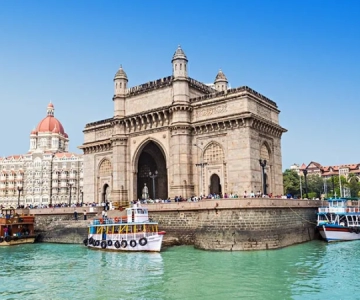
MUMBAI: Karachi Sweets in Mulund is not the only business establishment that bears the name of a Pakistani city. TOI came across at least seven shops, offices, halls and restaurants named after Karachi, Peshawar, Multan, Sindh and Lahore-most of the owners probably could never forget their hometowns that they had to leave during Partition.
"How can the MNS ban shop names like Karachi, Lahore or Sindh as most of the owners are refugees from Pakistan?'' said a shop owner in Bandra. "Even my shop is named after a Pakistani city and we have been running this business for the past 100 years. A lot of sentiment is attached to the name.'' He added that it was unfair to target innocent shop owners who have settled down in India and are patriotic. "We just carry a Pakistani city's name on our signboard. We are true Indians and not Pakistanis.''
We shall overcome the trap of violence
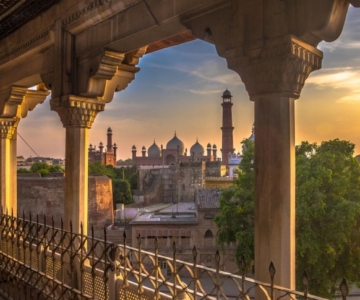
As clouds of war hover in the skies of Lahore, I am missing Delhi and lamenting the relatively difficult venture to visit the city The December of . 2008 was a month of promise. I was meant to visit the Jawaharlal Nehru University, read a paper, participate in a conference and enjoy the environs of the campus that would have glowed in December sunshine. Not to forget that I was meant to pick up two books on Gulzar, the great modern poet and lyricist of India whose links with Urdu and Pakistan’s Punjab are as intractable as the nine centuries of our South Asian past. How keen I was to walk around the bookstores of Delhi and try out the unfrequented eateries hidden behind the mayhem of the urban life. Above all, I wanted to finish the book that I have been writing on Delhi. For that I have to do a little more exploring of its myriad moods. Alas! Certain things are not meant to be. My trip was scheduled right after the tragic Mum bai events which were equally mourned in Pakistan. But that terrorist event has now become a bone of contention, almost a drumbeat for war, between India and my country .
9 Is Not 11

I am completely under the spell of this fabulous piece of writing, brutally honest and eminently sensible.
essay: terror in mumbai
![]()
9 Is Not 11
![]()
(And November isn't September)
![]()
ARUNDHATI ROY
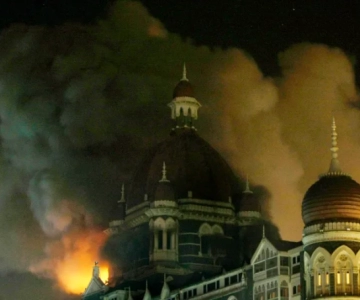
We 've forfeited the rights to our own tragedies. As the carnage in Mumbai raged on, day after horrible day, our 24-hour news channels informed us that we were watching "India's 9/11". And like actors in a Bollywood rip-off of an old Hollywood film, we're expected to play our parts and say our lines, even though we know it's all been said and done before.
As tension in the region builds, US Senator John McCain has warned Pakistan that if it didn't act fast to arrest the 'Bad Guys' he had personal information that India would launch air strikes on 'terrorist camps' in Pakistan and that Washington could do nothing because Mumbai was India's 9/11.
But November isn't September, 2008 isn't 2001, Pakistan isn't Afghanistan and India isn't America. So perhaps we should reclaim our tragedy and pick through the debris with our own brains and our own broken hearts so that we can arrive at our own conclusions.
The best of Mumbai posts
My friend Annie's post on Mumbai is a remarkable piece of writing. I am cross-posting it here:
The other day, I went shopping for veggies at the nearest supermarket, and found it almost empty. The girls employed there were kidding around with each other. I heard the word ‘terrorist’. One girl told another she’d set the terrorists after her friend. The other one alleged that she was one herself. Light laughter. Odd, somehow. Perhaps, necessary, somehow.
Yesterday, I’d stepped out with my own bag and a laptop, boarded a train and opened a book. My station arrived, I got off and ten seconds later, wondered why my shoulder felt light. I’d forgotten the laptop in the Ladies compartment.
In a mad rush, I turned back. I had no way of tracking down that same train even if I did follow it in the right direction. The train had started moving by then, so I jumped into the nearest compartment. I almost fell. A stranger reached out and grabbed me at the door, pulled me inside. Others asked me to sit down, catch my breath, relax. I was too worried to step away from the door.
Who will win the game?
Saturday, December 06, 2008
Raza Rumi
I have been amazed at the reaction that my little piece, "Policy shifts not war" published on these pages on Dec 4 has generated especially from the other side of the border. My email inbox was inundated with a wide variety of views and comments, some of which were quite unsavoury and abusive. However, the silver lining is that there were many voices from the other side that called for regional cooperation and finding alternative solutions to mindless jingoism. Most Pakistanis, while disagreeing with my interpretation of partition, expressed their sadness at the Mumbai mayhem and reiterated that a war had to be avoided at all costs.
The media factor has been much analysed over the past few years. As a powerful player in the game, the role of Indian, and to a great extent, Pakistani media industries has been far from satisfactory. As another formal institution with charitable rhetoric, it is emerging as yet another tool for reinforcing conformity, boundaries and the famed refuge of the scoundrels.
Media polls with shady sample sizes are confirming that the 'public' in India wants revenge thus isolating the sensible Indian leadership that has tried to undo the legacy of the past. Similarly, the prediction of surgical strikes and eliminating the so-called hideouts for terrorists in Pakistan is a magic bullet that would create a terror-free region. Nothing could be farther from reality, if only the lessons from US misadventures, bloody at that, are kept in view. Aggression and violence breed further violence. The relative degree of failures in Iraq and Afghanistan are rude reminders of how the neo-con, or its ideologically equivalent Hindutva strategy, is bound to create more problems than solving anything.
Policy shifts not war
Raza Rumi
The dastardly attacks in Mumbai have irritated the old wounds and replayed the familiar, jingoistic tunes across the Indo-Pak borders. The Pakistanis, clamouring for friendship with their larger and problematic neighbour, have condemned these attacks in no uncertain terms. Who could be a worse victim of terrorism than Pakistan in these extraordinary times? Yet, the Indian media and sections of its establishment are quick to involve ‘Pakistan’ as the key perpetrator of the terror regime. This has obviously angered some and allowed a few Cold-War practitioners to call for self-defence and fighting with India till the last. The truth is that much of Pakistan does not want war. Hopefully, the Indian citizens are also not looking at war as a solution, or so it seems.
It is almost a cliché to state that war is not a solution to the current imbroglio despite the hysterical calls by the Hindu right to ‘neutralise’ Pakistan. The saner elements in India have already pointed to the implicit and deep-seated issues of misgovernance, short-termism and the mess of Partition that were neither carefully deliberated nor rectified during all these decades. The non-state actors in both India and Pakistan have gained ascendancy due to the power distance of the Raj induced steel-frame structures of governance. If there are dozens of districts in India that operate beyond the writ of the formal state, there are areas in Pakistan that are not just outside the scope of the formal state but in a state of rebellion due to the war on terror.