Posts Tagged militancy

Myth and reality of extremism

29 August 2011

Pakistan needs to undertake research on militancy for effective policymaking

By Raza Rumi:

A recent attempt to understand militancy, “Poverty and Support for Militant Politics: Evidence from Pakistan” (Graeme Blair, C. Christine Fair, Neil Malhotra, Jacob N. Shapiro, 2011), provides us fresh insights into the phenomenon or myth of popular support for militant extremism in Pakistan. Using a sample of urban and rural population and employing inventive techniques, this research is an important document if only Pakistan’s policymakers would ever pay attention to the little evidence that is generated with respect to militancy. It is a sad state of affairs that our national policy institutes and ‘think-tanks’ are yet to undertake such studies even when the state and its agencies have been brutally attacked and over 35,000 Pakistanis have died due to terrorism during the last decade. By no means does this survey provide a definitive account of what is happening in the country. However, in the absence of any other study, its findings are most useful to debate how extremism is taking root in the society.

The survey measured public attitudes towards four important militant groups: Al-Qaeda, the Afghan Taliban, Kashmiri groups (Lashkar-e-Tayyaba, Jaish-e-Muhammad among others) and sectarian groups such as Lashkar-e-Jhangvi and Sipah-e-Sahaba. Contrary to conventional wisdom, the study concludes that the survey participants “were generally negatively inclined toward all four militant organizations” and reinforced what many analysts have said often: “Pakistanis do not have a taste for militants”. However, participants differentiated between the groups. They were more inclined to believe that Kashmiri groups provided public goods like health services, etc., and were much more likely to say that they were fighting for a good cause. Secondly, Pakistanis living in violent parts of the country, e.g. Khyber-Pakhtunkhwa (KPK), strongly disliked these groups probably because they pay a higher price for their actions. (more…)

Future of a crisis

11 September 2010

My latest piece on Pakistan’s incredible calamity and its after-effects

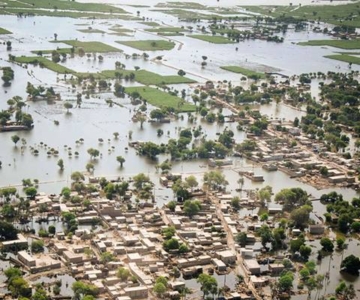
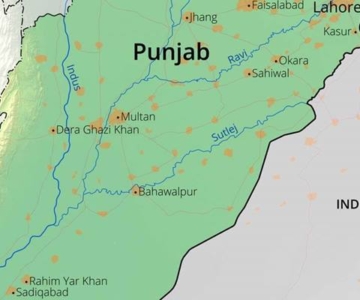
Pakistan’s devastating floods have opened up a Pandora’s Box of governance dysfunctions and historical distortions that have plagued the polity since independence. It remains to be seen what will be the outcome of the greatest calamity in our recent history. Various estimates show that the floods have affected 18-20 million people. The death toll has crossed the figure of 2000 while 2 million houses have been damaged or destroyed. Floodwaters are receding in many areas, and though there are concerns about standing water that remains in Punjab and other areas, the worst of the current flooding is taking place in Sindh.

The disaster is still not over but the fissures within Pakistan have started to erupt and once again proving how vulnerable the state is and how fractured the Pakistani society has become. Five key crises have emerged, some old and some new. However, they point to the fact that our continuous refusal to address structural problems remains a key challenge.

Martial state syndrome: Pakistan’s history is an uninterrupted tale of direct and indirect military rule and centralisation. Each time there is a crisis there is a need to resort to the de facto, real governance paradigm: the military rule. Therefore, Altaf Hussain of the Muttahida Qaumi Movement (MQM) and Imran Khan of the Pakistan Tehreek-e-Insaaf (PTI) are not saying anything new. The perennial search for a Messiah, rooted in the religious ideology that the state and education system have cultivated, is back in full force. This time the media and other discordant voices are calling for another phase of direct military rule. (more…)

Pakistan’s disaster could lead to a collapse

16 August 2010

As if Pakistan’s implosion from within wasn’t enough, the gods have acted to further push hapless and crumbling polity into a major crisis. Prior to August 2010, Pakistan was fighting a battle for its survival on an existentialist and ideological plane. The central features of a nation-state had withered away, save the institution of the Pakistan army. If anything, the insurgencies in Balochistan, FATA and Khyber-Pakhtunkhwa, and simmering discontent in Southern Punjab and Sindh had alarmed several Pakistanis and those in the international community who wanted Pakistan to be a stable state.

The colossal humanitarian tragedy and the imminent economic meltdown, will now shape a new Pakistan or rather, exacerbate its predicament in the months and years to come. Pakistan’s chronic political instability, structural economic constraints and a warped national security policy are all going to be affected by the unfolding drama of the national disaster, perhaps the severest, in the country’s history. Whilst the challenges have snowballed within a short duration of ten days, the response of the Pakistani state and society underline extremely dangerous trends and make us wonder about future of the country, as we have known it for the last 63 years.

Systemic shock:

Pakistan had reverted to quasi-democratic rule after a decade of dictatorship in March 2008. Since the resumption of the electoral process in February 2008, the traditionally powerful unelected institutions, had acquired both legitimacy and unprecedented powers. The power troika of the 1990s had transformed into a quartet comprising the army, judiciary, the media and the civilian government which was represented by a ‘discredited’ president who has been a constant punching bag for the unelected institutions of the state. (more…)

Pakistan needs immediate assistance

14 August 2010

I just wrote this on Pak Tea House:

PTH is starting a series of posts devoted to the Pakistan’s current crisis effects of which will be long term in nature. While millions of Pakistanis are in dire need of emergency help, our country’s political and economic instability will have ramifications for the region and the world.

This is why it is extremely important to understand how several parts of Pakistan have lost decades of development and a state with weak capacities needs billions of dollars in the short term to start a major programme of rehabilitation. If Pakistani state is unable to intervene, the Taliban and other Al-Qaeda militants (and their allies in South Punjab) will find a golden opportunity to annihilate the Pakistani state, discredit constitutional governance and capture political space.

Pakistanis cannot be silent victims and therefore we will speak. Pakistan has to be rescued and the international community cannot absolve itself of the responsibility towards its frontline state.

Read the rest of the story here

The question of Pakistan’s provincialism

5 July 2009

My piece that appeared in the ‘political economy’ section of The NEWS on Sunday.

The elites drunk on the status quo have expressed two major reactions to the proposal of creating another province within the mighty Punjab. First that this is akin to opening a Pandora’s box when we are at war against terrorism. Second, that this is a planted controversy whereby the ruling PPP wants to harm the house of Raiwind; or a conspiracy by those who want to destabilise Pakistan’s political system.

Both these arguments are spurious for nothing is more important for Pakistan than to make the federation work. The argument that the British drawn provincial boundaries are sacrosanct is as nonsensical as the reality of the Durand Line or for that matter the line of control itself. If anything, South Asia has experienced territorial and demographic shifts through the centuries. When resisted, the sweep of history has blown away the resistant elements and when carefully manoeuvred such shifts have resulted in commonsensical political and administrative solutions. (more…)

Falsehoods about terrorism

18 May 2009

I was fascinated by my dear friend Adnan’s post – Falsehoods about terrorism: ‘Islamic’ and ‘un-Islamic’ terrorists [Indian Muslims and Media] - that was a breath of fresh air. In a non-ideological, dispassionate manner he critiques the media power and association of the word Muslim with terrorism. I have known Adnan since I started blogging. Even though I have never met him in real life, I know that we could have been great actual (as opposed to virtual) friends had the walls of borders, distrust and competing nationalisms not stood between us. But cyberspace has allowed us to be friends and this is remarkable by itself. Perhaps the tone of his post has to do with the essential good manners that come with the Ganga-Jamni tehzeeb (high Indo-Muslim culture) of which Adnan is a torchbearer. He is equally into politics, activism as much as he is steeped in the culture of internalising Urdu poetry and its refined nuances. See his blogs with the finest selections from Urdu poets.

Back to Adnan’s excellent post. I am reproducing an excerpt here:

Believe me, had any of these attacks involved a Muslim, it would have been termed a Terrorist attack and for days, we would have been shown images of ‘trained Muslim youths’, their links, cell phone records, the masterminds, the names of obscure organisations with Arabic names and what not.

“…I would request you to just have a look at the frequency of attacks mentioned below:

1. 11 CISF personnel gunned down in Naxal attack on NALCO bauxite mine in Orissa (April 13) [Link courtesy The Hindu] (more…)

Abject surrender

26 April 2009
My piece published in The Friday Times
How can I remain unaffected and quiet after seeing that my country might be disfigured and my roots pulled out, to be replaced by an ideology alien to my thousand-year old consciousness?

April 13 will be remembered as a black day in Pakistan’s history. This is the day, future historian will write, when its pampered and stuffed-up political elites opted for a grand surrender. We have to live with the pain, infamy and ignominy of the December 1971 surrender at Ramna Park, Dhaka. That black moment was faced by a General who shall remain the face of Pakistan’s atrocities against its own citizens, the interference of an irresponsible, vengeful neighbour and the bravado of Bengalis who had been excluded from the privileged ‘martial race’ category by none other than Field Marshal Ayub Khan and his junta. This exclusionary act by the Field Marshal, later recorded in his memoirs, set the tone for an agenda of discrimination that was subsequently responsible for the second amputation of South Asia in less than 25 years. (more…)

Civil society speaks

14 April 2009

Zinda dilaan-e-Lahore say no to Talibanisation, reports Raza Rumi

Never before have we citizens been traumatised with an uncertain future and the knocks of destruction at our door as is the case in the year 2009. The celebrated twenty first century has, if nothing else, blown the contradictions of Pakistani society and state right into our faces. One hundred and eighty million people cannot be spectators to the imperial great games and a callous state that gropes in the dark trying to locate the ‘enemy’ outside, instead of looking into its own crevices and cracks.

Not that Lahore has been a haven of peace in recent years – the inequities, the crime levels have been on the rise. However, March 2009 witnessed two full-scale terror attacks in the city of gardens, shrines and a centuries-old tolerant culture. Media gurus were quick to involve India, RAW, the Americans, everyone under the sun except the enemy within. First the friends of Pakistan – the Sri Lankans and then the ill-equipped and vulnerable Police Academy at Manawan, were attacked by trained assassins who espouse a version of Islam that no sane Muslim can ever live with.The panic and fear generated by these two incidents had not ended when the brutal video of Chand Bibi getting lashed on the streets of Swat was released. (more…)

Brutalities have swung public opinion in Pakistan

8 April 2009

I have been quoted in this brave piece of reporting:

Girl’s flogging exposes Pakistani rift

Salman Masood (writing for The National)

ISLAMABAD // The video of a teenage girl being whipped in public by the Pakistani Taliban has riveted the country and has highlighted an ideologically strained and divided society faced with the growing threats of Talibanisation and extremism, analysts say.
The video, broadcast last week on Pakistani television and widely posted on the internet, showed a 17-year-old from the Kabal area of the restive Swat district. The Taliban publicly flogged her after she was accused of having an illicit relationship with a neighbour. (more…)

Lahore is burning

30 March 2009

Raza Rumi

[reportedly] 27 dead and dozens injured – no respite for us.

Once again, in less than a month Lahore has been ravaged by terrorists. Who said that Pakistan was a hub of terrorism – we are now the greatest victim of terror and militancy. The residents of Lahore are scared and the vibrant city seems to be enveloped in a mist of uncertainty and fear.

The Mumbai and later Lahore 3/3 model seems to be in vogue now. Extremely well trained commandos, with sophisticated weapons  and not afraid of death are let loose on the society. The media is hysterical as well and following the Indian media’s cue[s] is now a participant and embedded in the so-called operation. (more…)

“Desecration of Rahman Baba’s tomb is desecration of humanity”

7 March 2009

The SCN press release echoes my sentiments at the disgusting act of vandalism in Peshawar. It is a befitting metaphor for the barbaric bigotry and the ineffectual state – a dangerous mix.

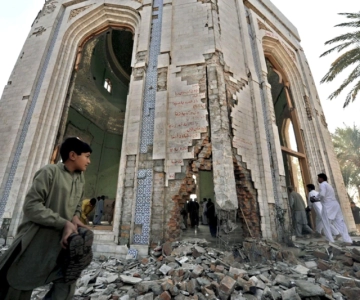
It is a matter of national shame for Pakistan to have sunk this low. Rahman Baba (1653 -1711 AD) commands a universal following for his mystic syncretism, has now fallen prey to the cannibalistic doctrine of bigotry and intolerance. (more…)

Basharat Peer’s Curfewed Night

28 December 2008

Book Review by Sumaira Samad

Curfewed Night is the memoir of young Kashmiri journalist Basharat Peer, recounting his youth in the troubled valley during the ’80s and ’90s. A harrowing look at the political strife and armed conflict that has torn Kashmir apart over the last 30 years, Curfewed Night is nothing if not personal. The people, places and events Peer describes are ones he encountered and experienced first hand. They are his parents and neighbours and friends. Yet, despite this intimacy, essential to any good memoir, Peer’s narrative is refreshingly honest, frank and unbiased. His is no polemic, and sentimentality, self-pity and melodrama take a back seat.

Beginning in the years before the struggle, Curfewed Night invites the reader into a beautiful, peaceful mountain paradise where the regular, slow rhythms of village life make up one’s existence. Peer lives a happy, uneventful childhood, surrounded by a loving family and tight knit community. But this apparent serenity, as it turns out, is merely the glassy surface, hiding a quagmire beneath. The shadow of Kashmir’s turbulent history and unresolved conflicts never quite goes (more…)

Confronting militancy

20 October 2008

The unedited version of my op-ed published in the NEWS today:

It is time that the vocabulary introduced by the global imperial projects is changed in Pakistan. The infamous and rotten coinage – war on terror – needs to be trashed. It was constructed by an imbecile global leader, whose vision defies basic standards of human intelligence. And, in our case the frontline-state status is a passé title as well. The war has now entered the Pakistani consciousness, has consumed thousands and continues to destabilize the country to a point where its citizenry is insecure and bereft of hope. We have to now protect Pakistanis and Pakistan first. All else is secondary.

The gravity of the situation is however not shared by many. The rugged militants are artfully backed by the ‘urban Taliban’, a term that has emanated from Sindhi intelligentsia. There are political parties and their leaders who downplay the threat to Pakistan, and few journalists and TV anchors brazenly eulogise the Taliban bravery and, believe it or not, ‘sound’ governance. Even some on the residual Left term this extremism as an anti-imperial struggle. We are being reminded that the destruction of private property and daylight murders of innocent civilians are nothing but a ‘reaction’ to our policies and Western diktat. Ironically, a key religious party now train-marching across the country on a was ruling two of the war zoned provinces for nothing less than five years tacitly supporting Army operations as well as legitimizing a military ruler through a constitutional amendment. (more…)