Jahane Rumi In search of the unsearchable: O, my soul! where would you find your house?

9Feb/103

Muslimness – shifting boundaries

Muslimness is an elusive state of being. There are watertight strictures of the theological identity defined by men, interpreted as the Sharia, on the one hand; and the broad political and cultural sense of the self, on the other. Identity, in any case, is a messy affair: shifty, shifting and eventually, imagined. While 9/11 placed Muslims at the centre stage of global politics, the broth had already been simmering in the cauldrons of biased academe and pop reality mirrored through the blood-thirsty lens of corporate media.

So what is it to be a Muslim? An inflexible bag of rituals? Or a cultural sense of belonging or a deeper dogma ingrained in young minds? I have never considered myself anything but a believer, a ‘practicing Muslim’. This has never been at variance with my secular and inclusive pretensions, despite the fact that the clergy in my country considers secularism akin to atheism, a sort of mirror image of the Pakistani political foundation. The clerics translate secular as la-deen , at best irreligious, and at worst, godless.

Ironical that this business of religious identity is articulated in a land that was the crucible of the secular Indus Valley civilization, non-militant Buddhism and a peculiar version of South Asian Islam that spread via the Sufi khanqahs and was a sort of amalgam of the Central Asian with the ancient South Asian. Even more ironical is the reality, neglected and veiled, that lived Islam is located around dargahs , tribal codes and customs which are irreligious in their own way. But who cares? Referred to as the world’s most dangerous country, Pakistan, according to the pundits of global opinion, is a haven for Islamic terrorists. Collateral damage, therefore, is kosher and a necessity to undo the unstated part of the ‘axis of evil’.

Labels and more labels. On the global shelves such products sell well and work in favour of a war machine hungry for energy resources, territory and blood.

1Sep/074

Long live Malaysia

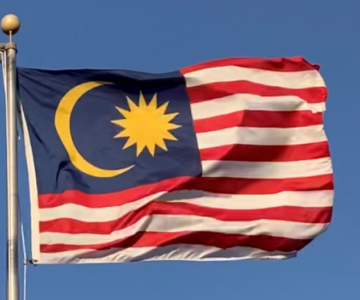
Malaysia has entered the fifty first year of its existence. This has been a half-century of determination, progress and keeping a fine balance between the diverse communities, races and cultures in the country. But Malaysia achieved successes against all odds.

True that it confronts issues of ethnic and religious tension and the side effects of controlled politics. However, prosperity assures that most of the citizens find a stake in national unity and the country's future!

I am a little allergic to the magnified tales of tensions in the country especially by a media that we know is neither fair nor benign. Which country of the world is free of internal schisms and struggles? Fifty years is too early to assess that. Or is it the case that this rapid success without reliance on the Western prescriptions and defying the post-colonial clientelism is at play. Inverse racism of sorts. Hope I am wrong...

Or is it that there is a Muslim majority which by definition (in the global propaganda) raises alarm bells? Maybe the images of women with scarves participating in the economic and political life of the country upsets all the stereotypes about women's "subjugation" by Islam. Many things irk the masters of stereotyping and branding agents of a new imperialism.

It is also a country that welcomes its tourists and makes sure that they enjoy their stay, Islamism notwithstanding. It also challenges the highlights of a recently independent 'developing' country: poverty, low levels of education, crumbling infrastructure, crime and dependence?

Unfortunately it is true that tensions in the society and calls for an "Islamic" society dilute its attempts to maintain ethnic harmony and channelise national resources to sustain gains already made. But like many Malaysians, I share the optimism and wish the country and its people the best.

Happy Independence Day - I love Malaysia (truly Asia!).

Postscript: My optimism on Malaysia in an older piece.

3Feb/060

Marvels of Malaysia

Muslim societies can learn from the plurality of race and religions in Malaysia says Raza Rumi

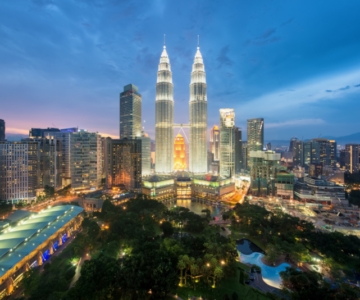
A few days spent in Malaysia are enough to dispel many myths about Muslim intolerance that are projected and reinforced by Western media and pop culture. An economic miracle of the 1980s, branded as the Asian tiger and vision personified by the iron-man Mahathir, Malaysia is a heart-warming testament to plurality and co-existence within the Islamic framework. Malaysia's 25 million strong population – modest by Pakistani standards – is a baffling mix of Malay, Chinese, Indian, Ibans and Kadazandusuns, among others.While the Malays constitute a marginal majority (over 50 per cent) of the total population and practice Islam quite seriously, the other groups enjoy full freedom to believe and live according to their own faiths.
Kuala Lumpur's landscape is dotted with mosques, temples and churches and there seems to be little tension. Admittedly, economic progress over the last two decades underwrites much of this success; yet this cannot be attributed to economic reasons alone. Leadership has played a vital role in instilling the sense of national pride and vision among all the races and religions in Malaysia. The country gained independence a decade after Pakistan and was poorer than most developing countries, yet Mahathir's twenty-year rule transformed the former British colony and increased levels of prosperity beyond belief. Its economic development aside, Malaysia's recent cultural development carries important lessons for Muslim states and societies.
Surprisingly, little is said in the Muslim world about the Malaysian practice of Islam. Calls for levying jizya in Pakistan on non-Muslims are all too common. One only has to see how many Christian and other minority professionals have emigrated to the West to realise the loss of diversity and human capital that Pakistan has suffered. In Malaysia, the societal contributions of Christians, Buddhists and Hindus are accepted.