Posts Tagged literature

A universe with four moons

20 January 2012

By Raza Rumi

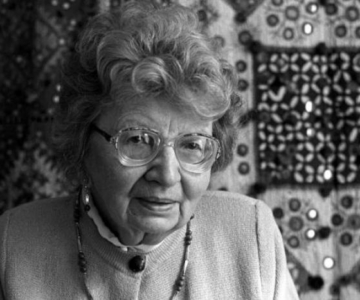
Neelam Ahmad Basheer is best known as a short story writer with a new voice in Urdu fiction. She has been writing all her life but established herself after she moved back to Pakistan from the United States during the 1980s. She spent a “lifetime” in the US married to a doctor who was not appreciative of her writing talents. And, we now know her better through the publication of Char Chaand (four moons) – a collection of autobiographical sketches and essays on her life, family and friends. Barring a few exceptions, few women venture to be as candid in Urdu writing as Neelam is in her new book. There is certainly no glorification, self-promotion or desperation to weave a halo around her persona. In fact, the author emerges as a vulnerable, melancholic and nostalgic character at the outset. The honest and self-fledgling tone of these sketches makes Char Chaand more than just a memorable book. It is in fact a testament to the tribulations of middle class women in private and public spaces and the kinds of struggles they have to wage to survive in a patriarchal society such as Pakistan.

Article Box

Article Box

Neelam’s greatest and perhaps the most ever-lasting influence is her father late Ahmad Basheer, a revolutionary writer, journalist and film-maker who was widely respected in Lahore’s literary and journalistic circles. One gets to know him through Neelam’s loving recollections in Char Chaand, also the title of the leading sketch. The four moons here are Neelam and her sisters: the uber-talented Bushra Ansari, Sumbal, a singer and known TV persona now; and Asma who has made her name in performing arts (but is unforgettable for her legendary performance in the famous parody of Malika Pukhraj and Tahira Syed with Bushra Ansari). Neelam weaves the narrative as if it were a piece of fiction and recreates her inner sanctum where this well-knit family lives in a relatively more tolerant Pakistan. It is amazing to read that Ahmad Basheer Saheb insisted that his wife should be trained in classical music; and an Ustad was hired for this purpose. The four girls grew up with this set of highly cultured parents. Ahmad Basheer was also a radical man at home. Neelam recounts how she was forced to go out of the house by the father when she was a teenager to run errands and how petrified she was to travel alone in a bus. Remarkable for the urban middle class culture where unmarried girls rarely leave the house without a male companion. Neelam is brutally honest about her insecurities growing up with prettier and bolder sisters who are eccentric in their own ways. She tells us how quiet and responsible she was as the eldest them of all. (more…)

The tragic story of Urdu

29 July 2011

By Raza Rumi

What makes translating Urdu literature a rare indulgence has also kept it closeted from global appreciation.

Ralph Russell, the legendary British scholar of Urdu literature, whose tireless efforts to explore the Byzantine layers of Urdu will always serve as a reference point for global Urdu-walas, once summed up the eternal dilemma of achieving a perfect translation of Urdu literature into English. He pointed out that the work of Indian and Pakistani translators suffered from a lack of command in either language. “The English-knowing products of what in India and Pakistan are generally called ‘convent schools’ have acquired their nearly (but not quite) perfect English at the cost of losing full command of their mother tongue,” he wrote in 1996.

This is not to say that translations of Urdu literature have not been accomplished. In fact, there are many 20th century writers whose works have been translated by competent men and women. Key examples are the translations of the short stories of Saadat Hasan Manto and Ismat Chughtai. Their poignant and non-conformist writings have found a wide readership in predominantly English-reading Indian middle classes and western readers attempting to understand the nuances of South Asia’s literary output. The contribution of The Annual of Urdu Studies – edited by Muhammad Umar Memon and published every year from the US – has been immense in this regard. Some writers and poets whose works have been translated include Abdullah Hussein, Patras Bukhari, Shamsur Rahman Faruqi, Rajinder Singh Bedi, Ghulam Abbas, Hajra Masroor, Premchand, Qudratullah Shahab, Intizar whose contribution and devotion to the translation of Urdu literature remains unparalleled and who has provided fine examples of literary translations, leaving out no major contemporary Urdu writer. His academic journal, The Annual of Urdu Studies, continues to publish translated works from Urdu every year.

Literary magazines are a great introduction to young and fresh voices in Urdu. One can observe a constant process of experimentation in language and expression. Short story writer Ali Akbar Natiq, one of Urdu’s most important new voices, and Mohammad Khalid Toor, who is critical newly- rediscovered voice, have been introduced to readers by Urdu literary magazines. (more…)

My candle burns at both ends

11 August 2010

Who will listen to the tale of my woeful heart?
Far and wide have I wandered on the face of this earth
And I have much to impart

It is not a coincidence that the earliest novels of the Subcontinent dealt with the intense and memorable characters of ‘nautch girls’. Essentially a colonial construct, a nautch girl referred to the popular entertainer, a belle beau who would sing, dance and, when required, also provide the services of a sex worker. The accounts on the marginalised women from the ‘dishonourable’ profession are nuanced, concurrently representing the duality of exploitation and empowerment.

Long before feminist discourse explored and located the intricacies of sex workers’ lives and work, male novelists during the 18th and 19th centuries were portraying the strong characters of women in the oldest profession. Stereotypes of the hapless and suffering prostitute rarely find mention in texts from that time, but one early novel, written in Urdu, is Mirza Muhammad Hadi Ruswa’s Umrao Jan Ada. While the Lucknow-based poet Ruswa is said to have persuaded Umrao to reveal her life history, many critics have surmised that the narrative was authored by Umrao herself. The tone and candour of the story suggests that Umrao played a significant role in drafting this semi-documentary piece. (more…)

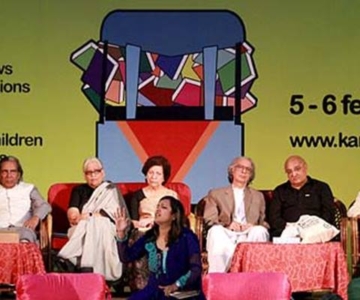
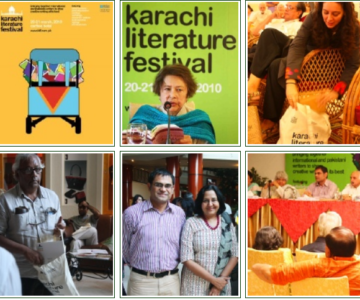
Karachi Literary Festival: Spring in the land of suicide bombers and charlatans

10 April 2010

Who says Pakistani literature was a relic of the past? If anything, Pakistani authors have a global audience today, and our writers are now the greatest harbingers of Pakistan’s complexity and nuance in a way that the embedded media can scarcely fathom.

The first literary festival took off in our cosmopolitan melting pot, Karachi, in March. The Oxford University Press’ dynamic head Ameena Saiyid, and the British Council, together organised this event. Asif Farrukhi, the premier litterateur of the metropolis was central to the festival. Farrukhi’s comprehensive command of Urdu and English literary currents, and the stature which he has earned with his hard work, ensured that we were all set for a fabulous gala.

Earlier, the festival faced the usual hurdles: the Indians were issued visas rather late in the day and my friend Sadia Dehlvi was denied a visa at the last minute, despite earnest efforts by the organisers. The iron curtain was rigidly in place. But the other regional and international delegates arrived as planned. The last minute finalisation of the schedule meant that due notice could not be given to many participants. However, the OUP team, especially Raheela Baqai, were adept at getting things done. Saiyid herself used Facebook to advertise the event. She’s obviously keeping up with technology and its changing frontiers.

We arrived just in time for the launch ceremony that was held at the British Consulate. It was quite a journey from the Carlton Hotel to old-world Clifton – a mini-bus that dazzled with literary icons of our time: Iftikhar Arif, Intezar Hussain, Masood Ash’ar and Shamsur Rehman Farooqi from the world of Urdu. The front seats were occupied by the petite and resplendent Bapsi Sidhwa, the contemplative Zulfiqar Ghose and the younger British Pakistani writer Sarfaraz Manzoor, whose book ‘Greetings From Bury Park’ has created waves across the English reading (more…)

Karachi Literary Festival

13 March 2010

Oxford University Press and the British Council are holding a literary festival – first of its kind.

The programme can be viewed here. KLF programme

I am off to Karachi next weekend to attend this moot.

Writing fiction

28 February 2010

I loved Guardian’s feature on Ten rules for writing fiction.

Elmore Leonard: Using adverbs is a mortal sin

1 Never open a book with weather. If it’s only to create atmosphere, and not a character’s reaction to the weather, you don’t want to go on too long. The reader is apt to leaf ahead look ing for people. There are exceptions. If you happen to be Barry Lopez, who has more ways than an Eskimo to describe ice and snow in his book Arctic Dreams, you can do all the weather reporting you want.

2 Avoid prologues: they can be annoying, especially a prologue ­following an introduction that comes after a foreword. But these are ordinarily found in non-fiction. A prologue in a novel is backstory, and you can drop it in anywhere you want. There is a prologue in John Steinbeck’s Sweet Thursday, but it’s OK because a character in the book makes the point of what my rules are all about. He says: “I like a lot of talk in a book and I don’t like to have nobody tell me what the guy that’s talking looks like. I want to figure out what he looks like from the way he talks.”

3 Never use a verb other than “said” to carry dialogue. The line of dialogue belongs to the character; the verb is the writer sticking his nose in. But “said” is far less intrusive than “grumbled”, “gasped”, “cautioned”, “lied”. I once noticed Mary McCarthy ending a line of dialogue with “she asseverated” and had to stop reading and go to the dictionary.

More here

Jaipur, Faiz and Ali Sethi

14 February 2010

Ali Sethi recently attended the Jaipur literary festival and his extraordinary performance is now accessible to those who were not there. I should thank him for sharing this video. Ali’s instructions were also meticulous but I will not post them here except his concluding comment: the whole of the rest of the session is fantastic, and includes an excellent performance by Shabana Azmi as well as a very funny story told by Javed Akhtar about his first meeting with Faiz Sahib..

Click and enjoy!

Jaipur Literature Festival 2010

Saadat Hasan Manto – part II

24 January 2010

After partition of India Saadat Hassan Manto arrived in Lahore sometime in early 1948. In Bombay his friends had tried to stop him from migrating to Pakistan because he was quite popular as a film writer and was making reasonably good money. Among his friends there were top actors and directors of that age—many of them Hindus—who were trying to prevail upon him to forget about migrating. They thought that he would be unhappy in Pakistan because the film industry of Lahore stood badly disrupted with the departure of Hindu film-makers and studio owners. But the law and order situation post-partition of British India was such that many Muslims felt insecure in India, just as many Hindus felt insecure in newly created Pakistan. That was the reason that Manto had already sent his family to Lahore and was keen to join them. Manto and his family were among the millions of Muslims who left present-day India for the newly created Muslim-majority nation of Pakistan. (more…)

Saadat Hasan Manto- Writer of Stark Realities

23 January 2010

(Courtesy Iftikhar Chaudri) Saadat Hassan Manto (May 11, 1912 – January 18, 1955) was a Pakistani Urdu short story writer, most known for his Urdu short stories , ‘Bu’ (Odour), ‘Khol Do’ (Open It), ‘Thanda Gosht’ (Cold Meat), and his magnum opus, Toba Tek Singh’. Unfortunately having spent life on both sides of the border he was portrayed as an Indian writer in Pakistan and in India he was portrayed as a Pakistani writer. But truely he was a writer of the subcontinent above distinctions of coutry or religion.
He was also a film and radio scriptwriter, and journalist. In his short life, he published twenty-two collections of short stories, one novel, five collections of radio plays, three collections of essays, two collections of personal sketches. (more…)

Urdu short stories – ‘The Myna of Peacock Garden’

22 October 2009

Published in The Friday Times last week:

A new collection of translated short stories reminds us how Urdu literature needs to connect with a global audience, says Raza Rumi

As I hold the recently published “The Oxford Book of short stories” in my hands, I cannot help bemoan the fact that Urdu literature has been almost invisible from the arena of global literature. Admittedly, translation is difficult; the tediousness of translation daunts many a brave heart. Having said that, there have been a handful of remarkable translators such as Khalid Hassan, Alamgir Hashmi, CM Naim, Aamer Hussain, Umer Memon and Rakhshanda Jalil, to name a few. But a wide corpus of Urdu literature lies forlorn and hidden from global readership, which alas is dominated by English language readers. For this very reason, Amina Azfar has done a remarkable job of compiling a collection of Urdu short stories. Her earlier translations have been competent and quite often lyrical. For instance, Akhtar Hussain Raipuri’s Gard-e-Rahh (the dust of the road) and Sajjad Zaheer’s Roshnai ( the Light ) are noteworthy for their tone.

The book has a nice little foreword by Aamer Hussain, who is correct in stating that Azfar’s collection provides a fine introduction to the genre of the Urdu short story. The stories selected encompass a range of various experiments undertaken by the great Urdu writers. The stark realism of Munshi Premchand is counterpoised by Khaleda Hussain’s two short stories that are allegorical and somewhat postmodern in their sensibility. Iftikhar Arif, the renowned poet-bureaucrat, in his formal introduction quotes Dr Jamil Jalibi, terming the selected short stories “in the category of the very best”. (more…)

Faiz’s ‘Intesab’ – a lovely translation

28 August 2009

A reader – Joe 31 – has rendered a great translation of Faiz’s poem – “Intesab”. I am posting it as a separate blog entry for all those who read and enjoy Faiz Ahmad Faiz, Pakistan’s eminent poet. This poem appears as an introduction to one of his early collections of verse. This timeless poem is relevant even today as it celebrates the resilience and courage of Pakistani proletariat.

Dedicated to these times, and the sorrow of these times.
The pain of today, that is set against the plentiful garden of life.
The forest of dead leaves, that is my land.
The collection of pain that is my land.

Dedicated to the gloomy lives of clerks
Moth eaten hearts and words.
Dedicated to the postmen
Dedicated to the coachmen
Dedicated to the railway workers
Dedicated to the innocent beings in the factories. (more…)

Qudraatullah Shahab – Enduring Legacy

13 August 2009

Syed Naveed Abbas has sent this contribution for Jahane Rumi. Shahab was an outstanding writer though his politics remains controversial and his extraordinary claims of piety and sainthood are deeply contested. However, he has inspired generations of writers and readers. RR

MAQDOOR HO TUO KHAK SAY POCHOO KEH AIE LAYEM

TUO NAY WO GANJ HAAE GERA MAYA KYA KEA

(If I was fortunate enough, I would ask the earth, Oh! Miser,

What did you do with those priceless treasures?)  – Ghalib

A careful study of the biographies of great men reveals that they lived for a central idea and their life’s work consisted of delivering that message to humanity. History tells us that when such men met with obstacles in their path, they further intensified their efforts to achieve their objectives. The greater the challenges great men had faced, the more determinedly they held (more…)

Qurratulain Hyder – it is as if she were an oracle

10 July 2009
Comments Off

 It is not a coincidence that Qurratulain Hyder, grand dame of Urdu literature, is remembered whenever we are faced with crises of state and society. Hyder was not just a fiction writer but a chronicler, for her sense of history remains unparalleled in the annals of South Asian vernacular literature. Her magnum opus “Aag Ka Darya” (AKD) was written and published in the highly contested milieu of the post-partition Indian subcontinent, when the new nation states were re-writing their historical discourses. In Pakistan, AKD was a sensation right from the time when it was published in the late 1950s. The controversy it created remains pertinent despite the passage of five decades.

Hyder’s nuanced and highly sophisticated vision was not easily apparent to officialdom or to state-sponsored literary critics in Pakistan. (more…)

Literature in the time of terror

19 June 2009

My piece that appeared in The Friday Times (May 29-4 June, 2009 issue). I have argued that the silence of Pakistani writers on terrorism and extremism is finally breaking  


‘Fallen Indus’, a painting by the author


‘Ignorance Is Bliss’, a miniature by Saira Wasim


Since the invasion of Afghanistan by the United States and the global hysteria about ‘terror’ and ‘terrorism’, Pakistan has faced the greatest of existential challenges after its dismemberment in 1971. As a frontline ally of the US in the war on terror, Pakistani society and polity have been engulfed by growing militancy and acts of violence. Whilst there is no single definition of ‘terrorism’, the mainstream media and policymakers – in the service of imperial rhetoric aimed to justify and perpetuate the occupations of Afghanistan and Iraq – have established terrorism as the major threat to domestic and regional peace in South Asia. Acts of premeditated and organised violence in India, Pakistan and Bangladesh have thus assumed a central place in discourse on regional cooperation or its converse: the rivalries between the constructed nation states and their irresponsible power-elites.

 In this milieu, South Asian citizens have been the victims of violence, uncertainty and acrimony that have only led to the exacerbation of poverty, inequality, ascendancy of militarism and the war-mantra. All of this is taking place when globalization is relentlessly seeping into domestic economies, cultures and social systems. Where does this leave the writers and poets of the (more…)

Contemporary Pakistani literature in the ‘age of terror’

26 March 2009

I am posting the synopsis of my paper entitled Silhouetted Silences – contemporary Pakistani literature in the ‘age of terror’, that I presented at the SAARC writers’ festival held in Agra, India (March 13-17, 2009). The full paper needs to be edited and referenced so that will posted a little later.

Round my neck,
from time to time, there was the hallucination
of a noose, and now and then, the weight
of chains binding my feet.
Then one fine day
love came to drag me, bound and manacled,
into the same cavalcade as the others (Faiz)

Since the invasion of Afghanistan by the United States and the global hysteria about ‘terror’ and ‘terrorism’, Pakistan has faced the greatest of existential challenges after its dismemberment in 1971. As a frontline ally of the US in the war on terror, Pakistani society and polity have been engulfed by growing militancy and acts of violence commonly branded as terrorism. Whilst there is no single definition of ‘terrorism’, the mainstream media and policymakers – in the service of imperial rhetoric aimed to justify and perpetuate the occupations of Afghanistan and Iraq – have established terrorism as the major threat to domestic and regional peace in South Asia. Acts of premeditated and organised violence in India, Pakistan and Bangladesh have thus assumed a central place in discourse on regional cooperation or its converse: the rivalries between the constructed nation states and their irresponsible power-elites.

In this milieu, the South Asian citizens have been the victims of violence, uncertainty and acrimonies that have only led to exacerbation of poverty, inequality, ascendancy of militarism and war-mantra. All of this is taking place when globalization is relentlessly seeping into domestic economies, cultures and social systems. Where does this leave the writers and poets of the region who grapple with the complex, confusing and fast changing social and political realities? Whilst the community of South Asian writers – traditionally the forbearers of intellectual and political movements – is beleaguered by corporate media industry, it has struggled to respond to challenges that events have created. (more…)

Next Page »