Posts Tagged Law

Another blow to Pakistan: Salmaan Taseer killed by extremism

4 January 2011

Punjab Governor Salmaan Taseer’s brutal murder at the hands of a security personnel is a cruel reminder of where we have landed ourselves: in a dark morass of irrationality lorded over by pernicious ideologies.

He was a brave man and stood for a liberal, tolerant and progressive Pakistan where economic and political freedoms could be upheld. He has paid for his life for his bold stance on the blasphemy law and countering Talibanisation. He was our hope and without him Jinnah’s Pakistan – NOT a theocracy – is in grave danger.

His legacy will be remembered by history and he will go down in history as a major icon of progressivism.

May he rest in peace. PTH mourns his loss and condemns this attack. The federal and provincial government should immediately investigate this murder and punish the criminal as well as the network behind him.

The war against extremism will have continue – otherwise, we are headed towards anarchy, more sectarianism and utter chaos.

Long live Pakistan!

Pakistan: “It is time for the judiciary to address incompetence and prejudice within its own ranks”

4 December 2010

Ali Dayan Hasan, Senior South Asia Researcher for Human Rights Watch, spoke to Raza Rumi about the blasphemy law.

What is your position on the blasphemy law and how is it viewed internationally?

The blasphemy law is a blot on Pakistan and brings disrepute to Islam. It is precisely the kind of law that reinforces, with good reason, negative stereotypes of Pakistan and Muslims. Because it is justified in the name of religion, it is difficult to explain to the world that this is a law imposed by a military dictatorship in the ‘80s for cynical political purposes and does not enjoy any “divine” sanction. It is our view that Sections 295 and 298 of the Pakistan Penal Code, which include the blasphemy law, should be repealed forthwith. The obscene consequences of these laws have been evident for decades through the continued criminalization and persecution of those the state ought to actually be protecting and failure to repeal makes successive governments, and the state itself, complicit in heinous discrimination and egregious human rights abuse.

But a substantial body of religious scholars argues that the blasphemy law is in keeping with Islamic jurisprudence…

It is interesting that political actors operating in the name of Islam, such as the Sunni Tehreek, the Jamaat-e-Islami and the JUI, take this position. They are cynically exploiting religion and encouraging social persecution and legal discrimination to seek political mileage. No serious religious scholar without a political axe to grind has spoken out in favor of these appalling laws. In fact, scholars such as Dr Javed Ghaamdi and Prof Khalid Masood oppose it vehemently. It is important to bear in mind that the imposition of these laws was a political not religious act, as is their defence. (more…)

Asma Jahangir – A formidable fighter

8 November 2010

Fearless and a formidable fighter, Asma Jahangir personifies the struggles Pakistanis have initiated against shameful cultural practices, discriminatory legislation and executive excess. A frail woman has kept the torch of public liberties, freedom and democracy alive for decades. Born on January 27, 1952, in Karachi, Asma Jahangir during the last forty years has become a champion of women, child and minority rights and in many ways the conscience of Pakistan.

A leading Pakistani lawyer and an advocate of the Supreme Court of Pakistan, Jahangir is most renowned for her role as a human rights activist, a role which has made her confront military dictatorships of General Zia-ul-Haq and General Pervez Musharraf and the civilian autocrats. In 1972, Asma Jahangir was only 18 when she filed her first petition to have her father — who had been arrested for denouncing the genocide in Bangladesh — released from prison. In a landmark judgment ten years later, she won the case. In fact, the earliest and perhaps the only judgment against a military coup is now attributed to her name. Her resistance to army’s role in politics (more…)

Saving the Capital

5 July 2010
My piece for The News:
The recent decision of the Supreme Court to order closure of a multinational food chain restaurant in Islamabad is path-breaking
It has become a cliché to praise the Supreme Court of Pakistan these days. Clichéd, because many partisan agendas find resonance within the all-embracing spectrum of judicial activism. Those who have been critical of judges turning into activists must rethink their misgivings. While the dangers of such blanket approval of the workings of a state institution are apparent, it is still a welcome change in a country known for its culture of impunity. This is why the recent decision of the mighty Supreme Court to have ordered the closure of a multinational food chain restaurant in Islamabad’s ill-designed public park is path-breaking.
First of all, the fact that a municipal matter reached an overburdened superior court speaks much about the dysfunctional executive that manages our lives. That the court had the wisdom to uphold the rights of ordinary Islamabadites marks a new beginning which, if taken to its logical end, would mean that all public spaces in Pakistan should come under intense judicial scrutiny. Lastly, the court’s effort to enforce accountability could very well turn out to be a new beginning in our murky public affairs.
Effective municipal management requires that we revisit the urban governance frameworks that are now outdated to handle the population growth, changed needs of the population and dwindling state capacity to enforce regulations. Notwithstanding that Islamabad is fifteen kilometres away from the real Pakistan, the management practices are no different from the rest of the country. Essentially, the Islamabad saga reveals a case of serious governance failure. (more…)

Should we bid farewell to democracy in Pakistan?

25 January 2010

Published in The NEWS

It is still not too late that PML-N and PPP and the regional parties sit together and agree on the way forward says Raza Rumi

Many decades ago, our Governor General-President Iskander Mirza had rather contemptuously stated that democracy does not suit the genius of Pakistani people. Immediately after these words of wisdom were uttered, direct military rule not only exiled Mirza but also became a norm rather than aberration. For the last six decades or so we have not been able to overcome this political reality. The unelected institutions of the state are not willing to give up the power they inherited from the might of the colonial state. At best, they are willing to share power to a degree that they deem fit.

It is now clear that within a few months Pakistan is due for another political upheaval. Barely twoyears after an election took place, the political elites are back in business: bickering, wrangling and oblivious to their historical role in strengthening the fragile democratic process. The unelected institutions have traditionally been contemptuous of democracy and their conduct in the last two years has not been surprising. The losers at the hand of the military rule – the PML-N and the PPP ought to have learnt their lesson: no matter how adverse the political climate was, the political forces had to stay united for a common cause.

However, the brief interlude of political cooperation led to mistrust and misgivings among the political players. First the restoration of judges and a partisan interpretation to the issue of independence of the judiciary created a rift between the two parties. Second, the imposition of ill-advised Governor’s rule led to widening of the gulf. This was followed by the long march that led to the restoration of the deposed judges. In the process, the co-chairperson of the PPP was termed as a leader who did not keep his promises and time and again betrayed the trust of Mian Nawaz Sharif painted by a prejudiced media as an innocent victim. (more…)

Two new poems by Kishwar Naheed

28 May 2009

My Nation, Listen to My Entreaty / Aey Meri Qom! Meri Binti Sun!

My country came into being through a law,
the law of the British
British – whichever line they drew
and gave it the name of two countries,
we just accepted it.

Our nation accepts every thing and every person
This nation accepted tyrants
it accepted lackeys, accepted impostors
If it did not accept,
it did not accept maulvis
it did not accept vampires and wolves,
did not accept declarations and fatwas.
O my nation
Your ancestors also had not accepted them
Your courts also had not defended them
Your flag also had not worn their amulets.
O my nation,
beware of those people
saluting them
defending them
wearing their amulets.
They hate woman,
as if they hate their own mother and their own daughter
In every shape of woman they see lust
and decorate their dreams as such
May any disaster fall upon the world,
they will not speak
May all the officers of all the country
become corrupt, drunk, venal,
they will not speak
On each and every step throats are slit,
people are bought and sold,
they will not speak.
Yes, but if any woman emerges with a banner in hand –
instantly they will speak
instantly delete her from the sphere of Islam,
from every reward of life.
O my nation!
Seek shelter from these merchants of Islam
Else in the harems of tribal leaders and landlords
our futures will be nurtured
These people will not issue fatwas against them
And when our future children
won’t be able to tell the names of their father
then even flocks of swallows will not come to their help.

A Solemn Conversation with the Taliban / Taliban se Qibla-ru Guftagu

Those who were frightened even of girls
Those even averse to knowledge,
they speak of the great Lord
He who commands of knowledge
Unrelated to His command,
they announce these declarations:
That no book be in any hand
Nor a pen between fingers
No place remain for writing a name
That women become nameless
Those who were even frightened of girls
announce in every city:
That the budding contours of a young girl
be veiled
That to the query of every heart
answer this –
There is no need
that these girls
soar like birds
There’s also no need
that these girls
head to any schools, any offices
If there be some blazing beauty, some one pious
then only within the walls
is her place
This is the Decree
This Written.
Those who were frightened even of girls
they are here, somewhere nearby –
See them, know them
Expect anything from them
in the fallen city
Keep courage, believe this
that those who were frightened even of girls
what pygmies they are
Announce in every city:
Keep courage, believe this
That those who were frightened even by girls
they are such pygmies.

Lahore blasts fail to terrorise Lahoris

8 October 2008

Posted by Raza Rumi

Having lived two days in Lahore as a ‘resident’, the three low intensity blasts are a rude reminder that there is a war all over the country..It does not matter whose war it is; what matters is that it is real and not a fantasy and that it continues to harm ordinary, unarmed citizens who perhaps have no hand in formulating policies in Pakistan.

The fodder of terrorism – home grown and external – are innocent victims, children and more often than not, the poor..

What can be done, is the issue. And, the answers to this ostensibly simple question are in short supply. (more…)

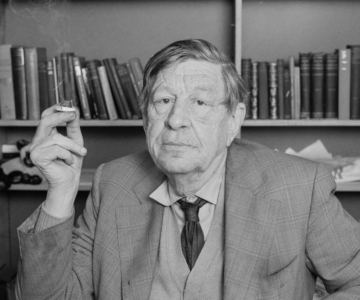
Law, like love and Stop all the clocks – W H Auden

16 March 2007

Taking a cue from the recent events in Pakistan, Ammar Qureshi has contributed a beautiful poem by Auden in a newspaper. I love the last lines:

Law, say the gardeners, is the sun,
Law is the one
All gardeners obey
To-morrow, yesterday, to-day.

Law is the wisdom of the old,
The impotent grandfathers feebly scold;
The grandchildren put out a treble tongue,
Law is the senses of the young. (more…)