Posts Tagged ‘Lahore’
Let the cynics froth and fume
My piece published in The Friday Times
This is the magic of Lahore and its deep-rooted cultural mores. No other city can boast of such individuals, movements and trends. Hopefully, the music will live on. The interest of younger generations and their experiments with various forms of music hold great promise
Last week the breezy environs of the majestic Lawrence Gardens once again swayed to the tunes of Hindustani classical music. A week long music festival organised by the All Pakistan Music Conference attracted musicians, vocalists and enthusiasts from all parts the country, as well as from the imagined “enemy” India. How could it not be the case when musical traditions emerged out of a cultural synthesis of 700 years or more?

The leading light of APMC was Hayat Ahmad Khan, whose sad demise in 2005 was interpreted as an end to the glorious tradition of subcontinental streams of music in Pakistan. However, 83 years of hard work and philanthropic contributions was not in vain. He left behind a powerful institution and a network of committed individuals and aesthetes who have kept the torch ablaze. Not a small feat in the troubled waters of a Pakistani cultural landscape constantly under attack by nation-state ideology and extremism that consider music to be too “Indian” or, even worse, un-Islamic.
This is the greatest irony of our existence: the Muslims in India contributed to what is known today as Indian classical music and innovations such as the sitar and the tabla. The Qawwal bache trained at the shrine of Nizamuddin Auliya in Delhi under the tutelage of Amir Khusrau became the founders of what was to later evolve as the sophisticated Khayal style of music. In dire times of the Sultanate and Mughal periods, these musicians had to take refuge in the princely states, and this is how the various gharanas, or schools of music, originated. This loose network of musicians organised along the lines of kinship or teacher-pupil bonds, sustained by court patronage and eclectic and secular in appeal, led to some fine moments. Tansen at Akbar’s court, Mohammad Shah Rangeela’s patronage and later the Kingdom of Oudh defined the high-points of this fused and seamless culture beyond religion, communal and sectarian divides.

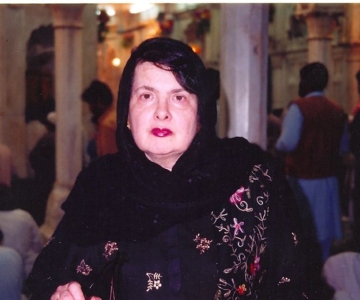
To keep this tradition alive in post-independence Pakistan was a Herculean task. Pakistan was a moth-eaten and truncated country in the words of its founder Mohammad Ali Jinnah. The psychological trauma and barbarity of the Partition had jolted everyone and the traditional patronage of the state was missing. It was under these circumstances that on September 15 1959, music-inspired citizens met at the famous Coffee House of Lahore and launched a voluntary organization called The All Pakistan Music Conference. Eminent personas such as Roshan Ara Begum were among the illustrious list of its founders.
It should be noted that this was also the age when the maestro Ustad Bade Ghulam Ali Khan migrated to India and Roshan Ara Begum was almost about to give up the passion of her life. Thus Read the rest of this entry »
Tags: APMC, classical, conference, Gardens, Lahore, Lawrence, Music, pakistan
In City of Tolerance…
I was quoted in this NYT article on Lahore
Still, Raza Rumi, a writer and blogger who takes great pride in his city, insisted that “Islamic extremism has had very little appeal here.” The cultural life of Lahore goes on, as it has for centuries.
He said that a recent stage play, “Hotel Moenjodaro,” whose theme was against religious fundamentalism, drew a packed audience. “It was very encouraging,” Mr. Rumi said.
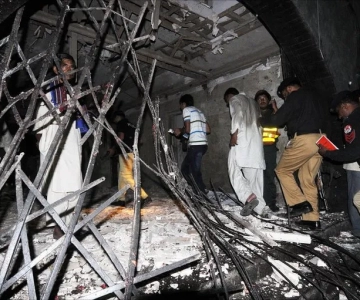
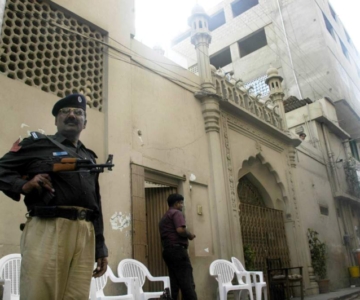
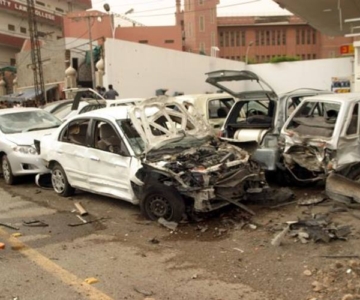
Nonetheless, he said, the Hall Road incident and the juice store blasts were alarming. “If the traders, the merchant class, which forms the bulk of the middle class of Lahore, becomes Talibanized, then the whole complexion of the city will change,” he said. “That’s a fear amongst the secular intelligentsia and elite of Lahore.”
Full story here
Tags: Extremism, Islamic, Lahore, pakistan, Taliban, tolerance
Ajoka Theatre and the Caucasian Chalk Circle
My piece published in The Friday Times (October 24 issue)
![]()
Who is entitled to keep the child - one who is a better, nurturing mother, or the one who may be the natural mother but could not care for the child? The larger question then haunts the audience: who is entitled to ownership – the one who has the deed or the one who tills the land?
![]()
Ajoka Theatre has revived a production that was first staged twenty three years ago. A deft adaptation of Bertolt Brecht’s The Caucasian Chalk Circle, its vernacular version, Chaak Chakkar, is a timeless comment on the viciousness of Pakistan’s exploitative culture of power politics. Perhaps the duo, Shahid Nadeem the playwright, and Madeeha Gauhar the director, would have tried to capture bits of social reality in the mid 1980s when General Zia was still the Lord Master of Pakistan. Why did Ajoka choose to stage this after a gap of two decades?
As Madeeha Gauhar explained: “In 2008 one marvels at how Brecht had foreseen the chaos, the anarchy, the shameless switching of loyalties of recent years, especially since the return of the popular leadership exile.” The seat of total power, “symbolized as Lal Mahal, is uncannily similar to Lal Masjid and Lal Haveli of our times,” she added. Read the rest of this entry »
Tags: Ajoka, Brecht, Caucasian, Chaak, Chakar, Circle, class, drama, inequality, Lahore, pakistan, play, revolution, street, theatre
Poverty and Inequality - the brewing storm
By Raza Rumi
(My op-ed first published here)
As I sipped the tenderly brewed coffee facing the lush green golf course of a relatively new Lahore Country Club, the new reality of Pakistan became a little clearer. The sprawling premises of the club were a preserve of the Railways Department until the inefficient Pakistan Railways could not manage it and doled it to the new, oligarchic big business of Pakistan. Much ado was made when the land owned by the Railways was privatised and questionable deals were transacted in that moderately unenlightened era. Nothing came out of the public questioning and today a lavish country club, far removed from its downmarket environs, has sprung out for the affluent and the upwardly-mobile classes of Lahore and Punjab.
The classic barriers to entry created by the cliques that lord over Pakistan’s elite clubs is being undone. Pay a handsome fee now (way over a million rupees) and you are a member to this new “club” built on the ashes of the Raj steelframe, albeit, reminding one of the nasty remarks of Churchill on how the brown, rapacious Rajas would appropriate the space created by the wise and just colonists. As my host elaborated on the entry procedures to Lahore’s richy-rich club, I could not help but remember the compensation to a suicide bomber that has also increased over the years and now hovers between one to two million rupees. A grossly-overlooked fact is that the grinding poverty in the pockets of Pakistan, seemingly unaffected by the consumerist prosperity, is the key to our current turmoil and violence. Read the rest of this entry »
Tags: club, country, FATA, inequality, Lahore, pakistan, Poverty, Richistan, Royal Palm, Taliban
Living Lohawarana - a Lahori rambling
My piece for Himal Magazine’s October issue

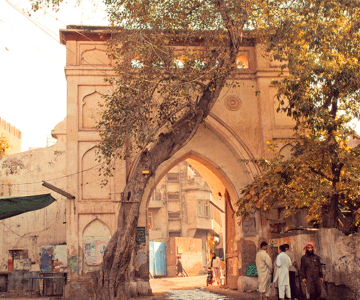
There was a Lahore that I grew up in, and then there is the Lahore that I live in now. Recovering from an exile status for two decades, I find myself today turning into something of a clichéd grump, hanging desperately on to the past. Yet I resist that. Writing about Lahore is a sensation that lies beyond the folklore – Jine Lahore nai wakhaya o janmia nai (The one who has not seen Lahore has never lived). It has to do with an inexplicable bonding and oneness with the past, and yet a contradictory and not-so-glorious interface with the present.
Lahore is now the second largest city in Pakistan, with a population that has crossed the 10 million mark. It is turning into a monstropolis. Had it not been for Lahore’s intimacy with Pakistan’s power base – the Punjab-dominated national establishment – this would be just another massive, unmanageable city, regurgitating all the urban clichés of the Global South. But Lahore retains a definite soul; it is comfortable with modernity and globalisation, and continues to provide inspiration for visitors and residents alike.
Over the last millennium, Lahore has been the traditional capital of Punjab in its various permutations. A cultural centre of North India extending from Peshawar to New Delhi, it has historically been open to visitors, invaders and Sufi saints alike. Several accounts tell how Lahore emerged as a town between the 6th and 16th centuries BC. According to commonly accepted myth, Lahore’s ancient provenance, Lohawarana, was founded by the two sons of Lord Ram some 4000 years ago. One of these sons, Loh (or Luv), gave his name to this timeless city. A deserted temple in Lahore Fort is ostensibly a tribute to Loh, located near the Alamgiri gate, next to the fort’s old jails. Under the regime of Zia ul-Haq, Loh’s divine space was closed and used as a dungeon in which to punish political activists. Read the rest of this entry »
Tags: city, History, Lahore, Mughal, pakistan, urban
Beyond Borders - with Shubha Mudgal and Tina Sani
My article published in the Friday Times (Aug11-18)
Days after the recent skirmishes at the Line of Control, when the composite dialogue between India and Pakistan was threatened, an alternative reconciliation was underway in Lahore. Music became the metaphor of shared ground between the two countries, challenging divides between them that can become violent.
Lahore hosted the legendary vocalist Shubha Mudgal for a few days. The crusade launched by Beyond Borders Television, a production house and sister company of The Friday Times and Good Times, is a unique development in Pakistan’s media world.
It is Beyond Borders’ mission statement to produce programming for regional channels that promotes understanding between peoples. Undaunted by visa restrictions and overcoming official barriers, Beyond Borders organised Mudgal’s visit to Lahore to record a tripartite discussion between Mudgal, Tina Sani and Jugnu Moshin, the compere.
The night before the recording, there was a get-together at the home of Jugnu Mohsin and Najam Sethi. It was a typical July evening, marked by the promising stillness of the monsoon. The fragrance of tuberoses, motia and lillies had made the atmosphere surreal and when the power breakdown happened, and candles were lit, it was like a slice out of some previous age. Read the rest of this entry »
Tags: Beyond Borders, classical music, Hidusthani, India, Lahore, Music, pakistan, Shubha Mudgal, South Asia, thumri, Tina Sani
The invisibility of the Mughal princesses
My piece published by the Himal Magazine
The limitations of Southasia’s historical record can be seen in the indifference towards two notable Mughal princesses, Jahanara and Zebunnissa.
History – that mosaic of tales and fables that is generally, though not entirely, agreed upon – will always be contested and debated, often in the blood-lined bazaars of power. Indian history, which serves as the broad banner for the histories of Southasia, is certainly no exception in this. After all, Indian history has largely been one of power laced with the force of religion. In addition, during the course of this history, the rulers, ministers, clerics and soldiers have, with rare exceptions, all been male. Indeed, the annals of the sultanate and Mughal history, both medieval and modern, are largely tales of powerful and quarrelsome men vying for power and patronage. The local patriarchal society, influenced by the zeal of West Asian Islam, ensured the almost complete invisibility of women.
The brief reign of Razia Sultan (1236-1240) was an exception, though her ascension to the Delhi sultanate throne and subsequent dethronement and exile, as well as the continuous resistance of clergy and nobles to her political persona, only reinforced the predominance to patriarchy. Other than Razia Sultan and Queen Nur Jahan, who both gave up purdah and participated in the brutal politics of men, rarely did a woman rise to a position of authority or influence. For her part, Nur Jahan (1577-1645) experienced particular success, but her precedent was not the norm – she was Persian, after all, and was considered a particularly wily player of power politics. And Nur Jahan is demonised as a power-hungry monster, who supposedly subjugated the masculinity of her emperor husband to assume charge of the Mughal Empire. Indeed, in the words of that husband, Jahangir, the kingdom had been ‘sold’ to his wife for a cup of wine and a bowl of soup. Nur Jahan has also been accused of misdeeds that were common to powerful men of that age: bribery, nepotism and the weaving of court intrigues. Such faint praise aside, all the while her lasting contributions to the Mughal court – the cuisine, lifestyle and trends of that age – have been largely overlooked, to appear as little more than ‘feminine’ footnotes in the main narrative of Southasian power.
Lahore is where Nur Jahan and Jahangir married, and where they established their royal home. As a Lahorite, the childhood memories of this writer are inextricably mixed with those of many visits to Jahangir’s tomb. But the name of this much-celebrated monument is also particularly symbolic: it is not just the final resting place of Jahangir, but also that of the queen who lovingly designed the buildings and surrounding gardens, to their very last detail. Many of the architecturally significant additions made to the Lahore Fort, such as the zenana (female) quarters, have never been attributed to her. The irony, of course, is that Nur Jahan was the only queen who actually spent the majority of her royal life in Lahore. Other Mughal Emperors and Empresses lived in Agra or Delhi, save a few years of Akbar’s sojourn in Lahore. However, the histories of Lahore inevitably reduce Nur Jahan’s era to a brief footnote or an unread appendix.
Rilasa-i-Jahanara
But there is more to this story of the neglected women of the Mughal court than Razia Sultan and Nur Jahan. Buried within the folds of history is the tale of two princesses who have always remained well out of sight of the mainstream historical narratives of the Mughals. In recent decades, historians and novelists have indeed begun to explore the lives of princesses Jahanara and Zebunnissa, but the scanty primary sources available have largely thwarted these endeavours. Nonetheless, the stories of these extraordinary Mughal women dazzle through the mists of time, and their central paradox cannot be overlooked: the princesses were royal, and hence noteworthy, and yet they are almost completely invisible in what Southasians know as ‘history’. Read the rest of this entry »
Tags: Agra, Aurangzeb, clergy, Delhi, History, Jahanara, Jehangir, Lahore, Mughal, Nizamuddin Auliya, Nur Jehan, patriarchy, princesses, Razia Sultan, sufi, Zebunnissa


Still, Raza Rumi, a writer and blogger who takes great pride in his city, insisted that “Islamic extremism has had very little appeal here.” The cultural life of Lahore goes on, as it has for centuries.