Jahane Rumi In search of the unsearchable: O, my soul! where would you find your house?

13Mar/101

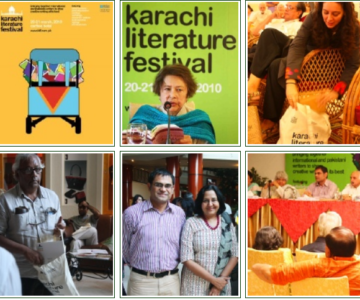
Karachi Literary Festival

Oxford University Press and the British Council are holding a literary festival - first of its kind.

The programme can be viewed here. KLF programme

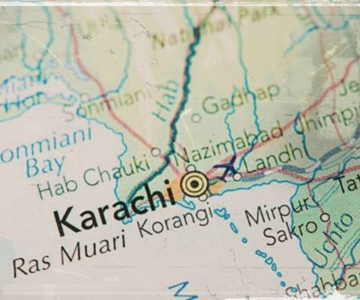
I am off to Karachi next weekend to attend this moot.

1Mar/107

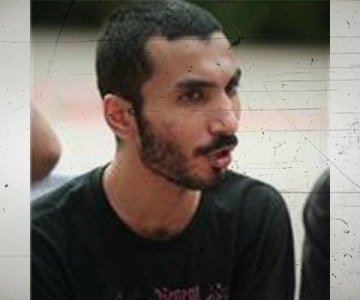
In memoriam – Asim Butt (1978-2010)

He was a man, take him for all in all,

I shall not look upon his like again

(Hamlet, Shakespeare)

It is only when Asim has gone that one takes measure of the legacy he has left for his troubled and torn country. A decade long association was lost on the fateful day of January when we heard of his untimely exit from this world. For hours, I sat in my office, numb. Not that Asim’s suicide was a surprise, for he had warned us all many times of this inevitable dénouement to his dramatic life.

Five years ago, when I wrote a piece on the Pakistani poet Mustafa Zaidi and the romance with nurturing a death wish, Asim wrote to me and said that I had no clue what this was all about. His words were: “loved and was deeply moved by your piece on Zaidi... saw so much of myself in his life story, hoping I don’t die unsung and on the fringes, and wondering why you of all people would have a death wish.” Asim had suffered and struggled with his inner demons with an intensity that most of us will never appreciate. This was the first time that I knew about the seriousness of his other side: a dialectical dark side to his otherwise cheerful, loving and warm persona. Asim cannot be mourned; he can only be celebrated. He would have hated the melodramatic statements that I am inclined to write in this remembrance.

Two of my dearest friends were close to Asim in a way that is difficult to understand. Nearly a decade ago I met Asim at Ali Dayan Hasan’s home in Karachi. I was passing through on one of my occupational breaks from my assignment in Kosovo. Ali had returned from England and joined the monthly Herald and was piecing his life together. I met this lean and quiet young man who had big, bright eyes and a unique smile. We did not talk much except for a small argument over something, perhaps about a book, but I could not help being thoroughly impressed with his viewpoint. Since then I have had a series of exchanges, verbal and electronic, in which Asim was always animated, off-beat and extremely gifted with words and ideas. No wonder his art work and many of his writings are a formidable legacy for us all.

Born into a regular upper middle class family, Asim Butt was always an exception. He was different, as he would tell me. Rejecting convention, tradition and the confines of societal expectations was therefore something that started way too early with Asim. To be fair, he did pursue a path chosen for him. He attended the Li Po Chun United World College where his gift for painting became polished, and at some level he had chartered his future course. There was some meandering: a degree in the first batch of B.Sc. in Social Sciences earned from the Lahore University of Management Sciences; and later an unfinished PhD in History from the University of California, Davis. He returned to Pakistan, wrote for the Herald and other publications, and finally enrolled himself at the Indus Valley School of Art and Architecture.Not surprisingly, Butt graduated with distinction in 2006.

18Feb/100

Killing Shias is not jihad – stop this carnage in Pakistan

This is an old article – When the state kills – authored by Pakistan’s eminent intellectual Khaled Ahmed. It remains relevant for what is happening today – the carnage in Karachi and targetted killing of the Shia minority is a cause for concern for  Pakistanis who want the country to become a plural, tolerant and progressive society for all its citizens irrespective of their faith, caste or creed.
Many of us - who identify themselves as neither Sunni nor Shia (only Muslims) - strongly condemn the Karachi incidents and will continue to raise voice against extremism and sectarianism.
22Jan/101

Farewell, Asim

Dear Asim: you left us in such a hurry - you will be missed, always..RIP

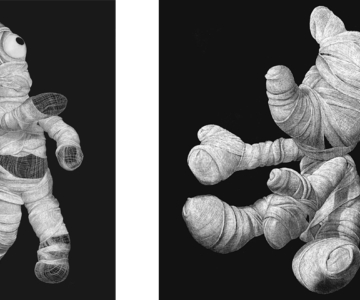
Asim Butt: A rebel from his conventional background, Butt continues to defy the conformist meanings of family, career, security, sexuality and that elusive bourgeois pursuit of happiness. Inspired by the Stuckism movement of art, Asim holds painting as a powerful medium of communication. This standpoint brings our young Pakistani Stuckist at odds with the skin-deep novelty and claimed nihilism of “conceptual” art and postmodernism. The pursuit of art in this worldview thus merges into an impulse for a renewal of spiritual values in art and society, or what is known as “re-modernism.” More here

10Jul/09Off

Qurratulain Hyder – it is as if she were an oracle

 It is not a coincidence that Qurratulain Hyder, grand dame of Urdu literature, is remembered whenever we are faced with crises of state and society. Hyder was not just a fiction writer but a chronicler, for her sense of history remains unparalleled in the annals of South Asian vernacular literature. Her magnum opus “Aag Ka Darya” (AKD) was written and published in the highly contested milieu of the post-partition Indian subcontinent, when the new nation states were re-writing their historical discourses. In Pakistan, AKD was a sensation right from the time when it was published in the late 1950s. The controversy it created remains pertinent despite the passage of five decades.

Hyder’s nuanced and highly sophisticated vision was not easily apparent to officialdom or to state-sponsored literary critics in Pakistan.

8Feb/090

On Habib Jalib

Kazim Aizaz Alam has sent this piece on the great poet for publication at Jahane Rumi.

I was recently introduced to someone who had been a companion of Habib Jalib. Khurshid sahib now works at the Karachi-based afternoon paper, Qaumi Akhbar, and sometimes reminisces about the good times he shared with people associated with the film industry. Being a film/theatre reporter for 59 years now (yes, he started his journalistic career in 1950!) Khurshid sahib has come in touch with every notable film star, director, writer, poet, musician and singer of Pakistan.

One of his dear friends was Habib Jalib. According to Khurshid sahib, whenever Habib Jalib was in town, his Vespa (that he still drives) would serve as the poet’s conveyance. Last time when he met Jalib sahib, he was in Karachi for a book-launch ceremony. In those days there used to be a UBL hostel in Saddar. The then president of the UBL was Jalib sahib’s fan who had arranged his stay at the hostel. Khurshid sahib picked him up from there and took to the Arts Council of Pakistan where the ceremony was to take place. He clearly remembers that Jalib sahib’s health was not good and he looked too frail. The poet walked into the venue with the help of Fehmida Riaz and Khurshid sahib. Benazir Bhutto was the chief guest and was accompanied by Begum Nusrat Bhutto. He says that both the distinguished ladies rushed forward and welcomed the ageing poet with utmost respect. Such was Jalib sahib’s regard that despite his bitter criticism of Benazir Bhutto’s policies during her first government, she had come to pay homage to the great revolutionary.

5Feb/092

Imagined homeland

It irks me when I hear simplistic platitudes on Pakistani society, state or people. The heterogeneity of Pakistan is by itself an anthropologist's dream, a planners' headache and a sociologist's challenge. Despite the sixty-one years of drumming the uniform nationalism mantra, Pakistan's regions and their peoples refuse to toe the line sponsored by the official textbook masters. This is why one minute there is a delightful speech on being a Pakistani and the other minute caste, tribe or ethnicity raise their discrete heads and the linear formulae dissolve into thin air.

Recently I was in Karachi and discovered that the drawing room chattering there was vastly different from that of Lahore's. The immediate urban crises of the Sindhi capital overshadow discussions that the Punjabi heartland loves to indulge in. The war mongering that has been a recent pastime on TV channels and in influential quarters of Lahore, is looked at with suspicion and, dare I say, contempt by many Karachi wallahs. It was refreshing to be reminded that, much in line with South Asian history, Pakistan is a diverse, multifarious place. That this country cannot be boxed easily and therefore appointed labels dissipate easily.

23Jan/0913

Bombay – Nostalgic shop owners refuse to change name

Read the captioned story in the Times of India today- politics of war mongering can be such a disruptive influence on ordinary lives. In Pakistan, we have shops and businesses named as Bombay restaurant, Bombay cloth house and even a Bombay sweet house. And of course Hyderabad's premier bakery - the Bombay bakery as reminded by Kazim. I am posting an image of the Hyderabad outlet during my recent, fleeting  visit to the city.

Deep down, the links continue despite 61 years of turbulence...

MUMBAI: Karachi Sweets in Mulund is not the only business establishment that bears the name of a Pakistani city. TOI came across at least seven shops, offices, halls and restaurants named after Karachi, Peshawar, Multan, Sindh and Lahore-most of the owners probably could never forget their hometowns that they had to leave during Partition.

"How can the MNS ban shop names like Karachi, Lahore or Sindh as most of the owners are refugees from Pakistan?'' said a shop owner in Bandra. "Even my shop is named after a Pakistani city and we have been running this business for the past 100 years. A lot of sentiment is attached to the name.'' He added that it was unfair to target innocent shop owners who have settled down in India and are patriotic. "We just carry a Pakistani city's name on our signboard. We are true Indians and not Pakistanis.''

29Dec/080

GulJee – what was the harm to you if you had lived a little longer!

Jahane Rumi is priveleged to publish this exclusive piece contributed by Syed Naveed Abbas

t is the month of December and one's heart weeps as one invokes the memory of Guljee. His work is a living testament to our times and the dignity of a proud nation. He was the painter from the day he was born. A profoundly earnest and sincere artist, he displayed a high seriousness tempered with tenderness and a love of simplicity. Nevertheless, he is perhaps best known worldwide for his abstract work, which is inspired by Islamic calligraphy and is also influenced by the action painting. The images that Guljee’s brush strokes produced are not only rich in symbolic meaning but visually so much variegated that the eye travels fascinated from point to point. His painting comes from a divine inspiration, giving it a dimension of space and movement. He carried the script with a flourish in all directions, giving it the power of space, vigour and volume. He has made the brush prove mightier than the sword, time and again, and with his brush on canvas he has earned accolades. Whatever Guljee had a hand in turned out to have an unquenchable spark of utter genius.

10Jul/082

A brush with the new – Asim Butt’s Art

What distinguishes Asim Butt from his generation and perhaps the preceding generations of artists is the sheer originality of his vision and an iconoclasm that is neither trumpeted nor made visible until the subtext of his lines is closely studied. This is why Asim has undertaken bold strides during the last 10 enriching years of painting. In the meantime, he also earned a degree or two in social sciences, a half-finished PhD at the University of California and formal training from Karachi's Indus Valley Art school.

Art education in Pakistan, despite its deep- seated tradition of experimentation, does not allow the full exploration of originality. This is why the revival of miniatures has become another soft tool of marketisation and an out-of-wedlock union between art and commercialism. Rejecting what is on the horizon of Pakistani art, Asim Butt has stuck to his innate traumas and nightmares, sometimes indulging them, at others softening them with figures that blend the sensuous with the spiritual and the political with the existential.

his early works display a cracked sense of the self is not surprising. A rebel from his conventional background, Butt continues to defy the conformist meanings of family, career, security, sexuality and that elusive bourgeois pursuit of happiness. Inspired by the Stuckism movement of art, Asim holds painting as a powerful medium of communication. This standpoint brings our young Pakistani Stuckist at odds with the skin-deep novelty and claimed nihilism of "conceptual" art and postmodernism. The pursuit of art in this worldview thus merges into an impulse for a renewal of spiritual values in art and society, or what is known as "re-modernism." In Asim's own words:

25Jul/067

Mustafa Zaidi – A poet remembered

Why would a poet of Mustafa Zaidi's stature decide to end his life?

Thirty five years ago, Mustafa Zaidi, a poet of notable standing and a dismissed CSP officer, was found dead in Karachi's Hotel Sumar. The mystery of his death remains unresolved to date but there is an informal consensus that he committed suicide. He was only 40-years old and had produced several outstanding, original collections of poetry. He had also tasted and fallen victim to intimacy with the state. He was married to a woman of German descent and had two children; yet his final companion was not a member of his family but Shehnaz, the last love of his life. That October day in 1970, Shehnaz was found unconscious along with Mustafa Zaidi's dead body. His last five poems were a series titled 'Shehnaz'; and it is through these powerful poems that we know of the woman who was immortalised by Zaidi.

As is often the case, Zaidi started off writing in Allahabad under the pseudonym Tegh Illahbadi. His first volume was published when he was in his teens. He was a disciple of another maestro, Josh Malihabadi, and was well-known by the time he migrated to Pakistan after the partition of India. The later trajectory is also familiar: advanced studies in English literature, a brief period spent teaching and entering the civil service of Pakistan through the competitive examination. However, his poetic side thrived through the various phases and he was published regularly to mixed acclaim.
Inappropriate as it may sound, I have always been fascinated by Zaidi's death, particularly by his apparent decision to end himself. Perhaps a sub-conscious death wish in me finds this such an alluring case. In real terms, Pakistan lost a fine civil servant and an unsung poet whose stature could be belittled only by a society as dysfunctional as ours. I have followed his path: in Dera Ghazi Khan, where he served as the sub-divisional magistrate; in the medieval resort of Fort Munroe, where he spent his summer, working away and composing verse; and all the places in the inimitable Murree hills. I have had a chance to stay in proximity of where he lived in Murree. For years, I have studied him in order to appreciate the intricacies of his inner universe. Would I be melodramatic in proclaiming that during this Zaidi trail, I have heard the echoes of his anguish, observed flashes of his infinite genius and traces of his apparent hedonism?

Wherever I have been, culturally endowed locals ascribe the following couplet to the houses in which he lived:

Traverse these stones, if you can, to reach me
The path to my house is not studded by a galaxy.

His last collection of verse, Koh-e-Nida (The beckoning mountain) contains a chilling chronicle of a death foretold. Koh-i-Nida is a splendid image borrowed from the Arabian tale of Hatim Tai, concerning a mountain that calls people in and consumes them. How very pertinent for a life such as Zaidi's that was annihilated by its very intensity. Published in 1970, the book's foreword is titled: 'The last word' and declares that this is the last collection of his verse. For a sensitive poet of Zaidi's ability, giving up poetry was tantamount to giving up life. If I were to paraphrase the critical stream of consciousness from this piece, it would read as follows:

I shall not write anymore: I have lost the spirit of enquiry over the last few years and my surroundings and circumstances have killed my desire to augment knowledge. In a country where I am considered educated, most people I have come across are devoid even of my ignorance. The kind of poetry that will be appreciated here, I am unfit to write.
Recognition: Is essential for a poet's soul and I have not achieved even a modicum of what I deserved. If for decades I have not been able to achieve that, why should I write more? I have often composed better verse than many poets whom the critics notice. I was shocked to see an anthology compiled by Wazir Agha that contained the names of lesser poets, but did not find a place for my name. I was heart-broken.

On being a misfit: In all circles, I am out of place. The civil servants consider me an object of entertainment in their drawing rooms and I suspect the poets find me useful. In my society where no ideology is accepted other than in its stultified vision, who am I to complain? Here, great minds such as Josh Malihabadi have been trampled by the state and society. What is the value of my anguish? Therefore, when society does not accept an individual and the individual refuses to conform to society, then composing verse is the most useless of activities. A poet has to be an organic part of the society, not a disconnected irrelevance.

And: In particular where the religious ideology of a country can easily kill you, what is the solution other than suicide, escape? If neither of these, keeping yourself prepared to be slaughtered by knives of the butchers.

Limited appreciation: Throughout the world, I have been taking photographs and the state has not even bothered to provide me with even a little physical space to continue my interests. I have a passion for flying and obtained my private pilot's license after much ado. In a crash landing, I could not prevent a small aircraft that I was fond of like my children from being damaged. I am so traumatised by this event that even the flying club management cannot appreciate the depth of this sorrow.

Harassment: On April 24, 1969, when I was living in a bachelor's hostel with my family, a subordinate brought thousands of rupees to me as a bribe. The following day, when I complained in writing to the chief secretary of the province, I was harassed for months and tortured to the extent that it was beyond the endurance of any normal human being. What was my fault? I had refused a bribe but my subordinate was enmeshed in the corridors of power and he ensured that my life was a living tale of misery.

Zaidi's dramatic soliloquy is self-explanatory and a microcosm of the larger existential woe of Pakistani society. It encompasses the dying values of inquiry, creativity and integrity, and bemoans the limited space for individual passions and interests. Notably, it also mentions religious bigotry and the lack of space for individual liberties, even in the pre-Islamised Pakistan of late 60s. Small wonder, then, that Zaidi uttered forebodingly:

On whose hands shall I find stains of my blood
The whole city is gloved in anonymity.
Yahya Khan's famous list of 303 summarily dismissed civil servants included the name of Mustafa Zaidi, who above all, suffered the biggest stigma of non-conformity. Zaidi was a wanderer, a bit of a philanderer and outspoken in his poetic expression. He never refrained from a candid assertion of sexual desire and experience, or from expressing his artistic contempt of all that surrounded him. As a classic misfit, he also had something in him reminiscent of Lord Byron, albeit in a different context.

'Aesthetics is a fire not aware of its in-flammability', said Zaidi, and continued to ignite the flames of his creativity until these consumed him. His poetry is diverse: from troubled relationships with women to a poetic critique on the unjust functioning of the United Nations; a dialogue with Polonius (from Shakespeare's Hamlet ) and on the country of his choice Pakistan. In Musafir (Traveller), written before his death, he addresses his homeland after a long sojourn abroad:

There is nothing that I carry from my homeland
Merely a dream and the fortifications of a dream
Accept the gift of my soiled shirt
For its dirt carries the dust from the mosques
This apparel cannot be washed for it enfolds
The splashes of Biafra's sacred blood
This is the soil from Vietnam and its grains contain
The radiant brows of the prophets.
(translation by author)
His troubled soul had predicted the pattern of emigration:
“I hope you may not end up desolate
Anarchy may not replace the law
Oh my country, so many of your citizens
Are left with no choice but migrate.

By late 1970, Shehnaz, his true declared love, was moving away from him. The five Shehnaz poems document in effect the evolution and climax of his passion, the decline and fall of their relationship and his underlying disappointment with life. The early Shehnaz poems profess:

She was not an artist herself, but shared my art
She shared the body in the journey of the spirit
Whose modesty had been revealed page by page
She accompanied me in every crease of the bed
In one way, I was a fire-worshipper
She experienced every angle of the garden.
And the last poem in the Shehnaz quintet complains:
The way you insist on separation now
Even my vows of love did not have such intensity
This new found comfort in our shared unfaithfulness
Eludes the heart's life-blood and the blossoming colour of henna.
(translations by author)

Is it not a sorry tale of forgetfulness that no authoritative work has been produced on Zaidi and perhaps the first PhD on his works was undertaken abroad? He complained bitterly about Pakistan not acknowledging his worth. Have things changed in all these years? He has surely been printed and read much more after his death but has not gained the attention that his original and diverse poetry deserves. Zaidi had an almost romantic craving for recognition and never concealed it. It is tragic that his competence as a civil servant has been forgotten by ruthless power-mongers and his poetry has not been given its due by aficionados of Urdu literature. Even today, he remains on the wrong side of the literary establishment and his poetry has been reduced to the sexual explicitness of some of the poems. Zaidi was never a sentimental poet and he knew it. This is why he complained that he could not write the poetry defined as right by the critics. However, as Josh said at Zaidi's memorial, he was the greatest poet of the future and aficionados can do little to undermine his creative genius.

Unfortunately, the reasons why Zaidi finished his existence remain valid even today; some would argue, in fact, that conditions have become worse. He yearned for artistic freedom, the actualisation of self-worth and esteem and he felt stifled. His fears of growing bigotry were not unfounded, as was witnessed in the decade after his death. Unlike many medieval and modern masters of Urdu poetry, Zaidi was politically active and international in his perspective. He felt that there was no place for him in Pakistani society perhaps we never do have any room for deviants!

Zaidi was punished for his dreams but they exist beyond him, continuing to haunt us yet often eluding our contemporary consciousness. We owe his tortured soul a lot; not the least of which is remembering why he decided to die.
Zaidi was starved for love and artistic freedom; and punished for his dreams. His dreams still fill our contemporary consciousness, reminding us each day of all that we have lost as a nation.

More comments here