Jahane Rumi In search of the unsearchable: O, my soul! where would you find your house?

21Aug/088

Kabir, Bulleh and Lalon – Petals of a mystic lotus

Also published in the Weekly Friday Times July 24 issue

The subcontinent during the 15th century witnessed the coming of age of a process that started brewing with the arrival of Central Asian Sufis, those eternal travellers who arrived in India with a message of Islam and mystic love. When Sufi thought, an off-shore spiritual undercurrent to the rise of Islam, met its local hosts, the results were terrific. There was no shortage of fundamentalists and communalists in that cultural landscape; and the gulf between alien rulers and the native subjects was a stark reality as well.

Nevertheless, a synthesis of sorts was navigated by hundreds of yogis, Sufis and poets of South Asia. Very much a people’s movement from below, the Bhakti movement articulated a powerful vision of tolerance, amity and co-existence that remains relevant today. This is many centuries before the suave, Western-educated intelligentsia coined the “people-to-people” contact campaigns. Yes, much has been lost in the tumultuous 20th century and perhaps these histories are irreversible. But a vast and complex common ground was nurtured by mystic poets of northern India, now comprising India, Pakistan and Bangladesh.

18Aug/081

Visit to Sindh, Udero Lal (the story of the Dalits in Pakistan)

Yoginder Sikand writing at DNA

South-central Sindh isn’t quite a favourite holiday destination, but I spent a fortnight there while on a vacation in Pakistan. My host was the amiable, 70 year-old Khurshid Khan Kaimkhani, a noted leftist activist, author of the only book on Pakistan’s almost 3 million Dalits. Along with a friend, he edits the only Dalit magazine in the entire country.

Khurshid met me at the railway station in Hyderabad, Sindh’s largest city after Karachi. We drove to his small farm, on the outskirts of his hometown of Tando Allah Yar, a two hour bus-ride ahead. Several Bhil families live on the farm. “They are like my own family,” Khurshid says as Baluji, a tall, handsome Bhil man, manager of the farm, welcomes us in with a tight embrace.

11Sep/062

Revisiting Kabir – the Weaver, the Myth, the Master

Do not go to the garden of flowers!
O Friend! go not there;
In your body is the garden of flowers.
Take your seat on the thousand petals of the lotus,
and there gaze on the Infinite Beauty.

(translation by Tagore)

Fifteenth century India witnessed the coming of age of a process that started brewing with the arrival of Central Asian Sufis who accompanied or followed the invaders from Asia Minor. When Sufi thought, an off-shore spiritual undercurrent to the rise of Islam, met its local hosts, the results were terrific. There was no shortage of fundamentalists and communalists in that cultural landscape; and the gulf between alien rulers and the native subjects was a stark reality as well.

Nevertheless, a synthesis of sorts was navigated by hundreds of yogis, Sufis and poets of India. Very much a people's movement from the below, Bhakti movement articulated a powerful vision of tolerance, amity and co-existence that is still relevant. This is many centuries before the suave, western educated intelligentsia coined the 'people-to-people' contact campaigns. Yes, much has been lost in the tumultuous twentieth century and perhaps the histories and nation states rhetoric are also irreversible. But common ground remains.

Read full entry >>

30Jul/062

The Universalism of Kabir

Troubled by the ongoing middle east crisis, the destruction of Lebanon and the acrimony generated by the tragic Mumbai blasts, I am reminded of this poem by Kabir:

Allah and Rama

If Khuda inhabits the mosque,
then whose play-field is the rest of the world.

If Rama lives in the idol at the pilgrim station,
then who controls the chaos outside?

The East is Hari's domicile, they say,
the West is Allah's dwelling place.

Look into your heart, your very heart:
That's where Karim-and-Rama reside.
All the men and the women ever born,
Are nothing but Your embodied forms:
Kabir's a child of Allah-and-Rama
They're his Guru-and-Pir

(translated by Vinay Dharwadker in Kabir: The Weaver's Songs)

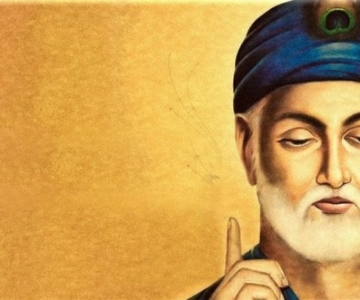
A miniature painting of Kabir, c.1825