Posts Tagged Judiciary

Governance crisis cannot be treated by old formula of changing faces

2 February 2012

An old piece that I could not post earlier:

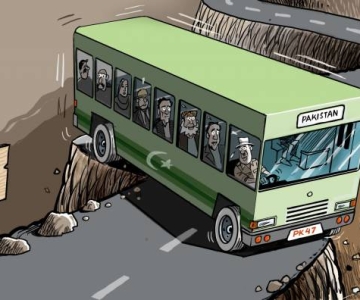
Commenting on the melting state of the economy, a reputed economic analyst stated how the “deplorable state of governance” was responsible for the “mismanagement of public goods”. Luckily, he also reiterated how such accountability was best undertaken through an election. A common misnomer that plagues public discourse relates to how “governance” is viewed as the job of an elected government and that the state and the government are interchangeable entities. It is important to note that the state of Pakistan — post-colonial, encroached and bitten by its non-state offspring — remains the dominant power centre and most elected governments have been at subordinate to these permanent interests.

The most glaring manifestation of this reality came about when the federal government in the memo-case (concerning the alleged treasonous act of authoring a memo addressed to the US against Pakistan’s security establishment) submitted before the Supreme Court that it had no control over the operations of the military and the premier spy agency — the Inter Services Intelligence (ISI). This has been said before as well in other judicial proceedings but not so directly. Everyone knew that but the government’s admission makes it clear that ‘constitutional governance’ is but a pipedream in the land of the pure. Without prejudice to any institution, this has been the case for decades and is not going to change overnight.

A new state within the state may have emerged. During the hearing of the same case, an honourbale judge of the Supreme Court remarked in his obiter dicta that the Judiciary was not answerable to anyone but the ‘people’. This statement defies logic as judges are not ‘elected’ by the people; and they are also servants of the state, paid by the taxpayers who are represented by the Parliament. These developments have prompted a beleaguered government and its Prime Minister to announce that Parliament was supreme and that there ‘states within states’ cannot be tolerated.

Leaving aside the torrential decade of 1970s, the evolution of an autonomous power centre within the state apparatus in the form of the intelligence agencies is a well-recognised fact. A martial state since 1950s has been a player in the global power games in the region; and the redirection of state unlike India was almost inevitable. The 2008 elections were, therefore, a transitional moment and during transitions from military to civilian rule, power is shared and not exercised by the elected officials. The addition of another power-centre i.e. the Judiciary is a recent and in its nascent stage of development. Its future course remains unclear whether it can arrest the dominance of the military-intelligence complex. (more…)

Final round of survival? It’s do or die

31 January 2012

Tehelka story last week: Government in final round of survival game: It’s do or die

Either the government will withstand the pressure from the unelected arms of the state or will cave in, says Raza Rumi

Pakistan’s beleaguered civilian government has entered into the final round of its survival game. This is not a new ‘game’ as the transition to democracy has been jeopardised from the very start. In 2007, the military junta started the process of negotiating with the Pakistan People’s Party (PPP) and the then Army chief, General Pervez Musharraf, and his trusted associate General Ashfaq Parvez Kayani shaped a power-sharing arrangement with late Prime Minister Benazir Bhutto. The ‘arrangement’ was formalised in the shape of a law—National Reconciliation Ordinance (NRO)—which inter alia intended to drop dozens of cases against PPP’s leadership and politicians. It should be noted that many of these cases were pending in courts for over a decade and due to lack of evidence or faulty prosecution, there were no convictions.

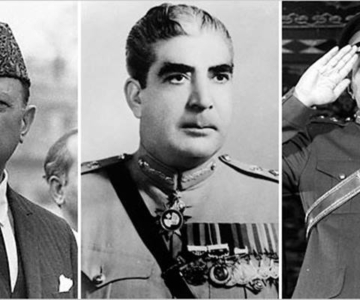
Politicians in Pakistan have faced ‘corruption’ charges since 1950s largely as an instrument to keep them in line and expand the space for the unelected executive i.e. the civil-military bureaucracy, which has ruled Pakistan for the longest period of time in its chequered history. The judiciary historically acted as a subordinate ally of the executive legitimising coups, convicting and debarring politicians and enabling a praetorian state to run the country.

Since 2007, the judiciary has evolved as a powerful institution due to the popular middle-class movement which contributed to the restoration of the deposed Judges and paved the way for Musharraf’s ouster in 2009. The period between 2007 and 2009 was when the urban middle class’ (led by the lawyers) aspirations (more…)

Media freedoms versus responsibility (holy cow syndrome)

18 July 2010

Published today in The News

Much has been said about media accountability and the dire need of a regulation framework for Pakistan’s new power centre. Pakistani media has earned its freedom and independence after a long, often bloody, struggle against military dictators and civilian autocrats. Countless journalists were imprisoned, harassed, even killed in this decade’s long fight for free speech, otherwise a much-touted fundamental right in every Pakistani constitution. There is no question that a viable democracy and a culture of accountability cannot exist without a robust and independent media.

Globalisation and the rise of electronic media in Pakistan, ironically under General Musharraf, is a relatively new phenomenon and has changed the contours of power matrix in the country. If anything, electronic media and its older cousin, the print media, with a plethora of columnists, are now an established group with considerable influence and nuisance value. Actualisation of the newly acquired powers was best demonstrated during the anti-Musharraf movement from 2007-2008. This was a startling development and pleased most Pakistanis as they found the echo of their daily trials and tribulations in the direct and frank reporting by the numerous TV channels.
Ambiguous regulatory framework: The sudden liberalisation of private television channels took place in an environment when a regulatory framework had barely been established. The Pakistani Electronic Media Regulatory Authority (PEMRA) came into existence during an unrepresented regime and, therefore, it lacked the essential process of consultation, ownership, and national consensus. On the one hand, media oligarchies emerged despite the vague announcements that cross ownership would not be permitted. On the other hand, electronic media showed little interest in developing a common code of conduct and finding ways of self-regulation. The results and the initial phase were disasters. Human limbs and heads found ample air time thereby glorifying terrorism and violence, and impacting the collective psychology of the viewers through a gradual process of desensitisation. Furthermore, objectivity was thrown out of the window and partisan, one sided rants became the order of the day.

Lawyers and media alliance: This was a type of intense civil activism and unprecedented representation of the Pakistani middle class in mainstream politics. Seemingly, a momentous development, the foresighted mobilization, came into public domain regurgitating the ‘anti-politics’ biases of Pakistan’s conservative middle class. This automatically resulted in severe distortions of the political expression. The first rule of law was personified by a handful of judges who had been linked to Pakistan’s regressive establishment throughout their careers; and a misconception that rule of law would lead to political, economic, and social transformation became a ‘truth’. Minority voices such as this scribe, alerted to the inherent contradictions of these developments. In short, intra-bourgeoisie struggles could be disruptive but rarely led to transformative social change. The results today are clear. The lawyers are beating up every public official and media representative who attempts to question their activities. After heroic battles the conduct of judges has been called into question. (more…)

Saving the Capital

5 July 2010
My piece for The News:
The recent decision of the Supreme Court to order closure of a multinational food chain restaurant in Islamabad is path-breaking
It has become a cliché to praise the Supreme Court of Pakistan these days. Clichéd, because many partisan agendas find resonance within the all-embracing spectrum of judicial activism. Those who have been critical of judges turning into activists must rethink their misgivings. While the dangers of such blanket approval of the workings of a state institution are apparent, it is still a welcome change in a country known for its culture of impunity. This is why the recent decision of the mighty Supreme Court to have ordered the closure of a multinational food chain restaurant in Islamabad’s ill-designed public park is path-breaking.
First of all, the fact that a municipal matter reached an overburdened superior court speaks much about the dysfunctional executive that manages our lives. That the court had the wisdom to uphold the rights of ordinary Islamabadites marks a new beginning which, if taken to its logical end, would mean that all public spaces in Pakistan should come under intense judicial scrutiny. Lastly, the court’s effort to enforce accountability could very well turn out to be a new beginning in our murky public affairs.
Effective municipal management requires that we revisit the urban governance frameworks that are now outdated to handle the population growth, changed needs of the population and dwindling state capacity to enforce regulations. Notwithstanding that Islamabad is fifteen kilometres away from the real Pakistan, the management practices are no different from the rest of the country. Essentially, the Islamabad saga reveals a case of serious governance failure. (more…)

State accountability

21 June 2010
My piece published in The Friday Times (June 18 issue)
Leaving aside the political debate on the results of the recent Transparency International (TI) survey, the results are pretty damning for the masters of our destiny. The issue is not about which province is least or most corrupt. The fact that the majority of respondents hold the Police as the most corrupt department since the last eight years is a matter of grave concern. It is even more troubling, given the current security scenario where Pakistanis are facing a crisis of public safety. Markets, shops, and highways are not safe. If there is a respite from the terrorists, then the criminals are there to make hay while collapsing administrative and policing structures struggle to manage their operations. Let us not forget that security of the person and their property is a fundamental right of the Pakistanis.
The party-based and ethnicity-oriented feuds on TI survey are meaningless as the Police is a provincial subject and TI’s surveys have consistently shown that there is something deeply rotten in how the security apparatus works at the subnational level. The causes for such a crisis of governance need to be highlighted, regardless of which party we vote for or where we live. What could be more telling than the events of the recent past?

Beyond censorship

6 June 2010
The youth of Pakistan give one hope that they will not accept the formulas crafted by the ancien regime

Pakistan is a captive country. Since the Partition, its ruling elites have used a self-serving version of ‘Islam’ to control a secular and pluralistic society. In particular, the ghost of General Ziaul Haq thrives in the polity and fashions institutional behaviour. Since the 1980s, discriminatory laws against women, minorities and ‘blasphemy’ — have further fractured the society. General Musharraf tried to reverse the tide of Islamism after a decade of ineffectual civilian governments, but it was perhaps too late by then. In the twenty-first century, when democracy has been restored, many Pakistanis had hoped that the dark shadows of authoritarianism and its bedfellow, the militant Islamism, would recede. It seems that there is a long way to go before such hopes come true.
Censorship is nothing new either. We are a country that banned Fatima Jinnah’s speech on radio when she criticised the military takeover by Ayub Khan. The rest is history — Ayub Khan banned newspapers and Ziaul Haq punished errant journalists and publications. Even Bhutto could not resist censoring portions of Fatima Jinnah’s memoir entitled, My Brother where Jinnah’s critical remarks on Liaqat Ali Khan’s intentions and other stalwarts of Pakistan movement could not be published, always in the name of Islam and national interest.

Pakistan’s crumbling institutions

25 May 2010

Published in The News (Sunday)

Pakistan’s instability is a cliché, almost a self-fulfilling prophecy. All the theoretical ingredients for stability are there: an elected government, a strengthened Parliament, working relationship between the government and the opposition and above all a free media and an independent judiciary. Despite such a promising milieu, there is chaos, misgovernance and instability all around. The paranoid conspiracy theorists would of course blame the enemies of Pakistan which range from India to Israel and from the United States to the Qadianis. Whilst the astrologers would say that Pakistan was created under a negative cosmic spell. However, the answer to the conundrum of Pakistan’s instability lies in the way its state was fashioned or rather sustained at 1947.

True, the civil-military relationship has been a problem from the very start and using Islamism as a tool for the legitimisation of unaccountable governance. But the fundamental nature of institutions that have wielded and distributed power has remained unchanged for decades. It is only with the assertion of the judiciary and a relatively free media that Pakistan’s political culture is changing and it remains to be seen how long it would be before the ancien regime tries to regain its ascendancy. (more…)

Whither rule of law?

23 April 2010

My piece published in the Express-Tribune

State effectiveness, by most definitions, has been waning in Pakistan. The ability of the law enforcement agencies and institutions to deliver services and entitlements is dwindling.

Ultra-nationalists resent the ‘failed state’ branding but what else can describe a dysfunctional apparatus that is unable to provide a basic entitlement, i.e. security? After 1973, the state has undertaken no serious civil service reform and the top-down reform under former president Pervez Musharraf has failed.

Therefore Pakistan has, among other things, witnessed a near-collapse of its institutions especially the criminal justice system where the police and prosecution have lost their efficacy and millions of cases are pending in courts.

Terrorism is often viewed in the country as the handiwork of ‘anti- Pakistan’ elements. However, rarely has it been noted that our criminal justice system is unable to cope with the spiralling phenomenon called terrorism. Cases are registered but proper investigations never take place. The overstretched prosecutors, lacking incentives to deliver, seldom pursue the cases in the courts. Consequently, the courts acquit most of the accused due to lack of credible evidence. (more…)

This night bitten dawn

2 April 2009

By Raza Rumi

The triumph of a popular movement on March 16 has marked a new beginning. The retreat of an intransigent government and the wise response by the PML-N and the lawyers averted a major crisis that could have been violent, and also a potential recipe for harming the parliamentary system in its infancy. There was a sigh of relief among the public for a long-standing issue appeared to have been resolved. This has been a monumental achievement by all standards.

However, the inherent imbalances within Pakistan’s power structure and the state of its polity are yet to be addressed and the contradictions of how our power is exercised stared us as the good news rolled out through the ubiquitous TV channels and their zealous presenters. The way quintessentially political issues and turf-wars between the PPP and PML-N were battled and resolved through a stage-managed process only concealed the bitter power-realities of Pakistan. (more…)