Posts Tagged Jinnah

That easy intimacy

15 October 2011
By Raza Rumi
A Pakistani re-discovers Bangladesh.
alt
Image: Carey L Biron

As a Pakistani, there is a part of you that reacts instantly to the word Bangladesh: guilt, remorse or, in some cases, nostalgia can suddenly take over. I am from the generation that was spared the horrors of Pakistan Army actions, of information blackouts on the massacre of Bengalis in the name of Pakistani nationalism. But what does it mean to be half a Pakistani, without East Bengal – especially when you know a bit of history and have managed to see through the falsities of the textbooks? It means nothing or it means a lot; it depends on which way you want to look at the other half, now a proud, vibrant country.

Working in international development is what took me to Bangladesh for the first time, nearly five years ago. Prior to that, I had been familiar with the country’s mythical music, rich poetry and tales of its golden sunsets and singing rivers, but had never touched its soil. Bengal’s magic is embedded in the Subcontinental imagination, and these images and literary references long shaped my view of the country. However, my romantic notions were severely jolted when I arrived in Dhaka – at first glance, an overcrowded concrete jungle typically lacking in urban planning. More of the same, I concluded: big cities, despite their buzz, can let you down.

Still, my disappointment did not last, as I soon undertook to seek out the city’s various corners, its hidden spaces of beauty and comfort; above all, what I found was an engaged citizenry marching on. Discovering the University of Dhaka and its surroundings came as a much-needed connection, though older parts of Dhaka are also quite mesmerising. The gulmohar (or krishnachura) trees, almost on fire, greet a visitor on nearly every street, as does a tremendous volume of rickshaws.

Then there is the Shaheed Minar, the monument marking Bengali resistance founded on linguistic identity. The physical monument is modern, and by itself is not particularly exciting. However, its significance is truly monumental, marking as it does Bengali nationalism from 1948 to 1971 under the misrule of West Pakistan elites. Given movements for ethnic, linguistic and provincial identities ongoing in today’s Pakistan, the Shaheed Minar is a powerful reminder of how centralised rule and marginalisation of cultural identities lead to festering problems.

A colleague who took me to see these sites was most polite with me. He was fervently nationalistic but chose his words carefully – at least until I asked him to drop the formalities and just say what he wanted. Then the floodgates opened, and out came his personal memories and renditions from Bengali oral histories. I even found myself apologising, though I then laughed at myself for such a delusional gesture – my few words of apology meant nothing against the horrors of Bengali suffering. Luckily, the charms of the place and the krishnachura trees came to my rescue. And so, I brushed the dark side of our shared histories under the proverbial carpet, just the way that Pakistan has done. For many people in Pakistan, 1971 is today an invisible event, a deliberately ignored footnote in our collective memory, despite being one that should remain understood as a moment of reckoning for the entire country. After all, majority provinces seldom secede; it is usually the other way around. (more…)

Can we afford to bypass Jinnah’s Pakistan?

14 August 2011

By Raza Rumi

Published today by Jinnah Institute, Islamabad:

Notwithstanding the contradictions inherent to pre-1947 Muslim politics, Jinnah was clear about certain fundamentals. Pakistan was to be a secular, democratic state. It was not destined to be a national-security obsessed and a paranoid military-intelligence complex.
Pakistan was to be a federation and Jinnah’s advocacy in the 1930s and 1940s was majorly focused on achieving a de-centralized governance paradigm. Finally, the new state was envisioned as a peaceful country, which would interact and establish relations with its neighbour India following the US-Canada model. Jinnah indicated that he would not mind settling down in his native city Bombay after his retirement. All of these facts are on public record and not fantastic or imagined tenets of his vision. What was so alarming about Jinnah’s vision for Pakistan that had to be virtually undone by the custodians of a Praetorian state? Not unlike Pakistan’s history, Jinnah’s legacy is a contested and fractured narrative.

After successive victories, the right wing of Pakistan won a significant battle under General Zia-ul-Haq (1977-1988) when it officially established the “ideology of Pakistan”. However this victory was not limited to official pronouncements but significant institutional changes were also effected to achieve a colonial archetype from South Asian history i.e. a “permanent settlement” of ideological contours. Lord Cornwallis may have undertaken such a settlement for Bengal’s fertile land but Pakistan’s education system, the media and the public discourse finally declared such a settlement as the sacred “truth”.

This sacred “truth” nullified Jinnah’s vision and historic struggles to achieve a fair deal for the Muslims of India, which had culminated in the creation of a truncated and “moth-eaten” Pakistan.

In terms of domestic governance of the new polity, Jinnah’s speeches to civil servants, firm advice to military officers and even to some of his errant politician colleagues were clear. The bureaucracy and the Army had to operate within the legal boundaries and a new direction for the post-colonial state had to be negotiated without undermining the rule of law and the imperative of creating a citizen-responsive state. To the military men Jinnah said the following in June 1948:“…I should like you to study the constitution which is in force in Pakistan at present and understand its true constitutional and legal implications.” And, to the civil service, (more…)

Last chance for Pakistan

9 January 2011

Taseer’s brutal murder has exposed every faultline of contemporary Pakistan

The brutal assassination of Governor Punjab, Salmaan Taseer by a staff member of Punjab’s supposedly, professional ‘elite force’, has virtually exposed every fault line of contemporary Pakistan. That a constitutional figurehead of a province with no executive authority or legislative power could be murdered simply for dissenting with the extremist worldview, is shocking to say the least. However, the tragedy has compounded further, much like the dark denouement of a Greek tragedy. The well-organized, ruthless and all-powerful extremist forces have jumped into the fray, and challenged the actuality of a cold-blooded murder. Clerics of all shades and varieties have tried to condone this act of barbarity and reactionary lawyers have promised to defend ‘Ghazi’ Mumtaz Qadri – a self-confessed killer – free of cost. Above all, public opinion has never been shamelessly manipulated in Pakistan as it is being done today by sections of electronic media who have gone out of their way to dilute the immensity of this event, and short of condoning it, have attempted to justify the motives of the criminal Qadri and his followers (which alas, are in the millions across Jinnah’s Pakistan).

Identity Mess

Much has been said about Pakistan’s warped identity, and it is a cliché to say that it is a tottering society in search of an identity. It should be clear to all and sundry now that large numbers of its residents, thanks to state-led indoctrination and a poisonous educational system, have espoused the right-wing interpretation of Pakistan as a theocratic state and that too, of a particular variant of Sunni Islam. This dangerously imagined polity excludes a large number of Muslims who belong to different schools of thought within the plural and complex range of Islamic faith. The minorities in Pakistan have suffered throughout their history, and their invisibility and insecurity is now a given fact of life.

Taseer struggled to raise voice from his public office and challenged the hegemony of Islamicist discourse, which makes this imploding ‘fortress of Islam’ as a repository of a faith-based nuclear bomb, thousands of armed militants ready to die in Jihad and irrationality driving all forms of decision-making – from foreign policy and economy, to municipal issues (such as the regulation of loud speakers in neighborhoods). In effect, Jinnah’s Pakistan is long dead and Zia’s Pakistan lives on in its full glory. (more…)

On secularism, Jinnah and Pakistan

22 October 2010

jinnah delivering a political speechMy contribution for Jinnah Institute’s secular space

What are we fighting for? What are we aiming at? It is not theocracy, not for a theocratic state – Mohammad Ali Jinnah

Sixty-three years after the country was created, the term secular remains the most contested and misunderstood political concept in Pakistan. Mention the word secular and there is a litany of protests. The right wing thinks that secularism is an outright blasphemy of sorts, while the liberals hold that the genesis of Pakistan was through an anti-secular process. It is amazing that this happens in a country which was founded by a genuinely secular leader of the subcontinent. Until the 1930s, Jinnah was an undisputed ambassador of Hindu-Muslim Unity and even in 1946 he was willing to make political bargains within the context of a secular and decentralized India.

If anything, the Indian National Congress despite its rhetoric of secularism failed the ultimate test of being accommodative of the Muslim demands. Here ‘Muslim’ was not a religious identity but a broad banner for a community’s cultural, economic and political interests. It would be naïve to suggest that there was no religious motivation in Pakistan’s creation. In fact there were many who interpreted Pakistan as an Islamic country. However, Jinnah was categorical in his stance. There is enough evidence to suggest that he shunned the notion of a theocracy. Yet the contradiction of creating a country for Indian Muslims posed a challenge to the new state-project. For instance Jinnah is said to have told Raja Saheb of Mahmoodabad as to whose Shariah would Pakistan follow. Iskandar Mirza’s version is even starker when he quoted Jinnah: “Shariah? Whose shariah? No. I shall have a modern state.”
Whatever doubts on Jinnah’s intentions or political rhetoric employed by the Muslim League, Pakistan was meant to be a polity where state was separate from religion. Jinnah was unequivocal about the vision of the state when he spoke on the floor of Pakistan’s first constituent assembly on August 11, 1947: (more…)

Bleak prospects

4 June 2010

My op-ed published in Express-Tribune today

It is evident that the Pakistani state faces a crisis of legitimacy and survival. Twelve years ago, on May 28, the Pakistani state displayed its nuclear prowess to the world especially to the ‘infidels’. After a decade, statehood and its compromised effectiveness stand exposed. True that the victims of the Lahore attacks were an underclass or at best residents with partial citizenship, i.e. the Ahmadis. But the inability of state agencies to fight splintered terror networks is worrisome.

The federal government had warned the provincial authorities of the impending attacks. The usual slovenliness and chaotic governance of the Pakistani variety treated it as just another communiqué. The police arrived late; and terrorists had implemented the plans rather adroitly making a mockery of Pakistan across the globe. Imagine a terrorist was nabbed through civic action, not the torture-friendly police. And guess where an injured miscreant was taken? No surprises here. A brutal murderer backed by large terror networks was admitted to Lahore’s busy public hospital where security was minimal given the level of threat. (more…)

No priests needed – search of a Pakistani identity

27 January 2010

Raza Rumi  wonders why we remain in search of a Pakistani identity

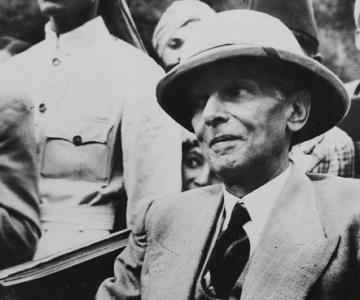
Half-truths are what we love to indulge in. One of the countless crimes committed by President Asif Ali Zardari is that he wears a Sindhi cap instead of a Jinnah cap. That by preferring a Sindhi topi and thundering at the occasion of late Benazir Bhutto’s death anniversary, he undermined his Pakistani identity, is truly mystifying. After all, what is a Pakistani identity and why is the Jinnah cap being elevated to the level of an article of national faith?

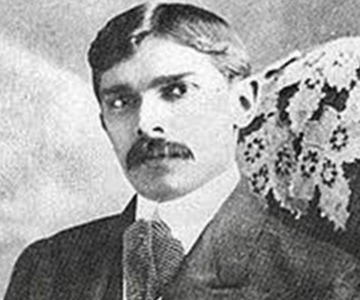
If anything, Mr Jinnah’s patronage of Muslim identity mark was an afterthought. His usual attire was a well-tailored pucca-sahib-like suit. It was only in the nineteen forties and that too close to India’s independence that Mr Jinnah started donning the Muslim nobility’s attire.

So what is this fuss all about? Constructing Pakistan’s ideology based on theological interpretation of a universal religion like Islam has been a carefully executed project of the Pakistani establishment and its shadows in the non-state domains. Such cliques have grown bigger, mushroomed and are now essential to our lived reality. Therefore lambasting of Zardari on not sporting a Jinnah cap finds public resonance and broad acceptability within the populous Punjab province where the Urdu press flourishes and finds readers and writers aplenty. (more…)

Maulana Azad’s interview given to Shorish Kashmiri, 1946

27 November 2009

I was intrigued by this interview of Maulana Abul Kalam Azad given to the famous journalist Shorish Kashmiri for a Lahore based Urdu magazine, Chattan, in April 1946. This interesting document has been discovered and translated by a former Indian minister Arif Mohammad Khan. Covert Magazine and newageIslam website have recently published it. The contents of this interview are difficult to agree with. Azad is speaking from a nationalist angle, anti-Pakistan movement platform.

However, the narrative has some interesting observations and predictions for Pakistan that cannot be rubbished simply because Azad was a Congressite. This interview was conducted over a period of two weeks (parallel to the proceedings of the Cabinet Mission) and has not been documented in any book except that of Kashmiri’s book on Abul Kalam Azad, which has been out of print for decades. Its discovery is a welcome step towards better historiography on both sides of the border.

Q: The Hindu Muslim dispute has become so acute that it has foreclosed any possibility of reconciliation. Don’t you think that in this situation the birth of Pakistan has become inevitable? (more…)

Dealing with the dual challenge

26 August 2009

I do not blame the young men and women of our age – they have been indoctrinated by the pernicious text-books, Zia’s ideology and the infiltration of Jamaat-i-Islami and jihadis into every nook and corner of Pakistan. This is why Pak Tea House (an e-zine I edit) as a voice of reason, faces the dual challenge of tackling the right wing and handling the global stereotyping of Pakistan as a jihadi haven. Not an easy challenge by any account — Raza Rumi

Read more here

Singh’s controversial book becomes subject of debate in Pak

21 August 2009

I was quoted in this press story. Also here


Press Trust of India / Islamabad August 20, 2009 - Seeking to give Muhammed Ali Jinnah a clean chit for country’s partition might have caused his expulsion from BJP, but former External Affairs Minister Jaswant Singh’s book has earned him supporters across the border.

(more…)

Jaswant Singh – the reluctant fundamentalist

19 August 2009

Jaswant Singh’s  right-wing worldview can be partially pardoned for he has made an attempt to set the record straight. The vilification of Jinnah to the extent of presenting him as a demon in mainstream Indian discourse has received a severe blow. Singh also blames the stalwarts of Congress for Partition and this has been the independent view held by many historians. It is shameful that a right winger had to condone Jinnah but then someone had to take the first step in the popular domain. The earlier voice of H M Seervai was drowned in the cacaphony of nation-state jingoism and because he was from a fringe community, his dispassionate views did not receive much attention. In fact many in India and Pakistan have no clue about Seervai. (more…)

Le grand historien – (KK Aziz 1927-2009)

5 August 2009

Zarina and KK Aziz, Lahore, 2007

KK Aziz, aged 11 years

Author with the grand historian of Pakistan, 2007

KK Aziz, aged 10 years

KK Aziz at MB high school, Batala, 1941-42

KK Aziz at Government College, Lahore, 1946

It was a humid evening in Peshawar when I found out about the demise of Pakistan’s neglected, grand historian KK Aziz. As it is, visiting Peshawar these days is quite depressing, and this news hit me for its stark, brutal reality. This was the physical death of the historian, for the scholar had already been marginalized from the mainstream of an anti-intellectual Pakistan. Only a week before, I had spoken to Zarina Aunty, his wife, and inquired about Aziz’s health. I am overwhelmed by the regret of not having met him for months, knowing full well how fragile he had been for the past few years.

It had become a routine over the years to meet the historian at his Lahore house and spend long, engaging afternoons duly arranged in advance. Aziz was an old-fashioned gentleman: proper, entertaining and hospitable. It was his wife, Zarina, who was more of a light-hearted character in their lonely house full of books and research materials.

At school, our exceptional history teacher had introduced us to KK Aziz and his writings; and the experience of reading shoddy, deceitful textbooks and Aziz’s reasoned critique was both revealing and entertaining. It was years later when my friend Faheem, with whom I explored history, introduced me to K.K. Aziz. That was a fantastic moment, for meeting Aziz was always a mixed experience: exciting, disquieting and sometimes depressing. He peeled away layers and layers of the ignorance and half-truths that have been so viciously grafted on to historiography by Pakistan’s nervous and irresponsible state.

Khursheed Kamal Aziz, commonly known as KK Aziz, was born to Barrister Abdul Aziz, in Ballambour near present-day Faisalabad on December 11, 1927. KK Aziz’s father was acclaimed as “a historian in his own right” for work on Heer Waris Shah, and in the Urdu work “Woh Hawadis Ashna” KK Aziz elucidates his family legacy and his father’s history.

True to his lineage, Aziz was to pen dozens of historical works and there is little doubt that he shall be remembered for generations of academia and independent scholarship. He was an alumnus of Government College, Lahore, where his tutors included Professor Ahmad Shah Patras Bokhari and Professor Sirajuddin. Later, Aziz became a full professor, and over the years taught courses in politics, history, Islamic Studies and Asian studies at various universities in Lahore, Toronto, Cambridge, Heidelberg and Khartoum. His research interests and capacities were emboldened by this international exposure. However, he yearned to bring back his experience and expertise to his country, but each time the co-joined twins of the Pakistani state and its ‘ideology’ were to harry him. Independence in scholarship is not a trait respected by officialdom, for it tends to promote and honour the cop-outs and the conformists.

Aziz served as an Official Historian to the federal government, Chairman of the National Commission on Historical & Cultural Research, and a Special Policy Adviser to the Prime Minister between 1973 and 1978. In these official capacities, he was characteristically important in the historical definition of Pakistan’s ‘life’ as a nation. In 1978, he was heading the National Commission of Historical and Cultural Research in Islamabad when he was forced to leave Pakistan by Zia-ul-Haq.However, this did not dissuade him from his passion and his academic pursuits.

Even before the draconian Zia era, K.K. Aziz faced various impediments from the state. For instance he related to me how the state censored certain portions of Fatima Jinnah’s monograph “My Brother”, where unsavoury remarks about Liaqat Ali Khan were kept under lock and key lest they demolished the official mythologization of Pakistan’s early leadership. Jinnah in Ziarat apparently had refused to see Liaqat Ali Khan, and only on the persuasion of his sister did Jinnah agree to see him, along with Abdur Rab Nishtar. Jinnah reportedly told his sister that the visitors, on the pretext of inquiring after his health, had come to check how soon he was going to die.

Such flagrant abuse of power and distortion of facts has led us to a point where we exist as an imagined fortress of Islam seeking glories, while in reality society and the state are struggling to survive. This is why the exit of KK Aziz is significant, for we have lost the home-grown voice of sanity which gave primacy to facts over spin-doctoring.

Aziz authored “The Pakistani Historian: Pride and Prejudice in the Writing of History” in 1993, elaborating upon the experience from his own professional career and the kind of life that a historian in this country would live through. In the same year he also wrote “The Murder of History”, a succinct rendition on history and how it is presented or obscured by official raconteurs. It was in the 90’s that he also admitted to having ghost-written “The Struggle of Pakistan”, published under the name of Ishtiaq Hussain Qureshi. In 1995 he attended the 62nd anniversary celebration for the name “Pakistan” at an event in London, where he elucidated upon the history of the word “Pakistan”, taking initiation from Rehmat Ali’s declaration “Now or Never” in January 1933. In 1997 he was elected to the coveted Aziz Ahmad Memorial Lectureship at the University of Toronto; signaling his position as a political scientist, as a historian and as an instructor/lecturer of global repute.

The works of KK Aziz testify to his penchant for detail, of verified sources of information and astute analysis. His seminal work, “The Making of Pakistan: A Study in Nationalism”, is a standard textbook and is a superior work on Pakistan’s troubled nationalist identity. His other well-regarded books include “Party Politics in Pakistan 1947-1958”, “History of the Partition of India” and “Britain and Pakistan”, among others. He also authored a diverse range of books that dealt with pre-Partition history: “Public Life in Muslim India: 1850-1947”, “Muslims under Congress Rule 1937-1939: A documentary record”, “British Imperialism in India”, and “The All India Muslim Conference 1928-1935: A documentary record”. His original works on political science and history, such as “Studies in History and Politics” and “Britain and Muslim India” are also well-known. Another well-researched document, “Rahmat Ali: A Biography” was published in 1987, and this is a magnificent tribute to an elusive historical figure who coined the term ‘Pakistan’ in the first instance.

From being an avid nationalist, KK Aziz also journeyed through a phase of disillusionment with the country that he had cherished. I recall a meeting where he was brutally frank about Professor Ishtiaq Hussain Qureshi, who had doctored historical facts to serve the new state, and created a fabricated account of Pakistan’s creation. Even though he had contributed to the writing of the book, Professor Qureshi had tinkered with the truth and set a wrong precedent for coming generations. It is no wonder that historiography in Pakistan is nearly extinct. A handful of Pakistani academics, mostly working in Western universities, such as Ayesha Jalal, are keeping the torch ablaze. But they are condemned and mocked by the guardians of official truth within the country, who cannot view Pakistan’s history beyond the right-wing narratives of anti-Muslim biases of the Hindus. Aziz in his last years was not as firm about his earlier views on the creation of Pakistan, and he did make a few revealing statements that I would rather not quote, for he should now rest in peace and not become a target for self-styled nationalist Mullahs. (more…)

Jinnah’s fabulous picture

19 May 2009

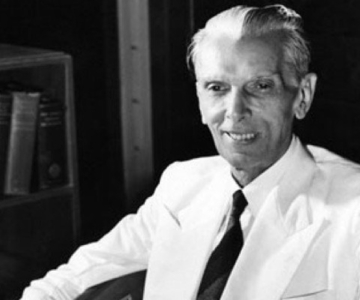
Amit has asked me to find a framed copy of this picture and what a great portrait it is. The only other portrait that has fascinated me is one painted by the great Pakistani artist Zahoorul Akhlaq.

Lost Imaginations

9 February 2009

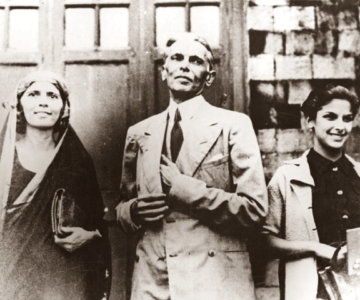
jinnah_with-fatima-and-dina2By Raza Rumi

Sixty one years have gone by but the creation of Pakistan is still a heated debate: contested, fractured and bitter. That history has been the preserve of the victors and the powerful is well known. But to spin and whirl the truth to the extent that it becomes empty and farcical is an art form practiced by the Pakistani state and its mock-historians.
In early January of this new year, a heated controversy entered the public domain. A famous Urdu columnist writing for the largest vernacular newspaper reiterated the widely-known fact that the pragmatic Mr Jinnah had accepted the Cabinet Mission Plan and given up the demand for Pakistan in 1946. However, it was the (more…)

On Bhagat Singh, his vision and Jinnah’s support for his struggle

28 March 2008

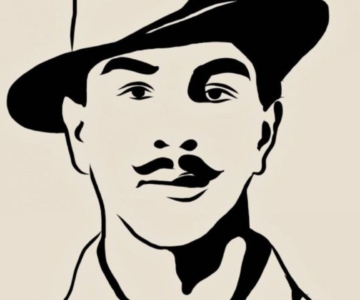
A few days ago, Irfan Habib, a noted researcher and author of TO MAKE THE DEAF HEAR – Ideology and Programme of Bhagat Singh and His Comrades sent his thoughtful piece on the legendary Bhagat Singh.

Incidentally, Bhagat Singh was hanged on Pakistan’s Republic Day – March 23 though nine years prior to that – in Lahore – thereby adding another dimension to the symbolism of March 23 for Pakistanis. Bhagat Singh for his principles, struggle for just causes and valour is a shared hero.

I am quoting some of the passages from Habib’s article below. Citing a Tamil newspaper editorial of 1931, Habib writes:

One of the most articulate and strong reaction was seen in far away Tamil Weekly called Kudi Arasu, where Periyar E.V. Ramasami wrote an editorial on March 29, 1931. Besides being critical of Gandhi and the Congress for failing to save him, Periyar saw in young Bhagat Singh an ally who stood for rationalism and spoke against caste oppression. He began by writing there is no one who has not condoled the death of Mr. Bhagat Singh by hanging. There is none who has not condemned the government for hanging him.

The above lines reflect the widespread acceptance of Bhagat Singh as a national hero, much beyond the limits of Punjab, and more significantly, within this short political life. There is no reason to believe that his persona was created by scholars through their exploration and interpretation of historical records.

Habib concludes with these words- (more…)