New Education Policy
A policy matter published in the iWrite Magazine
Raza Rumi responds to the new education policy for Pakistan
Yet another educational policy has been announced for Pakistan and its hapless citizens. We should not cast aspersions on the motives of an elected government, for we have been bitten by endless rounds of authoritarian rule which have not only destroyed the institutions of civilian governance, but have also demolished the integrity of our curriculum and mode of instruction. Decade after decade, dictators chose to glorify martial rule and later legitimized the abuse of jihad and violence. Even those who have studied at elite, expensive schools have somehow been doctored by the same curse of malicious textbooks. The surreal curricula have glorified looters and plunderers like Mahmud Ghaznavi only because they happened to be Muslims by a sheer coincidence of birth. Not to mention the Hindus, with whom we have coexisted for nearly a thousand years; they have been painted as treacherous, villainous and vile creatures ready to destroy the Muslims.
One would have expected that a legitimately elected government, representing the aspirations and pluralism of Pakistan's small provinces would take a strong stance on the revision of pernicious curricula. Alas, this is now a distant, buried dream for all. The policy is silent on that. This is a government that is waging wars on terrorism rather successfully and with clarity of purpose, but the educational policy makes little mention of the madrassa reform which is now an imperative for the very survival of Pakistan as a viable state. Thousands of madrassas scattered all over the place, funded by external powers preach hatred, bigotry and a reversion to the Dark Ages. Who will reform these madrassas if the national education policy does not even bother to lay out a strategy and provide resources? The new policy promises that by 2015, the budgetary allocation for education would increase to seven percent of the GDP from the current 2.1 percent of the GDP. This is surely promising but how can a policy not envision the need or the strategy to mobilize such resources? Have we not heard such sanguine proclamations in the past?
Falsehoods about terrorism
I was fascinated by my dear friend Adnan's post - Falsehoods about terrorism: 'Islamic' and 'un-Islamic' terrorists [Indian Muslims and Media] - that was a breath of fresh air. In a non-ideological, dispassionate manner he critiques the media power and association of the word Muslim with terrorism. I have known Adnan since I started blogging. Even though I have never met him in real life, I know that we could have been great actual (as opposed to virtual) friends had the walls of borders, distrust and competing nationalisms not stood between us. But cyberspace has allowed us to be friends and this is remarkable by itself. Perhaps the tone of his post has to do with the essential good manners that come with the Ganga-Jamni tehzeeb (high Indo-Muslim culture) of which Adnan is a torchbearer. He is equally into politics, activism as much as he is steeped in the culture of internalising Urdu poetry and its refined nuances. See his blogs with the finest selections from Urdu poets.
Back to Adnan's excellent post. I am reproducing an excerpt here:
Believe me, had any of these attacks involved a Muslim, it would have been termed a Terrorist attack and for days, we would have been shown images of 'trained Muslim youths', their links, cell phone records, the masterminds, the names of obscure organisations with Arabic names and what not.
"...I would request you to just have a look at the frequency of attacks mentioned below:
1. 11 CISF personnel gunned down in Naxal attack on NALCO bauxite mine in Orissa (April 13) [Link courtesy The Hindu]
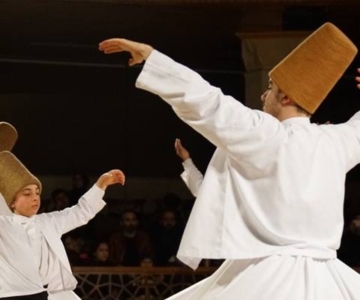
Southasian Sufism: a new victim of communalist brigade
After everything Muslim has been trashed by the rejuvenated Hindutva across the border, now Southasian Sufism is also being highlighted as an Islamist-supremacist project. What utter ignorance to write about the syncretic mystics who were not part of power games nor were they parts of the armies. They were wandering mystics who found India's spiritual landscape exciting and endearing and chose to stay and die there. The saddest piece that was forwarded to me by a reader is linked below by someone who holds forth - rather fumes - on Sufism and makes sure that he is introduced as "IPS (Retd)" - a scion of the Indian Police Service, an abominable legacy of the colonial state and its naked exploitative nature. Small wonder, his communalised veiw of the world is what the architects of his proud service wanted and achieved with much success.
False, pretentious and ill-informed. Alas.
Dark side of Sufism: Reappraisal of the Role of Sufis Working as Missionaries of Islam, R.K. Ohri, IPS (Retd)
For centuries the Sufi creed and Sufi music have been tom-tomed as great symbols of spiritualism and promoters of peace and harmony between the Hindus and the Muslims. The cleverly marketed concept of Sufi spiritualism has been unquestioningly accepted as the hallmark of Hindu-Muslim unity. It is time we studied the history of Sufis,
1971: the forgotten silence
The NEWS: Friday, December 19, 2008
by Raza Rumi
This week marks the 37th anniversary of the tragic events of 1971 that led to the dismemberment of Pakistan and creation of Bangladesh. This time the sixteenth day of that deadly December invited little attention in the mainstream media as the new Pakistan struggles to manage the multiple crises of statehood, governance and cohesion.
Whether we like it or not, history and its bitter truths have to be confronted. When the united Punjab was being ruled by the Unionists and the Congress and the NWFP had a chief minister from the congress-Khudai Khidmatgar alliance, and almost all the custodians of South Asian puritanical Islam were opposed to Pakistan, the peasantry and the intelligentsia of East Bengal were spearheading a movement for Pakistan. There were indeed economic reasons, but there was an unchallengeable mass support for and belief in Pakistan. What happened after 1947 is well known; and within two decades or so, those who wanted Pakistan in the first place were subjected to state excesses and brutal treatment by the groups and elites that had actually little commitment to Pakistan or its idea. Nothing could be more ironical.
It is of little significance to remember the exact chronology of events or to indulge in a blame-game. The truth is that we as a state and society lost our majority province after pushing its people into a situation where independence through a War of Liberation was the only choice. India, of course, played a huge role in transacting this deal, but the West Pakistani elites had prepared the ground, sown the seeds of mistrust to a great degree. Thus the Pakistan created by its founding members was no more in 1971, further subdividing the Muslims of the subcontinent. A bitter lesson of history was in the making. If only, we were capable of paying heed to it.
Revisiting the concept of Jihad in Islam
By Maulana Wahiduddin Khan
(Translated from Urdu by Yoginder Sikand)*
The word 'jihad' is derived from the root juhd, which means 'to strive' or 'to struggle'. It denotes the exertion of oneself to the utmost, to the limits of one's capacity, in some activity or for some purpose. This is how the word is understood in Arabic grammar.
Because fighting against one's enemies is also one form of this exertion or striving, it is also sometimes referred as jihad. However, the actual Arabic word for this is qital, not jihad. Fighting with one's enemies is something that might happen only occasionally or exceptionally. However, jihad, properly understood, is a continuous action or process that animates every day and night of the life of the true believer. Such a person does not let any hurdle affect his life, including desire for gain, the pressure of customs, the demands of pragmatism, lust for wealth, etc.. All these things serve as hurdles in the path of doing good deeds. Overcoming these hurdles and yet abiding by the commandments of God is the true jihad, and this is the essential meaning of the concept of jihad. There are many references to jihad, as understood in this way, in the collections of sayings attributed to the Prophet Muhammad.