On Kabir, Bulleh Shah and Lalon Shah
Not a great recording of my talk at Kuch Khaas, Islamabad.
By Raza Rumi
There must be something terribly wrong with the state of Pakistan that in its largest province, state schools no longer recite the national anthem and are giving up on the Pakistani flag. Tragic, that such alarming reports flashed in the national newspapers and on the internet are a subject of little debate and introspection across the country. Either that nobody really cares as to what happens to the tribals in the southwest of Pakistan, or that there is soft censorship at play. Such is the level of self-censorship on the issue of Balochistan that the ongoing insurgency finds scant mention in the otherwise, hysterical electronic media of Pakistan. True, there are brave exceptions in the public arena, but the eerie silence on Balochistan is disturbing for any Pakistani who believes in the territorial and federal integrity of Pakistan.
Only during the last six months, dozens of Baloch political activists have been reported dead. It is difficult to ascertain exact numbers, given the lack of credible information. But palpable violence defines the state of Balochistan. On the one hand, there are Baloch activists, leaders and professionals who are being targeted by ‘unknown’ forces and on the other hand, thousands of ‘settlers’ (mostly Punjabis) have been leaving the province, as their lives are no longer secure. A wide array of Baloch separatist groups exist in the province, whose source of funding is unknown and whose political agenda is vague, despite the overall banner of ‘independence’. (more…)
Raza Rumi from Islamabad
Update: no survivors – earlier media reports remain unconfirmed
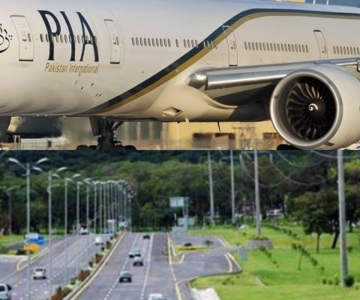
Ten minutes before the air crash this morning I was in a PIA aircraft that was unable to land at the Benazir Bhutto International Airport for 45 minutes. We were meant to land at 8.50 am but the pilot informed around 9 am that he was unable to land. He kept on circulating around Islamabad avoiding a major storm, heavy rain and lack of visibility. The passengers were quite petrified. Even I woke up from my early morning nap and could not help wondering if these were my last moments. It was rocky, turbulent ride.
The plane finally landed at 9.45 am. The pilot was clever as he took different air routes and navigated the plane well. As we landed, my phone started to ring and just outside the airport when the news broke out, my friend from overseas called to inquire if I was OK. I had no clue that this horrible tragedy had occurred. Several calls followed.
While we were landing, it makes me shiver that another aircraft had lost contact with the control tower in Islamabad and was about to crash amid thick fog and heavy rainfall.
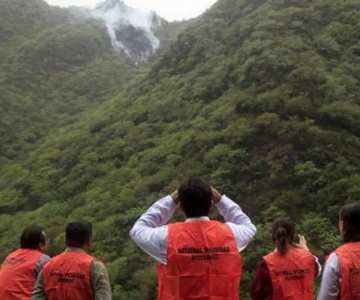
As I drove to Islamabad, smoke from the rain-washed Margallas was visible. The onlookers were terrified to see this tragedy unfold in front of their eyes.
At present, Margalla Road (also known as Khayaban e Iqbal) is closed for traffic as the rescue operations are underway. Thank God there are survivors many of them have been air-lifted. But this is going to be a long and arduous operation given the scale and the problem of accessing the hills via road.
It is a sad day – raises several questions about airlines’ regulation, the aviation industry and of course our ability to prevent and manage disasters & emergencies.
My prayers are with the families of the deceased and the injured survivors.
My piece for The News:Silence on Azad Jammu & Kashmir in the Pakistani mainstream, other than the juicy breaking news, is a tacit acceptance of the marginalization of this area
Arundhati Roy has been exposing the brutalities of the Indian State in the ‘occupied’ Jammu and Kashmir. She has questioned the presence of over half a million Indian troops and the naked violations of human rights there. Roy’s the lone domestic voice that has earned the ire of the patriots and nation-state parrots. In Pakistan, we face a dilemma whereby commenting on the status and predicament of Azad Jammu and Kashmir (AJK) remains a forbidden territory. Any discussion on AJK has to locate itself within the narrow confines of the Partition mess. This is why a zone with ambiguous citizenship continues to exist next to the Islamic Republic of Pakistan.
The current government has accorded a quasi-provincial status to Gilgit-Baltistan but the state of AJK like its other strategic sibling, the federally administered tribal areas (FATA) is quite low on the national agenda. Indeed, the national security doctrines inform such discussions and leave little option for introspection, let alone deliberating policy shifts. Ostensibly an autonomous state government exists in AJK with institutions of governance but their remit and outreach are limited. If anything, Islamabad is the real capital. Ironically, both the Indian and Pakistani states despite their rhetoric and habitual one-upmanship display the worst characteristics of their original cast – the colonial apparatus that constructed fragile and unsatisfactory notions of citizenship. (more…)
We did it again. A hallmark of Hillary Clinton’s visit to Pakistan was her meeting with the stars of the Pakistani media – the all-knowing anchors who have taken it upon themselves to be the “representatives” of Pakistan. Forget the President elected by all the legislatures, the Prime Minister who enjoys the confidence of the National Assembly, and even the Foreign Minister, who at the end of the day was elected from a constituency with a huge majority and nominated by the ruling party.
Such constitutional niceties are of little value. What we witnessed with a motley group of top anchors was a repeat of their daily performance on the idiot box, and the discourse with America’s second most powerful politician was familiar and disappointing. A senior journalist based in Lahore remarked that even the young students at the Government College University came up with better questions than the exchanges aired on television.
Who are we? Muslim, South Asian, Arab? No clear answer, because we are ten different things at the same time, and while the rest of the world is comfortable with multiple identities, Punjab’s urban middle classes crave a singular Islamic identity but want it with all the world’s frills. This is why we cheer the blowing up of the World Trade Centre and at the same want to live in New York. This is why the Islamo-fascist hate-America crowd is at ease with their progeny studying in the United States (more…)
Pakistan is once again in political turmoil. Two popular Punjabi leaders are disqualified by a court that has been maligned over the last few months. Governor’s rule has been imposed in the larger province – epicentre of Pakistani power.
Overall these recent developments do not bode well for democratic development – after all it has only been a year but it seems that our political elites have learnt no lesson from history and even their personal tribulations. Both Zardari and Sharif have suffered over the last decade and their parties were in the wilderness. And, now they cannot resolve their differences. What a shame. It does not matter who is right or wrong – the country gave a split mandate last February and both parties had the obligation to cooperate and perform. It appears that our expectations from the elected leaders were way too many. They remain their old, bickeringselves.
At my other blog-zine Pak Tea House, I have posted a few interesting analyses. Do visit if you want to see how the debate is unfolding: the rationalist argument, the political insight and a ‘scathing comment on the Sharifs of the situation.

![]() |
|
![]() |
|
|
After Mumbai, I have stopped watching television. I will not participate in the senseless jingoism of the Indo-Pak media industries … most Pakistanis do not want war with India |
|
Since my return to Lahore, my social life has resumed its Lahori normalcy except that I have changed. Alas. I just cannot go to random places and meet the same people over and over again. Life is not just tribes, clans and cliques. This is why Rafay Alam has become a saviour of sorts. A younger muse, Rafay is an enthusiastic urban explorer. Though we have hardly kept our plans consistent let alone punctual, the tours within Lahore have been fantastic. From the Mughal to the Raj eras, I have managed to fathom a lot – the evident and not so apparent tide of change that has engulfed Lahore. The people’s architecture is simply astounding for its social and aesthetic statement. Away from the self-conscious red-brick homes of the elites, and far from the kitsch sold as comfort in the Defence Housing Authority; the Mughalpura and Ghoray Shah areas have some interesting buildings and colours that one would rarely find amid the growing menace of high-rises and hideous sign boards that are thankfully being removed fromthe scene.
It was therefore great to be at my dear friend SA’s birthday bash that was a smallish affair but had an interesting mix of Lahore’s younger intelligentsia. Except that I got into trouble while arguing with a friend over the ethnic riots in the commercial capital of Pakistan. The exchange was heated and more so following the Mumbai attacks and the theories that are floating around as to who actually perpetrated the attacks. I was a little too critical of the liberal chattering classes who are pretty much responsible for the mess to start with. Their prognoses and diagnoses are all off the mark. For instance, when someone said that post-Mumbai, quick attacks were an opportunity for Pakistan to carry out surgical strikes and weed out terror, I nearly banged my head against their woolly wall of delusion. Such distance from reality can only be found in the well heated drawing rooms of Lahore with an odd painting of a Pakistani master hanging above their spurious theorisations. (more…)
![]() |
|
|
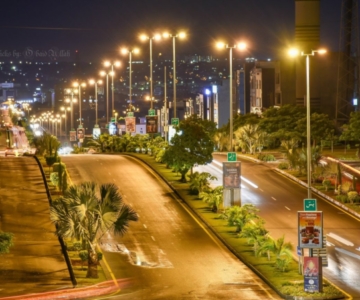
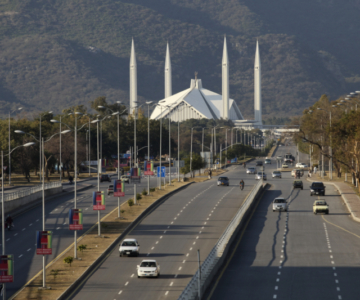
Many of the new roads in Islamabad have nothing to offer to those who do not own cars |
|
![]() |
|
|
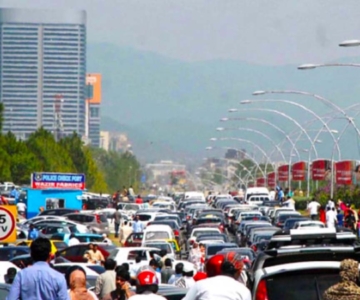
The view outside the Diplomatic Enclave |
|
![]() |
|
|
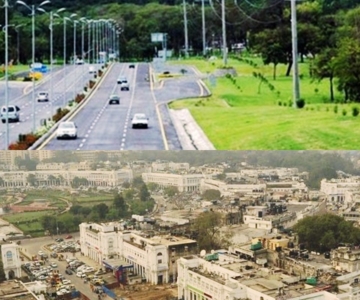
Contitution Avenue, Islamabad |
|
![]() |
|
|
The Serena Hotel, an architectural gem, is no longer accessible to |
|
| Today, sleepy Islamabad, with its clear skies and majestic hills, has turned into a classic capital under siege. It is not just under siege from Islamists; internal forces are also set to eat it up in pursuance of a suicidal streak that runs along the faultlines of Margalla-land | |
|
Chiding me for returning to Pakistan when its end is nigh, this corporate type endlessly complained about what a s**t hole Pakistan had become. Predictions of decay and disintegration flowed out as his clean, nimble fingers played with a BlackBerry |
|
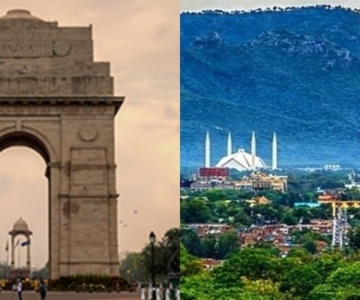
Not long ago, Delhi and Lahore were vulnerable to hordes of foreign invaders. The Mongol fear was overwhelming and indeed Delhi, the capital of the Caliphate for nearly eight centuries, was time and again ravaged by Central Asian fortune hunters. The builders and beneficiaries of idyllic Islamabad may have forgotten the shrill lesson of history: once the central throne was weak and maladministration at its peak, invasions and insurgencies were almost a natural consequence.
Today, sleepy Islamabad with its clear skies and majestic hills has turned into a classic capital under siege. It is not just under siege from the Islamists; the internal forces are also set to eat it up in pursuance of a suicidal streak that runs along the fault-lines of the Margalla-land.
After a long time away, a day in the capital was a trip into a fear-zone. Although it was admittedly for work reasons, the experience was nevertheless insightful and a little melancholic, especially when one has lived in Isloo during peaceful times. It is not pleasant to see a loveable city turn into a ghetto of barricades, echoing of trepidation; and incessantly wobble on the slippery foundations of civilian power-sharing arrangements. Since the suicide bombing at the Chief Justice’s reception last summer, the slide of the city’s law and order into chaos has been remarkably swift and unrelenting. The Lal Masjid saga, its location, proximity to the invisible force of the power market and bungled operations were clearly reflective of the seething unrest within the polity.
My parents were locked inside the house and recounted those few days with curfews, blackouts, nightly explosions and panic in the air. This had never happened before and a new history akin to the mainland was being scripted for the capital. The rest is history as they say – from the targeting of foreign missions, restaurants, hotels and not to mention the excesses against the sitting Chief Justice and later the lawyers and the media personnel.
This has surely made the proverbially oxymoronic Constitution Avenue a no-go area. On the crisp Thursday morning when I arrived in the city to attend a meeting in the besieged diplomatic enclave, the multiplicity of barricades was astounding. The Serena Hotel, an architectural gem, is no longer accessible to the public; in fact, normal traffic cannot pass on the road that leads to Constitution Avenue. The diplomatic enclave, now proposed to be a gated hamlet within the capital, is also nearly impossible to enter unless you have passes, stickers on vehicles and various identifications ready for inspection.
I wonder what the inhabitants of the diplomatic enclave feel. Apparently, nervousness is rampant despite the sense of adventure that many an international staff share as a life trait. Once inside, life within the compounds replicates “home” with ex-pat clubs, festivals and international nights, or so I am told. My friend, LA, from Canada, is undaunted as she continues to attend parties and even sneak into local markets with Pakistani friends and acquaintances. Not all ex-pats are so lucky: most have sent their families back to the countries of their residence and are barred from going to local markets and restaurants. Essentially, they are limited to the securer circles of work and living.
The obvious question that evades the attention of foreign missions is how much are they, if at all, responsible for all that is happening to Pakistan, particularly Islamabad. If the NATO allies are unable to control Afghanistan despite the massive amounts spent on the war machine, then there is something wrong somewhere. And, if billions in relief, emergency and development aid have been unable to alleviate the miseries faced by Afghan people, then the aid architecture should be revisited or perhaps scrapped to avoid senseless technical assistance on sophisticated government machinery in a country where millions are maimed, hungry and shelter-less. (more…)
Unaffected by the prophets of doom, a Lahori decides the city is the place to be
Twenty years ago, I left Lahore. Excited by prospects of quality higher education and the adolescent yearning for freedom, this was a moment that only with age I have understood. A flash that alters the life-path even when one is not aware of it. As I grew up and visited Lahore from a multitude of cities and continents, Lahore’s provincialism and inward-looking ethos irked me. However, the splendour of its lived history and multi-layered present fascinated me endlessly. A false sense of fatalism whispered that my exile was going to cover a life-span.
The last few years were spent abroad: so dejected I was that not living in Lahore would mean living just anywhere. When I decided this summer to return to Pakistan, I was astounded by the reactions from all and sundry. I was told that I am ‘mad’ to have chosen to return to a burning, imploding and crashing Pakistan. Such is the power of global corporate media that even the discerning and schooled Pakistanis have started to believe in the failed state mantra scripted outside Pakistan.
My own parents, temporary residents of Islamabad, scared by the blasts advised me against it. Others from the more indulgent school of thought were aghast with my decision to return to a country where power outages, crumbling urban infrastructure and pollution define urban living. Of all the nightmares cited was that who knows if the country would survive? Such cynicism and unmasked pessimism about Pakistan is always disturbing, yet familiar. My question is when was the country not about to unravel since 1947?
Such has been the level of insecurity propagated by the state and of late its international partners or the ubiquitously infamous band of its ‘friends’? After all, if this was such a grave situation then I might as well be with the loved and the familiar instead of living a life of an unrequited exile? (more…)
![]() |
| Mahboob Ali |
Located in the foothills of the Margallas, and boasting green spaces and forests intertwined among the folds of the city, Islamabad appears almost surreal against the densely populated rest of Pakistan. Built during the early 1960s by Pakistan’s developmentalist dictator, General Ayub Khan, Islamabad was seen as an antidote to politicised Karachi – which, in any case, was a bit too far from the Punjab and the NWFP, the popular bases for Pakistan’s powerful military. Laid out as a model city with the help of Greek architects, this city of the exclusive was formally born in 1965. Nearby Rawalpindi was already the seat of the army’s headquarters, and its proximity to the new capital was certainly intentional.
The new city’s layout was divided into sectors, numbered streets and broad avenues that are called ramna, using the Bengali term. The civil bureaucracy of federal united Pakistan moved here, and thus the sleepy town suddenly emerged as a new urban settlement in line with the earlier planned emergence of Chandigarh. In Islamabad, roads would empty out after sunset, and the national capital would be oddly deserted on all public holidays. After all, for decades none of the residents actually belonged to this city. (more…)
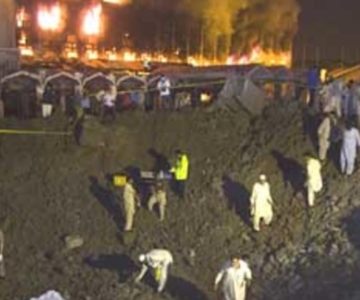
What jihad, what Islam and what kind of Muslims these butchers are – they kill innocent people, the underclass outside a posh hotel in Islamabad and think that they are serving some cause. And, this is the month of Ramzan when the Satan is apparently locked up….
The numbers of dead and injured are mounting – there is blood everywhere and a commentator has termed it Pakistan’s 9/11.
About time Pakistani government weeds them out and saves us all from this menace.
Horrific. Barbarity at its worst.
ISLAMABAD, Sept. 20 (Xinhua) — A blast occurred outside Marriott hotel in the center of Pakistan’s capital Islamabad on Saturday evening, leaving at least 30 dead and scores of people injured, said the Pakistani Adviser to Prime Minister on Interior Rehman Malik. (more…)
My op-ed published in the NEWS. This was also posted at ATP and a robust discussion took place there.
A week long sojourn in Islamabad just came to an end. It was not the Islamabad that I had lived in or the one that my memory was intimate with. It has changed and perhaps forever.
I have been an accidental resident of Islamabad as I was thrown into the sleepy folds of the capital by imperatives of securing a livelihood. Lahoris can never be content with any other city. But Islamabad’s serenity as a stark contrast to the urban mess of Pakistan was most endearing to say the least. Even its cultural wastelands were forgivable for the communion with Nature was a splendid alternative to civilisation. Thus the sprawling greenbelts of Islamabad and its wild foliage became a source of inspiration and muse. I left the city three years ago with fond memories. (more…)
My article that appeared in Dawn. here.
THE enthusiasts for the long march towards Islamabad are justifiably feeling let down by the grand posturing, thundering rhetoric and the subsequent retreat from agitation outside the dreary citadels of power in Islamabad’s dark heart.
A Bastille, which was not meant to be? Interpretations abound and explanations are flowing in from the motley groups who ventured to change the contours of state-society relations. The lawyers’ movement is profoundly significant. It constitutes the finest historical ‘moment’ in our troubled history. However, many observers have hinted at its limitations and the problematic phase that the movement has now entered.
Unlike China, Pakistan’s long marches have been nefarious for their results. Orchestrated by political and non-political actors to undermine the democratic process, we are well aware of this stratagem. This time it was different, complex and refreshingly path-breaking alas with similar results: pressurise the beleaguered PPP government still trying to find the proverbial power-ground beneath its truncated legs. In that sense, the march was a roaring success. From the sloganeering against the much maligned Asif Zardari, to de-legitimising three decades of PPP’s valiant struggle against dictatorship culminating in the assassination of Benazir Bhutto.
Irony, that all is now a forgotten snippet of history. What is indeed more pressing, as we are told time and again, are the sacrifices made by the honourable judges. Indeed they have altered the parameters of the state and perhaps buried the subordination of the judiciary to the all powerful executive. Well, one may ask what about Asif Zardari and his eleven and a half years in jail without a single conviction? Therefore the vilification of Zardari by anti-Musharraf sections of the media and by the historical long march is symbolic. It is a testament to the deep-seated middle class trend of demonising politicians and party politics that are prerequisites for democracy and means to establish the ‘rule of law’.
The opportunism of individuals and groups jumping onto the lawyers’ bandwagon is also alarming. It is most convenient to have been all-powerful army chiefs, heads of the ISI and former honchos of the civilian bureaucratic monolith and once the party is over, re-christen yourself as firebrand democrats. The patriotic Hameed Guls, Aslam Begs and Faiz Ali Chishtis and the neo-constitutionalist Roedad Khans and right-wing ambassadors (who slept while Afghans were killed for strategic depth), must be questioned by the anti-Musharraf movement for it was their historical culpability that undermined civilian governance. Is it not important that circumspection be exercised while letting them be the spokespersons of the new vanguard? If Zardari has to be isolated then these dubious characters must also be questioned. (more…)
Recent Comments