Posts Tagged Islam

More on the Pakistan Wikileaks- US Operations Constrained by India-Pakistan Relations

16 June 2011

My interview which has appeared on Wikileaks Central.

Pak-Usa

The Dawn Media Group in partnership with WikiLeaks has been releasing the “Pakistan Papers.” Thus far, some of the revelations include the following: US was concerned that Pakistan would oppose its policies at the United Nations; US was worried Pakistan would purchase oil from Iran, allowing them to get a foothold in Pakistan; Pakistan’s government was upset with US funding for the Pakistan military, which led to increased civil-military tensions; Pakistan’s military asked for continued drone coverage; the US has had troops deployed on Pakistan soil; Saudi Arabia and the UAE have been financing jihadist groups in Pakistan and the US did not provide Benazir Bhutto with proper security. (more…)

Fascists strike again in Pakistan: Minorities Minister killed

2 March 2011
Shahbaz Bhatti (5 February 2010)
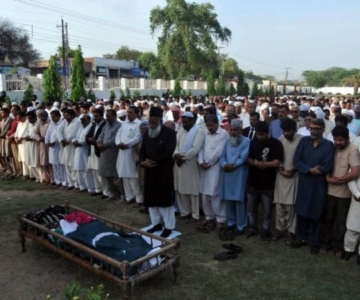
Sometimes it feels we are living in stone age where no dissent and no call for a tolerant society is possible. Murder, violence, mayhem are the order of the day. Today, we mourn the death of Shahbaz Bhatti who had been repeatedly threatened, but not intimidated.
It is time for Pakistan’s political parties to take stock of this situation and get their own ideological house in order before they are wiped out as well. Pakistani state organs have been appeasing the Right and Islamofasicsts for too long. It is time to stand up. If they think they can be safe then they ARE WRONG.
PTH condemns this murder and recalls that Pakistan was not created for this violence and bigotry that is now our halmark and has made us a joke in the international community.
Taseer’s murderers have to be booked, Benazir Bhutto’s murderers have to be brought to book and Bhatti’s murder should not go to waste.
Wake up Pakistan and our appeal to Pakistanis: stand up for your rights for living in a secure, tolerant society.
Here is a newsreport from BBC – sad and I hate to post it but then such are the times we live in:

Pakistan’s Minorities Minister, Shahbaz Bhatti, has died after two gunmen opened fire on his car in the capital, Islamabad, hospital officials say. (more…)

Rumi’s Poetry: ‘All Religions, All This Singing, One Song’

18 November 2010

Coleman Barks is a great translator. His recent essay here is a great read especially in terms of debates on Islamophobia

Rumi: The Big Red Book collects all the work that I have done on The Shams (Rumi’s Divani Shamsi Tabriz, The Works of Shams Tabriz) over the last 34 years. As I put this book together, I felt drawn to revise slightly almost every poem, to relineate and reword. So I hope this is a refreshed collection.

I sent a copy to my friend, Robert Bly. He describes in a letter what I have done with these poems: “You have given them pats on the shirt, set them on some local horse, and given the horse a clap on the rear, and the poems are gone, well almost gone.” He should know. He got me started on this path, when in June of 1976, he handed me a copy of Arberry’s translation of Rumi and said, “These poems need to be released from their cages,” by which he meant they needed to be translated out of their scholarly idiom into the lively American free verse tradition of Whitman. Hence this book. It is not all that I have done the last three decades, but I did spend some time, almost every day, with Rumi’s poetry. I do not regret it. Something about the practice keeps unfolding.

The organization of this book is unique. The odes (ghazals) are divided into 27 sections, each a Name for the Mystery. I avoid, wherever I can, using the word God. It feels so freighted, to me, with doctrine and division and violence. I don’t necessarily recommend this avoidance to anyone else. Eighteen of the Names are taken from my teacher, Bawa Muhaiyaddeen‘s The 99 Beautiful Names of Allah (The Opener, The Gatherer, The Patient, The Kind, The Intricate, Majesty, Light, Peace, The Grateful, The Living, etc). Two of the Names for Mystery are people I have been fortunate enough to meet, Bawa Muhaiyaddeen and Osho. Two other Names are also human beings, the Indian saint, Ramana Maharshi, and Shams Tabriz. Three other Names are borrowed. Dissolving the Concept of “God” (I have heard this somewhere, but I don’t remember where), Playing (Plotinus), Tenderness Toward Existence (Galway Kinnell’s phrase) and then there’s the next to last, Everything and Everyone Else. The last Name is one that is implied in every Sufi list of the 99 Names, The Name That Cannot Be Spoken or Written. (more…)

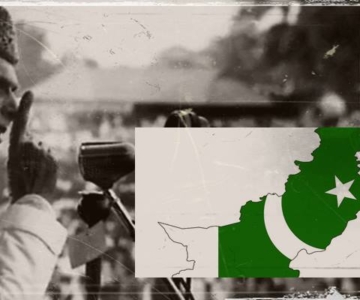
On secularism, Jinnah and Pakistan

22 October 2010

jinnah delivering a political speechMy contribution for Jinnah Institute’s secular space

What are we fighting for? What are we aiming at? It is not theocracy, not for a theocratic state – Mohammad Ali Jinnah

Sixty-three years after the country was created, the term secular remains the most contested and misunderstood political concept in Pakistan. Mention the word secular and there is a litany of protests. The right wing thinks that secularism is an outright blasphemy of sorts, while the liberals hold that the genesis of Pakistan was through an anti-secular process. It is amazing that this happens in a country which was founded by a genuinely secular leader of the subcontinent. Until the 1930s, Jinnah was an undisputed ambassador of Hindu-Muslim Unity and even in 1946 he was willing to make political bargains within the context of a secular and decentralized India.

If anything, the Indian National Congress despite its rhetoric of secularism failed the ultimate test of being accommodative of the Muslim demands. Here ‘Muslim’ was not a religious identity but a broad banner for a community’s cultural, economic and political interests. It would be naïve to suggest that there was no religious motivation in Pakistan’s creation. In fact there were many who interpreted Pakistan as an Islamic country. However, Jinnah was categorical in his stance. There is enough evidence to suggest that he shunned the notion of a theocracy. Yet the contradiction of creating a country for Indian Muslims posed a challenge to the new state-project. For instance Jinnah is said to have told Raja Saheb of Mahmoodabad as to whose Shariah would Pakistan follow. Iskandar Mirza’s version is even starker when he quoted Jinnah: “Shariah? Whose shariah? No. I shall have a modern state.”
Whatever doubts on Jinnah’s intentions or political rhetoric employed by the Muslim League, Pakistan was meant to be a polity where state was separate from religion. Jinnah was unequivocal about the vision of the state when he spoke on the floor of Pakistan’s first constituent assembly on August 11, 1947: (more…)

Living in Denialistan

13 October 2010

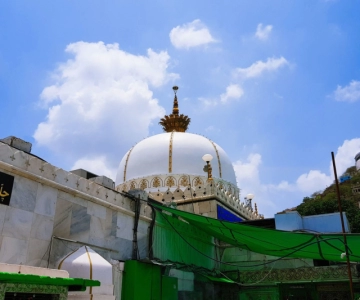
The recent attack on Abdullah Shah Ghazi’s shrine is another reminder of the plain truth that the Pakistani state needs to focus on its domestic crises rather than remain obsessive about external threats. The unholy conglomerate comprising al Qaeda, sectarian outfits and elements within the state has targeted Karachi’s best-known public and cultural space. This is a continuation of Islamist battles against Pakistan.

Yet, apologists remain adamant. Butchering of civilians and annihilation of a plural Sufi culture is a reaction, we are told. First, it was the US occupation of Afghanistan, then the invasion of Iraq and now drone attacks in Pakistan. True, Muslims and Pakistanis are enraged at US policies and its sheer arrogance in dealing with the region. But using anti-Americanism as an excuse to overlook the growing cancer of bigotry at home is disingenuous and dangerous for our future. (more…)

Saints who ruled India

2 August 2010

Book Review

The War that Wasn’t: The Sufi and the Sultan By Fatima Hussain Publisher: Manoharlal Publishers Pvt. Ltd, New Delhi Pages: 245

Last year I had a chance to meet Dr Fatima Hussain, a thoughtful and inspiring academic based in Delhi. We had all congregated in Agra for the SAARC writers’ summit and Hussain’s facility with subcontinental history, especially Sufism, was most impressive. This is when I found out that her book had just been published and my curiosity to read the book knew no bounds. The title of this book was even more intriguing: “The War that Wasn’t: The Sufi and the Sultan”. Essentially the title summarises a millennium of the societal resistance offered by the Sufis against state power as well as the embedded social relations in the Indian subcontinent.

Hussain teaches History at Delhi University and was educated at Lady Shri Ram College and Jawaharlal Nehru University, New Delhi. She has also authored The Palestine Question: A Historical Perspective (2003) and several scholarly articles. An interesting volume that she edited – Sufism and Bhakti Movement: Contemporary Relevance (2008) – perhaps explains the relative fluency of her familiarity with the subject. After her marriage to Pakistan’s leading Punjabi writer and activist, Fakhar Zaman, she is now delving into documenting the history, culture and morphology of Lahore. (more…)

Lahore attack strikes Sufism, a tolerant blend of Islam

3 July 2010
A France24 story By Leela JACINTO (where I was quoted)
The attack on the landmark Data Darbar shrine in the eastern Pakistani city of Lahore, which killed 41 people, was an assault on an ancient, traditionally syncretic form of Islam that is under siege in a fast radicalising country.
The attack, when it happened, was an assault on so many fronts, a calculated onslaught on the very soul of a centuries-old, flexible form of Islam.
On Thursday night, when militants stormed the landmark Data Darbar shrine in the eastern Pakistani city of Lahore, killing at least 41 people, it sent a bone-chilling message to a populace growing lamentably accustomed to violence.
The oldest and grandest shrine in Lahore, Data Durbar, also known as Data Ganj Baksh, houses the remains of the revered 11th century Sufi saint, Abul Hassan Ali Hajwery. His burial site attracts Sunni and Shia Muslims – as well as non-Muslims – from across the subcontinent. The shrine is particularly packed on a Thursday night, a traditionally sacred night in Islam.
A day after the attack, Raza Rumi, a Pakistani expert on Sufism and a native Lahori, was reeling from the shock.
“This is a tragedy on multiple levels,” said Rumi in a phone interview with FRANCE 24. “It’s a human tragedy, it’s an attack on the future of Pakistan, and it’s an attack on Islam, a lived Islam.”

First woman to lead Friday prayers in UK

15 June 2010
This is such an interesting development. Much as it is preaching to the converted syndrome. But as such scattered reformist acts occur within Islam is a welcome development. Debate and dialogue is important for a dynamic religion such as Islam which has been maligned and stereotyped in this age of corporate media and gross generalisations.

Story and picture from the Independent (By Jerome Taylor): A Canadian author will become the first Muslim-born woman to lead a mixed-gender British congregation through Friday prayers tomorrow in a highly controversial move that will attempt to spark a debate about the role of female leadership within Islam.
Raheel Raza, a rights activist and Toronto-based author, has been asked to lead prayers and deliver the khutbah at a small prayer session in Oxford.
She has been invited by Dr Taj Hargey, a self-described imam who preaches an ultra-liberal interpretation of Islam which includes, among other things, that men and women should be allowed to pray together and that female imams should lead mixed congregations in prayer. (more…)

Lahore – a nightmare that is still not over

29 May 2010

Updated: my quotes in Tehran Times

Today’s events in Lahore have shaken the entire country. The zealots and the bigots aside, an ordinary Pakistani is baffled at the scale and impunity of the violence. A terrorist has been captured – perhaps more as events unfold. But will they be punished or we will find more lame excuses that the Ahmedis by worshipping in their mosques were provoking the believers.

The Taliban want to eliminate all diversity and pluralism from Pakistan. The process alas started in the 1950s and Bhutto’s tragic actions and Zia years have planted bigotry and intolerance. Fundamentalism is now a cancer that has widely spread in the body politic. Yet, no one wants to tackle it. For the past two years, get Zardari debates have dominated Pakistan’s public discourse punctuated by the anti-Americanism of the Right. (more…)

Pakistan’s crumbling institutions

25 May 2010

Published in The News (Sunday)

Pakistan’s instability is a cliché, almost a self-fulfilling prophecy. All the theoretical ingredients for stability are there: an elected government, a strengthened Parliament, working relationship between the government and the opposition and above all a free media and an independent judiciary. Despite such a promising milieu, there is chaos, misgovernance and instability all around. The paranoid conspiracy theorists would of course blame the enemies of Pakistan which range from India to Israel and from the United States to the Qadianis. Whilst the astrologers would say that Pakistan was created under a negative cosmic spell. However, the answer to the conundrum of Pakistan’s instability lies in the way its state was fashioned or rather sustained at 1947.

True, the civil-military relationship has been a problem from the very start and using Islamism as a tool for the legitimisation of unaccountable governance. But the fundamental nature of institutions that have wielded and distributed power has remained unchanged for decades. It is only with the assertion of the judiciary and a relatively free media that Pakistan’s political culture is changing and it remains to be seen how long it would be before the ancien regime tries to regain its ascendancy. (more…)

Mystical Form of Islam Suits Sufis in Pakistan

26 February 2010

A New York Times’ piece where I was quoted.

By SABRINA TAVERNISE- LAHORE, Pakistan — For those who think Pakistan is all hard-liners, all the time, three activities at an annual festival here may come as a surprise.
Thousands of Muslim worshipers paid tribute to the patron saint of this eastern Pakistani city this month by dancing, drumming and smoking pot.
It is not an image one ordinarily associates with Pakistan, a country whose tormented western border region dominates the news. But it is an important part of how Islam is practiced here, a tradition that goes back a thousand years to Islam’s roots in South Asia. (more…)

The closed minds that deny a civilisation’s glories – where I was quoted

15 February 2010

I was most pleased to read this piece by Yasmin Alibhai-Brown entitled The closed minds that deny a civilisation’s glories. I would like to thank Yasmin Alibhai, whom I have always respected for her integrity and courage, to have quoted a few hurried lines posted by me in response to tge butchery perpeterated by the extremists in Pakistan and elsewhere:

Muslims are seeing Koranic injunctions where none exist
Confused Dad Mohamed from somewhere in the US sends his dilemma to an Islamic guidance website through whom Allah apparently communicates his orders – on how we dress, what we do minute by minute, unholy TV programmes, wicked vitamins and even wickeder relations between males and females.
I paraphrase Mohamed’s frantic appeal for clarity. His children watch cartoons, and have stuffed toys, quilts and pillow cases with Mickey Mouse on them. Is all that halal? Now many of us detest the addictive and manipulative Disney brand which targets young children. But this fully grown, procreative adult cannot trust his own mind and seeks instructions from unverified voices of authority. How abject is that?
These global sites control people, push through Maoist “cleansing”. Miserable mullahs are closing down the Muslim mind and heart the world over. Meanwhile “true believers” desperately seek enslavement and thank their enslavers. The questions posed are startling in their naiveté. May we sing? Is it OK for a man to listen to a woman singer? Do I watch a female newsreader? Yes, says a wise one – as long as she is properly covered up and not wearing perfume. Don’t laugh. It is tragic, not funny.
Somehow in the last decade or so, millions of believers have been persuaded that they are repositories of sin because they watch films, love music and paintings, read books, experience temporal pleasures and ecstasies. Remember the ferocity with which the Taliban destroyed all pre-Islamic treasures? Saudi Arabia is guilty of similar vandalism. Thus they seek to recreate the piety of triumphant Islam. Well they didn’t have cameras, mobile phones, cars and computers then. Should these be banned too?
Muslim children are now programmed to obey – robbed of imagination, independent thought and refinement. UK Muslim parents are increasingly coming out against school visits, music and drama, novels, exercise, scientific facts. Teachers know these parental demands leave Muslim children under-educated and emotionally numbed, rendered unresponsive to artistic words, sights and sounds.
This is a travesty of our history, our love of truth and beauty, the intellectual energy that throughout history uplifted Muslim civilisations. The current Science Museum exhibition of Muslim inventions that shaped the modern world proves we were never the barbarians promoted in Western demonology. Some of the earliest manuals on surgery and optics, astronomy and flying machines came out of Muslim regions. And those same places were creative hubs producing great works of art, incredible buildings and intricate crafts.
There is no Koranic injunction against the depiction of the human form, yet pictures from previous ages would today not be painted – a kneeling, sensual angel by an Ottoman artist in the mid-16th century, a man filling his cup of wine. Passion plays were performed through the centuries in all main Arabian conurbations. Poetry was written and recited by both men and women. Music, devotional and romantic, was in every household. All that is under threat today.
The Pakistani blogger Raza Rumi writes: “Who are these butchers of culture? What religion do they follow? They have no religion except barbarism.” Exactly. British Muslims for Secular Democracy (of which I am chair), supported by the British Council, is tomorrow organising a conference on artistic and cultural freedom at the School of Oriental and African Studies in London. Speakers include Miss Pakistan (who is also a professor), fashion designers, the entrepreneur Saira Khan, painters, stand-up comics, musicians, writers, others who are concerned. The event is open to all. Check the BMSD site. We will be launching an advisory guide for teachers on protecting the interests of the Muslim child. (more…)

The Speech of Mr. Sris Chandra Chattopadhya (Opposition to Objectives Resolution, Constitutent Assembly of Pak, 12 March 1949)

12 February 2010

This is a historic speech and a document that posterity will re-examine. Seldom has one piece of legislation caused so much trepidation. Thanks to my firebrand friend Usman Qazi, I got to read this speech that I had heard about from many people. Here is the  text of the address of  Sris Chandra Chattopadhya (Opposition to Objectives Resolution, Constitutent Assembly of Pak, 12 March 1949).

Mr. Sris Chandra Chattopadhya (East Bengal : General) : Mr. President, I thought, after my colleague, Mr. Bhupendra Kumar Datta, had spoken on the two amendments on behalf of the Congress Party, I would not take any part in this discussion. He appealed, he reasoned and made the Congress position fully clear, but after I heard some of the speakers from the majority party, viz, Muslim League Party, the manner in which they had interpreted the Resolution, it became incumbent on me to take part in this discussion.
I have heard Dr. Malik and appreciate his standpoint. He says that “we got Pakistan for establishing a Muslim State, and the Muslims suffered for it and therefore it was not desireable that anybody should speak against it”. I quite agree with him. He said; “If we establish a Muslim State and even if we become reactionaries, who are you to say anything against it?” That is a standpoint which I understand, but here there is some difficulty. We also, on this side, fought for the independence of the country. We worked for the independence of the entire country. When our erstwhile masters, Britishers, were practically in the mood of going away, the country was divided – one part became Pakistan and the other remained India. If in the Pakistan State there would have been only Muslims, the question would have been different. But there are some non-muslims also in Pakistan. When they wanted a division there was no talk of an exchange of population. If there was an exchange of population, there would have been an end of the matter, and Dr. Malik could establish his Pakistan in his own way and frame constitution accordingly. It is also true that the part of Pakistan in which Dr. Malik lives is denuded of non-Muslims. That is clear.
Dr. Omar Hayat Malik: On a point of order, Sir, I never said that. He has understood me quite wrongly.
Mr. Omar Hayat Malik: I never said that Pakistan was denuded of non-Muslims. My friend on the opposite has misunderstood me. (more…)

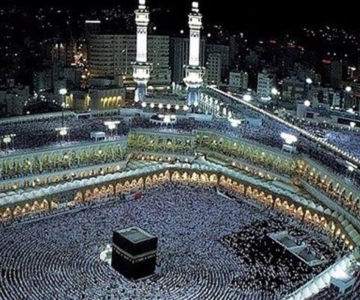
The Destruction of Holy Sites in Mecca & Medina – Destroying Islamic Heritage

10 February 2010
The Asian Age: The Arabian Peninsula, the cradle of Islam, is being demolished by hardliners. In countries such as Saudi Arabia almost all of the Islamic historical sites are gone, but this is not the first time they have been destroyed.
In 1802, and army led by the sons of Muhammad ibn ‘Abd al-Wahhab (the founder of Wahhabism) and Muhammad ibn Saud occupied Taif and began a bloody massacre. A year later, the forces occupied the holy city of Mecca. They executed a campaign of destruction in many sacred places and leveled all the existing domes, even those built over the well of Zamzam. However, after the army left, Sharif Ghalib breached the truce, inciting the Wahhabis to re-occupy Mecca in 1805.
In 1806, the Wahhabi army occupied Medina. They did not leave any religious building, including mosques, without demolishing it, whether inside or outside the Baqi’ (graveyard). They intended to (more…)

Muslimness – shifting boundaries

9 February 2010

Muslimness is an elusive state of being. There are watertight strictures of the theological identity defined by men, interpreted as the Sharia, on the one hand; and the broad political and cultural sense of the self, on the other. Identity, in any case, is a messy affair: shifty, shifting and eventually, imagined. While 9/11 placed Muslims at the centre stage of global politics, the broth had already been simmering in the cauldrons of biased academe and pop reality mirrored through the blood-thirsty lens of corporate media.

So what is it to be a Muslim? An inflexible bag of rituals? Or a cultural sense of belonging or a deeper dogma ingrained in young minds? I have never considered myself anything but a believer, a ‘practicing Muslim’. This has never been at variance with my secular and inclusive pretensions, despite the fact that the clergy in my country considers secularism akin to atheism, a sort of mirror image of the Pakistani political foundation. The clerics translate secular as la-deen , at best irreligious, and at worst, godless.

Ironical that this business of religious identity is articulated in a land that was the crucible of the secular Indus Valley civilization, non-militant Buddhism and a peculiar version of South Asian Islam that spread via the Sufi khanqahs and was a sort of amalgam of the Central Asian with the ancient South Asian. Even more ironical is the reality, neglected and veiled, that lived Islam is located around dargahs , tribal codes and customs which are irreligious in their own way. But who cares? Referred to as the world’s most dangerous country, Pakistan, according to the pundits of global opinion, is a haven for Islamic terrorists. Collateral damage, therefore, is kosher and a necessity to undo the unstated part of the ‘axis of evil’.

Labels and more labels. On the global shelves such products sell well and work in favour of a war machine hungry for energy resources, territory and blood. (more…)

Next Page »