Jahane Rumi In search of the unsearchable: O, my soul! where would you find your house?

8Feb/104

How instability is garnered

My latest analysis published by The News

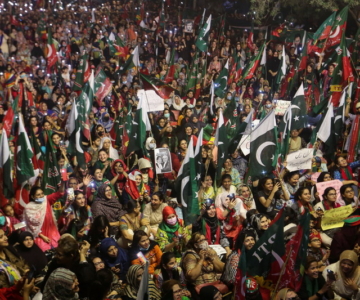
We continue to bemoan the failure of democratic norms to take root in our governance culture. True, that the repeated extra-constitutional interventions and direct or indirect military rule have rendered democratic governance as a distant and seemingly unattainable goal. In addition, the emergence of non-state actors, sometimes more powerful than the state itself has also led to formidable and multiple centres of power. In such a milieu, achieving the sustainability of democratic process is a Herculean task. Whilst the intentions of our unelected state institutions and their overt and covert non-state partners are clear, the behaviour of the political elites is confounding.

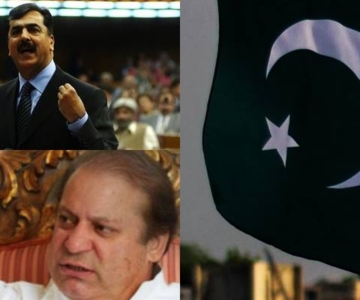
Not unlike the past, the divisiveness of Pakistan’s political elites has entered into a decisive phase. Fissures are apparent in the post-2008 political accord that led to the unanimous election of the Prime Minister, Yousaf Raza Gilani. The first cleavage, now a recurrent pattern, has emerged in Sindh where the coalition partners — the Pakistan People’s Party (PPP) and the Muttahida Qaumi Movement (MQM) — are pitted against each other for political control of urban Sindh. The latest skirmish is rooted in the evolving arrangements for the local governments and who will end up controlling the third tier of government. However, there is an ethnic dimension to it as well. Karachi remains besieged by sectarian, provincial, and linguistic ghosts that apparently are alive and kicking.

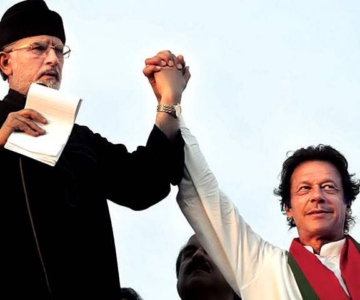
The second disruption in the political compact that led to a transition towards representative rule is unfolding in the shape of a brewing discord between the ruling PPP and the opposition Pakistan Muslim League (Nawaz). The PML-N rules the Punjab and thereby has a stake in the system and power matrix but it is also striving to maintain its ‘opposition’ status. This is why a dual strategy is evident where a few firebrand leaders of PML-N take a hard line against the federal government and the President Asif Ali Zardari. The party does not want to rock the system it says but also considers ‘options’ that lead to a mid-term election or even the premature exit of the President from the office in the wake of Supreme Court rulings on the National Reconciliation Ordinance.

4Jan/100

To undo the vicious past

It's about time a civilian Pakistan functions as a peaceful country with fair share of resources put into people's welfare by Raza Rumi (published in the News on Sunday)

That Pakistan's endemic political instability is a function of its inherent power imbalances is well known. The continued spells of authoritarian rule have also retarded the growth of political parties and other necessary institutions essential for democratic governance. We are a country trapped in our history, our self-fulfilling conspiracies and intrigues that are also rooted in the various phases of colonial era. Our geo-political situation, celebrated by a rentier state, has not helped us either. From the 1950s we have been in close partnership with global powers that are viewed as the ultimate saviours of a dysfunctional polity.

In 1971, we lost half the country. While the seeds of discord in East Pakistan had been laid by West Pakistan's ruling elites, our vengeful neighbour took full advantage and supported the Bangladeshi liberation movement. By all accounts, this was an avoidable tragedy had the national security-obsessed state dominated by West Pakistani vested interests could have seen the writing on the wall and fixed the issues of federalism that still haunt us.