Posts Tagged inequality

Pakistan: A failing society?

8 May 2010

My recent op-ed:

A couple of weeks ago a conference at the Lahore School of Economics allowed me to pontificate on how Pakistan is fast turning into a failing society. The context was how fractured federalism and an unstable political system had resulted in the social exclusion of a majority of the population.

The net result has been that we are a society that is divisive with embedded violence all around. Much has been said about Pakistan as a failing or failed state. Such prognoses have been manufactured in the dominant capitals of the West. True, such claims are exaggerated and self-serving for they provide a tailored worldview that Pakistan is a place that needs to be ‘fixed’.

While we are cognisant of such imperatives, let us not be blind to our deeply iniquitous and un-just society that needs major healing, reconciliation and perhaps surgery. Pakistan from 1947 to 1971 could not become a cohesive society, as the cultural-political identity of the Eastern Wing, now Bangladesh, was never accepted. Efforts to create a uniform identity failed and ultimately our majority province severed all ties with us. Ironically, this was a province at the forefront of the Pakistan movement. (more…)

Baba Najmi’s little poem

11 February 2010

Iko Tera mera payu (You and I share the same father)

Iko teri meri maan (We share the same mother)

Iko saadi janam bhon (one is our birth place)

Tu Sardar tey mein kammi kiyon? (why are you the chief and I a slave)

Ajoka Theatre and the Caucasian Chalk Circle

31 October 2008

My piece published in The Friday Times (October 24 issue)

Who is entitled to keep the child – one who is a better, nurturing mother, or the one who may be the natural mother but could not care for the child? The larger question then haunts the audience: who is entitled to ownership – the one who has the deed or the one who tills the land?

Ajoka Theatre has revived a production that was first staged twenty three years ago. A deft adaptation of Bertolt Brecht’s The Caucasian Chalk Circle, its vernacular version, Chaak Chakkar, is a timeless comment on the viciousness of Pakistan’s exploitative culture of power politics. Perhaps the duo, Shahid Nadeem the playwright, and Madeeha Gauhar the director, would have tried to capture bits of social reality in the mid 1980s when General Zia was still the Lord Master of Pakistan. Why did Ajoka choose to stage this after a gap of two decades?

As Madeeha Gauhar explained: “In 2008 one marvels at how Brecht had foreseen the chaos, the anarchy, the shameless switching of loyalties of recent years, especially since the return of the popular leadership exile.” The seat of total power, “symbolized as Lal Mahal, is uncannily similar to Lal Masjid and Lal Haveli of our times,” she added. (more…)

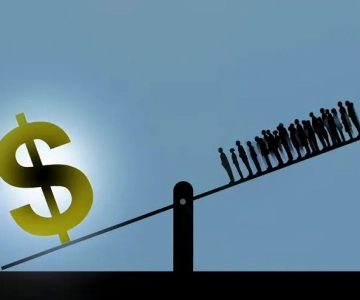
Poverty and Inequality – the brewing storm

15 October 2008

By Raza Rumi

(My op-ed first published here)

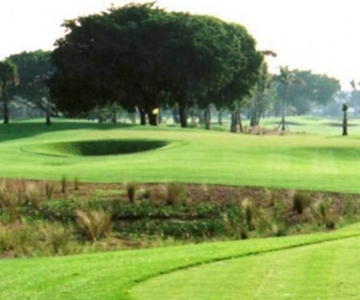
As I sipped the tenderly brewed coffee facing the lush green golf course of a relatively new Lahore Country Club, the new reality of Pakistan became a little clearer. The sprawling premises of the club were a preserve of the Railways Department until the inefficient Pakistan Railways could not manage it and doled it to the new, oligarchic big business of Pakistan. Much ado was made when the land owned by the Railways was privatised and questionable deals were transacted in that moderately unenlightened era. Nothing came out of the public questioning and today a lavish country club, far removed from its downmarket environs, has sprung out for the affluent and the upwardly-mobile classes of Lahore and Punjab.

The classic barriers to entry created by the cliques that lord over Pakistan’s elite clubs is being undone. Pay a handsome fee now (way over a million rupees) and you are a member to this new “club” built on the ashes of the Raj steelframe, albeit, reminding one of the nasty remarks of Churchill on how the brown, rapacious Rajas would appropriate the space created by the wise and just colonists. As my host elaborated on the entry procedures to Lahore’s richy-rich club, I could not help but remember the compensation to a suicide bomber that has also increased over the years and now hovers between one to two million rupees. A grossly-overlooked fact is that the grinding poverty in the pockets of Pakistan, seemingly unaffected by the consumerist prosperity, is the key to our current turmoil and violence. (more…)

Voices of the oppressed – Dalit literature

9 May 2008

by K G Sankarapillai

Dalit means broken, oppressed, untouchable, downtrodden, and exploited. They come from the poor communities which under the Indian caste system used to be known as untouchables. They constitute nearly 16% of the Indian population.

The caste system, with a history of more than 3000 years in India, is a shameful system of social segregation, which works on the principle of purity and impurity. Purity is rich and white or whitish, impurity is poor and dark. Hidden powers of wealth can be easily traced in every feudal Brahmanical concept of the ideal. Material milieu of purity and beauty and prominence and command and comforts is also wealth. Economic division is reflected in the social classifications. But it should not be registered that caste is racial or economic. Dr. Ambedkar says that the caste system came into being long after the different races of India had commingled in blood and culture. To hold that distinctions of caste are really distinctions of race and to treat different castes as though they were so many different races is a gross perversion of the historical facts. Ambedkar asks: What affinity is there between the Untouchable of Bengal and the Untouchable of Madras? The Brahman of Punjab is racially the same stock as the Chamar of the Punjab and the Brahman of Madras is the same race as the Pariah of Madras. The caste system does not demarcate racial division. (Annihilation of caste – in writings and speeches vol.1 .p.49 Dr .B.R. Ambedkar) (more…)

Sahir Ludhianvi’s Taj Mahal

29 August 2007

Sahir Ludhianvi’s immortal poem Taj Mahal has always fascinated me. It takes a most unconventional take at this beautiful monument where the poet protests at the choice of a romantic rendezvous.

Today, I found a lovely translation of this poem. I am reproducing it below – but first a few lines from Urdu:

Yeh chaman zar yeh jamna ka kinara yeh mahal
Yeh munaqqash dar-o-deevar yeh mehrab yeh taaq
Aik shahanshah nay daulat ka sahara lay ker
Hum ghareebon kee mohabbat ka uraya hai mazaaq

Taj Mahal

The Taj, mayhap, to you may seem, a mark of love supreme
You may hold this beauteous vale in great esteem;
Yet, my love, meet me hence at some other place!

How odd for the poor folk to frequent royal resorts;
‘Tis strange that the amorous souls should tread the regal paths
Trodden once by mighty kings and their proud consorts.
Behind the facade of love my dear, you had better seen,
The marks of imperial might that herein lie screen
You who take delight in tombs of kings deceased,
Should have seen the hutments dark where you and I did wean.
Countless men in this world must have loved and gone,
Who would say their loves weren’t truthful or strong?
But in the name of their loves, no memorial is raised
For they too, like you and me, belonged to the common throng.

These structures and sepulchres, these ramparts and forts,
These relics of the mighty dead are, in fact, no more
Than the cancerous tumours on the face of earth,
Fattened on our ancestor’s very blood and bones.
They too must have loved, my love, whose hands had made,
This marble monument, nicely chiselled and shaped
But their dear ones lived and died, unhonoured, unknown,
None burnt even a taper on their lowly graves.

This bank of Jamuna, this edifice, these groves and lawns,
These carved walls and doors, arches and alcoves,
An emperor on the strength of wealth, Has played with us a cruel joke.
Meet me hence, my love, at some other place.

Translation by K.C. Kanda, appeared in Masterpieces of Urdu Nazm published by Sterling Publishers Pvt. Ltd. – found here