Posts Tagged ‘India’

On Damadam Mast Qalandar

Renuka Narayanan writing for the Hindustan Times
So many wake-up calls

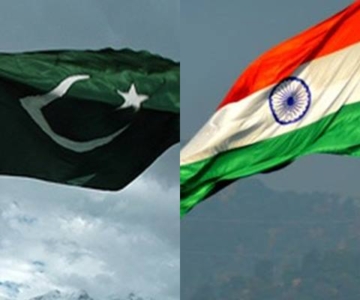
The unrelenting terror trail across India recalls young Pakistani author Raza Rumi’s wistful remark that Hindu-Muslim amity seems like “a fairy tale from Never-Never land”. But surely India can wake up and recall how she managed things? Here’s an old story about one of modern India’s favourite songs, Damadam Mast Qalandar. Runa Laila of Bangladesh, Reshma of Pakistan and the Wadali Brothers of India have all sung it. The song came back this month with Ruby, Reshma’s daughter, who was in Delhi to sing at a Deepavali party held in a Muslim gentleman’s house.

The fact is that Jhuley Lal and Lal Shahbaz Qalandar are the patron saints of both Hindus and Muslims. Jhuley Lal (or Udero Lal/Amar Lal/Lal Sain) is said Read the rest of this entry »

Tags: , , , , , , , , ,

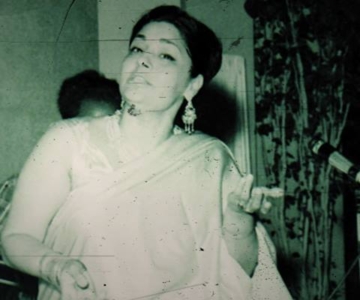
Fahmida Riaz: A neglected genius

My op-ed for The NEWS

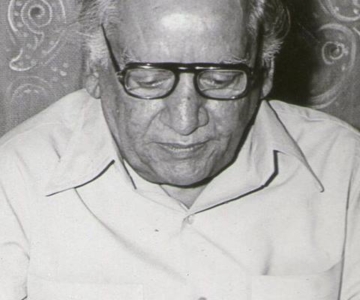
Whilst my earlier piece on the IMF programme and the tremendous discussion it has invoked deserves a rejoinder, I want to write on a completely different subject this week. I am perturbed by the fact that thousands of jobs have been recreated for those who were rightly or wrongly dismissed in the earlier dispensations; there is silence about one luminary, a towering one at that, who lost state employment twice. Fahmida Riaz’s name is yet to appear amongst the reinstated ones.

Following the physical departure of the leading Urdu poets – Qasmi, Munir and Faraz – Fahmida Riaz is arguably the greatest living poet of Pakistan. Controversial though this statement might be, her originality and path-breaking poetry has yet to find an equal in the turbulent waters of the Pakistani cultural river. It is hardly surprising that Fahimda Riaz has been targeted all through her otherwise illustrious creative career by state and society alike. She was branded as unpatriotic when she had to run for her life in the Zia-ul-Haq days and live in exile. In India, she was termed as a Pakistani agent since she criticised the communal tensions that the Indian state had encouraged. Read the rest of this entry »

Tags: , , , , , , , , ,

My soul has come on my lips

Amir Khusrau’s Khabaram Raeeda translated by Annemarie Schimmel

Tonight there came a news that you, oh beloved, would come –
Be my head sacrificed to the road along which you will come riding!
All the gazelles of the desert have put their heads on their hands
In the hope that one day you will come to hunt them….
The attraction of love won’t leave you unmoved;
Should you not come to my funeral,
you’ll definitely come to my grave.
My soul has come on my lips (e.g. I am on the point of expiring);
Come so that I may remain alive -
After I am no longer – for what purpose will you come?

(trans. A. Schimmel)

sent by JZ via email

Tags: , , , , , , , , , ,

Amir Khusro’s lasting tryst with love

PRANAV KHULLAR writing here
At the heart of the Sufi mystical experience lies the Zikr or remembrance of God.

In its musical expression through the Qawwali , it has become synonymous with the name of Amir Khusro, whose musical idiom facilitated a unique synthesis of the Persian and Hindu-Braja cultures. His prodigious literary and musical experimentation is a unique effort at creating a universal Sufi language of Love and he forged a new mystical Sufi consciousness. This could have been a forerunner of the Nirguna Bhakti movement.

Khusro’s compositions are rooted in the theme of separation from the Beloved, a metaphor for the God within. His verses bring out the intense Sufi longing to merge into this state of mind. His Qawwali music touches that inner space in every listener, transporting him to a different dimension beyond the outer world of duality. Read the rest of this entry »

Tags: , , , , , ,

History’s ghetto - (Geneva Camp, Dhaka)

My recent piece for the The Friday Times - about the bitterness and destitution in a Dhaka camp for Biharis

It was almost by accident that I visited the Mohammadpur Geneva camp in Dhaka – one of the largest settlements housing thousands of stranded Biharis in Bangladesh. On my last visit to Dhaka, my guide Ronny offered the possibility of getting the best bihari kebabs in town. He told me that his house was near the place and I could meet him somewhere close.

This was an extraordinary afternoon when the receding sun was converting the sky into a field of unimaginable colours that artists can only aspire to create through their limited palettes. Dhaka, the noisy, overcrowded megapolis can be enchanting at times, especially during late springtime when the Krishnochura trees (the Flame of the Forest) bloom all over with their fiery flowers. I almost cancelled the trip thinking that a walk in the park might be a better alternative to the usual South Asian gluttony. Quite soon, I arrived at the meeting point having rationalised my proclivity for indulgence.

Little did I know that the meeting point was nowhere but at the doorstep of Dhaka’s underbelly, the easy to ignore Bihari camp. Not until I had reached there had I realised how the wounds of 1971 were festering for hundreds and thousands of men, women and children who have waited for all these years to attain identity and citizenship of Pakistan. As if it were a curse, the Pakistani state soon forgot about their existence as its ethnic politics dominated the policy commitments of Bhutto. And for the Bangladeshis these were the “traitors” who continued to wave Pakistani flags when the vast majority of East Pakistanis revolted against the excesses and the might of Pakistan army following the infamous and mischievous army action of 1971.

In a few minutes I had all but forgotten about the famous Mustaqeem kebabs and parathas and forced Ronny to take me inside the camp. Very soon I realised I did not need any Bangla-speaking guide as the ghetto was Urdu speaking, and portraits of Pakistani leaders and flags could still be spotted despite the passage of three and a half decades. Ronny knew the locals and found his younger friends, child workers and idle youth who took charge of our little tour.

Shamed by guilt and excited by the real experience, I wandered the smelly, open-drained and dark streets of the ghetto. I have frequented other slums but this one was special for it reeked of the contemporary elite politics, bloodshed and cold inhumanity that Pakistanis are shy of confronting. The living conditions would put any half-concerned South Asian to shame. The homes for most of the families comprised tiny little rooms, with all the belongings and large families concentrated in the inner space. No proper toilets and water supply – as if civilization had taken a backseat here. Read the rest of this entry »

Tags: , , , , , , , , , , , , , , ,

Issues in Madrassa Education in India

Yoginder Sikand’s new book Issues in Madrasa Education in India published by Hope India, Gurgaon is a promising publication. Here is a review by Nasir Khan:

A number of books have been recently published on the madrasas of India, and, in addition to this, madrasas have become a subject of considerable debate in the mass media. This latest addition to the writings on Indian madrasas makes a valuable contribution to our understanding of the subject.

The issue of madrasa reform is much debated today, and several of the articles in this volume examine the question from various angles. The opening article of the volume, titled ‘A Day in Deoband’, based on the author’s visit to the Dar ul-Ulum madrasa in Deoband, India’s largest madrasa, suggests that even many traditionalist ulema, wrongly berated as being wholly opposed to change, actually do support madrasa reforms to some extent, although the way in which they imagine the project of reform substantially differs from that advocated by many outside the madrasa system. This emerges even more clearly in the following article, titled ‘The State and Madrasa Reform: An Indian Deobandi Perspective’. The point is reiterated in subsequent articles, such as one on a Deobandi madrasa in Kashmir which is engaged in providing new forms of technical education in addition to traditional religious instruction, another on traditionalist madrasas in Kerala that have launched innovative experiments to combine religious and secular education, and yet another, on the educational model of the founder of the Jamaat-e Islami, Syed Abul Ala Maududi. A piece on the growing number of women’s madrasas in India makes the argument that promoting women’s rights from within a broader Islamic paradigm is also part of the project of madrasa reforms as even several traditionalist ulema see it. The author argues that this might have important consequences
in the future for the nature of religious authority as well as gender-relations among the Indian Muslims.

Read the rest of this entry »

Tags: , , , ,

The dilemma of an educated [Indian] Muslim youth

Saif Khalid, a patriotic Indian writes here on the predicament of those who want to stay away from the missions, the purges and typecasting of Indian media:

Terrorists once again played with deadly bombs in Delhi on September 13, bringing the usual destruction of life and property. By now, we Indians have become quite accustomed to death and destruction — man made or natural.

My very first reaction was: Will it be Indian Mujahideen (IM) once again? Within minutes of the blasts IM claimed it was behind the savagery. I felt like crying and shouting from the rooftop that whatever the terrorists have done in the name of Islam was wrong; that I am an Indian, who also happens to be a Muslim. I would not rejoice at the bleeding of my very own countrymen.
Read the rest of this entry »

Tags: , , , , , , , ,

Ode to Mirza Ghalib’s Haveli

This excellent post brought found here back so many memories - of my two memorable visits to the famed but neglected Haveli

Gali Qaasim Jaan was wrapped in fading darkness. A few tattered curtains hung listlessly on some doors. Pigeons flew overhead and some kids fought over marbles. Somewhere a goat tethered to a threshold, bleated timidly.This was Ballimaaran in the walled city of Delhi more than 150 years ago where one of the greatest masters of Urdu Poetry, Mirza Ghalib once lived.Mirza gave a whole new dimension to the world of Urdu Poetry, and has been hailed as one of the the true Masters. My desire to visit Mirza’s Haveli was soon going to be realized. Regardless of how well one knows the streets of Delhi, it is no joke to locate Gali Qasim Jaan where Mirza’s Haveli still stands.
It is a crying shame that what once was a two-storey Haveli has been reduced to barely a neglected remnant. Years of government indifference has led to severe misuse of the place.

Finally, the Archaeological Society of India took matters into its own hands and two ushers now look after the Haveli. Visiting hours are observed for tourists who long to feel the air, which still echoes with Mirza’s recitals.

Read the rest of this entry »

Tags: , , , , , , , , , , ,

Revisiting the concept of Jihad in Islam

By Maulana Wahiduddin Khan

(Translated from Urdu by Yoginder Sikand)*

The word ‘jihad’ is derived from the root juhd, which means ‘to strive’ or ‘to struggle’. It denotes the exertion of oneself to the utmost, to the limits of one’s capacity, in some activity or for some purpose.  This is how the word is understood in Arabic grammar.

Because fighting against one’s enemies is also one form of this exertion or striving, it is also sometimes referred as jihad. However, the actual Arabic word for this is qital, not jihad. Fighting with one’s enemies is something that might happen only occasionally or exceptionally. However, jihad, properly understood, is a continuous action or process that animates every day and night of the life of the true believer. Such a person does not let any hurdle affect his life, including desire for gain, the pressure of customs, the demands of pragmatism, lust for wealth, etc.. All these things serve as hurdles in the path of doing good deeds. Overcoming these hurdles and yet abiding by the commandments of God is the true jihad, and this is the essential meaning of the concept of jihad. There are many references to jihad, as understood in this way, in the collections of sayings attributed to the Prophet Muhammad. Read the rest of this entry »

Tags: , , , , , , , , , , , , , , , ,

Delhi and Islamabad blasts: Deadly tale of two cities

A reader directed me to this lovely post.
13/09/08: A series of bomb blasts ripped through the crowded market places of Delhi claiming a number of lives and shattering the lives of many survivors.
20/09/08: A powerful bomb blasts takes place outside Marriott Hotel in the Pakistani city of Islamabad. From initial news coming out explosive laden dumper truck has wreaked this havoc. Some 40 people have already been declared dead.
If it were not for the difference in the Hindi and Urdu ticker running at the bottom of the television screen one could have mistaken scenes of one city’s mayhem for the others. Before Delhi it was Ahemdabad in India and Peshawar/Karachi in Pakistan.

Read the rest of this entry »

Tags: , , , , , , ,

No One Is Left Hungry at Ajmer

No One Is Left Hungry

By Rajan Mahan, “No one goes hungry in Ajmer during Ramadan” - NDTV - New Delhi, India
For Muslims of south Asia, the Sufi Dargah at Ajmer stands second only to the sacred one in Mecca.

And in the holy month of Ramadan people from all corners of the subcontinent seek the blessings of the Dargah’s immortal 13th century saint Khwaja Moinuddin Chishti.

Popularly called Gareeb Nawaaz, the Protector of the Poor, the Khwaja is still revered for his compassion and empathy for those desperate and needy. Read the rest of this entry »

Tags: , , , , , , , ,

From Persia to Pakistan, via Mysore

Zafar Hilaly recounts the history of his distinguished family, amongst whom were Sir Mirza Ismail, Agha Hilaly and Agha Shahi

Family legend has it that my great grandfather, Ali Asker, fled the court of the last Shah of the Qajjar dynasty of Iran sometime in the late 1800s. No one quite knows why he did so but he must have had good reason because he did not stop running till he reached Mysore in Southern India. And only when several thousand miles separated him from his nemesis did he pause for breath.

Alerted to the arrival of a disheveled Iranian, along with some horsemen, the Maharaja of Mysore enquired about the purpose of their visit. When told that they sought asylum, the Maharaja enquired what could they offer in return. “We will train your cavalry and supply it with horses,” Ali Asker responded. A deal was struck; and he never returned to Iran. Read the rest of this entry »

Tags: , , , , ,

Hyderabad - Past And Present

The Untold Charminar -Reviewed By Asif Noorani

Way back in 1954 when I greeted a grand old lady, who had migrated to Karachi from what used to be Hyderabad Deccan, with the customary Assalam Alaikum, I was admonished for my ‘bad manners’. She reminded me that I was not her age, which was why I was supposed to say Aadab and bend my neck slightly.

That was the Hyderabadi tehzeeb (a combination of good manners and courtesies). A recently published collection of writings Hyderabad: An Untold Charminar, imaginatively compiled and intelligently edited by Syeda Imam, has much more to say on the subject. The old-worldly charm in Hyderabad co-exists with the great strides that the city has taken in becoming a high profile IT city, which is why it has been nicknamed Cyberabad. Read the rest of this entry »

Tags: , , , , , , ,

Through a screen, darkly

My piece published in the Friday Times last week.

Pakistani cable operators, following the cyclical escalation of imagined hatreds, discontinued the transmission of Indian satellite channels in 2002. The absence of Indian TV soaps, fodder for an entertainment hungry populace, was widely mourned. Once, not long ago, the axiomatic edge of Pakistan’s TV serials was widely acknowledged both in Pakistan and in India. No longer. This is the age of the market, of selling dreams and drama, of converting the stereotype into a saleable commodity and citing it on the cultural stock exchange.

The popularity of Hindi language soaps is not limited to Pakistan. I have seen squatters in Dhaka’s decrepit Bihari camp, Bangladesh’s largest no man’s land, glued to their colour TV sets. Here, Biharis lack citizenship; they are technically Pakistani, having opted for the Land of the Pure at the cessation of Bangladesh in 1971. But Pakistan doesn’t want them and so they continue to live in limbo. Yet, Star Plus is still beamed 24/7 into their tiny, cramped, leaking shacks. Indian soaps have made inroads even into Afghanistan, that newly liberated project of global corporate interests. They were wildly popular until the Afghan government banned them as inimical to Afghani values.

The soaring audience of Star Plus and Zee TV serials, with their in-your-face parivar mantras, is known all too well. The hype is also a constructed story of success and market acquisition. On the face of it, the commodification of entertainment is a global phenomenon. So what’s the problem, one might ask, given that most of us post-colonial wannabes in South Asia want to integrate into the global economy and its uniform cultural variants? Junk food, designer brands, pop music and the corporate media ethos are all “signs of progress.” Read the rest of this entry »

Tags: , , , , , , , , , , , , , , , , ,

Two pictures- Breaking the Fast and Desecration

Two pictures with captions tell many stories

I Breaking the Fast

A lone man eats in a soup kitchen set up for Ramadan outside a public housing project in Paris. Source

II Desecration
A damaged portrait of Jesus Christ hangs on the wall of a demolished home after an anti- Christian mob attacked it in Barakhama village in the eastern Indian state of Orissa. Read the rest of this entry »

Tags: , , , , , , , ,

Closing the gap

Delhi based writer Tridivesh Singh Maini sent this piece that was published here

The Indo-Pak relationship has been so enmeshed in political issues - mostly disputes - that often both countries tend to neglect important developments which facilitate cultural cooperation between them. Foreign ministries in both countries are engrossed in thinking of CBM’s, though if one were to look, not much progress has been made with regard to educational and cultural exchanges. Meanwhile, a Washington-based non-profit organisation named APNA, (Academy of the Punjab in North America) has taken a significant step — publishing a quarterly Punjabi magazine by the name of Saanjh (which means commonality in this context) in both Gurmukhi, the Punjabi script used in East Punjab), and Shahmukhi, the script used in West Punjab. Read the rest of this entry »

Tags: , , , , , , ,

The Feast Of Roses

The Feast Of Roses is a sequel to Indu Sundaresan’s widely appraised novel The Twentieth Wife. As can be expected it is the story of Mehrunnisa, the powerful woman in Indian history as well as in Mughal dynasty. The novel begins where the other novel ended with the marriage of the long separated lovers Emperor Jahangir and Mehrunnisa.

Mehrunnisa’s long cherished desires come to life as she enters the Mughal dynasty. Even though she is the last wife of the emperor in the harem, the union of love makes Mehrunnisa into Empress Nur Jahan. As time goes by Emperor Jahangir is given into drinks and Nur Jahan takes the reins into her hands. It was not that easy. She forms a junta with her father, brother and the heir-apparent to the throne, Shah Jahan as well with their supporters.

On the way Nur Jahan ruthlessly exploits Jahangir’s love to seize ever-increasing authority and power. However, she has tom pay the price for it. A well-contrived accident in the harem terminates Mehrunnisa’s pregnancy and her potential for mothering a dynasty…

Read more here

Tags: , , , , , ,

Extracts from Empires of the Indus by Alice Albinia

From the Guardian

Water is potent: it trickles through human dreams, permeates lives, dictates agriculture, religion and warfare. Ever since Homo sapiens first migrated out of Africa, the Indus has drawn thirsty conquerors to its banks. Some of the world’s first cities were built here; India’s earliest Sanskrit literature was written about the river; Islam’s holy preachers wandered beside these waters. Pakistan is only the most recent of the Indus valley’s political avatars. I remember the first time I wanted to see the Indus, as distinctly as if a match had been struck in a darkened room. I was twenty-three years old, sitting in the heat of my rooftop flat in Delhi, reading the Rig Veda, and feeling the perspiration running down my back. It was April 2000, almost a year since the war between Pakistan and India over Kargil in Kashmir had ended, and the newspapers which the delivery man threw on to my terrace every morning still portrayed neighbouring Pakistan as a rogue state, governed by military cowboys, inhabited by murderous fundamentalists: the rhetoric had the patina of hysteria. But what was the troubled nation next door really like? As I scanned the three-thousand-year-old hymns, half listening to the call to prayer, the azan, which drifted over the rooftops from the nearby mosque (to the medley of other azans, all slightly out of sync), I read of the river praised by Sanskrit priests, the Indus they called ‘Unconquered Sindhu’, river of rivers. Hinduism’s motherland was not in India but Pakistan, its demonized neighbour.

At the time, I was studying Indian history eclectically, omnivorously and hastily – during bus journeys to work, at weekends, lying under the ceiling fan at night. Even so, it seemed that everywhere I turned, the Indus was present. Its merchants traded with Mesopotamia five thousand years ago. A Persian emperor mapped it in the sixth century BCE. The Buddha lived beside it during previous incarnations. Greek kings and Afghan sultans waded across it with their armies. The founder of Sikhism was enlightened while bathing in a tributary. And the British invaded it by gunboat, colonized it for one hundred years, and then severed it from India. The Indus was part of Indians’ lives – until 1947. Read the rest of this entry »

Tags: , , , , , , ,

Hating Arundhati Roy

Why We Love To Hate Ms Roy - Saba Naqvi on Arundhati Roy (OUTLOOK)

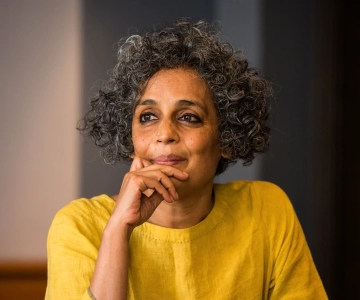
Arundhati Roy certainly has a stomach for controversy. By writing several articles and providing an introduction to a book defending Mohammad Afzal Guru (13 Dec, A Reader: The Strange Case of the Attack on the Indian Parliament), the main accused in the December 13, 2001, attack on the Indian Parliament, she has stuck her neck out again. Ever since the lady made her views on the matter public, many furious friends have called. “Who does that woman think she is?” they have thundered, accusing her of “passing off conspiracy theories as investigations”. As far as they are concerned, Roy should be the first citizen in their rogue’s gallery of ‘anti-national’ elements. No other writer inspires as much anger and mountains of hate mail to publications where she writes as this ‘petite woman’. Read the rest of this entry »

Tags: , ,

Beyond Borders - with Shubha Mudgal and Tina Sani

My article published in the Friday Times (Aug11-18)

Days after the recent skirmishes at the Line of Control, when the composite dialogue between India and Pakistan was threatened, an alternative reconciliation was underway in Lahore. Music became the metaphor of shared ground between the two countries, challenging divides between them that can become violent.

Lahore hosted the legendary vocalist Shubha Mudgal for a few days. The crusade launched by Beyond Borders Television, a production house and sister company of The Friday Times and Good Times, is a unique development in Pakistan’s media world. It is Beyond Borders’ mission statement to produce programming for regional channels that promotes understanding between peoples. Undaunted by visa restrictions and overcoming official barriers, Beyond Borders organised Mudgal’s visit to Lahore to record a tripartite discussion between Mudgal, Tina Sani and Jugnu Moshin, the compere.

The night before the recording, there was a get-together at the home of Jugnu Mohsin and Najam Sethi. It was a typical July evening, marked by the promising stillness of the monsoon. The fragrance of tuberoses, motia and lillies had made the atmosphere surreal and when the power breakdown happened, and candles were lit, it was like a slice out of some previous age. Read the rest of this entry »

Tags: , , , , , , , , , ,