Posts Tagged IMF

Before it’s too late

24 January 2011

As Pakistan enters into another year fraught with fresh challenges and old dilemmas, it is quite clear that its ruling elites – civil and military – are unwilling to learn from history. The crisis of governance in the country has spiraled out of control. We are heading towards grave internal conflict, the possibility of which has been bolstered by serious economic woes in the wake of high inflationary trends. Most importantly, the dilemma of reconciling our national security interest with a possible long-term economic agenda is becoming even more problematic by the day.

Radicalistan? Pakistan’s radicalization is now a threat to its society and the region. Whilst General Zia ul Haq will be remembered for institutionalizing extremism, most Pakistani governments, including democratic and quasi-democratic regimes have in the past, surrendered to the Islamist fringe. From Liaquat Ali Khan’s acquiescence to a terribly vague and confusing Objectives Resolution to Zulfikar Ali Bhutto’s unforgivable act of declaring Ahmedis as non-Muslims through a constitutional amendment, Pakistan’s long-term interest has always been sacrificed at the altar of short-term expediency and political survival. But the Pakistan of today is not a case of a majority beholden to a virulent minority; it is split from within and fraying at the edges.

Extremism has become embedded in our social fabric?: we are a country in transition. The old is cracking up and the new remains undefined and directionless. Over 65 percent of Pakistan’s exploding population is under the age of 26 and the coming generations will set the future course of the country. However, the portents are disheartening. Nearly 60 percent of youth surveyed in a countrywide poll (organized by British Council Pakistan) had little faith in democracy. Therefore, the glorification of former Governor Punjab Salmaan Taseer Shaheed’s murderer is not an isolated incident. It reflects a combination of societal changes in the broader context of religo-political transformation. At least three factors have greatly contributed to these phenomena.

First, the education system and its overtly pro-jihad bias (whether in madrassas or in state-run schools), has led to the construction of a particular mindset that shuns reason in favor of a theological or a hyper-nationalist discourse. Second, the institutionalization of mullahs and mosques with hefty state patronage backed by the zakat distribution systems ensure that public discourse is controlled and aligned with national security imperatives. Third, the sheer neglect of a social change agenda and absolute disregard for issues of social justice and a citizen voice means that there is an ever-increasing citizenship crisis. A large number of Pakistanis either enjoy partial citizenship rights (Balochistan, many parts of Khyber-Pakhtunkhwa and even Karachi for that matter) or none at all (Federally Administered Tribal Areas, Azad Jammu and Kashmir to name a few). (more…)

Pakistan’s budget: Policy sans public

11 June 2010

Our state considers the people as ‘beneficiaries’ and ‘recipients’ of the wise decisions made in air-conditioned secretariats and donor board-rooms

Last week, a former Minister while referring to the budgeting process remarked how the budget documents were accessible to only 3% of the parliamentarians. A lady MNA whom I met after the budget speech was ploughing through the shabbily printed pink documents, looking for the allocations for regulatory bodies and both of us could not find the relevant figures. This should be enough to describe the inaccessibility and obfuscated nature of the budgeting process in Pakistan and several other developing countries.

Executive board-room syndrome: Lack of public consultation in the budgetary processes is another hallmark of how the executive formulates the national priorities and finances them. Our state considers the people as ‘beneficiaries’ and ‘recipients’ of the wise decisions made in air-conditioned secretariats and donor board-rooms. This is why the economic and social policies are seldom reflective of the will of the people. Pakistan’s deep rooted authoritarian tradition explains this dilemma. But the civilian governments have rarely attempted to change this trend. More often than not, they also rely on the same evergreen bureaucrats. Our present elected government has chosen economic managers who are former international bureaucrats representing the good-old Washington Consensus.

Lack of participation: Across the globe, pre-budget consultations are exercises seeking public support and inputs for policy. Countries in democratic transition are adopting participatory decision-making processes. There is also a growing consensus that budget decisions need to be subjected to public scrutiny and debate. Earlier, our government organized seminars in big cities and consulted the business, middle classes and other stakeholders to frame the policies. This time last-minute public consultations focused on the VAT issue. Quite obviously, for purely political reasons, these consultations have failed and we have a higher GST rate thereby more exposure to inflation. (more…)

More on the debate on IMF

10 November 2008

I had posted my piece on the forthcoming (?) IMF programme and expressed fears as a citizen. The op-ed that was published in the NEWS has evoked a hard-hitting response by a former IMF staffer. I am happy that a debate has ensued – this is why his scathing attack on my argument is more than welcome. Any noise is better than the silence of complacency. Raza Rumi (ed.)
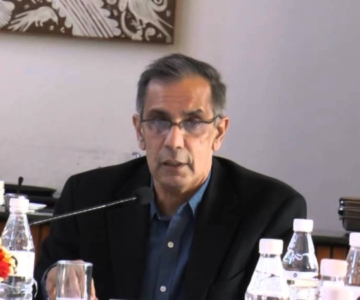
by Dr Meekal Aziz Ahmed

Raza Rumi wrote a nice article entitled “Debating the aid plan,” in your newspaper of Nov 1. I agree with a lot of what he says. Things in our land are pretty grim these days. But just as Mr Rumi’s article was engaging me, there came the usual blast against everyone’s favourite whipping boy and scapegoat, the IMF.

Let me recall a timeless phrase so that Mr Rumi knows “where I am coming from,” as they say, and then move on to the substance of his critique. ‘The fault, dear Brutus, is not in our stars, but in ourselves, that we are underlings.” Mr Rumi, who must have read his Shakespeare, surely is familiar with these words. How well that quote describes our hapless country which seems to be going nowhere, while we insist it is everyone else’s fault? (more…)

Pakistan: IMF Programme needs to be debated

1 November 2008

Debating the aid plan

Raza Rumi’s op-ed published in the NEWS (Pakistan)

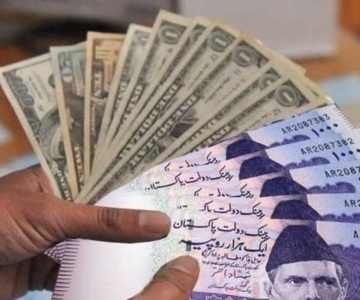
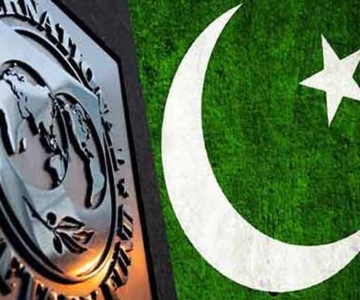
The not-so-inevitable is about to happen. After weeks of groping in the darkness of global financial mess, the Pakistani government is negotiating with the International Monetary Fund. Admittedly, Pakistan’s options are limited, given its intractable dependence on oil imports for survival. The civilian government moving from one crisis to another has elevated indecision to a policy status. This does not imply that we start echoing the unwise cacophony of impatience with an elected and far more legitimate government than the eight-year-long authoritarian regime. But then who cares: if recent history is a guide, PPP governments come with a brand or at least get branded as incompetent comprising coteries of cronies, as if the rest of the country is a fair, rule-based haven.

The plain truth is that the power-wielders of Pakistan have been following a set of disastrous policies for decades that have now put the survival of the state, or as we knew it, in question. From the great hunts for strategic depth and Jihad, and from nurturing domestic oligarchies and pampering a delinquent industrial sector at the expense of land tillers and equitable irrigation, we are now paying the price for policy making by the elites for the sustenance of the elites. (more…)