Bombay – Nostalgic shop owners refuse to change name
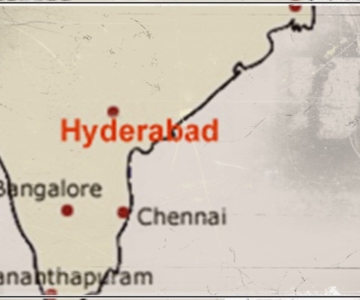
Read the captioned story in the Times of India today- politics of war mongering can be such a disruptive influence on ordinary lives. In Pakistan, we have shops and businesses named as Bombay restaurant, Bombay cloth house and even a Bombay sweet house. And of course Hyderabad's premier bakery - the Bombay bakery as reminded by Kazim. I am posting an image of the Hyderabad outlet during my recent, fleeting visit to the city.
Deep down, the links continue despite 61 years of turbulence...
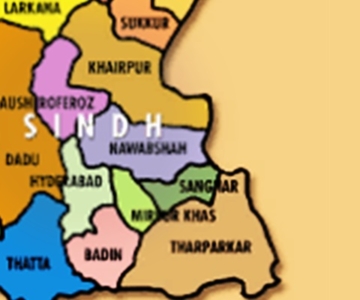
MUMBAI: Karachi Sweets in Mulund is not the only business establishment that bears the name of a Pakistani city. TOI came across at least seven shops, offices, halls and restaurants named after Karachi, Peshawar, Multan, Sindh and Lahore-most of the owners probably could never forget their hometowns that they had to leave during Partition.
"How can the MNS ban shop names like Karachi, Lahore or Sindh as most of the owners are refugees from Pakistan?'' said a shop owner in Bandra. "Even my shop is named after a Pakistani city and we have been running this business for the past 100 years. A lot of sentiment is attached to the name.'' He added that it was unfair to target innocent shop owners who have settled down in India and are patriotic. "We just carry a Pakistani city's name on our signboard. We are true Indians and not Pakistanis.''
Hyderabad – Past And Present
The Untold Charminar -Reviewed By Asif Noorani
Way back in 1954 when I greeted a grand old lady, who had migrated to Karachi from what used to be Hyderabad Deccan, with the customary Assalam Alaikum, I was admonished for my ‘bad manners’. She reminded me that I was not her age, which was why I was supposed to say Aadab and bend my neck slightly.
That was the Hyderabadi tehzeeb (a combination of good manners and courtesies). A recently published collection of writings Hyderabad: An Untold Charminar, imaginatively compiled and intelligently edited by Syeda Imam, has much more to say on the subject. The old-worldly charm in Hyderabad co-exists with the great strides that the city has taken in becoming a high profile IT city, which is why it has been nicknamed Cyberabad.
Makhdoom a people’s poet – a poem
Found this poem and its translation by Makhdoom Mohiuddin here
Our city is strange -
it whispers in the
nights when you
walk on roads
calls you to show
its wounds as if
the secrets of
its heart
its windows shut
alleys quiet
walls tired
doors locked
only the corpses stayed
in rented houses for years.
-tr. Ravi Kopra
------------------------------------------------------------
apnaa shah’r
ye shah’r apnaa, ajab shah’r hai
ke raatoN ko
saRak pe chaliye tau sargoshiyaaN sii kartaa hai
bulaa ke zakhm dikhaataa hai
raaz-e-dil kii tarah
dariiche band
galii chup
niDhaal diivaareN
kivaaR muh’r-balab
gharoN meN mayyateN thahrii hu’ii haiN barsoN se
kiraaye par —— !
Visit to Sindh, Udero Lal (the story of the Dalits in Pakistan)
Yoginder Sikand writing at DNA
South-central Sindh isn’t quite a favourite holiday destination, but I spent a fortnight there while on a vacation in Pakistan. My host was the amiable, 70 year-old Khurshid Khan Kaimkhani, a noted leftist activist, author of the only book on Pakistan’s almost 3 million Dalits. Along with a friend, he edits the only Dalit magazine in the entire country.
Khurshid met me at the railway station in Hyderabad, Sindh’s largest city after Karachi. We drove to his small farm, on the outskirts of his hometown of Tando Allah Yar, a two hour bus-ride ahead. Several Bhil families live on the farm. “They are like my own family,” Khurshid says as Baluji, a tall, handsome Bhil man, manager of the farm, welcomes us in with a tight embrace.
Impressions – White Mughals by William Dalrymple
My bright, young friend Imaduddin (left) has written this excellent, terse review of the engaging book White Mughals.
Yesterday when he emailed me this text, I was intrigued by his views as well as envious of his ability to say a lot in so few words. I enjoyed the book for the era it evoked with such craftsmanship and tenderness. However, Imaduddin says it all:
Quick and dirty impressions of White Mughals by William Dalrymple
Beautiful prose with a significant point brought out: that the British DID integrate in India prior to their discriminatory laws against mixed race progeny of the 1780s, the policy that East India Company servants would be older when they arrived in India, the arrival of white memsahibs and the arrival of condescending, colonial attitudes. Dalrymple finds that a third of Company servant wills bequeathed property to native wives, concubines and children until the afore mentioned advents, after which wills including native family dropped to almost none.
Vivid depictions of the court life and society of perhaps India's most cultured city, Hyderabad, are brought out in this book, as are the enlightened, seeking attitudes of early British Company servants who integrated beautifully into Mughal society, as had the Portugese into Indian society earlier - as had every other foreigner invader into India, an India which had turned rugged Mughal warriors into artsy Rennaisance men.
The love story of Khair un Nissa, cousin to an ambitious minister in the Nizam's court, and James Kirkpatrick, the Company's Resident in Hyderabad, is the thread that brings all these themes together, but is unnecessarily long. If I were Dalyrymple's editor, I'd have cut this 500 page book by a fifth - there is much repitition.
If you don't have time to read love stories and are interested in historical commentary on India, read the first 57 pages. That will be enough.
It irks me when I hear simplistic platitudes on Pakistani society, state or people. The heterogeneity of Pakistan is by itself an anthropologist's dream, a planners' headache and a sociologist's challenge. Despite the sixty-one years of drumming the uniform nationalism mantra, Pakistan's regions and their peoples refuse to toe the line sponsored by the official textbook masters. This is why one minute there is a delightful speech on being a Pakistani and the other minute caste, tribe or ethnicity raise their discrete heads and the linear formulae dissolve into thin air.