Posts Tagged heritage

Moenjodaro might have been washed away

13 August 2010

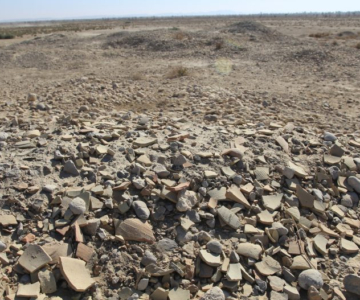
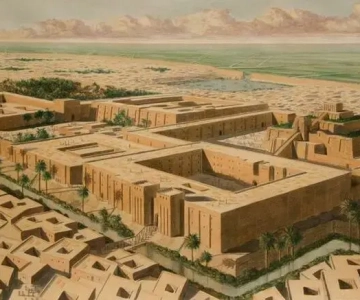
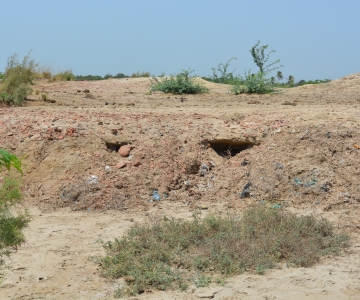
I just read this message (pasted below) from the Director of the World Heritage Centre on impact of Pakistani floods on the Archaeological Ruins at Moenjodaro, Sindh. While millions are suffering this is also a huge tragedy. The response of the UN is a little disappointing – yet another damage assessment when water recedes. While rescue and relief efforts continue, UN must also arrange for a small team of locals to visit the area and suggest immediate and urgent measures to get something done. By no means I am suggesting that this should take precedence over saving human lives but this issue also deserves urgent attention.

In addition to their dramatic consequences for the affected people, to which the World Heritage Centre (more…)

A beatific vision – Nizamuddin Auliya

12 July 2010

There is something unique, almost magical about this place. Otherwise a tiny space in the sprawl of urban Delhi, Nizamuddin’s shrine means a lot to me. My five years old relationship with this corner of a tumultuous globe is source of strength, peace and a connection with a bygone age.
The sad part is that I never get enough time to be there – just to sit and muse – do nothing. Even taking pictures is such a burden in a place where you want to let go – and be yourself, without any need, ambition, desire or a deadline.
When will I visit next? A question that lingers in my mind each time I am leaving this place. Wish the visa hassles were not there. But they are real and so am I.

The Destruction of Holy Sites in Mecca & Medina – Destroying Islamic Heritage

10 February 2010
The Asian Age: The Arabian Peninsula, the cradle of Islam, is being demolished by hardliners. In countries such as Saudi Arabia almost all of the Islamic historical sites are gone, but this is not the first time they have been destroyed.
In 1802, and army led by the sons of Muhammad ibn ‘Abd al-Wahhab (the founder of Wahhabism) and Muhammad ibn Saud occupied Taif and began a bloody massacre. A year later, the forces occupied the holy city of Mecca. They executed a campaign of destruction in many sacred places and leveled all the existing domes, even those built over the well of Zamzam. However, after the army left, Sharif Ghalib breached the truce, inciting the Wahhabis to re-occupy Mecca in 1805.
In 1806, the Wahhabi army occupied Medina. They did not leave any religious building, including mosques, without demolishing it, whether inside or outside the Baqi’ (graveyard). They intended to (more…)

The romance of Raja Rasalu

25 September 2009
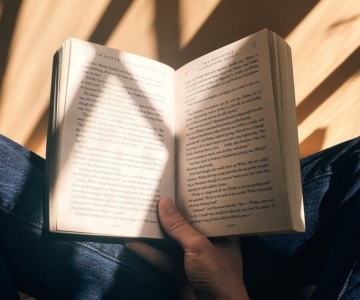
Book: The Romance of Raja Rasalu and Other Tales
Story telling has been a primordial urge, never quite expressed in its fullest measure, but always lingering and floating like life. There was a sub-continent before the colonial interaction that brought in its wake an aesthetic hardened by the industrial revolution and its uniformity of life and space. This was a world rich with myriad identities, of whispers and tales all interlaced in a peculiarly complex kaleidoscope. Since the 19th century that particular aspect of folk story telling and transfer of generational accounts gave way to what is now known as education and knowledge – instruments and reflections of power and a linear world view set elsewhere but adapted awkwardly to the local context.
This is why Simorgh Women’s Resource and Publication Centre in Lahore, under the leadership of Neelum Hussain, have undertaken the challenging task of reclaiming the rich heritage that lies in our folklore especially that of the Punjab. “The Romance of Raja Rasalu and Other Tales” is a stunning compilation of the romance of Punjab’s legendary hero, Raja Rasalu and, while it draws heavily on the colonial storytellers, the book twists the narrative in a manner that brings us closer to the origins of our cultural sensibilities. The tales are sheer magic. The romance, the intrigue, the bravery and the integrated nature of human existence where it finds communication even with birds and trees comes to a full life throughout the narrative.
It is one thing to produce an admirable compendium but it is another matter to ensure that the purpose and spirit of the tales are adequately reflected in the illustrations. This particular touch of originality is provided by the eminent artist Laila Rehman whose breathtakingly attractive illustrations add a new layer of meaning and sensibility to the folk stories. It is, therefore, as has been rightly stated in the introduction, a book for pleasure: a pleasure that moves beyond the immediate and the momentary and merges into the real or imagined pleasure of living. Laila’s paintings and sketches are evocative enough to generate a parallel story within the larger narrative. It is as if the reader is traversing into several worlds. One minute (more…)

City of our future

15 August 2009

Published in The Friday Times
Lahore’s problems are not intractable, says Raza Rumi after visiting an exhibition organised by OCCO
Attiq Ahmed, the unassuming leader of the Office for Conservation and Community Outreach (OCCO), encompasses both the old traditions of public service and the modern impulse for change. Among his many initiatives, his passion is OCCO. Comprised of a group of motivated urban designers and architects, the organization is a voluntary effort, financed by donations from individuals who refuse to ignore the responsibility that the bizarre “development” of Pakistan, and Lahore in particular, has thrust upon them. (more…)

Delhi by the book

28 July 2008

Writing about the textbook enemy, the ‘other’, is but a daunting task. Facing the grandiose Humayun’s tomb on a chilly January morning this year, I decided to write a book on Delhi.

It was not before I had visited the ancient city that I knew what it symbolised. In Pakistan, we were influenced by the glories of Lahore, my beloved city. Reconstructed histories had kept Delhi invisible. The seat of the Sultans, Mughals and the Raj, precursor of the modern united India and originator of the Indo-Islamic civilization was a mere phantom, best ignored.
Over several visits to Delhi, I realised that invisibility was also a shared curse. A good number of Delhi wallahs I met, had no clue where they lived or crossed the streets. Erasure, blank spaces in textbooks had rendered their own city a mythical other-world existing only in erudite books, rare cultural soirees and among the fading memories of old-Delhi.
When I looked for the house where Urdu’s legendary poet Mir Taqi Mir lived, no one knows it. Those living in Hauz Khas are unaware of what it was. There are thousands, perhaps more, who have never visited Nizamuddin Bastee let alone the dargah there. Tracing history through books resembles a two-dimensional vision. Lived histories add other dimensions to the inner kaleidoscope. But there are so few who can help me.

I am pained when I am taken to the tomb of India’s first female ruler Razia Sultana (1236 – 1240). Only centuries later another woman Indira Gandhi was to rule the Centre. Razia’s grave languishes on an abandoned, filthy cul-de-sac. Many don’t care. I wonder, should I?

As I have ventured out to write, the enormity of Delhi — the idea — haunts me. Where do I start? The layered construction of Indian, and Muslim identities in the subcontinent emanate from the ridges and Hades of Delhi. The saints buried under (more…)

Lahore Nama – A new blogspace devoted to the magical city

23 April 2008

I have been rather casually posting news, stories and comments on Lahore’s heritage and its current status on Lahore Nama. While blogging here I was always tempted to write about Lahore or post stuff by others on my beloved city. Noting that this would be rather obsessive, I have created an outlet for this obsession and a new blog is now on the block, as they say.

What differentiates Lahore Nama from other Lahore-centred blogs? Indeed, it is no way near the excellent Lahore metblog that is managed by a good team of motivated bloggers. My focus is on Lahore’s past and viewing the present in relation to that.

Luckily, Darwaish in Lahore has sent me some brilliant pieces and Ahmad Rafay Alam has agreed to the use of his incisive articles on urban planning; and Mayank Austen Soofi has also been contributing stories for cross-posting. In fact Soofi was most kind to announce the birth of Lahore Nama on The Delhi Walla. I quote from that story:

More than 60 years have passed since the creation of our two nations. 60 years should be but a blip in the life of great cities like Delhi and Lahore but meantime much has changed in their characters. And character is destiny. Both cities have continued to grow in ways that makes them very different from each other. Delhi lost its Muslim refinement. Lahore lost its Hindu heritage. Today there are three cities of Delhi and three cities of Lahore: what they used to be; what they are now; what they could have been.

So Lahore Nama is on the blog-horizon and without much effort on my part it is attracting a few hundred visitors each day.

Such is the pull of Lahore….