Posts Tagged Health

Towards a decentralised Pakistan

20 July 2011

Without civil service reform, devolution of policy setting will be unachievable and the current reform may just not achieve its intended purposes

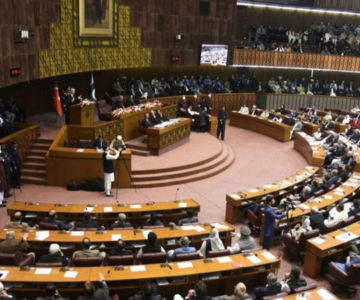
On July 1, 2011, the third phase of redistribution of federal powers and functions was completed whereby 7 federal ministries now stand devolved. These include Ministries of Health, Food and Agriculture, Labour and Manpower, Environment, Women Development, Sports and Minorities affairs. Earlier, ten ministries were devolved to the provinces with the abolition of concurrent list under the 18th Amendment.

Implementing the 18th Amendment: The process has been fraught with political bickering between the Centre and the Provinces and resistance by powerful groups, which are beneficiaries of a centralised Pakistan. However, these political and administrative contests have not undermined the process of devolution. A major factor in negotiating this transition has been the role of Mian Raza Rabbani who heads the Implementation Commission for the 18th Amendment to the Constitution.

Most significantly, the political parties have shown their willingness to work together in achieving the intended results of provincial autonomy related clauses. Having said that, the real test of the elected civilian governments has just begun. Large scale restructuring of the federal government and transfer of new functions to the provinces implies that there is much more needed than executive notifications and political rhetoric.

Beyond executive notifications: Four challenges are of urgent importance. First, to ensure that devolution process is completed and not truncated or manipulated to suit the ends of the political parties. At the same time the regulatory capacity of the state, already weakened over decades, must not be diluted during the transition. Secondly, the corresponding institutional capacities are also devolved to the provinces and where missing, the Centre should advise and facilitate institutional strengthening. Thirdly, a civil service reform is required to achieve the responsive and citizen-oriented governance — the larger goal of the 18th Amendment. Finally, decentralisation of provincial powers is also needed and the local government system should be reintroduced. Unpacking and addressing these four imperatives is now an urgent responsibility, which the federal and provincial governments cannot absolve themselves of. (more…)

Preparing an early recovery plan

21 August 2010

Millions who have been displaced by the worst floods in Pakistan’s history need an urgent way out of their misery. If anything, the scale of the recent disaster is unprecedented. By all accounts, the worst is not over. In fact, it has not even started.

Where do we stand today? Cumulative estimates of losses are increasing (initial estimates have gone beyond $15 billion) and over 20 million people have been displaced in 71 districts of Pakistan. This is a recipe for chaos and failure. There is no alternative to undertaking urgent planning efforts leading to an early recovery plan.

Learning from 2005: Before an early recovery plan is formulated, learning from the 2005 earthquake is vital. The foremost lesson from that phase of disaster-management relates to the ineffectiveness of setting up centralized bodies such as Earthquake Reconstruction & Rehabilitation Authority (ERRA), which did not deliver the goods. After five years of operation, ERRA “has not even utilized the 50% of the funds earmarked and has to date spent less than 20% on the education sector”, says Usman Qazi who was closely affiliated with the post-earthquake recovery drive.

Another lesson pertained to the installation of parallel structures at all governmental levels thereby leading to duplication of effort and inefficiencies. The Planning Commission must be aware of the pitfalls of creating centralized relief and reconstruction agencies. The earthquake recovery process also witnessed the unnecessary involvement of contractors’ mafia in the reconstruction process. The rural support programmes and other community-based networks delivered far better than contractor-driven relief efforts. (more…)

On prescription medications

10 September 2009

People should have access to the prescription medications they need. Access2wellness is designed to help. As I stumbled on Access2wellness website, I wondered if such an arrangement was possible in developing countries. This website was launched as an easily accessible resource for patients, caregivers, health care professionals and hospital administrators. Others can also  join and extend this endeavour to bring better health within everyone’s reach.

(more…)