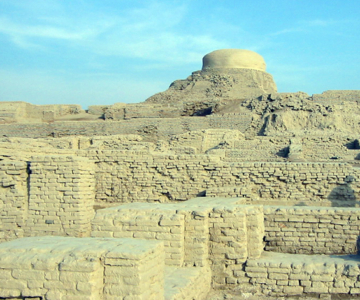
Dholavira: A Harappan Metropolis
Found this interesting post on Shunya
The road to Dholavira goes through a dazzling white landscape of salty mudflats. It is close to noon in early April and the mercury is already past 100F. The desert monotones are interrupted only by the striking attire worn by the women of the nomadic and semi-nomadic pastoral tribes that still inhabit this land: Ahir, Rabari, Jat, Meghwal, and others. When I ask the driver of my hired car to stop for a photo, they receive me with curious stares, hoots, and giggles.
This is the Rann of Kutch, an area about the size of Kuwait, almost entirely within Gujarat and along the border with Pakistan. Once an extension of the Arabian Sea, the Rann ("salt marsh") has been closed off by centuries of silting. During the monsoons, parts of the Rann fill up with seasonal brackish water, enough for many locals to even harvest shrimp in it. Some abandon their boats on the drying mudflats, presenting a surreal scene for the dry season visitor. Heat mirages abound. Settlement is limited to a few "island" plateaus, one of which, Khadir, hosts the remains of the ancient city of Dholavira, discovered in 1967 and excavated only since 1989.
Entering Khadir, we pass a village and find the only tourist bungalow in town. It hasn't seen a visitor in three days; I check in and head over to the ruins. I've planned this for months; even the hottest hour of the day cannot temper my excitement for the ruins of this 5,000 year-old metropolis of the Indus Valley Civilization. While hundreds of sites have been identified in Gujarat alone, this is among the five biggest known to us in the entire subcontinent, alongside Harappa, Mohanjo-daro, and Ganeriwala in Pakistan, and Rakhigarhi in India. Read more here
Capitulating Rajas: why Taliban might not be resisted

My new piece for The Friday Times
South Asian history is a tale of capitulation of local elites before external invaders. Be it the Aryans, the Mongols or East India Company officials, we have always relented, and sometimes quite painlessly. This is an area of history that remains less explored as it conflicts with the grand narratives of ‘resistance’ and nationalist myths we love to construct.
A phrase locked into our cultural memory – Hunooz Dilli Door Ast (Delhi is as yet far away) explains this historical pattern. It has become a metaphor for the insularity of the elites and the powerlessness of the common people. The complacency that Delhi, the capital of the Islamic empire was not accessible to the hordes of invaders, was the tragic reaction by debauched kings, local Rajas and their henchmen who were either men of straw or active collaborators.