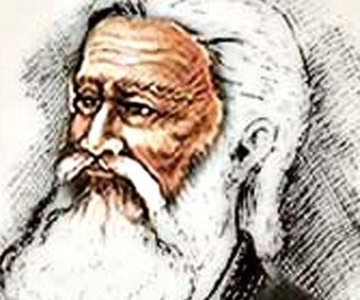
Jahane Rumi In search of the unsearchable: O, my soul! where would you find your house?

18Feb/10Off

Tau kiya yeh tay haye… (Gulbahar Bano singing)

A piece of Urdu poetry that has remained with me through seasons, years and all the vicissitudes...
This is an extraordinary ghazal (rhymed poem in Urdu composed in classical style). The poet is perhaps Saleem Kausar whose expression is subtle yet brutal. There is a sense of finality in the lyrics - a denouement that is being challenged and hence a dynamic is created that allows the tragedy of two people parting their ways to turn into a moment of absolute beauty. The sadness of the verse is augmented by Gulbahar Bano's unique voice that brings out the depth of meaning in the lines.

I can only translate the first couplet:
Tau kiya ye tay haye ke ab umr bhar nahee milna
Tau phir ye umr bhi kiyon, tum se gar nahee milna

Is it now agreed that we shall not meet for life
But what good would be living if I will not be with you

As I rendered this literal translation, I wanted to curse myself for being so inadequate with words.. Those who can understand Urdu or Hindi would know what exactly I am complaining about. I dedicate this to someone special who remains as close as time itself. In fact, I am grateful to this muse who sent it the other day bringing back the smell of summer heat, the shades of white and all the flowers that bloomed and were tucked into thick books.

Here is the ghazal

another version found on youtube:

3Feb/100

I have returned, like the new year (Rumi)

I am posting Sunlight translations of Rumi's  Ghazal (Ode) 1375, from  "Diwan-e-Shamsi" ("The Collection of Shams"), rendered by Nader Khalili, and Prof. William Chittick:
~~~~~~~~~~~~~~~~~~~~~~~~~~~~~~~~~~~~~~~~~
i've come again
like a new year
to crash the gate
of this old prison
i've come again
to break the teeth and claws
of this man-eating
monster we call life
2Oct/09Off

Parveen Shakir – ‘coins of my truthfulness’

Parveen Shakir with her mentor Qasimi whom she called Ammu

Young Shakir at a mushaira

Fifteen years later Shakir remains intensely popular. Her poetry has been reinterpreted and critics who dismissed her as a poetic lightweight have realized that there was much more to Parveen's poetic vision than just henna-dyed hands

Parveen Shakir (1952-1994) has defined the sensibilities of several generations and beyond. At the relatively young age of 42 years, Parveen Shakir died on an empty Islamabad boulevard, as if this was an essential part of her romantic persona. But she had lived a full life where poetry and tragedy intersected each other and became inseparable from her being.

As a young student in high school, I was introduced to Shakir’s romantic poetry, which was best represented by her first collection of poetry ‘Khushbu’. I had won an essay writing competition in Urdu and a delightful award came in the form of this tender volume of poetry. Since then I have always returned to bits and pieces of Khushbu. It may not be according to the cannons of literary theory, but it is spontaneous, fresh and almost dreamlike. Shakir was bearly 24 years old when Khushbu was published and since its first edition, this book has been a best seller wherever Urdu poetry is read or appreciated.

Khushbu turned Shakir into a celebrity. Aside from mushairas, newspapers and public fora, she was ever-present on the Pakistan television, perhaps as its only saving grace during the rigid years of Zia-ul-Haq’s Martial Law. Shakir had a natural talent for public speaking, reciting poetry and just being herself. I remember one monsoon evening in Murree when we were hooked to her presentation on Pakistan’s Independence Day. There was a distinct tenderness in her voice that was in sharp contrast to the platitudes being churned out. Above all she was beautiful. I remember she would read verses from her own work and from the great masters of Urdu poetry with complete ease and immense refinement. In the short period of time that she lived as a poet, Parveen did rather well and was quite prolific. Her later collections comprised Sad Barg (marsh merrygold), Khud Kalami (conversing with one’self), Inkaar (refusal), Maah-e-Tamaam (full moon) and Kaf-e-Aaina (edge of the mirror).

Her raw romanticism runs through her poetry. For instance, yay haseen shaam apni is a love poem of rare beauty; and has always been a favourite of mine. It is composite, taut and melodic; and here is my translation.

This melting evening of ours

Where everything dissolves

The scent of your clothes

The blossoming sprouts of my dreams

A deferred vision, this is

In a little while,

A star will emerge on the horizon

To gaze at you meaningfully…!

Your heart shall then reminisce

The echo of a memory

The tale of a separation,

Of an unfinished moment

Of un-blossomed dreams, things unsaid

We ought to have met

In times, considerate

In pursuit of attainable dreams

On a different sky

On a different earth

We ought to have met

27Jun/090

“The Blocked Road”

I wish I knew what you wanted.
You block the road and won't give me rest.
You pull my lead-rope one way, then the other.
You act cold, my darling!
Do you hear what I say?

10Jun/090

Thou art wine and I am water

Before such spirit-bestowing Beauty, how should
I not die? How should I not go mad and seize hold of Thy
chainlike tresses?
When I drink Thy wine, how should I not be
obliterated? Thou art wine and I am water, Thou art honey
and I am milk.

27May/091

Ghalib: Heart is a Mirror and Mirror a Heart

Ghalib: Heart is a Mirror and Mirror a Heart

I am absolutely mesmerised by this post and the verse that I only read after ten years at Mehr-i-Niimroz blog. Am just too tempted to cross post it here.

az mihr taa bah-;zarrah dil-o-dil hai aa))inah
:tuu:tii ko shash jihat se muqaabil hai aa))inah

1) from sun to sand-grain-- heart; and heart is a mirror
2) {from / by means of} the six directions, a mirror confronts the parrot

Translation and commentary on Desertful of Roses. Parallel commentary on The South Asian Idea.

25May/092

Cast the paradise into hell…(Ghalib)

Courtesy mehr-i-niimroz, I found one of my favourite verses from Ghalib

taa((at me;N taa rahe nah mai-o-angabii;N kii laag
doza;x me;N ;Daal do ko))ii le kar bihisht ko

1) so that, in obedience/worship, the attachment/desire of wine and honey does not remain
2) take Paradise, and cast it into Hell

Commentary here

24May/091

Mir Taqi Mir’s discovery of Simurgh

Tha woh to rashke hoor-e-behesti hameen mein Mir!
Samjhe na hum to fahm ka apne qusoor tha

(That hoor from paradise was part of my being.
I blame it on my utter lack of comprehension of the Ultimate Truth).

Mir, like other great Urdu poets, has seen Simurgh.

Excerpted from here

7Apr/090

Whatever shrine I go to

Another readable piece by Dr Sher Zaman Taizi

This poem in ghazal form is very simple and direct. It starts with a direct address to God and gradually moves on to ethical values, human needs and human nature. I will try to transliterate the original Pushto verses into English with the hope that readers will be able to appreciate its meaning.

Not for a single moment, am I indifferent to You! Not indifferent to Your invocation and reflection! Whatever shrine I go to, I have You in mind!

I am not interested in any pilgrimage to mosque or temple!

3Mar/091

Noor Jehan & Khurshid Anwar

I loved Fawad's post "A Divine Musical Collaboration - Noor Jehan & Khurshid Anwar" and here it is:

In the wake of Khalid Hasan's death, the great Pakistani songstress Noor Jehan (Wikipedia) has been much on my mind. Khalid Hasan was a great admirer of the late Madam and wrote a much quoted tribute essay on Noor Jehan. Perhaps more importantly he translated Saadat Hasan Manto's great portrait of Noor Jehan's early years as a rising diva in pre-partition Bombay under the title "Nur Jehan: One in a Million" (unfortunately this link is to a scan of the essay and hard to read but the essay is included in the collection "Stars from Another Sky"). "Stars from Another Sky" includes other translations of Manto's brilliant Urdu sketches published in "Ganjay Farishtay" and "Loudspeaker" on film industry icons like Ashok Kumar, Nargis, Naseem Bano (Dilip Kumar's wife, Saira Bano's mother) and Shyam.

12Feb/090

Ahmed Nadeem Qasmi (1916-2006)

I am republishing an old article that appeared in The Friday Times, Pakistan on the great Urdu poet Ahmed Nadeem Qasmi.

Ab aik baar to qudrat javaabdeh thehre

hazaar baar ham insaan aazmaaye gaye

Now Nature must be held accountable at least once

We humans have been held answerable a thousand times

Few men evoke such awe and respect as the departed poet and writer Ahmed Nadeem Qasmi who breathed his last on July 10 2006. His mastery over poetry – he has been equally prolific in traditional ghazal and nazm – and prose – as a short story writer, journalist and literary critic – stand at the pinnacle of Urdu literature and he has contributed to the language over 50 titles.

Born in 1916 amidst the scenic Soon-Sekasar valley in district Khushab, nature influenced the evolution of Qasmi’s poetic sensibilities. Exposure to the grim realities of rural India’s inequities also played their part in his development as a writer; the underlying theme of his poetry is human dignity and his short stories – regarded as next in line to another master, Munshi Prem Chand, for their directness and simplicity – portrayed the woes of the Punjabi peasantry and their interaction with power structures. Following his matriculation from Campbellpur in 1931, around the time when he wrote his first poem, he moved to the Sadiq Egerton College in Bahawalpur and graduated in 1935.

8Feb/090

On Habib Jalib

Kazim Aizaz Alam has sent this piece on the great poet for publication at Jahane Rumi.

I was recently introduced to someone who had been a companion of Habib Jalib. Khurshid sahib now works at the Karachi-based afternoon paper, Qaumi Akhbar, and sometimes reminisces about the good times he shared with people associated with the film industry. Being a film/theatre reporter for 59 years now (yes, he started his journalistic career in 1950!) Khurshid sahib has come in touch with every notable film star, director, writer, poet, musician and singer of Pakistan.

One of his dear friends was Habib Jalib. According to Khurshid sahib, whenever Habib Jalib was in town, his Vespa (that he still drives) would serve as the poet’s conveyance. Last time when he met Jalib sahib, he was in Karachi for a book-launch ceremony. In those days there used to be a UBL hostel in Saddar. The then president of the UBL was Jalib sahib’s fan who had arranged his stay at the hostel. Khurshid sahib picked him up from there and took to the Arts Council of Pakistan where the ceremony was to take place. He clearly remembers that Jalib sahib’s health was not good and he looked too frail. The poet walked into the venue with the help of Fehmida Riaz and Khurshid sahib. Benazir Bhutto was the chief guest and was accompanied by Begum Nusrat Bhutto. He says that both the distinguished ladies rushed forward and welcomed the ageing poet with utmost respect. Such was Jalib sahib’s regard that despite his bitter criticism of Benazir Bhutto’s policies during her first government, she had come to pay homage to the great revolutionary.

26Oct/082

powerless is the prayer…

A friend sent me these verses; luckily he translated the first verse of the ghazal
Is na'ay daur ki na'i charagari tou deykhi-ye
Bay asari dua kay sath, dard dawa kay saath hai
(Behold the beneficience of this age modern
powerless is the prayer, painful its medication)
Jo miri riyazat-i-neem shab ko Saleem subh na mil saki
Tou is kay ma'nay tou ye hu'ay yahan khuda koi aur hai
7Sep/085

Makhdoom a people’s poet – a poem

Found this poem and its translation by Makhdoom Mohiuddin  here

Our city is strange -
it whispers in the
nights when you
walk on roads
calls you to show
its wounds as if
the secrets of
its heart

its windows shut
alleys quiet
walls tired
doors locked
only the corpses stayed
in rented houses for years.

-tr. Ravi Kopra

------------------------------------------------------------

apnaa shah’r

ye shah’r apnaa, ajab shah’r hai
ke raatoN ko
saRak pe chaliye tau sargoshiyaaN sii kartaa hai
bulaa ke zakhm dikhaataa hai
raaz-e-dil kii tarah

dariiche band
galii chup
niDhaal diivaareN
kivaaR muh’r-balab
gharoN meN mayyateN thahrii hu’ii haiN barsoN se
kiraaye par —— !

1Jul/080

A World with No Boundaries

With every breath the sound
of love surrounds us,
and we are bound for the depths
of space, without distraction.

We've been in orbit before
and know the angels there.
Let's go there again, Master,
for that is our land.

17Apr/088

Faiz, a Peaceful Revolutionary

This is in continuation of the splendid translation series undertaken by Mr. Anis Zuberi and contributed by JZ for this blog. Earlier posts can be found here here and here.

Drawing on the Persian tradition, the subject of Urdu Ghazal has always been about earthly or heavenly love. With the rise in social consciousness Urdu poets started using the form of nazm to address such issues like injustice, poverty, uneven distribution of wealth, highhandedness of the privileged, tyranny of rulers, exploitation by priests, etc. However, Faiz introduced protest and dissent as a regular subject in ghazal. He did it by keeping the ghazal's traditional format but giving the lexicon of ghazal a different meaning. This has had such a profound effect on Faiz's poetry that at times it is hard to draw a line between his ghazal and nazm. For instance, Hum ke threy ajnabi itni madaaratuN ke baad though written in ghazal form is also a topical nazm titled Dhaka se wapsi per, reflecting his deep emotions after he visited Bangladesh (former East Pakistan) in 1974.

He also discovered that whispering is more powerful then screaming and that became his hallmark. Unlike Iqbal, Josh or many others who wrote poetry of protest like us khet ke her khoushae gandum ko jalado or kakhe-umaraa ke dar-o-dewar hila do, Faiz does not confront injustice with hostility and anger. His protest is not direct, loud, thunderous, or deafening. He faces up to his tormentor by his moral strength, power of endurance and persistence. He believes in a soft and gradual revolution. He challenges the conscience of all human beings by showing his resolve and defiance when he says, aaj bazaar meiN pa-ba-julaN chalo or jo bache haiN sang samet lo. Even in moments of extreme anguish he avoids confrontation and invokes heavenly justice when he says lazim he ke hum bhee dekheN ge.
He captivates his audience by mixing traditional love with protest; lout jati hei udher ko bhi nazar kiya kije. It is amazing how Faiz has changed the traditional meaning of idioms used in ghazal for centuries. For example, love (ishq) is synonymous with struggle for justice (tohmat-e-ishq poshida kafi nahiN); his lover (aashiq, Qais, majnouN, Farhad) is a victim of oppression who is offering sacrifices while waging a struggle for justice; His rivals (raqib and adoo) are exploiters (Agar urooj pe hei ta'lae raqib to kiya).
Keeping the above background, I will attempt to translate and explain the meaning of the ghazal.

Woh buton ne dalay hain waswasay ke dilon se khauf-e-Khuda gaya
Woh parri hain roz qayamatain, kekhayal-e-roz-e-jaza gaya

(So much) cynicism (waswasa also means confusion; uncertainty) is created by the idols that fear of God has vanished from hearts.
(Because People) have gone through Armageddon daily the thought of the Day of Judgment is gone.

Here ButoN is not a metaphor for beloved, earthly gods or goddesses, but a symbol of brute authority. The word khauf in the second line also reinforces that meaning. The meaning of butuN in the above line is same as in the following couplet:

6Apr/086

Abida Parveen’s magic – Sufi music at its best

Someone once said Abida Parveen is not a singer or an artist... she is an experience..... her voice and expression takes you to a different universe... when she collaborated with India's ace filmmaker, poet, artist, revivalist, musician and activist Muzaffar Ali the result had to be something divine ... something out of ordinary, something that transcends all boundaries... it was purest of the pure Raqs-e-Bismil (dance of the injured)... totally unforgettable and soulful ... In Abida's own words Raqs-e-Bismil has the glow of Almighty in it...one can become wali by listening to it.... sufi poetry has a magic that is beyond any explanation, any comprehension ... it fascinates me as each time it takes me into a new realm of discovery.

I am sharing my favorite ghazal from the album with translation... although each piece is a priceless gem yet this ghazal has the power to take you beyond yourself. Abida is at her best here.

The English translation is done by Muzaffar Ali himself.

Hairat mara ze har do jahan be niaz kard
Een khab kaare daulat e bedaar meekunad
(Rumi)

Bewilderment has absolved me of both the worlds
This is the consequence of awakening from my dreams

Khuli jab ki chashm e dil e hazeen,
to vo nam raha na teri rahi
Hui hairat aisi kuch aankh par ki asar ki be asari rahi
Pari goshe jaan mein ajab nida ki jigar na bejigari rahi
Khabare tahhayyur e ishq sun na junoon raha na pari rahi
Na to tu raha na to main raha jo rahi bekhabari rahi...
(Khamsa by Nazeer Akbarabadi for Siraj Aurangabadi)

The eyes of an anguished heart open...
No longer moist.. Bereft of tears
The perplexed vision
Remained unmoved.. Devoid of response
The soul heard.. An unusual sound
That took the pluck of life away
As wondrous love revealed itself
The fairy vanished..The ecstasy lost
Nor you remained.. Nor I was found
mere oblivion was all there was...

Mujhe bekhudi ye tune bhali chashni chakhayi
Kisi aarzoo ki dil mein nahi ab rahi samayi

O surrender in love,
You have given me a taste that pales all worldliness
No desire remains
In the heart filled with submission

Na hazar hai na khatar hai, na raja hai ne dua hai
Na khayaal e bandagi hai na tamana e khudai

Neither distance nor fear...
neither hope nor prayer
neither thoughts of subjugation
nor desire of godliness

Na muqqam e guftagu hai na mahhall e justaju hai
Na wahan havaas pahunche na khirad ko hai rasai

No place for exchange of words...
no occasion for further quest
Where neither consciousness reaches
nor thoughts transcend its realm

Na makin hai ne makan hai na zameen hai ne zaman hai
Dil e be nava ne mere jahan chhavni hai chayi

No one resides..Neither habitation exist...
Is where this wandering heart has come to camp

Na visaal hai na hijraan na suroor hai na gham hai
Jise kahiye khwab e ghaflat so woh neend mujh ko aayi

Where there is no union... No separation
no sorrow... no joy
What is said to be an endless oblivion
I enter such a slumber

(Hazrat Shah Niaz)

Another video below

11Feb/0813

….na junoon raha na pari rahi – when neither you exist nor I exist

Junaid has sent this classic ghazal by one of the earlier, eclectic poets of Urdu language, Siraj Aurangabadi. The best part of his email is the translation by his relative - a Toronto based poet - Anis Zuberi. The translation is amazing as it delves into the deeper meanings of this great ghazal.

Anis Zuberi writes:

It is hard to translate classical poets. This ghazal of Siraj is like a flower, full of beauty and fragrance that one should smell and enjoy and not dissect. ...Siraj Aurangabadi was one of the earlier poets of Urdu who came after Wali Dukkani. According to his biography for years, he was in a state of trance and used to remain naked. Khabar e-tahayyur-e-ishq is one of the his most famous Ghazals.

Khabar-e-tahayyur-e-ishq sunn, na junoon raha na pari rahi
Na toh tu raha na toh mein raha, jo rahi so be-khabari rahi

Learn oh absorbing love that neither the obsession (for the beloved) is left nor and the object (pari) of love survived. The only thing that is left is a state of self-unconsciousness: where neither you exist nor I exist.