Posts Tagged Gandhi

Shobhaa De notices blogs from across the border

30 March 2009

Shobhaa De has noted the ramblings of yours truly on her blog:

I came across a Pakistani blog that took him to the cleaners – but in such a witty way. Since he’d been clubbed with Modi (why not?), the blogger from across the border, urged the world to watch out for the new fascist on the block. Interestingly, his comments’ column is filled with entries from outraged young Indians expressing their admiration for Big Mouth Varun and defending his hate speech…

The best lines on her blog are about blogging itself-

It’s come to a sickening point : I blog, therefore, I am! I am hooked. Seriously. I don’t remember the last time I experienced the same sort of rush from writing. And I write, have written, shall continue to write etc etc etc. But, even after reams and reams of the stuff over so many years, blogging has hit the sweet spot like no other medium. It is freeing…. hugely liberating… and entirely satisfying.

SD has in her usual style said it all.

More here

More on Varun Gandhi

25 March 2009

Amarjit Chandan has sent another article on the Varun Gandhi’s saga. My views have been quoted again.

Naveen S Garewal
Tribune News Service, Chandigarh, March 24
Varun Gandhi is either the saviour of the Hindus or a venom-spewing hate monger, depending upon the blogs you read on the Internet. Active writers on the Internet, or the literati of the blogosphere as they like to be called, are pulling no punches in defending or attacking this outspoken member of the BJP.

(more…)

Varun Gandhi is a scary bigot

22 March 2009

A post at Pak Tea House and the sharp comments attracted some ire among the readers as to what was Varun Gandhi issue doing on a Pakistani blog-zine? Indeed, the question merits some deliberation. We in Pakistan are constantly being demonised by the Indian mainstream media as a ‘terrorist’ country and that we are a great threat to the ’secular’, shining India. Varun gandhi’s remarks as the saner elements of Indian media and commentators are saying only show that people have gotten away with such crap. The fissures in the secular Indian democracy get even more evident when such speeches are delivered.

Varun Gandhi’s remarks on Muslims, hate speech that goes beyond all measures of ‘hate speech’ concerns us as it only exposes us to brigades of hatred, communalism and violence across the border. (more…)

Lost Imaginations

9 February 2009

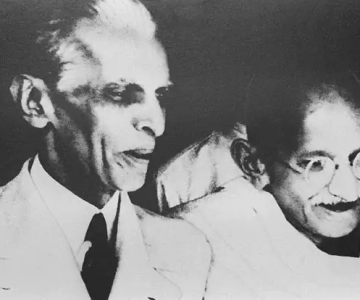
jinnah_with-fatima-and-dina2By Raza Rumi

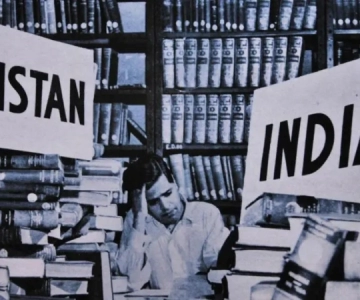
Sixty one years have gone by but the creation of Pakistan is still a heated debate: contested, fractured and bitter. That history has been the preserve of the victors and the powerful is well known. But to spin and whirl the truth to the extent that it becomes empty and farcical is an art form practiced by the Pakistani state and its mock-historians.
In early January of this new year, a heated controversy entered the public domain. A famous Urdu columnist writing for the largest vernacular newspaper reiterated the widely-known fact that the pragmatic Mr Jinnah had accepted the Cabinet Mission Plan and given up the demand for Pakistan in 1946. However, it was the (more…)

Say no to war

26 December 2008

by Raza Rumi

Little did we know that the imminence of war between India and Pakistan would once again become a possibility, howsoever faint or misguided? The ruling political junta in India is talking war following the media frenzy over Mumbai carnage. Once again it is time to be ‘tough’ with Pakistan. This is a surprise given that the interlude of peace under General Musharraf and all the offers of conflict resolution were either stalled by the red-tapism of Indian bureaucracy or a victim of political inaction. At home, we have the air-force planes hovering the wintry skies of Lahore causing consternation not only to the peaceniks, shrinking each day, but to the overwhelming majority of the common citizens. After all what have they got to do with the power game in Islamabad and Delhi, the media hysteria or even the terror cartels?

True that circumstantial evidence points to the fact that the metaphor of our times, Ajmal Kasai socially upgraded as the Urduised Kasab, is linked to the little Faridkot in the Pakistani Punjab. However, much of the international community has reminded India that there is little or no evidence of any direct involvement of the Pakistani state let alone its fragile civilian government. Yet, the rhetoric of unilateral strikes by the Indian foreign minister and now the venerable Sonia Gandhi is having the right effect here. Of war mongering, preparedness assessments and the much trumpeted security strategy through the nuclear option. (more…)

On Bhagat Singh, his vision and Jinnah’s support for his struggle

28 March 2008

A few days ago, Irfan Habib, a noted researcher and author of TO MAKE THE DEAF HEAR – Ideology and Programme of Bhagat Singh and His Comrades sent his thoughtful piece on the legendary Bhagat Singh.

Incidentally, Bhagat Singh was hanged on Pakistan’s Republic Day – March 23 though nine years prior to that – in Lahore – thereby adding another dimension to the symbolism of March 23 for Pakistanis. Bhagat Singh for his principles, struggle for just causes and valour is a shared hero.

I am quoting some of the passages from Habib’s article below. Citing a Tamil newspaper editorial of 1931, Habib writes:

One of the most articulate and strong reaction was seen in far away Tamil Weekly called Kudi Arasu, where Periyar E.V. Ramasami wrote an editorial on March 29, 1931. Besides being critical of Gandhi and the Congress for failing to save him, Periyar saw in young Bhagat Singh an ally who stood for rationalism and spoke against caste oppression. He began by writing there is no one who has not condoled the death of Mr. Bhagat Singh by hanging. There is none who has not condemned the government for hanging him.

The above lines reflect the widespread acceptance of Bhagat Singh as a national hero, much beyond the limits of Punjab, and more significantly, within this short political life. There is no reason to believe that his persona was created by scholars through their exploration and interpretation of historical records.

Habib concludes with these words- (more…)