Basharat Peer’s Curfewed Night
Book Review by Sumaira Samad
Curfewed Night is the memoir of young Kashmiri journalist Basharat Peer, recounting his youth in the troubled valley during the '80s and '90s. A harrowing look at the political strife and armed conflict that has torn Kashmir apart over the last 30 years, Curfewed Night is nothing if not personal. The people, places and events Peer describes are ones he encountered and experienced first hand. They are his parents and neighbours and friends. Yet, despite this intimacy, essential to any good memoir, Peer's narrative is refreshingly honest, frank and unbiased. His is no polemic, and sentimentality, self-pity and melodrama take a back seat.
Beginning in the years before the struggle, Curfewed Night invites the reader into a beautiful, peaceful mountain paradise where the regular, slow rhythms of village life make up one's existence. Peer lives a happy, uneventful childhood, surrounded by a loving family and tight knit community. But this apparent serenity, as it turns out, is merely the glassy surface, hiding a quagmire beneath. The shadow of Kashmir's turbulent history and unresolved conflicts never quite goes
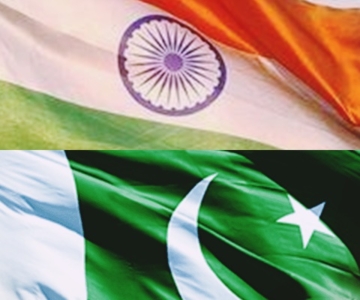
national identity sans freedom
A few quotes from this article in the Hindustan Times - incidentally it also includes what I rambled....
Freedom means everything. But I’m not free. All these concepts are self-imposed imprisonments.—Roshan Seth, actor
Independence has provided me with a national identity but it hasn’t meant freedom. I find myself enslaved to narrow ideas of patriotism. I’m trying to break free. And writing a book on Delhi, the capital of the ‘enemy’ nation, is my first step.
—Raza Rumi, blogger
Personal freedom is crucial to my growth as an artist. ‘Independence Day’ is a distant celebration for me. Each year, as mid-August approaches I am conscious of a sense of loss — I wonder what could have been had the subcontinent not been splintered.
— Sehba Sarwar, poet
Being a (somewhat) responsible parent, I will share with my children the notion that today we remember our national heroes. And amidst the nationalistic pop nuggets being broadcast round the clock, I hope they hear Yeh watan tumhara hai, tum ho Pasban iss kay, yeh chaman tumhara hai, tum ho naghma khwan iss kay…
— Shandana Minhas, author
Kashmir,Azadi and Arundhati Roy
UPDATE from SAJA Forum, articles, news and comments here
UPDATE: Arundhati's brutally frank piece where she asks this question:
The unimaginable sums of public money that are needed to keep the military occupation of Kashmir going is money that ought by right to be spent on schools and hospitals and food for an impoverished, malnutritioned population in India. What kind of government can possibly believe that it has the right to spend it on more weapons, more concertina wire and more prisons in Kashmir?
"India needs azadi from Kashmir as much as Kashmir needs azadi from India.”
Sir Salman Rushdie’s fatwa against freedom of expression
BY SHAJAHAN MADAMPAT
SIR Salman Rushdie, that beloved symbol of freedom of expression, has now turned Khomeini, so to speak, exposing, in an ironic twist of tale, the hypocrisy and double standards that marked the entire liberal case for unqualified and unrestrained freedom of representation.
The man, in whose defence the world's intelligentsia mounted an intellectual blitzkrieg against the alleged medievalism of the Muslim masses, has threatened to sue the publishers of a book about him by a former police officer, Ron Evans. In his forthcoming book, On Her Majesty's Service: My Incredible Life in the World's Most Dangerous Close Protection Squad, Evans dares to paint a rather unflattering portrait of the writer, whose unflattering ways stirred up controversies ever since he began to write. Rushdie alleges that the book "destroys his character" and "presents wholly made up incidents as facts."