Posts Tagged fiction

“Love is not yet a taboo in Pakistan” – Mohammad Hanif

28 August 2011

By Raza Rumi:

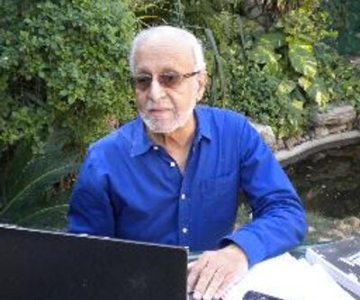
In a few days, Mohammad Hanif’s new novel will be available in Pakistan. Last week, I met him at his house in Karachi. The grand dame of Urdu literature, Qurratulain Hyder, used to make fun of people who would ask writers what were they writing about. “Are writers cooks that they should be subjected to senseless questions,” she remarked in one of her essays. With this sentence lurking somewhere in the corner of my mind, I was most hesitant to ask Hanif questions about his new novel. In any case, Hanif is not known for responding to inane questions either. We found ourselves locked in this battle: me not wanting to ask; and Hanif avoiding to pontificate about his latest book. Awkward? No. Funny, Yes.

We found ourselves locked in this battle: me not wanting to ask; and Hanif avoiding to pontificate about his latest book. Awkward? No. Funny, Yes

Dressed in a flamboyant pair of shorts and a funky T-shirt, Hanif and I spoke about everything under the sun. He had been to an Iftaar party in North Nazimabad and a part of him was terribly inspired by the event. This was the ‘roza-kushai’ (breaking the first time fast) of a child and a wedding hall was the venue for a lavish Iftaar. He cited the discussions he had with a ‘buzurg’ (an elder) and quoted him. Writers play with their memories and recreate them in a most innovative manner. Thus the delightful tales of the elderly gentleman’s commentary on Karachi, its random violence, literature and society was most amusing.
(more…)

Writing fiction

28 February 2010

I loved Guardian’s feature on Ten rules for writing fiction.

Elmore Leonard: Using adverbs is a mortal sin

1 Never open a book with weather. If it’s only to create atmosphere, and not a character’s reaction to the weather, you don’t want to go on too long. The reader is apt to leaf ahead look ing for people. There are exceptions. If you happen to be Barry Lopez, who has more ways than an Eskimo to describe ice and snow in his book Arctic Dreams, you can do all the weather reporting you want.

2 Avoid prologues: they can be annoying, especially a prologue ­following an introduction that comes after a foreword. But these are ordinarily found in non-fiction. A prologue in a novel is backstory, and you can drop it in anywhere you want. There is a prologue in John Steinbeck’s Sweet Thursday, but it’s OK because a character in the book makes the point of what my rules are all about. He says: “I like a lot of talk in a book and I don’t like to have nobody tell me what the guy that’s talking looks like. I want to figure out what he looks like from the way he talks.”

3 Never use a verb other than “said” to carry dialogue. The line of dialogue belongs to the character; the verb is the writer sticking his nose in. But “said” is far less intrusive than “grumbled”, “gasped”, “cautioned”, “lied”. I once noticed Mary McCarthy ending a line of dialogue with “she asseverated” and had to stop reading and go to the dictionary.

More here