Posts Tagged federalism

Towards a decentralised Pakistan

20 July 2011

Without civil service reform, devolution of policy setting will be unachievable and the current reform may just not achieve its intended purposes

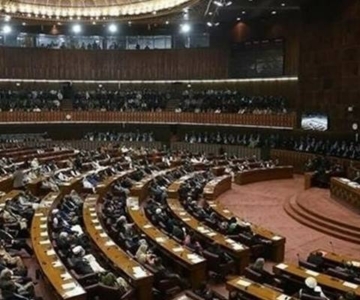
On July 1, 2011, the third phase of redistribution of federal powers and functions was completed whereby 7 federal ministries now stand devolved. These include Ministries of Health, Food and Agriculture, Labour and Manpower, Environment, Women Development, Sports and Minorities affairs. Earlier, ten ministries were devolved to the provinces with the abolition of concurrent list under the 18th Amendment.

Implementing the 18th Amendment: The process has been fraught with political bickering between the Centre and the Provinces and resistance by powerful groups, which are beneficiaries of a centralised Pakistan. However, these political and administrative contests have not undermined the process of devolution. A major factor in negotiating this transition has been the role of Mian Raza Rabbani who heads the Implementation Commission for the 18th Amendment to the Constitution.

Most significantly, the political parties have shown their willingness to work together in achieving the intended results of provincial autonomy related clauses. Having said that, the real test of the elected civilian governments has just begun. Large scale restructuring of the federal government and transfer of new functions to the provinces implies that there is much more needed than executive notifications and political rhetoric.

Beyond executive notifications: Four challenges are of urgent importance. First, to ensure that devolution process is completed and not truncated or manipulated to suit the ends of the political parties. At the same time the regulatory capacity of the state, already weakened over decades, must not be diluted during the transition. Secondly, the corresponding institutional capacities are also devolved to the provinces and where missing, the Centre should advise and facilitate institutional strengthening. Thirdly, a civil service reform is required to achieve the responsive and citizen-oriented governance — the larger goal of the 18th Amendment. Finally, decentralisation of provincial powers is also needed and the local government system should be reintroduced. Unpacking and addressing these four imperatives is now an urgent responsibility, which the federal and provincial governments cannot absolve themselves of. (more…)

Future of a crisis

11 September 2010

My latest piece on Pakistan’s incredible calamity and its after-effects

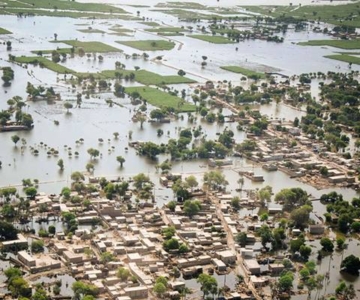
Pakistan’s devastating floods have opened up a Pandora’s Box of governance dysfunctions and historical distortions that have plagued the polity since independence. It remains to be seen what will be the outcome of the greatest calamity in our recent history. Various estimates show that the floods have affected 18-20 million people. The death toll has crossed the figure of 2000 while 2 million houses have been damaged or destroyed. Floodwaters are receding in many areas, and though there are concerns about standing water that remains in Punjab and other areas, the worst of the current flooding is taking place in Sindh.

The disaster is still not over but the fissures within Pakistan have started to erupt and once again proving how vulnerable the state is and how fractured the Pakistani society has become. Five key crises have emerged, some old and some new. However, they point to the fact that our continuous refusal to address structural problems remains a key challenge.

Martial state syndrome: Pakistan’s history is an uninterrupted tale of direct and indirect military rule and centralisation. Each time there is a crisis there is a need to resort to the de facto, real governance paradigm: the military rule. Therefore, Altaf Hussain of the Muttahida Qaumi Movement (MQM) and Imran Khan of the Pakistan Tehreek-e-Insaaf (PTI) are not saying anything new. The perennial search for a Messiah, rooted in the religious ideology that the state and education system have cultivated, is back in full force. This time the media and other discordant voices are calling for another phase of direct military rule. (more…)

The question of Pakistan’s provincialism

5 July 2009

My piece that appeared in the ‘political economy’ section of The NEWS on Sunday.

The elites drunk on the status quo have expressed two major reactions to the proposal of creating another province within the mighty Punjab. First that this is akin to opening a Pandora’s box when we are at war against terrorism. Second, that this is a planted controversy whereby the ruling PPP wants to harm the house of Raiwind; or a conspiracy by those who want to destabilise Pakistan’s political system.

Both these arguments are spurious for nothing is more important for Pakistan than to make the federation work. The argument that the British drawn provincial boundaries are sacrosanct is as nonsensical as the reality of the Durand Line or for that matter the line of control itself. If anything, South Asia has experienced territorial and demographic shifts through the centuries. When resisted, the sweep of history has blown away the resistant elements and when carefully manoeuvred such shifts have resulted in commonsensical political and administrative solutions. (more…)