Jahane Rumi In search of the unsearchable: O, my soul! where would you find your house?

25Feb/103

Pakistan: democratic governance is the only way forward

(Also published by The News) Given the average shelf life of any civilian government, it is almost miraculous that the incumbent government has survived and there are signs that its removal is not immediate. The longevity of civilian order has less to do with the inherent strengths of its style of governance or delivery of public goods that it had promised in its manifesto. The survival of this government is an outcome of the lack of options for the establishment as well as its international allies, notably the Western powers. Leaving the conspiracy theories and the excessive over-reliance of the analysts on the American factor, we can safely argue that the military establishment of Pakistan and its intelligence agencies has found themselves in a unique situation since the assumption of the presidency by Asif Ali Zardari.

The truth is that Pakistan People’s Party, an anathema to the civil-military bureaucracy, has assumed the most important and powerful offices that a civilian government can aspire for. Two years ago, when the Prime Minister Yousaf Raza Gillani was

11Nov/092

Anchorless rambling

We did it again. A hallmark of Hillary Clinton’s visit to Pakistan was her meeting with the stars of the Pakistani media – the all-knowing anchors who have taken it upon themselves to be the “representatives” of Pakistan. Forget the President elected by all the legislatures, the Prime Minister who enjoys the confidence of the National Assembly, and even the Foreign Minister, who at the end of the day was elected from a constituency with a huge majority and nominated by the ruling party.

Such constitutional niceties are of little value. What we witnessed with a motley group of top anchors was a repeat of their daily performance on the idiot box, and the discourse with America’s second most powerful politician was familiar and disappointing. A senior journalist based in Lahore remarked that even the young students at the Government College University came up with better questions than the exchanges aired on television.

Who are we? Muslim, South Asian, Arab? No clear answer, because we are ten different things at the same time, and while the rest of the world is comfortable with multiple identities, Punjab’s urban middle classes crave a singular Islamic identity but want it with all the world’s frills. This is why we cheer the blowing up of the World Trade Centre and at the same want to live in New York. This is why the Islamo-fascist hate-America crowd is at ease with their progeny studying in the United States

3Aug/090

US assistance needs an alternative paradigm

An oped published by The NEWS

The gods are smiling at Pakistan's development industry once again. Such a moment was experienced almost a decade ago when Pakistan's strategic location made it into a hub of post-9/11 investments to secure the world peace. However, this time the United States of America has undertaken a historic step of aiding the civilian government and addressing the structural imbalances such as poverty, unemployment and lack of opportunity that quite rightly fuel militancy and promote factories of suicide bombers. Some would think this is naive in view of the imperial occupation of Afghanistan and the rather schizophrenic and counterproductive policies of the US elsewhere in the Muslim world.

This is not an invalid position taken by the rejectionists of US assistance. But this is an equally naive postulate for it is far more important to invest in civilian governance than hi-tech arms and domestic war machine. Haven't we reaped the disastrous

15Oct/085

Poverty and Inequality – the brewing storm

By Raza Rumi

(My op-ed first published here)

As I sipped the tenderly brewed coffee facing the lush green golf course of a relatively new Lahore Country Club, the new reality of Pakistan became a little clearer. The sprawling premises of the club were a preserve of the Railways Department until the inefficient Pakistan Railways could not manage it and doled it to the new, oligarchic big business of Pakistan. Much ado was made when the land owned by the Railways was privatised and questionable deals were transacted in that moderately unenlightened era. Nothing came out of the public questioning and today a lavish country club, far removed from its downmarket environs, has sprung out for the affluent and the upwardly-mobile classes of Lahore and Punjab.

The classic barriers to entry created by the cliques that lord over Pakistan's elite clubs is being undone. Pay a handsome fee now (way over a million rupees) and you are a member to this new "club" built on the ashes of the Raj steelframe, albeit, reminding one of the nasty remarks of Churchill on how the brown, rapacious Rajas would appropriate the space created by the wise and just colonists. As my host elaborated on the entry procedures to Lahore's richy-rich club, I could not help but remember the compensation to a suicide bomber that has also increased over the years and now hovers between one to two million rupees. A grossly-overlooked fact is that the grinding poverty in the pockets of Pakistan, seemingly unaffected by the consumerist prosperity, is the key to our current turmoil and violence.

21Apr/085

Pakistan Suicide Bombings: The narratives of terror

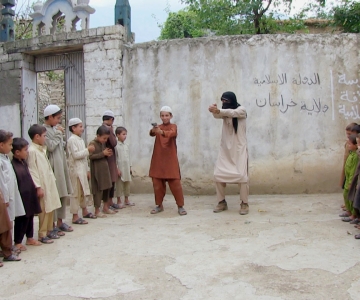
An overwhelming majority of Pakistan's population finds itself hostage to narratives of terror that are either alien to its ethos or are constructed by its home-grown theologians and opinion-makers. This is not to say that the issue of suicide bombings is easy to define and understand. They are essentially complex and located in decades of Pakistan's evolution into a society that is difficult yet again to label: Islamic in name, struggling to be democratic and a republic it is not, well, not yet.

If we take the viewpoint of liberals, it is our war as much as a war of others. If we were to hear the west, it is about countering terror and preserving world peace; and if we listen to Pakistan's right it is someone else's battle fought on our land 'the land of the pure' lest we forget.

Where does this leave the confused, battered citizen who now has to strive for personal security among other daily struggles of existence? There are no clear answers and if one were to probe further, the questions are as murky as their geneses.

One thing is clear though: to identify the recurrent suicide bombings in the name of theological, tribal and imperial grievances is at best a half-truth. The genie is far more complex than a response to the reductionist narrative of âwar against terror and such other imperial phraseology. At the core of this phenomena, if one were to be rather blunt, lies an exclusive, bigoted ideology of a few men of holy intentions orchestrating a script written by others.